

Electrician by day, acclaimed woodworker by night
Artist Chris Joyce crafts meticulous boxes, bowls, sculpture and furniture
June 19, 2026
By Steele Hays
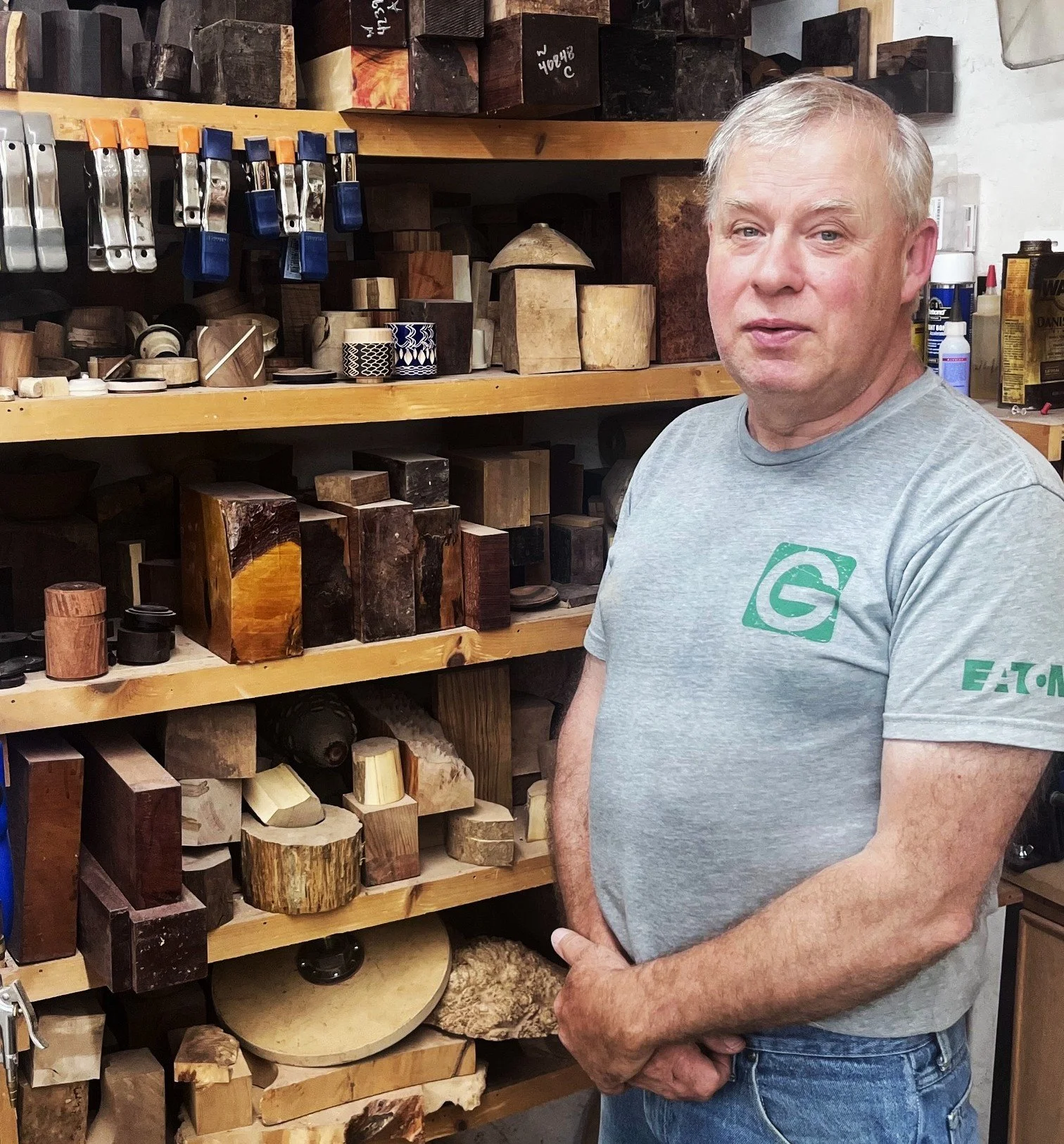
Chris Joyce’s intricate pieces use rare and exotic woods sourced from all over the world. Photo by Steele Hays.
STONINGTON—Stonington electrical contractor Chris Joyce works long hours during the building season. But his day doesn’t end there: Instead of unwinding after work, he heads to his workshop, where he creates award-winning fine woodwork, from boxes and bowls to sculptural pieces and furniture.
Joyce’s meticulous creations are crafted from rare and exotic woods sourced from all over the world.
“I am always in awe of his work – his level of skill is just phenomenal,” said Stuart Kestenbaum, the former director of the Haystack School of Crafts, where Joyce has worked periodically as a mentor and teacher. “In certain cases, you see something and you look at it and you just know it’s right. That’s the case with Chris’s work. It’s stunning.”
The Turtle Gallery in Deer Isle has carried Joyce’s work for more than 20 years, and many of the gallery’s customers eagerly await the arrival of Joyce’s carefully crafted pieces at the start of a new summer season.
“He’s got some wonderful customers who really appreciate his work,” said Caitlin Johnston, co-owner of the Turtle Gallery and daughter of gallery founder Elena Kubler. “His talents are deep.”
“It is as though wood has become a language for Chris,” Kubler said.
Joyce’s work has been featured many times in Fine Woodworking Magazine and in 2023, he had a solo exhibit at Maine Craft Portland. He’s sold to collectors in Germany, Japan and South America, and a collector in Boston has purchased more than 50 pieces of Joyce’s work from Kubler’s gallery.
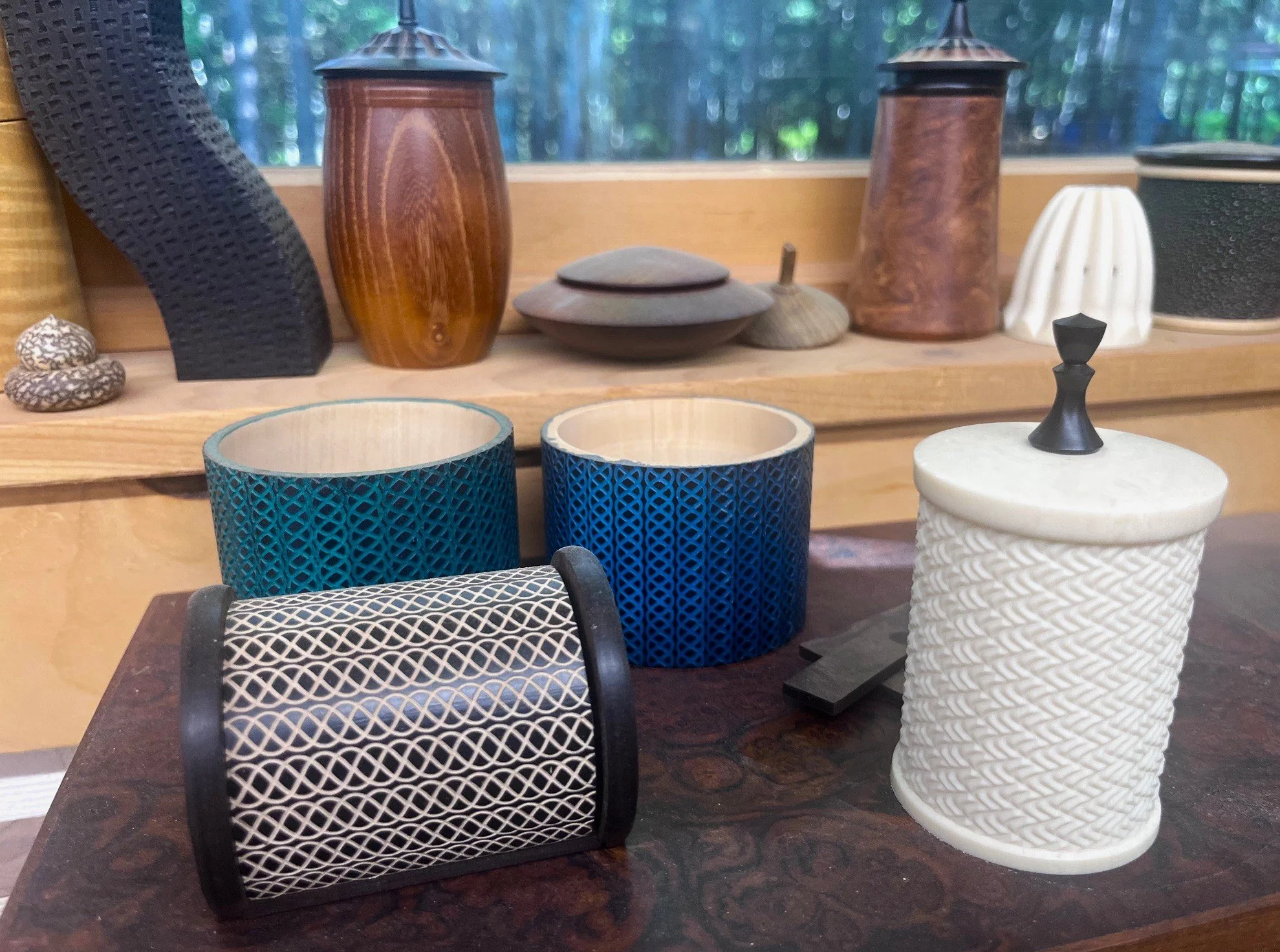
An assortment of "boxes" in Joyce’s studio. ““I like the challenge of the small […]the intricate,” he said. Photo by Steele Hays.
A Stonington native and lifelong resident, Joyce is largely self-taught as a woodworker. He credits Dennis Saindon, a longtime industrial arts teacher at Stonington-Deer Isle High School, as being a mentor who inspired him. As a teenager, Joyce began reading Fine Woodworking Magazine and one day he found a burl, a tumorous growth that sometimes occurs in trees, which are highly prized by woodworkers for their “colors, textures, the grain, the way they reflect light,” he said. That got him hooked.
In his early years, Joyce turned out hundreds of bowls and built more than 20 pieces of furniture for his own house. As his skills grew, he began to focus more on smaller pieces, which he calls “boxes,” although many are round or have unusual shapes.
“I like the challenge of the small, the intricate, these small boxes,” he said, holding one up to catch the light. “It’s far more complicated than it looks. I come up with an idea and I try to figure out how to make it work.”
Joyce also enjoys the challenge of competing with other crafts people. He has entered many of his pieces in juried exhibitions, in which many artists submit work and judges select only a limited number of them for display and recognition. Many of his pieces have been selected for recognition in annual exhibitions at the Center for Furniture Craftsmanship’s Messler Gallery in Rockport.
The intricate patterns in many of Joyce’s pieces are created using a sophisticated lathe called a rose engine. Today’s rose engines are high tech machines, but early versions of rose engines have actually been in use for more than 400 years. The earliest versions were powered by foot pedals, or treadles, like 19th Century sewing machines. Karl Fabrergé used a rose engine to create the guilloche patterns on his jeweled eggs for the tzars of Russia.
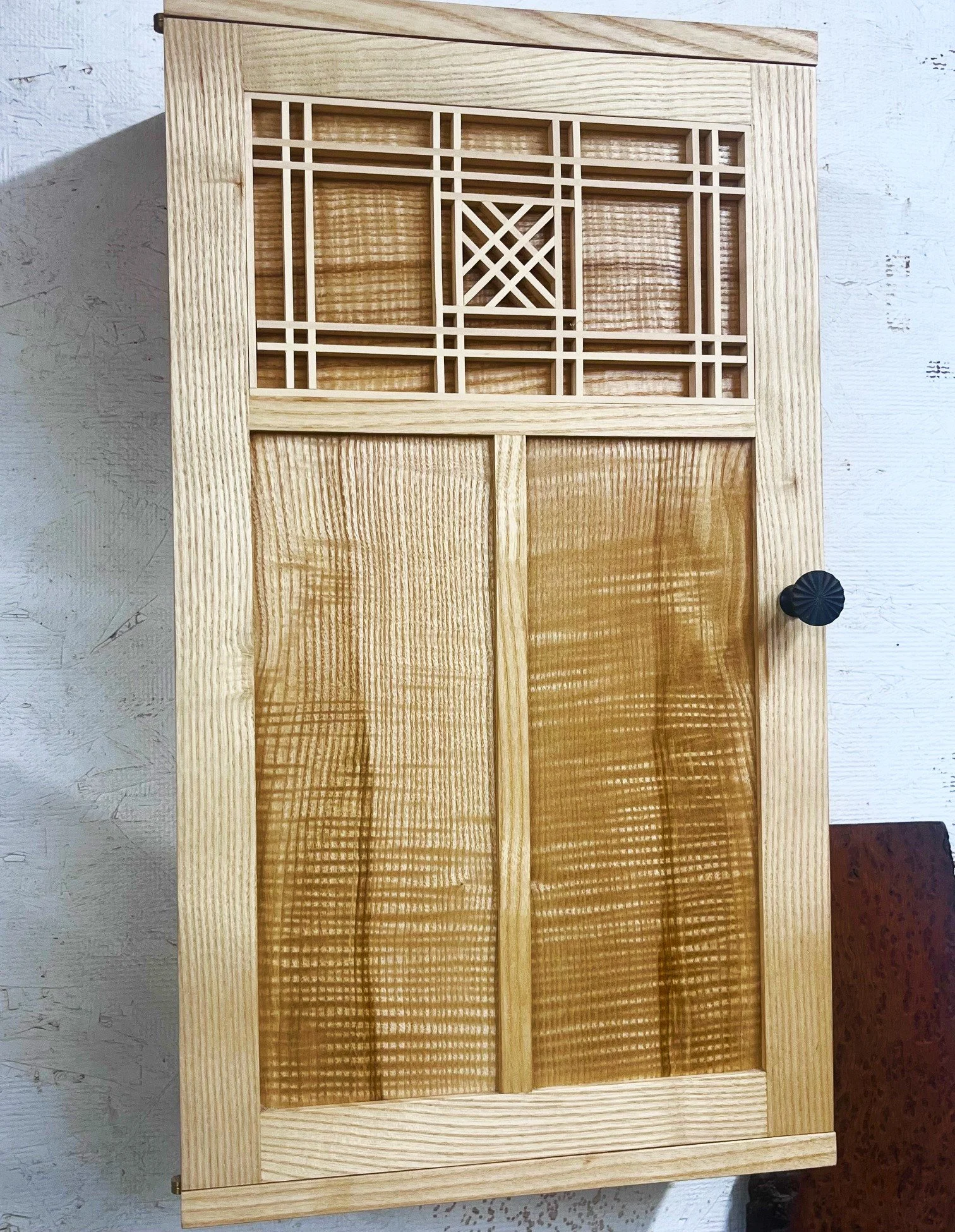
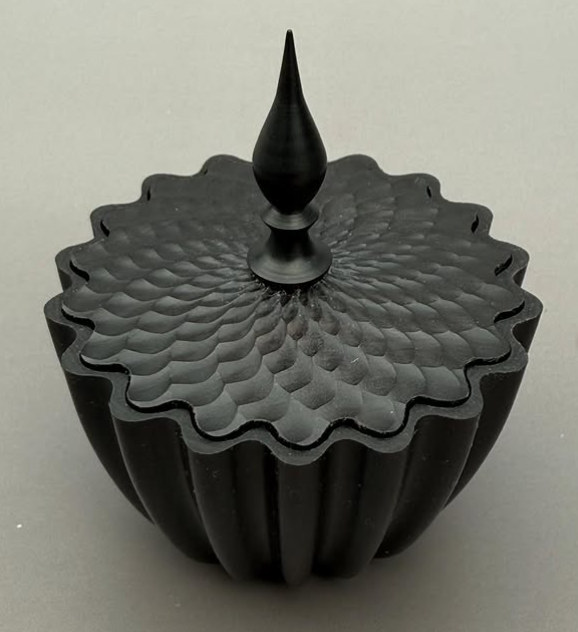
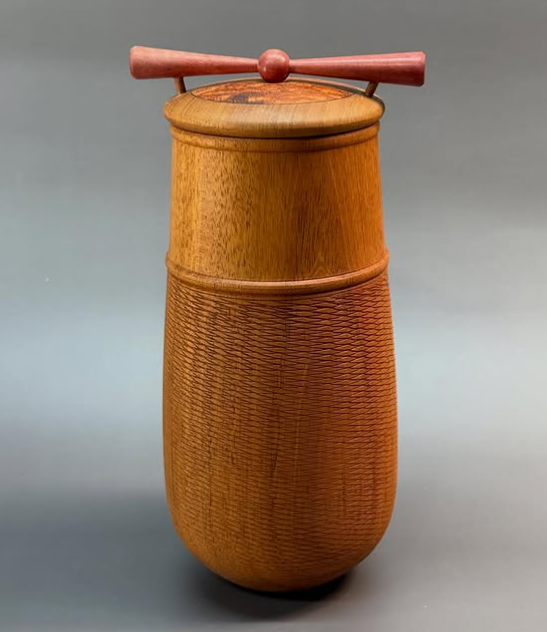
A cabinet made of English ash, white ash and African blackwood (left) and a "box" crafted with African blackwood (middle). Photos by Steele Hays. On the right, one of Joyce's newest pieces, made of Afzalia lay, mahogany and pink ivory wood. The pattern was created with a rose engine lathe. Photo courtesy of Chris Joyce.
“I feel like I can do almost anything under the sun with a rose engine,” Joyce said.
Joyce’s workshop shelves are filled with rare woods from more than 50 countries – mahogany, African blackwood, Australian huon pine, charred and burled lace she oak --- all of them prized by woodworkers for their special attributes and some incredibly valuable. Joyce lifted one piece of wood roughly two by five inches and one foot in length. “This is the most valuable piece in the shop,” he said. “Azelia lay from Sri Lanka. It would sell for more than $1,000.”
For Joyce, woodworking is “peaceful.”
"It's good stress relief,” he said. “I just love to see the beauty of wood.”
Joyce’s work is on display seasonally at the Turtle Gallery in Deer Isle and he periodically posts photos of new work on Instagram.