

The annual local bird count is Dec. 14. Here are three trends on birders’ minds.
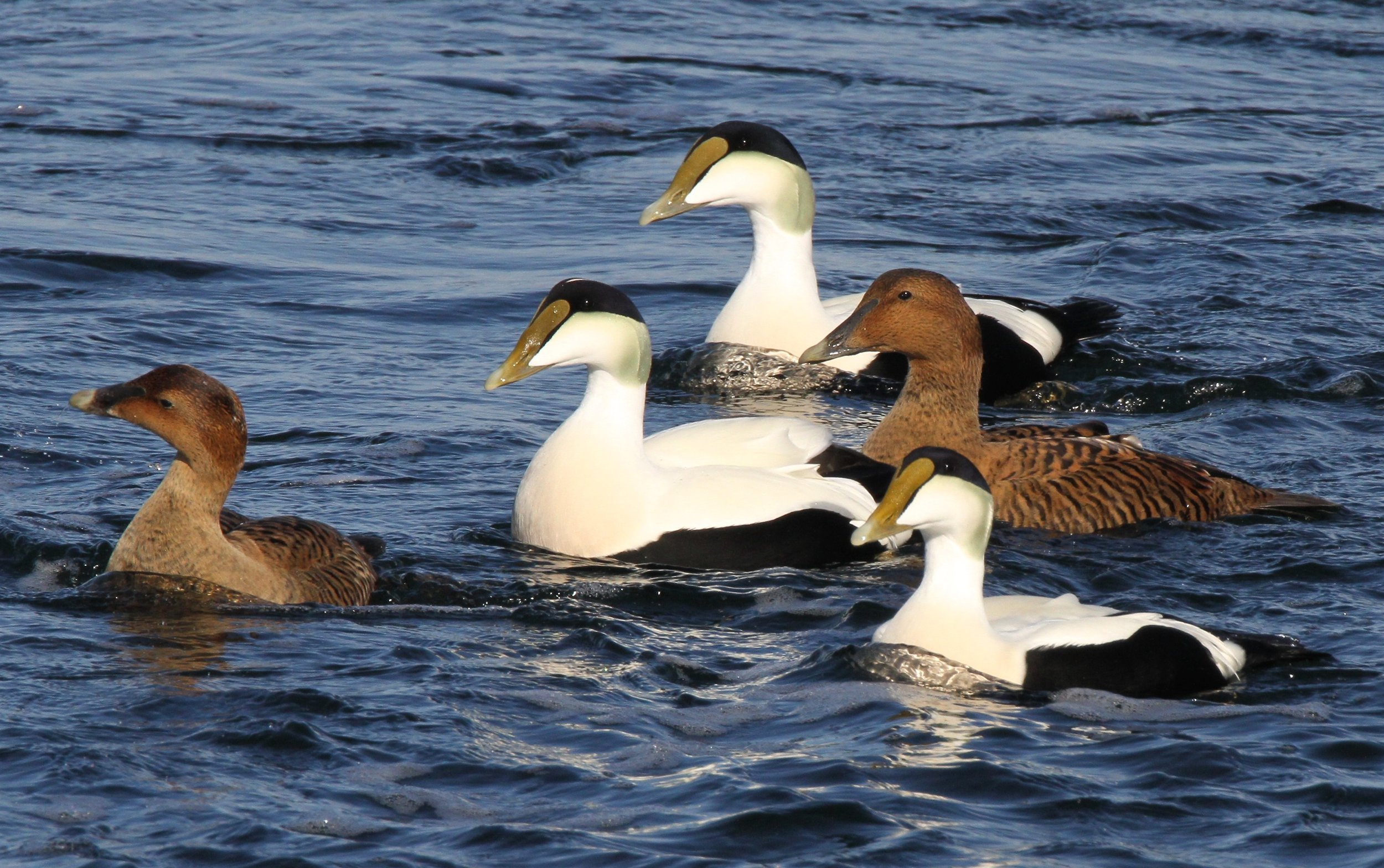
Common Eiders, often seen at Blue Hill Falls, have been declining in Maine. Photo courtesy of Leslie Clapp.
By Steele Hays
The annual local Audubon Christmas Bird Count will take place Dec. 14, with 40 volunteers spending a full day in the field identifying and counting birds as part of what the National Audubon Society says is the largest citizen-led environmental survey in the world.
This is the 126th consecutive year the count has been held nationally. Last year, more than 80,000 volunteers participated across the U.S. Nationally, the count takes place between Dec. 14 and Jan. 5.
Zach Holderby of Penobscot is leading this year’s count for the Blue Hill area, just as he has for the last nine years. Blue Hill's "count circle" covers a circle that is 15 miles in diameter centered on Blue Hill Mountain.
Whether it is raining or snowing, participants are expected to get out and look for birds in their sectors as assigned by Holderby, “unless it’s an absolute blizzard,” Holderby said in an interview.
This year's local participants will be monitoring three key issues and recent trends:
How many sea ducks and other waterfowl are found in our area, especially common eiders? Over the last 20 years, there have been significant declines in the numbers of these species which come to Maine in the winter from their breeding grounds in Canada. Eiders feed on mussels and large flocks are often found around Blue Hill Falls. As recently as 2007, almost 1,800 eiders were recorded, but in the last four years the numbers have ranged between 346 and 272.
Are there any "irruptions" this year of specific bird species like finches, grosbeaks and crossbills? These are seed eaters that move en masse to wherever they find good food supplies. The Finch Research Network (FiRN), a collaboration of scientists and birders who monitor these movements, says that conditions are ripe for a significant irruption into New England this winter because spruce and birch seed crops have been poor in Canada. Evening grosbeaks have been spotted in several locations around downeast Maine in recent weeks, according to Holderby.
Are species like Eastern Bluebirds and Carolina Wrens increasing as winter residents of our area? These birds normally spend winter months further south, but as our average winter temperatures rise, more and more are staying in Maine all winter, Holderby said.
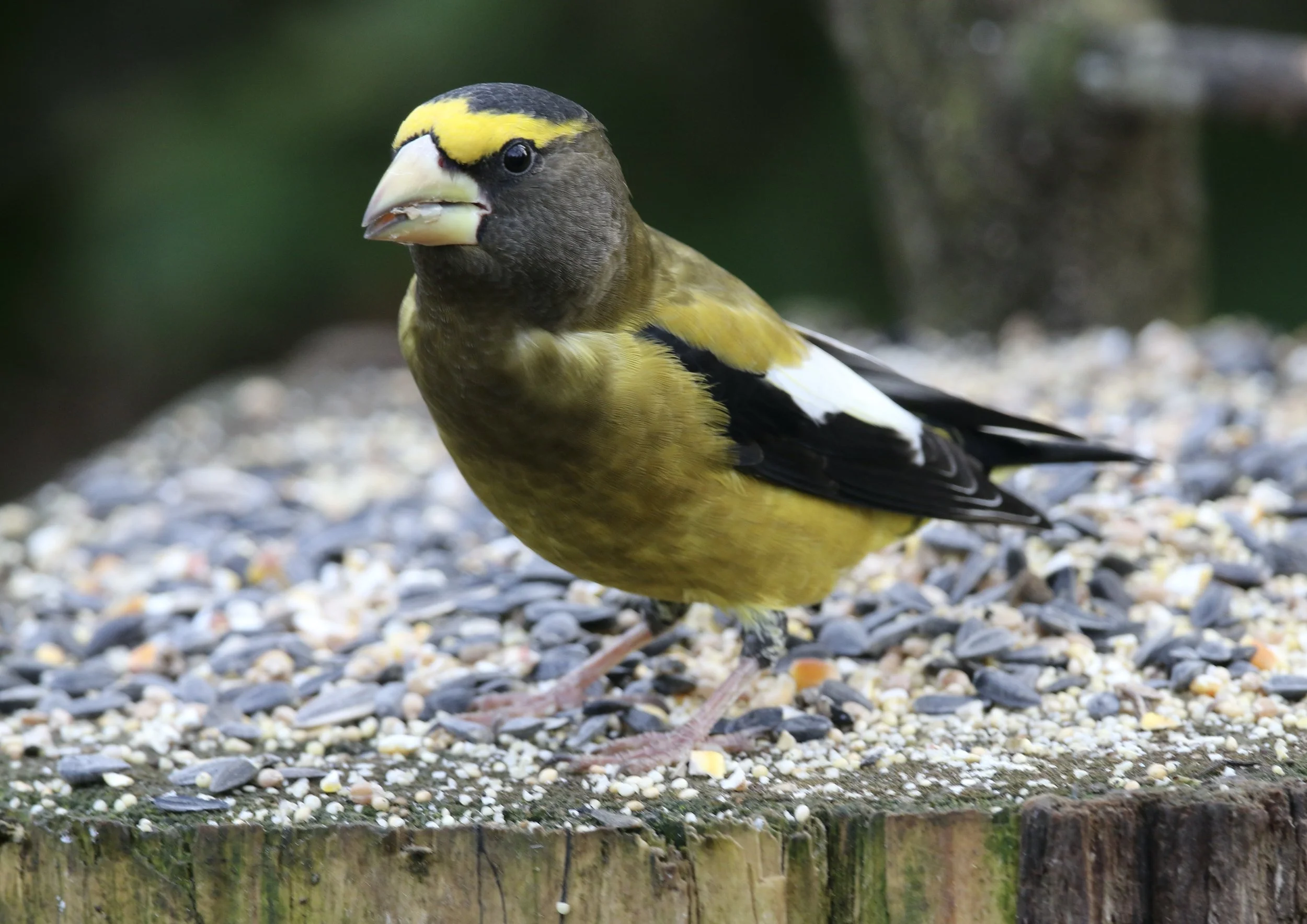
If you see a lot more Evening Grosbeaks this month, it’s because they aren’t finding the food sources they need in Canada. Photo courtesy of Leslie Clapp.
Scientists have documented that total bird populations across the world have been declining at significant rates in recent decades. A landmark 2019 study by the journal Science found that bird populations in the U.S. and Canada had fallen 29 percent since 1970.
Countering the national trend, the Christmas bird counts in the Blue Hill area have been growing over the last three years. Volunteers counted 5,439 birds and 68 species last year, up from 4,229 and 61 species in 2022.
Launched in 1900, the Christmas Bird Count is the longest-running citizen science survey in the world. Audubon officials say it is also the largest, but Holderby said that position actually belongs to the Cornell Lab of Ornithology’s eBird project, which has collected data from more than 1.1 million birdwatchers who use the eBird app on mobile phones to submit their bird count lists on an ongoing basis year round.
Holderby has enough volunteers to cover the area this year, he said, but anyone interested in signing up to assist may contact him at Z_Hold@hotmail.com. Anyone who wants to count should be prepared to spend most of the day in the field, he said.
Leslie Clapp, president of the Downeast Audubon Chapter, is coordinating volunteers for a separate part of the Christmas Bird Count, which collects data from people who observe and report birds visiting their feeders. Anyone interested may contact Clapp at DEAudubon@gmail.com.
