

The animal that gets a new coat—and a new name—every winter
Learn how to identify the tracks of the elusive ermine, and other animals
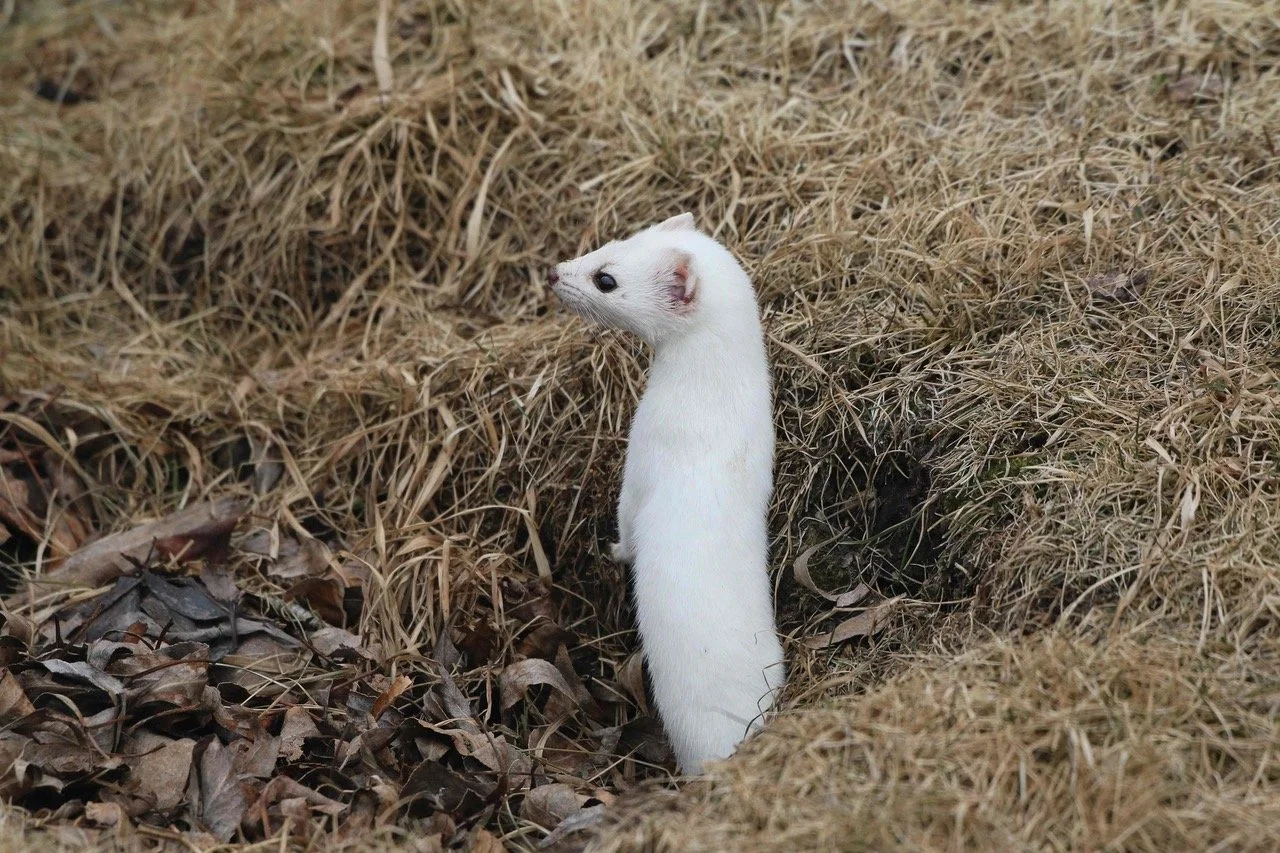
Don’t call this a weasel, at least in winter. Photo by US Fish and Wildlife Sercice / Ann Hough.
By Kimberly Ridley
During our first winter in Brooklin 30 years ago, my husband Tom called me at work to report a strange wildlife sighting. “There’s a skinny little animal in the woodpile,” he said. “It’s white with big black eyes and a pink nose. You gotta come check it out.”
At lunchtime, we scanned the snow-covered woodpile through binoculars. Nothing. I was about to give up when a pointy white face poked out from a chink in the cordwood. Big black eyes, pink nose.
I’d never laid eyes on this creature, but its name popped into my brain: ermine, also known as a short-tailed weasel in its white winter coat. That was the extent of my knowledge. I soon learned, however, that the weasel is perhaps nature’s most elegant mousetrap.
Tom and I stood spellbound watching the ermine ricochet around our woodpile. Less than a foot long from its nose to its black-tipped tail, it leapt to the ground and bounced across the snow toward our house. Its stubby legs seemed spring-loaded. To our surprise, it slipped under the cellar door and disappeared.
“What do we do now?” Tom asked.
“Wait, I guess.”
A few minutes later, the ermine reappeared with a mouse clamped in its tiny jaws. A lightbulb went off. This dazzling creature was after the gazillion mice we had inadvertently invited into the cellar by neglecting to cover a bucket of bird seed.
The mice disappeared within a week. So did the ermine, once it had polished off all the mice. I looked for its tracks (see this handy guide for identifying Maine animals) in the snow for weeks, but it had moved on in its quest to stay alive.
Weasels have a bloodthirsty reputation, but what seems like viciousness to us is survival for them. They have one of the highest metabolisms among carnivorous mammals in North America, second only to shrews. Their hearts beat 400 times a minute. Their long, skinny bodies, perfect for squeezing into rodent tunnels, are ill-equipped to conserve heat, thus putting them at risk for hypothermia despite plush winter coats. Consequently, a weasel needs to consume roughly one-third to two-thirds of its body weight every day.
That amounts to two or three rodents a day, or up to twenty per week, mainly mice and voles, along with chipmunk, squirrels, and the occasional snowshoe hare (a bit more on them later). As Bernd Heinrich notes in Winter World: The Ingenuity of Animal Survival, ermines don’t have permanent dens, as they typically take a post-dinner nap in the nests of their victims before resuming the hunt for their next meal.
In warmer months, weasels also will take small birds and their eggs, insects, amphibians and snakes. In most cases, they dispatch their prey with a quick bite to the back of the neck.
I can count on one hand the number of times I’ve seen an ermine since that winter day long ago. The best look was on a balmy January afternoon a few years ago. Rain the day before had melted the snow. I was hiking across a meadow when the matted grass in front of me began to ripple. There was no wind. Suddenly, an ermine in winter white popped out of the weeds less than 10 feet away. It stood on hind paws to scrutinize me as if to inquire, “And you are?” We stared at one another for a long moment. Either the ermine blinked or I did, breaking the spell. It bounded across the field like “a muscled ribbon” in the words of author Annie Dillard, leaving me to wonder whether it was truly fearless, or oblivious to the fact that its white coat in the snowless meadow had blown its cover.
Along with ermines, long-tailed weasels and snowshoe hares here in Maine also molt into white winter coats. Length of daylight—not temperature—triggers hormonal changes that cause them to turn white in winter and brown in spring. Warmer and less snowy winters spell trouble by exposing these animals to predators such as owls, hawks, coyotes, bobcats, and foxes.
It remains to be seen how climate change will affect our weasels and snowshoe hares. In some parts of the country, snowshoe hares are ditching their white winter coats. Researchers studying these animals in the Rocky Mountains have discovered that snowshoe hares carrying a gene from jack rabbits don’t turn white in winter, a trait that might someday help improve their odds for survival.
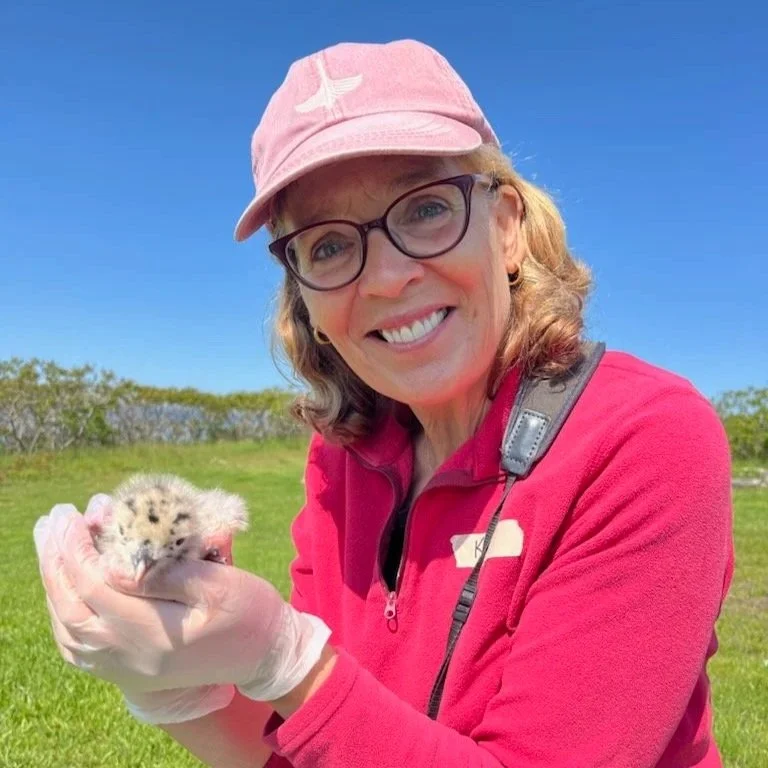
Brooklin nature writer Kim Ridley.
Here on the Blue Hill Peninsula, I’m always on the lookout for our remarkable wild neighbors on my winter walks. I scan forest edges, brush piles, and old stone walls and search winter fields for rippling grass revealing an ermine on the hunt. I look for snowshoe hares every time I find their tracks (see # 17) along the edges of their favorite hideouts in dense stands of young conifers. I’ve yet to spot one in its white winter coat, but I sometimes feel those dark eyes watching me, and send a silent greeting.
Maine native Kimberly Ridley is the award-winning author of six creative nonfiction books about the natural world for children and adults, including The Secret Pool and Wild Design: Nature’s Architects. Her essays and articles have appeared in numerous publications including Down East Magazine, The Christian Science Monitor, and The Boston Globe. She lives in Brooklin with the painter Tom Curry and their cat Andy. www.kimberlyridley.org
