

Adapting to the evolving blueberry landscape
For the first time in decades, W.R. Allen readies for retail blueberry sales, while a land trust is ‘getting our feet under us’ with blueberry land management.
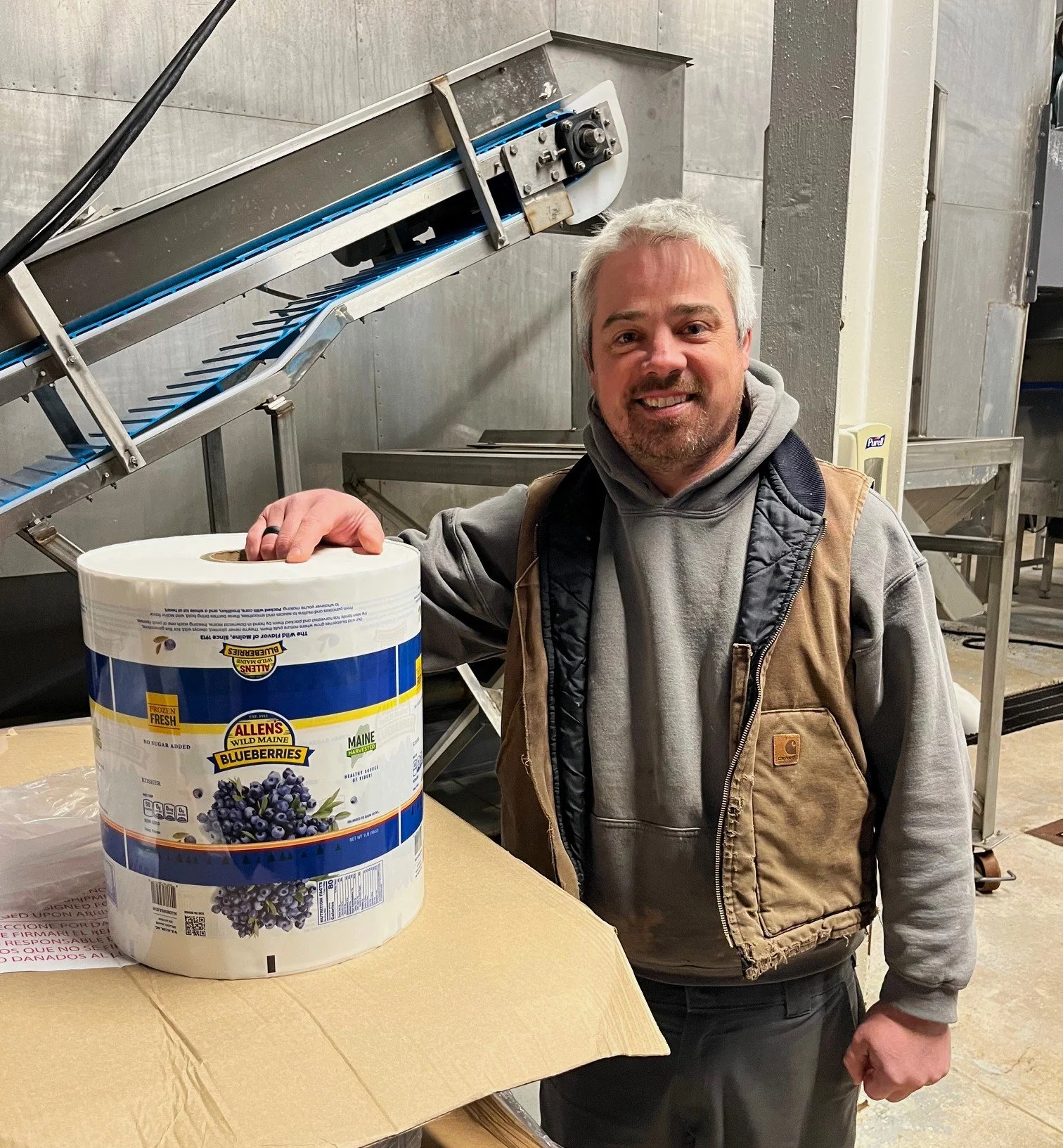
Simeon Allen, general manager of W.R. Allen blueberry growers, says the five-generation business is not a job, but a tradition. Photo by Steele Hays.
Jan. 7, 2026
By Steele Hays
Maine blueberry growers face a multitude of challenges–droughts, rising land values, labor shortages, insect pests, surging production costs and tariffs–but like the wild blueberry plant itself, they’re resilient.
Lily Calderwood, a wild blueberry specialist and associate professor of horticulture at the University of Maine, said she goes “back and forth, honestly” in her outlook for Maine growers.
“Six of the last 10 years have been droughts and there are a lot of farms that are really struggling,” she said in an interview. “But I still do believe that Maine farmers are resilient and they will continue to farm wild blueberries.”
Despite the challenges, the amount of land in blueberry production in Maine has remained relatively stable over the last 25 years at around 25,000 acres. More than 90 percent of the state’s production is in Washington and Hancock Counties with Hancock’s volume being about a third of Washington County’s. There were 6,143 Hancock County acres in production in 2022, the most recent year with county-level statistics available.
“It’s a culturally important crop across these towns,” Calderwood said. “So often, I get calls from people who say ‘I have inherited some family land and it’s been blueberry land for decades. How can we keep it in production and make it work?’ I hear that story over and over again.”
Simeon Allen, general manager of W.R. Allen, Inc., knows about that continuity through the decades. His family has been a leader in the industry for five generations.
“Growing blueberries in Maine is not a fulltime job, it’s a tradition,” Allen said.
Several factors are providing encouragement and hope to farmers. Federal assistance from the U.S. Department of Agriculture has paid for removing boulders, or “de-rocking” land, allowing for more efficient mechanical harvesting. Innovations in harvesting equipment provide cost-effective ways to harvest berries and address the shrinking pool of seasonal hand-rakers.
The federal support for de-rocking and land improvement “has been a savior to the industry in this area,” Allen said.
Fewer workers, more machines
Twenty years ago, Allen’s company employed more than 100 hand-rakers for each harvest season, he said. Now, they are down to 15 seasonal workers, U.S. citizens of Haitian descent who come to the area from their homes in Florida to pick blueberries, he said.
Growers have been steadily increasing their use of mechanized harvesting equipment, but in the last five years there has been a surge in innovation and significant improvements in equipment, both Allen and Calderwood said. One of the most promising technologies is a mechanized harvester made in Nova Scotia. At least 22 of the machines were used in Maine last year, Calderwood said.
Compared to tractor-mounted harvesters, the Nova Scotian device rakes a far higher proportion of the available berries and results in less damaged and bruised fruit, Calderwood said. The machine can be mounted to the front of a zero-turn riding lawn mower. A short video shows the harvester at work.
In addition to such innovation, many of the parts, tools and other equipment used by Maine blueberry growers are produced in Canada, and the recently imposed federal tariffs are increasing costs for growers, according to Calderwood. “That’s really impacting them,” she said.
Re-entering the retail market
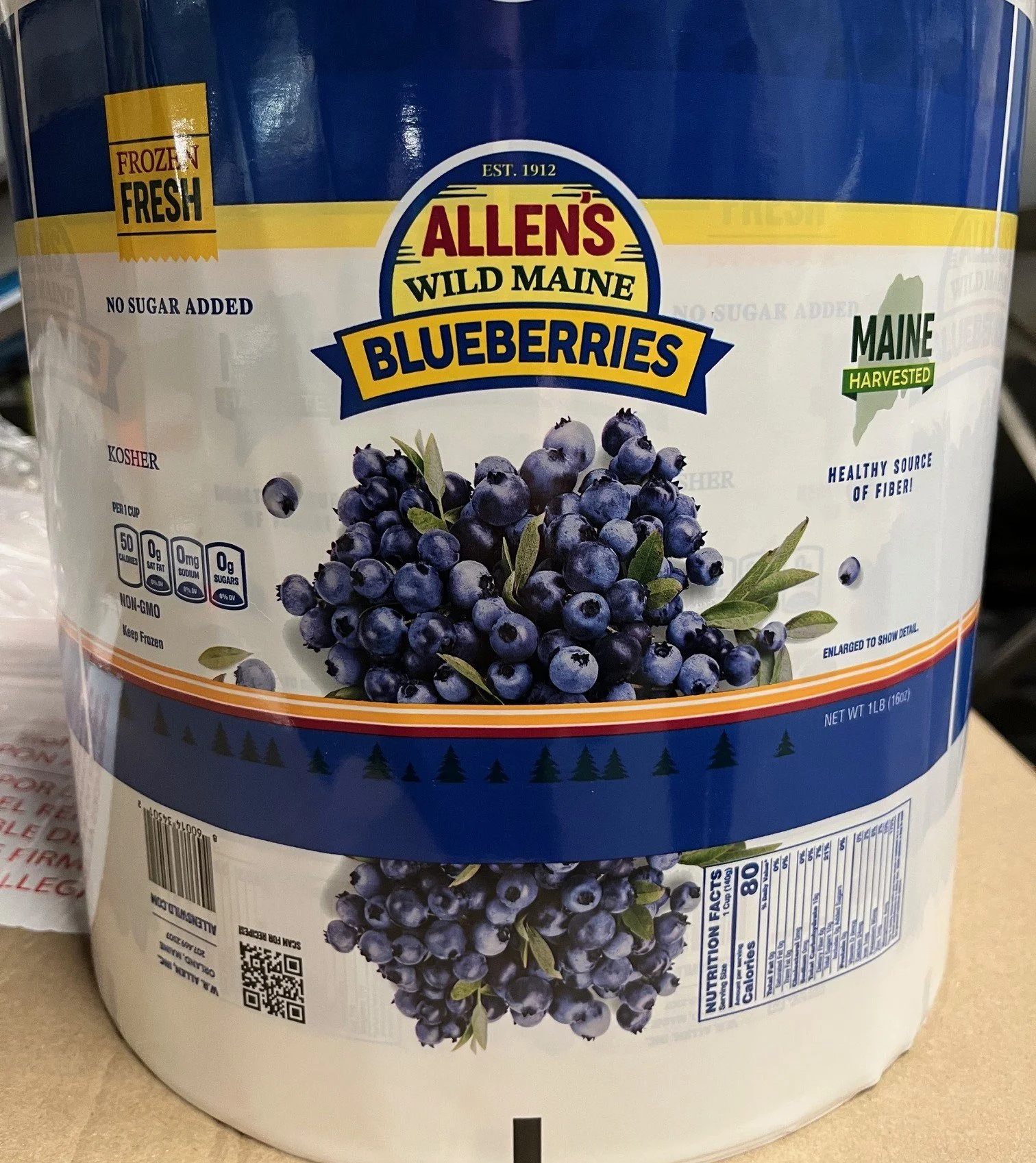
The new labeling for Allen’s blueberries, which will be sold to retail customers this year for the first time in decades. Photo by Steele Hays.
Allen said he remains optimistic for the future, despite the fact that in the past four years, “Mother Nature has been rotten to us.” Despite that, “When you have a good crop, you have a good feeling that you’ve done something right,” he said.
Part of Allen’s optimism for the family-owned business stems from a recent investment that “will allow us to continue to be in business for a long time,” he said.
The company recently purchased a high-speed bagging machine that will let workers process and bag up to 2,000 pounds of frozen blueberries an hour in retail-sized plastic bags of one, three and five pounds. This will mark the first time in decades that the company has sold blueberries to retail customers under its own brand. Since relocating its production operations from Sedgwick to Orland in the early 1970s and converting from canning to freezing, Allen has generally sold blueberries at wholesale to food distributors and other institutions in 10- and 30-pound packages.
Allen’s decision to re-enter the retail market “is a wonderful thing,” Calderwood said. “There’s a lot of opportunity for retail sales and especially meeting local market demand.”
“We hope for more stable prices from this move,” Allen said. “We think this will help us sell more berries and will help us sell Maine.”
Non-commercial fields
In addition to the thousands of acres still in commercial blueberry cultivation in Hancock County, local conservation organizations like Blue Hill Heritage Trust now own and manage hundreds of acres of blueberry barrens for recreational use by hikers, nature lovers and bird watchers. With their open scenic views of distant hills, islands, bays and lakes, blueberry barrens are an iconic part of the local environment
In recent years, BHHT has acquired several preserves that include significant blueberry acreage, including Wallamatogus Mountain in Penobscot and Cooper Farm on Caterpillar Hill in Sedgwick. The Wallamatogus preserve alone has more than 140 acres in blueberry land.
In addition, BHHT is expected to be the recipient of the 38-acre Salt Pond blueberry barrens in Blue Hill. That land was purchased by Blue Hill Community Development, a local nonprofit, for $1.8 million. Supporters who want to preserve the Salt Pond property say they will repay that cost, at which point BHCD will turn the land over to BHHT. (Full disclosure: The reporter for this story, Steele Hays, has been involved in that effort.)
Maintaining blueberry barrens is more expensive and labor intensive than maintaining forest land, according to BHHT executive director George Fields. Without periodic mowing, brush cutting and burning, the barrens will gradually revert to forest.
“We’re getting our feet under us with [the challenges of managing] these blueberry lands,” Fields said in an interview.
At Wallamatogus, “not everything will be kept open,” he said. Dozens of acres of former blueberry land on the southern edge of the preserve have already begun to return to forest and BHHT plans to allow that natural succession to continue.
The rest of the blueberry land on Wallamatogus will be kept open through a combination of periodic burning, mowing and brush cutting, Fields said. A portion of a federal grant BHHT received to purchase Wallamatogus is earmarked for those ongoing stewardship and land maintenance costs.
“Blueberry barrens are a unique wildlife habitat and they’re part of the tradition of this area,” Fields said.
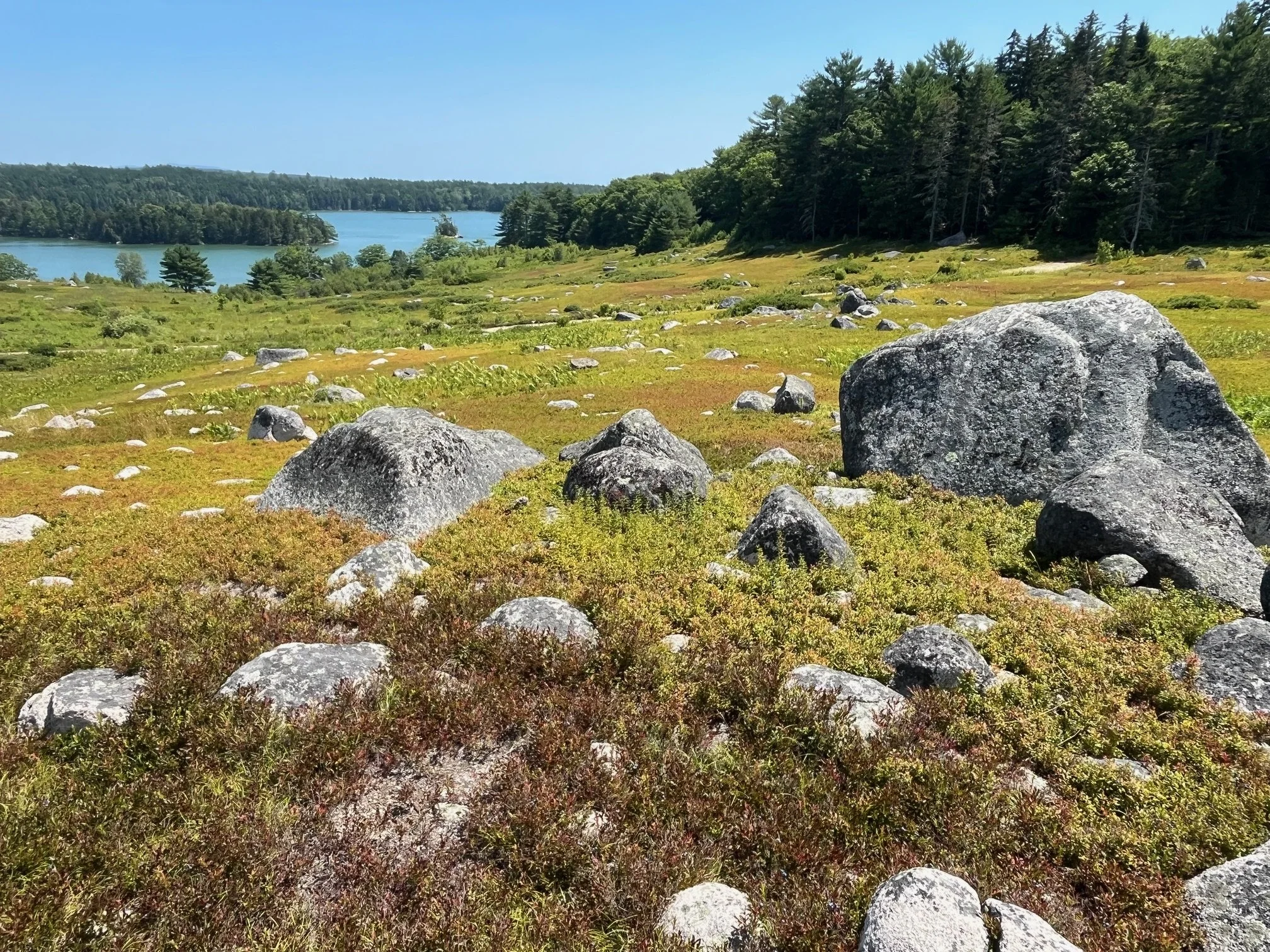
The Salt Pond blueberry barrens in Blue Hill. File photo.
