

GSA broaches town contract initiative to ‘provide enrollment stability’
Town academy offers board seats to towns that accept contract offer
Jan. 14, 2026
By Tricia Thomas
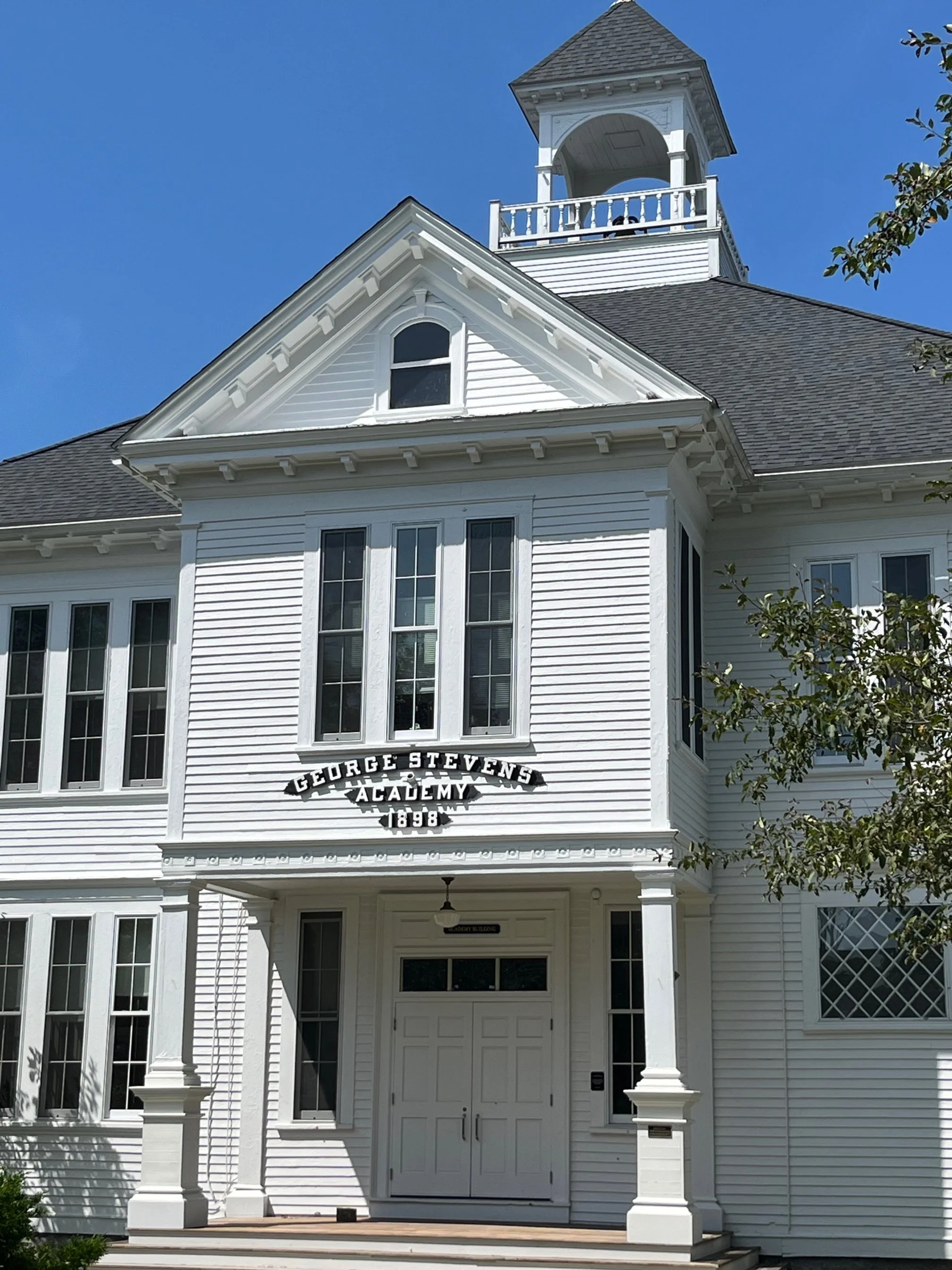
BLUE HILL—George Stevens Academy is signaling to local towns that it wants to discuss entering into contracts with municipal governments for educating local students, a move the school says would “provide enrollment stability.”
In a Jan. 9 letter sent to local select boards and obtained by The Rising Tide, GSA board chair Deb Ludlow broached the idea of a contracting discussion with towns.
“Town contracts provide enrollment stability that benefits both GSA and our partner towns, ensuring predictable educational planning and reliable budgeting for all parties,” Ludlow stated in her Jan. 9 letter. “We believe this partnership model represents the strongest path forward for sustainable, high-quality education on the Blue Hill Peninsula.”
The letter was emailed to all seven of the so-called “sending towns” of Blue Hill, Brooksville, Brooklin, Sedgwick, Orland, Penobscot and Surry.
Currently, parents may choose to use their towns’ tax-funded tuition money for schools other than GSA. In recent years, an increasing number of students have chosen to attend schools other than GSA.
While its halls were once filled with 350 high schoolers, enrollment has dropped to 205 students today. Of the seven sending towns, 122 students–37 percent of area high school students–attend schools other than GSA, a statistic confirmed to The Rising Tide by school officials this week.
Contracts with towns could restrict tax-funded tuition money to only GSA tuition.
A private town academy that serves as the de facto high school for Blue Hill and surrounding towns, GSA has been struggling with declining enrollment and budget shortfalls in recent years. To help cover the shortfalls, GSA has asked sending towns in each of the last five years to chip in additional funds over the state-allowed tuition. Last year, GSA sought and voters approved a supplemental tuition request of $1,700 for each student they send to the school.
The same letter also said the school board of trustees voted in December to reduce the amount of supplemental tuition it has sought over the past several years. The letter said the school would this year ask for $1,530 in supplemental tuition from towns for each enrolled student, a 10 percent reduction. The school also said it would continue to reduce that supplemental tuition fee each year by an additional 10 percent for the next three years “as a demonstration of GSA's continued commitment to fiscal responsibility and partnership with our sending towns.”
According to Ludlow’s January 9 email, towns that enter into a contract with GSA would also be given one seat on GSA’s board of trustees and would not need to pay supplemental tuition for new students.
“If successful, we will reserve a seat on the Board for a representative in each sending town along with a promise to eliminate supplemental tuition for each new enrolled student at GSA,” the email stated.
Days later, on Jan. 13, and after word had begun to spread among local residents and on social media about the potential move toward contracts, GSA trustees sent a second correspondence to the towns “in light of misinformation that has surfaced,” emphasizing that talks on the plan are in the beginning stages.
“While we are pursuing town contracts with some sending towns in the coming months, we emphasize this is only the beginning of conversations with town and school officials and our sending communities. It is our intent to gauge community support first before negotiating any town contract. We do not wish to enter any contract without the majority support of our sending communities,” Ludlow said. “Once community support is assessed, we will work with town and school officials to schedule collaborative negotiations.”
Neither email provided details on how the proposed plan would work, or how families on the peninsula would be affected, except for an intimation that local students already enrolled at other high schools would not be asked to transfer back to GSA.
“As educators first, we would never mandate the interruption of a student’s educational experience,” Ludlow said in her Jan. 13 email to towns.
The school has announced that it would hold a Jan. 15 press conference on the matter.
Ellen Best, chair of the Blue Hill select board, announced the board’s receipt of the Jan. 9 letter at its regular public meeting on Jan. 12. While no details on the plan were provided, any such plan would require voter approval, Best said.
“That’s the whole problem with what was given to us, in a nutshell right there. There’s no detail,” Best said.
After a brief discussion, Best and select board member D. Scott Miller recommended waiting to act until more information became available.
“They’ve let us know that they will be pursuing town contracts, and I think we and the school committee should stand by and wait to hear a proposal of more than five sentences,” Miller said.
The two emails follow an announcement from GSA in mid-December that it will cut about $325,000 worth of jobs by the end of the current school year. Both school head Dan Welch and board member Kate Stookey said then that increasing enrollment and stemming students’ exodus to other regional schools are key to the school’s financial stability and path forward.
“Significant dollars are flowing off of the peninsula to other high schools, and those dollars are then not being invested in our community’s high school. That’s part of the enrollment conversation that we need to have with sending towns,” Stookey said.
