

Medicine: A short story
A tale of family in an era of tuberculosis, from a Deer Isle writer
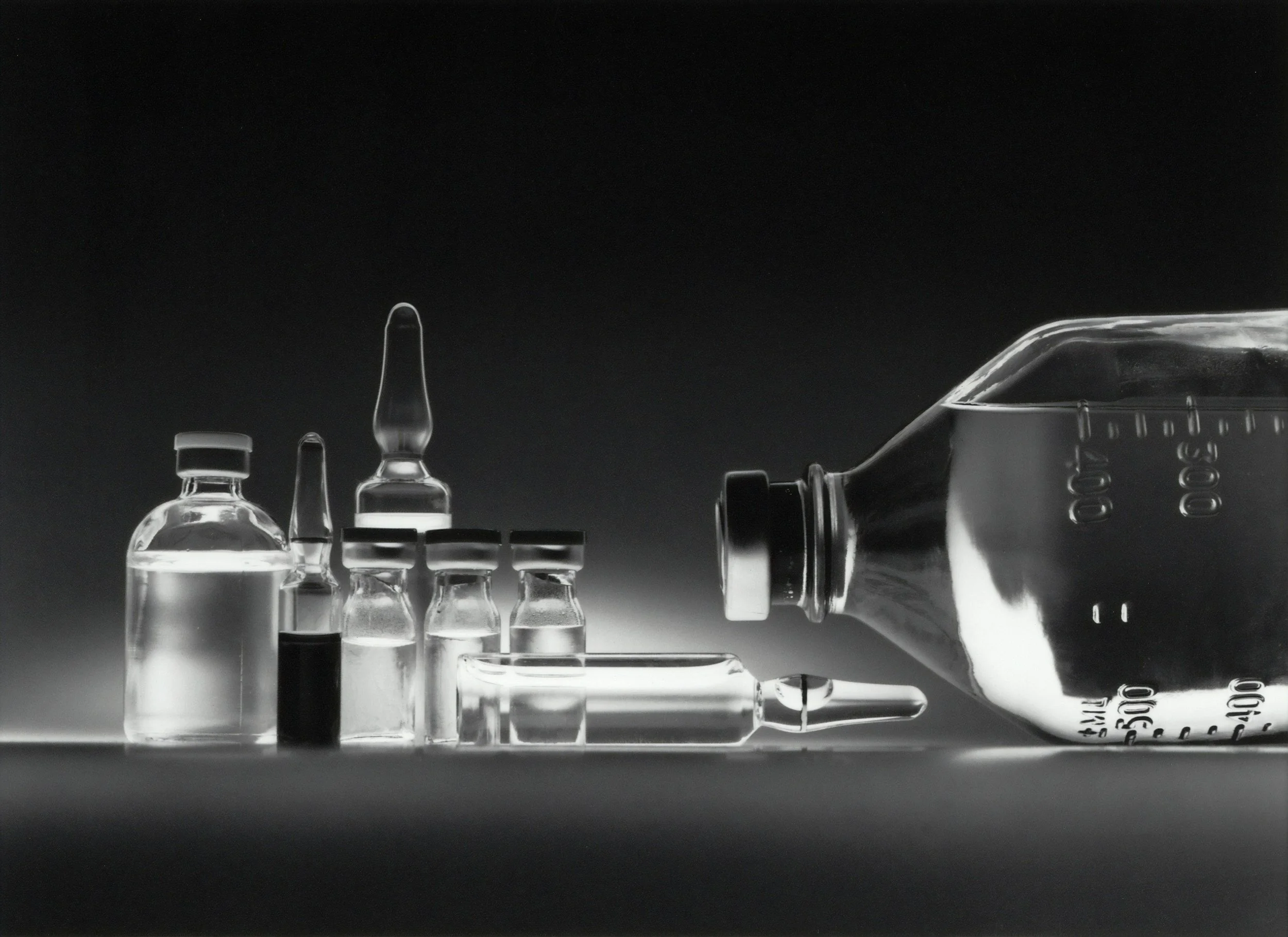
Photo by Unsplash
Oct. 26, 2026
Medicine
By Cynthia Dockrell
Herbert left his sister’s coffin in the parlor and lugged his doctor’s bag up the stairs. His feet still remembered which steps groaned the loudest, and he dodged them without thinking. As he climbed, it all came back: the phantom smells of soup and damp diapers; that dent in the plaster where Peter had once swung at him and missed; the tapping of Kathryn’s feet as she taught herself a dance; then the real sound, Peter’s rhythmic coughing.
He paused at the bedroom door, wondering how he was to treat his brother—this brother especially. In the heavy air of this cramped hallway, his muscles began their faint insect twitch.
He knocked and let himself in. Peter was half-sitting, half-lying on the bed by the window; even from here, Herbert could see the fever shimmering in his eyes. “Hello, Peter,” he said. The room, which the two of them had once shared with the younger brothers who still occupied it, seemed even smaller than the last time Herbert had been here.
“Hello yourself,” said Peter, making no attempt at a smile. He pushed himself up as Herbert approached, his eyes on the bag. “Look at you. Mother’s little doctor. Come up here to save me, huh?” Talking made him cough, and a moment later he was doubled over, a handkerchief pressed to his mouth.
Herbert sat on the other bed and waited. When the coughing subsided, he said, “Maybe I can check your pulse, at least.”
Peter held out his hand, the handkerchief balled in his fist. Beneath the hot skin, his pulse was slow but strong enough, hardly a surprise given how powerful he was. Peter stood half a foot taller than Herbert and outweighed him by at least fifty pounds.
When Herbert let go of his wrist, Peter’s hand relaxed, and the handkerchief opened out of it like a blood-streaked flower.
Herbert stared at it for a moment and then looked up at Peter. “How long has that been going on?”
“I don’t know.” Peter waved the bloody cloth in the air. “What difference does it make now?”
Herbert opened his bag and pulled out his stethoscope. “Can I listen to your lungs?”
Peter shrugged and turned with effort. Herbert barely needed the stethoscope to hear the rales in his lungs, but he asked his brother to take a deep breath anyway. He could manage only one before another bout of coughing took hold. Herbert removed the stethoscope and exchanged it in his bag for a syringe and a vial of phenobarbital. “This will calm the coughing so you can sleep,” he said as he filled the syringe.
Peter swatted at it. “I don’t want that.”
Herbert forced himself to look Peter in the eye. “I think you do.”
He got out the alcohol and soaked a cotton ball. Peter tensed his biceps but didn’t resist now as Herbert quickly swabbed his skin and dispensed the drug. As the barbiturate took hold, Peter’s pupils slowly constricted, his chest settled into steady respirations, and the red splotches that just minutes ago were climbing his neck faded away. Herbert could feel the fight going out of him.
He took advantage of the moment. “I know Mother convinced you to come back home so she could take care of you,” he said, “but you should be in a sanatorium. You need expert care. And you’ll infect the others if you stay here. You probably already have.”
“Tell that to Mother,” Peter said, his eyes working to stay focused. “She thinks if I go away that’ll be the end of me for sure.”
Herbert sighed. “She ought to know better after what happened to Agnes. I’ll try to speak with her.”
“Do what you want.” Peter’s voice was slow and thick, the medicine pulling him away.
“And you try to sleep,” Herbert said, but there was no need. By the time he’d put everything away, his brother was already out.
He picked up his bag and stepped quietly from the room. From downstairs he heard the clamor of his family as they greeted neighbors and others who had come to pay their respects. Someone was sobbing—one of Agnes’s many friends, no doubt. The voices, pitched higher than usual, floated up the stairs and surrounded him. He stood there a moment, gathering himself, and went down.
People were crowded everywhere, in the parlor, the hallway, even the kitchen. The house was already too small for the large Barnes family, much less these numbers Agnes’s wake was bringing in, and the air was stifling. An old, familiar panic stirred in Herbert’s chest. It had dogged him forever, this feeling that he was suffocating. He had felt it every day of his childhood, in the bedroom he’d shared with too many brothers, in the classrooms at St. Ann’s where the expectations had nearly smothered him, at the dinner table where his siblings got less than they needed because the family wages were being set aside for his education.
The smart one, he was. So they all said. The smart one who’d lived.
He made his way into the parlor and over to Agnes. The oldest of his seven remaining siblings, she’d also been the kindest—the one who’d defended him against the others’ resentments. “Someone in this family should have a chance,” she’d said, even as she’d missed her own, traipsing off to work every day, her life halted now at thirty-three. In death she was oddly lovely. Lying in her coffin on two kitchen chairs, her face as white as the pillow under her head, she looked almost better than she had in life. There was no strain in her face now; her brow was smoothed out, her mouth set in a death-smile.
But the body still smelled of animal hides, the earthy reek of it little better than the decay it masked. There had always been that smell to Agnes, even after she’d scrubbed herself raw, no concealing that she worked at the shoe factory down the hill. Herbert wondered how the few suitors who’d courted her had stood it. But of course they smelled of their own factories—machine grease, paper pulp—just as Herbert’s brothers did, and his other sisters, with their odors of tobacco and wool. A stench to all their lives. Only he had escaped it.
His mother came in from the kitchen and took up her place by the body. She’d been there all day and would stay all night, Herbert knew; no amount of coaxing would send her to bed. And yet she had shed no tears. It was God’s will, she said, you had to accept it. Herbert’s father had bellowed that in that case God was a bastard, but she was impervious, her fingers working the rosary around and around. There was no sign of Herbert’s father now. Unable to stand a whole day of this, he had stolen away to Lynch’s, to that back room where you could get the bootleg liquor. His brothers had disappeared too, leaving Herbert alone with all these women, their desolated faces pleading with him somehow, as if they thought he should fix this. As if any doctor could do that.
“Come,” said his mother, patting the chair next to her, “sit with me.” Her feet hung an inch from the floor; she could have been a child on a swing waiting for a push if it weren’t for the worn-out look to her. When he’d arrived earlier, Herbert had been shocked at how old she had become. Six months had gone by since his last visit home, a lapse that shamed him even as it was happening (how easily they’d accepted his excuses—too busy, so many patients, when in fact his practice was failing after two short years), but that shame was nothing next to the hunger that bit off more of him every day.
“Tell me about Peter,” said his mother. “Will he be all right?”
“He’s very sick, I’m afraid,” Herbert told her. “I gave him something to help him sleep, but I can’t do much more than that.”
She twisted sideways to face him, the rosary beads clicking in her fingers. “He just needs to rest, surely.” Her eyes were pleading. “He’s been working too hard.”
The room was so thick with people that they seemed to be stealing all the air. Herbert loosened his tie and unbuttoned his collar, though it did little good.
His gaze fell on the coffin. “Peter has TB, Mother. I think you know that.” He stared at Agnes’s chest, could almost see the devastated lungs. “I’m sorry.”
The beads went quiet beside him.
He closed his eyes, waited a moment, then turned to her again. “Peter shouldn’t be here, Mum.” He took her hand, dry and burled from the years of use, his own soft hand an embarrassment next to it. “He needs to go up to Glencliff. If he doesn’t, he’ll make everybody else sick.”
“No one else here is coughing.”
“Not yet. But Bernard and Charlie might already be infected, sharing that room with Peter.” He looked at the coffin again. “And the girls, too. With Agnes.”
“This is Peter’s home,” his mother said. “His first home, before he went off on his own. I won’t turn him out.”
“Of course not.” Herbert squeezed her hand. “But he’s stuck upstairs in that room. If he goes to the san he’ll be able to move around, talk to the other patients, take the air. It’s not a bad place.”
“But he won’t come back. I know it.”
“Of course he will.” Sometimes Herbert hated himself for the lies he could tell.
“I can’t lose him too.”
Two siblings had come and gone before Herbert was born—the boy who’d lived for an hour, the girl lost to a fever at three. And Herbert would never forget Michael—the third brother, their father’s favorite, the family star—who’d died of TB at fifteen, back in 1912. Somehow the rest of the family had escaped the disease then, but now here it was again, thirteen years later.
“It’s God’s business and not mine,” said his mother, “so I try not to think about it. But it’s like a sin, tempting me. To ask why He gave me all these children only to take them away.”
Well, Herbert thought, Dad is right. The heat was inside him now, cooking his very blood. God is a bastard.
His mother yanked her hand away. “I won’t have that from you.”
So he’d said it out loud. One of his lapses. “I’m sorry,” he muttered.
His mother took up her beads. “But God also gave me you.”
Herbert tried to listen to the other sounds in the room—the rustling of clothing as the mourners drifted about, their sniffles and whispers as they peered into the coffin—but his mother’s voice was too close to ignore.
“Peter doesn’t need Glencliff,” she said. “You’re here now.”
The room began to shrink. Herbert could feel the unoccupied space, what little there was, being squeezed out like water from a rag. In a moment, every object, every person, would be touching him. His skin began to itch.
His mother nodded at Herbert’s bag. “And you have your medicine.”
Everything around him was so close he could smell it—lilac, pine, bodies living and dead. Nausea, that unwelcome companion, bloomed in his stomach.
He reached for the bag and stood. “I need to take a walk, Mother. Get some air.”
He hurried toward the door, or tried to, but there were too many people to weave through. As he inched away, his mother’s voice stayed with him. “If only you could have come in time to save Agnes.”
*********
Outside, the air was still warm even though the sun was sinking. Herbert set down his bag and took a few deep breaths to calm his stomach, then removed his jacket and tie and draped them on the porch railing—the porch his father had built, along with every other inch of this house. How familiar it all was: the small yard, which had been so trampled during Herbert’s youth that the grass had grown like the fringe on a bald man’s head; the next-door neighbors’ houses so close you could smell what they were having for supper; the whole street a tight line of tired houses, their windows looming like giant, watchful eyes. At least they were at something of a remove up here on the hill. All of Manchester was spread out below them, the dirty Merrimack snaking alongside the red-brick mill buildings that stretched from end to end. Herbert thought about walking down there, but his legs were beginning to ache, and the climb back up would exhaust him. There was nothing down there for him anyway.
He picked up his bag and went around the house to the barn. His father had built this structure as a garage, but there had never been a car to put in it, not even a buggy when Herbert was a boy. So his father had saved face by giving it another name and using it for another purpose. Herbert swung open the door and stepped inside. The air was hot and stuffy and smelled of plaster. Within seconds he was sweating.
He sat on the big bag of plaster pushed up against the wall and waited for his eyes to adjust. In the dim light, the objects began to take shape—the massive wooden table his father worked at, flaked all over with dried plaster bits, his chisels and knives scattered across the surface, the little round stool a dwarf beside it. Against the far wall were the figures. Lined up three and four deep, they stared at Herbert with their disturbing eyes. His father’s obsession, these Indians and soldiers and angels, which he sculpted out here when he wasn’t plastering walls in town or killing time at Lynch’s. He’d started making them right after Michael was buried, staying out here all night sometimes, carving and sanding until his hands gave out. Herbert’s mother had tried to coax him inside, but he was deaf and blind to everything, even to Herbert when he would sneak out here and watch. Herbert’s hands had flexed with desire—to sink to the elbows in that wet plaster, spread and swirl it into some kind of form, sand it smooth, chisel it to perfection—until the night his father came out of his trance long enough to say, “Leave me be.”
Herbert stood and made his way across the dirt floor. He could see perfectly now, as if his eyes were providing the light. He passed the table and the barrel where his father mixed the plaster and stopped in front of the statues. None of them were more than a few feet tall, and he squatted down to see them better. His father had crafted the bodies with great skill, their proportions and even the folds in their clothing life-like—so surprising of a man untrained, barely literate. He had taken special care with the angels, whose wings were so beautifully textured that Herbert could almost see them moving. How he longed to make such a thing himself, to render life rather than minister to it. He ran his hand over the angel in front; even in this stuffy heat, the wing was cool and smooth as a river stone. But the angel’s face was mournful. It wasn’t just the eyes, whose pupils had been chiseled out; it was the brows pulling upward like a taut bow, the delicate mouth silenced. The angel’s essence seemed to be trapped there in its face. The same thing was true of every figure here. And it was the same face on every body. Michael’s face.
Herbert stood and backed away a few steps, running his eyes over the whole collection. The nausea hit him again, and his ears began to ring, as he chided himself for coming out here. Why confront all this? It wasn’t just his father’s grief, so manifest in these faces, it was his own memories living inside these crude walls. He and Peter and Michael had made this barn their headquarters when they were boys; it was where they hid from their sisters and plotted against the Whelan brothers, where they blackened their faces with coal from the stove to scare the little kids at Halloween. But that was when Herbert’s brothers still looked up to him—before Michael’s brilliance, and their father’s favor, outshone everything else, before Peter’s jealousy grew along with his strength, before Herbert shrank inside himself. After Michael was gone and Herbert took his place as the one who would become a doctor, whether he wanted it or not, he could never recapture that feeling of being in charge. Or even of owning his life.
Sweat began dripping from Herbert’s temples, and his legs grew heavier with their aching and itching. He leaned against the table and mopped his face with a handkerchief, then opened his bag and groped inside it as the statues watched him. “I’m sorry,” he told them.
“Who are you talking to?”
He turned and saw Kathryn silhouetted in the doorway.
“What are you even doing out here?” she asked him.
He slapped the bag shut. “I came out to get some air.”
“Air? It’s stifling in here.”
“It’s worse in the house,” he said, hearing how feeble that sounded.
“Well, too bad for you. Mother sent me to find you. You have to come back.”
“I’m not hiding out here, if that’s what you think.”
“No,” she said, “it’s Peter. He’s worse.”
“But I gave him a sedative. He should still be asleep.”
“Maybe it wore off. He’s awake, talking nonsense. Come on, you need to help.”
She started toward the house, but when he didn’t follow she came back and waited. He pushed himself away from the table and ran the handkerchief over his face again. His eyes were starting to water, and when he paused to wipe them she must have thought he was wiping away tears. “I know,” she said, her voice breaking. “I miss her too. At least after today we won’t have to see her like that anymore.”
He picked up his bag and followed her up the little hill to the house. Through the screen door he could hear Peter’s voice, deep and slow but awake nonetheless. Herbert must have given him too little of the barbiturate earlier. Such carelessness.
“Up there,” Kathryn told him when they got inside, though he could see for himself that Peter was sitting on the floor at the top of the stairs. His mother and his sister Irene were hovering over him, trying, and failing, to lift him to his feet. The visitors who were lined up in the hallway kept glancing up there and then looking away. Herbert tried to take the stairs two at a time, but he felt sick through and through now and his legs wouldn’t cooperate. Behind him, Kathryn asked what he was waiting for. “Sorry,” he said. Sorry again. Always sorry.
“He isn’t making sense,” said Herbert’s mother when he and Kathryn reached her. “He came downstairs. Fell down the last few, I could hear people gasping out in the hall. Then he came into the parlor. Looked down at poor Agnes and started mumbling.”
“I tried to lead him back up to bed,” said Irene, the color gone from her face. “This is as far as we got.”
Herbert told his mother and sisters to help lift Peter by the arms while he wrapped his own arms around Peter’s torso. The effort of pulling him to his feet made Herbert’s stomach lurch, and he had to fight not to retch. His head pounded as they shuffled and dragged Peter into his room; when they lowered him onto the bed, Herbert all but fell onto it himself. He held the mattress with both hands until his arms stopped trembling and he could lift his head.
Peter rolled onto his side and muttered something that sounded like “bad.”
Herbert’s mother bent down and stroked Peter’s hair. “What’s bad, son? Does something hurt?” They waited for an answer, but Peter simply coughed.
She moved away from the bed and took Herbert aside. There was fear in her face now, something Herbert had rarely seen in his small, sturdy mother, and it made her seem even smaller. “Is it the fever,” she asked, “making him delirious?”
He decided to let her think so; no point in revealing that he’d miscalculated on the medication earlier. “I’ll try to bring the fever down,” he said. “Why don’t you leave him with me.”
She nodded and left the room, Irene and Kathryn behind her.
Herbert picked up his bag and closed the door. He took a few deep breaths, willing his stomach to calm and his heart to slow. Peter, silent now, watched Herbert walk toward the bed, his feverish eyes suspicious, maybe even fearful.
“You’re with me, then?” Herbert said. He sat on the other bed and waited for Peter to say something, anything, to show he knew where he was, but his brother simply stared at him.
“I’m going to check your pulse again, Peter,” Herbert said. “Is that all right?” He leaned across the space between the beds and placed his fingers on Peter’s wrist. The rhythm wasn’t as strong as before; Peter’s blood pressure was probably down, but there was no way to check it here. Herbert looked at his watch, had barely begun to time the beats when Peter said, “I didn’t mean it.”
Herbert looked up. “What didn’t you mean?”
Peter blinked, struggled to focus. “To kill him.”
Herbert let go of the wrist. “Who?”
Peter was looking past Herbert now. “Michael.”
This was the phenobarbital talking, Herbert suspected, however much of it was left in Peter’s blood. He decided to play along rather than agitate his brother further. “I know you didn’t.”
“I took him in there.”
Herbert felt for the pulse again. “Where was that, Peter?”
“Sullivan’s.”
The cigar factory, where Peter had been working since he was sixteen. “You showed him what you did there?” Herbert asked.
“Showed him my stinking life.” Peter was laboring to breathe now. “So he could see how good he had it. Dad’s smart little pet. Made me sick.”
Herbert felt his face flush. His heart was working too hard, his sympathy for Peter all mixed up with old guilt and fresh craving. “I know.”
“I stuck a cigar in his mouth. Then another one and another one. Rammed them down his throat. Made him choke.”
Herbert tried to see it, Michael following Peter into that noisy, reeking building, only to become a victim of his own good faith. “Maybe you thought that would be funny,” he said.
Peter looked straight at him. “They were dirty. Those cigars. Danny’d rolled them.”
Herbert looked away, down at his hands, which he saw were trembling. Danny had been stationed at the rolling machine next to Peter’s and had died of TB a few months before Michael fell ill. It had seemed so mysterious at the time, how Michael had become infected, but it all added up now. The factory’s windows were kept closed at all times, even on the hottest days, so the tobacco wouldn’t dry out, and disease swept through it like fast-moving weather. It cut down the most vulnerable workers—the least healthy, the young—in waves. Michael himself must have figured it out, but he never let on, never gave Peter away.
Herbert took out his handkerchief and wiped his sweaty face and runny nose, then looked again at his brother. “You couldn’t have known, Peter. What would happen, I mean.”
The fog seemed to lift from Peter’s eyes. “But it did.”
The nausea was creeping from Herbert’s stomach into his throat. He had to move quickly now, before the shakes got hold of him. “That’s all behind us,” he said to Peter. “Right now we need to make you comfortable.”
He filled another syringe with sedative, forcing his hands to hold still while he carefully measured 120 milligrams, and swabbed Peter’s arm. Peter watched the needle go in, then looked up at Herbert. “I’m next,” he said. “When you see me again I’ll be stretched out in the parlor like Agnes.” He let out a single, wheezy laugh. “That’s only right, huh? Paying for my sin.” His eyes clouded over again and slowly drifted shut.
Herbert settled Peter’s head onto the pillow and covered him with the worn bedspread. Then he crossed the room and locked the door.
********
It had grown dark, and he’d hardly noticed. But he could see fine. That was one part of him that never suffered—his eyesight. No need to turn on the lamp; the starlight was enough.
He sat on his old bed, Peter’s sleeping form so familiar beneath the window, and reached for his doctor’s bag. Its contents were calling to him now. He hoisted the bag onto his lap and pushed his trembling hand inside it, his practiced fingers searching blindly. There it was—that cool, smooth bit of glass. He held up the morphine and admired it for a moment: such tiny bottles it came in. So beautifully deceptive.
He rummaged in his bag for the rest of his equipment. Working quickly, he filled the syringe, tied the tourniquet around his arm, and inserted the needle into the raised vein. It took mere seconds for the medicine to reach his brain, but as always that moment felt endless, the wait worse than all the pain that had come before it.
But then … there.
The aching in his legs dissolved, and he felt his head grow light. The itch left him. He lay back and watched the night through the window, the stars pulsating in the darkness. How beautiful it was. A breeze fluffed the curtains and traveled across the room, cooling his damp skin. Such comfort, this. Nothing else would ever come close.
He sat up, almost weightless now, and removed the tourniquet, buttoned his sleeve. In the pocket deep in his bag that he’d set aside for this purpose, he hid the morphine bottle and the used syringe, and then stood and stretched. The stars, the moonlight, the sweet summer air—all of it filled him. He lingered there with his arms raised, the relief he was feeling, and his gratitude for it, moving him almost to tears. If only it could last.
But he wouldn’t dwell on that.
He straightened his clothes and drifted across the room, pausing in front of the ancient, scratched mirror to comb his hair. He could hardly see himself—he was just a shadow—but it didn’t matter.
Taking a deep, clean breath, he unlocked the door and opened it. The house was still full of people, and as he stepped into the hall, their voices once again rose up to meet him. But they didn’t touch him anymore, and he headed down the stairs to float above them.

—Cynthia Dockrell is a retired editor who worked at The Boston Globe and The New England Journal of Medicine, among other publications. Several of her short stories have appeared in literary journals, and one was nominated for a Pushcart Prize.
Her short story, “Medicine," was inspired by her great uncle, who against all odds became a doctor but later succumbed to addiction.
“Tuberculosis plagued his family as it does in the story, but as far as I know he never attempted to treat any of his brothers or sisters. That part is entirely invented,” Dockrell told The Rising Tide.
