

Peninsula potters show their wide diversity of processes during tour
A look at the varied local kilns that carry on the area’s ancient tradition of pottery
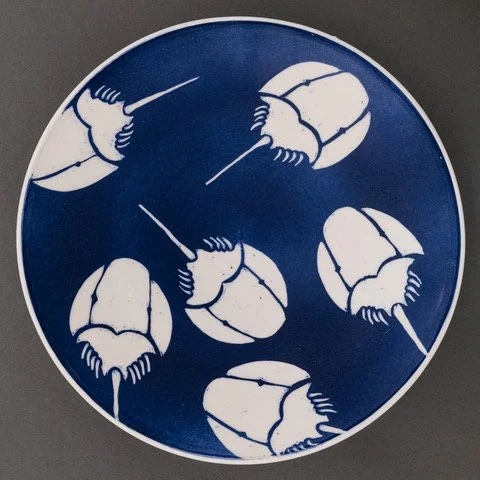
A piece by potter Lansing Wagner. Courtesy photo.
Aug. 5, 2026
By Marilyn Eckberg
Local artisans held the 25th Annual Blue Hill Peninsula Potters Tour on Aug. 1-2, a self guided exploration of ceramic studios stretching from Penobscot to Deer Isle. This guild of local clay artists shut down their kilns, tidied up their studios and displayed their work for show and sale.
I spent the better part of two days driving from studio to studio, following the well-organized tour map, and chatting with clay artists about their inspiration and processes.
We know from archeology that people have been making pots on this peninsula for thousands of years. Artists I spoke with recognized this amazing history, and remain excited by the creative possibilities of fire hardened clay.
Ellen Sedgwick Pottery in Surry stays close to the basics of clay work. Twice a year she packs a Japanese-style, wood-fired anagama kiln with hand-built and wheel-thrown pieces. It takes a crew four to six days to load and burn enough cords of hardwood and pine to get the temperature up to 2,350 degrees and keep it there. The payoff is the unexpected surface of her stoneware and porcelain enriched by the effects of raw flame and wood ash.
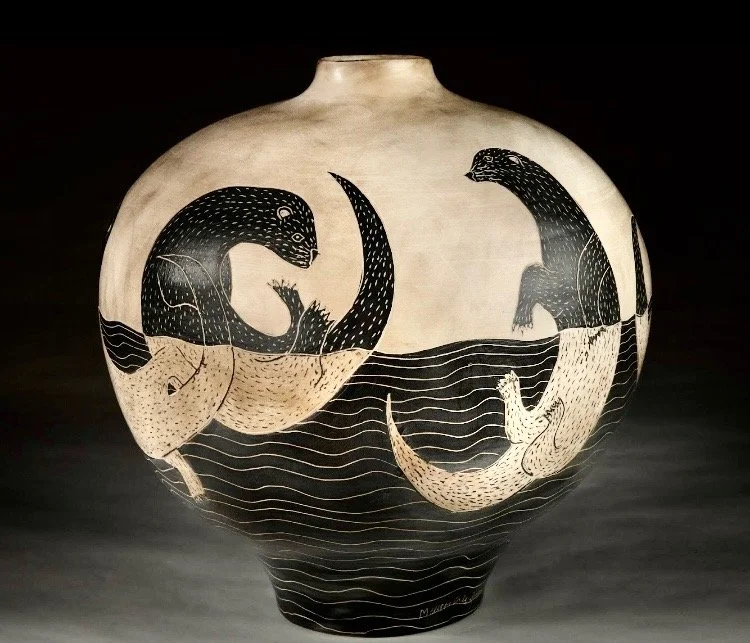
In comparison, Melissa Greene's extraordinary pottery at Greene-Ziner Gallery in Deer Isle is relatively low-fired. She throws large white earthenware vessels, decorates them with beautifully composed imagery of women and birds and animals that she incises and paints with colored slips. She bisque fires, burnishes, waxes and completes the piece by smoking it in burning hay to bring out the color in works she makes of museum quality ceramic art.
Mark Bell Pottery of Blue Hill is much admired by collectors. He throws and sculpts fine porcelain into handsome elegant forms. Vivid glaze colors are mixed and sprayed onto his pots. Within the open flames of his gas kiln, Mark achieves pleasingly complex surface interest and depth. He often works with other artists. Of special interest are collaborative pieces made with William Irvine.
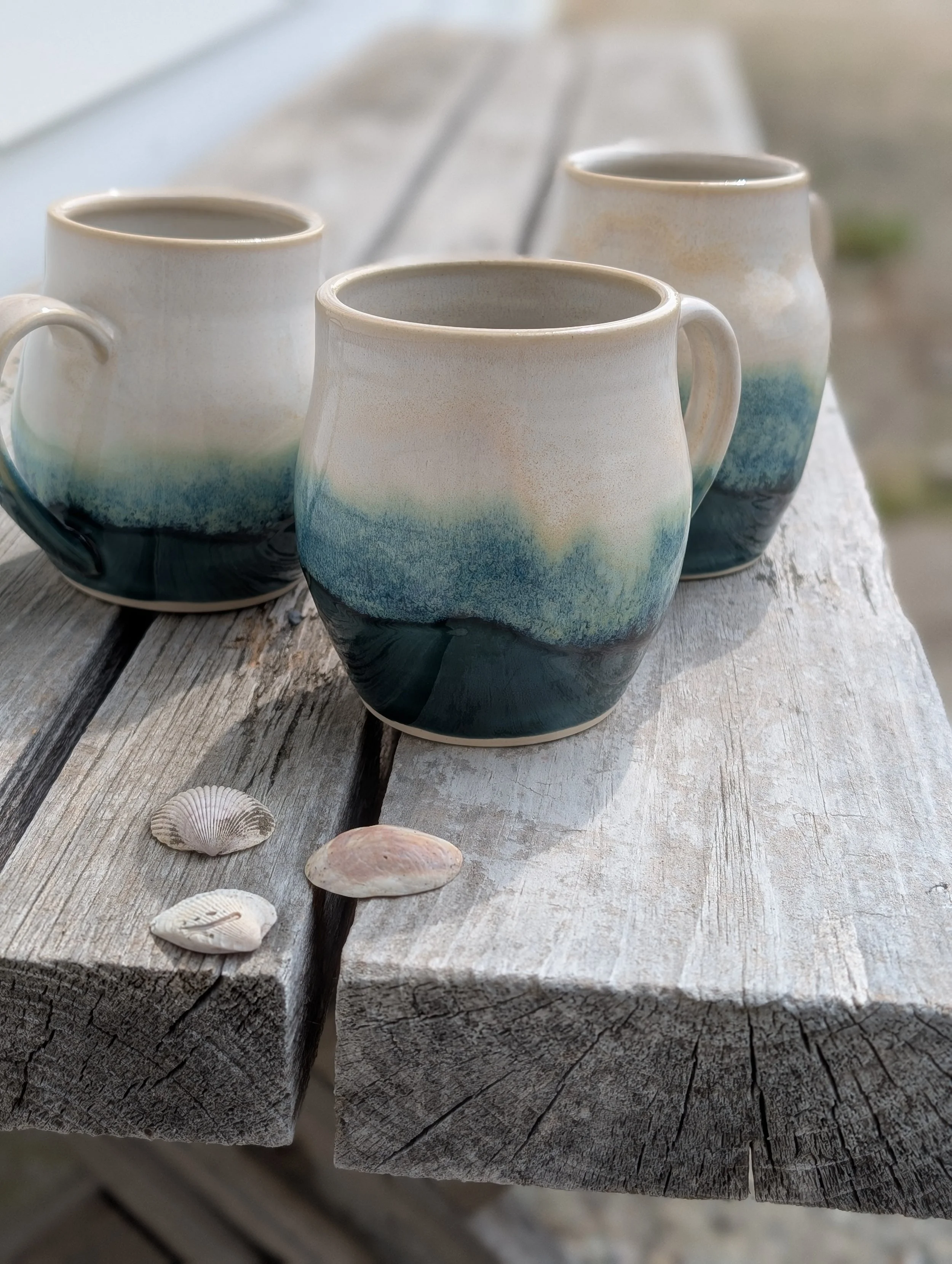
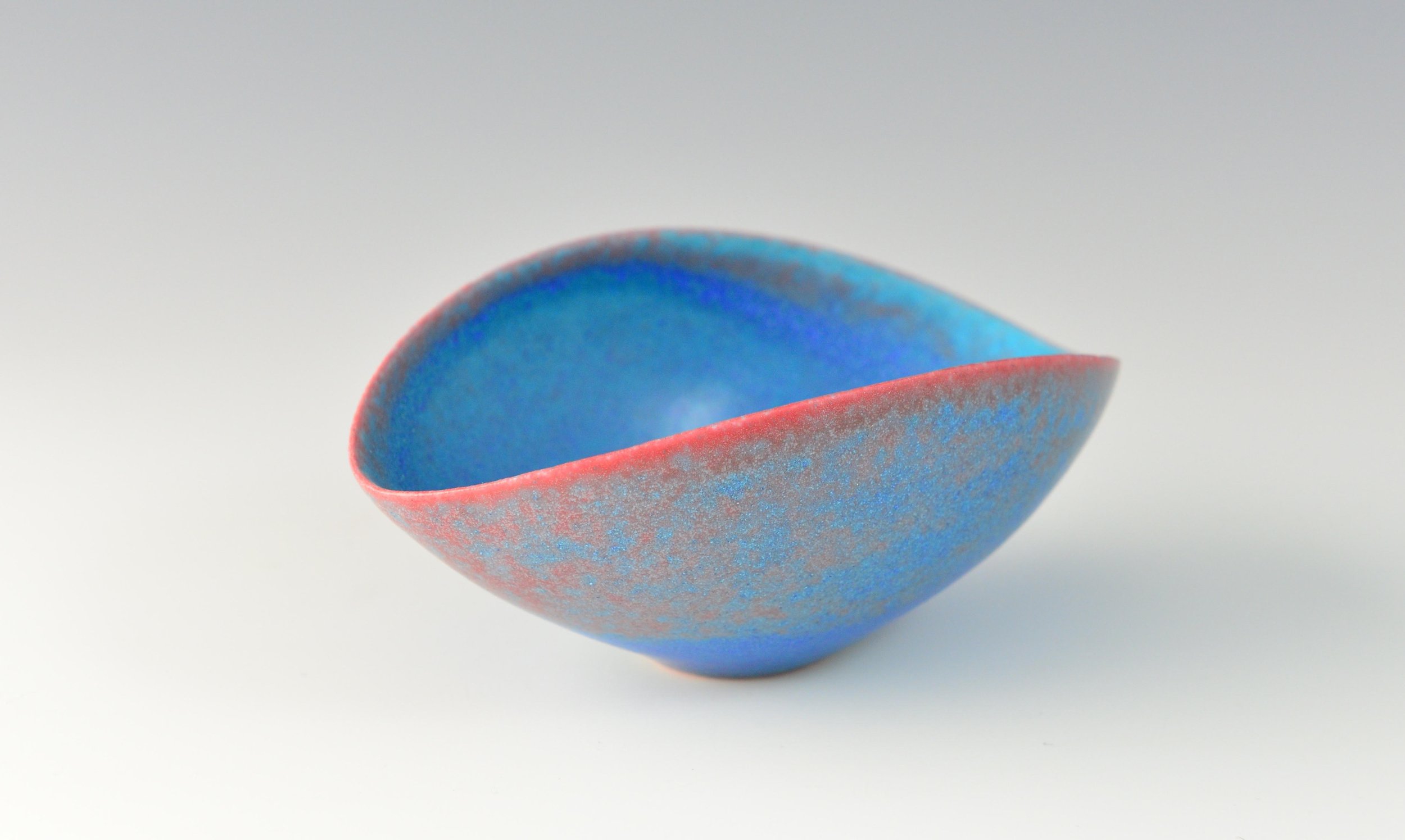
The Brooklin Pottery Co-op serves as a great example of people sharing space, equipment and inspiration. Sometimes, the constraints of one wheel and one electric kiln can initiate an outpouring of creative energy exemplified by the work of Cathy Rees, Ann Cutting, Kathy Githens, Martha Martin, Katy Gaebler and Stephen Fascina on display at the Co-op.
The offerings by Odette Heideman at OH Pottery in Brooklin and guest artist Paul Wheeler seem to require a slowing down, and really looking to appreciate the subtlety of their salt-fired clay. Influenced and inspired by a Japanese ceramic aesthetic, Heideman and Wheeler craft functional work and sculptural objects. Exposing their clay creations to the intense corrosive atmosphere of salt, vaporized in a high temperature kiln, enhances the surface of stoneware, resulting in unique, satisfying, one-of-a-kind pieces.
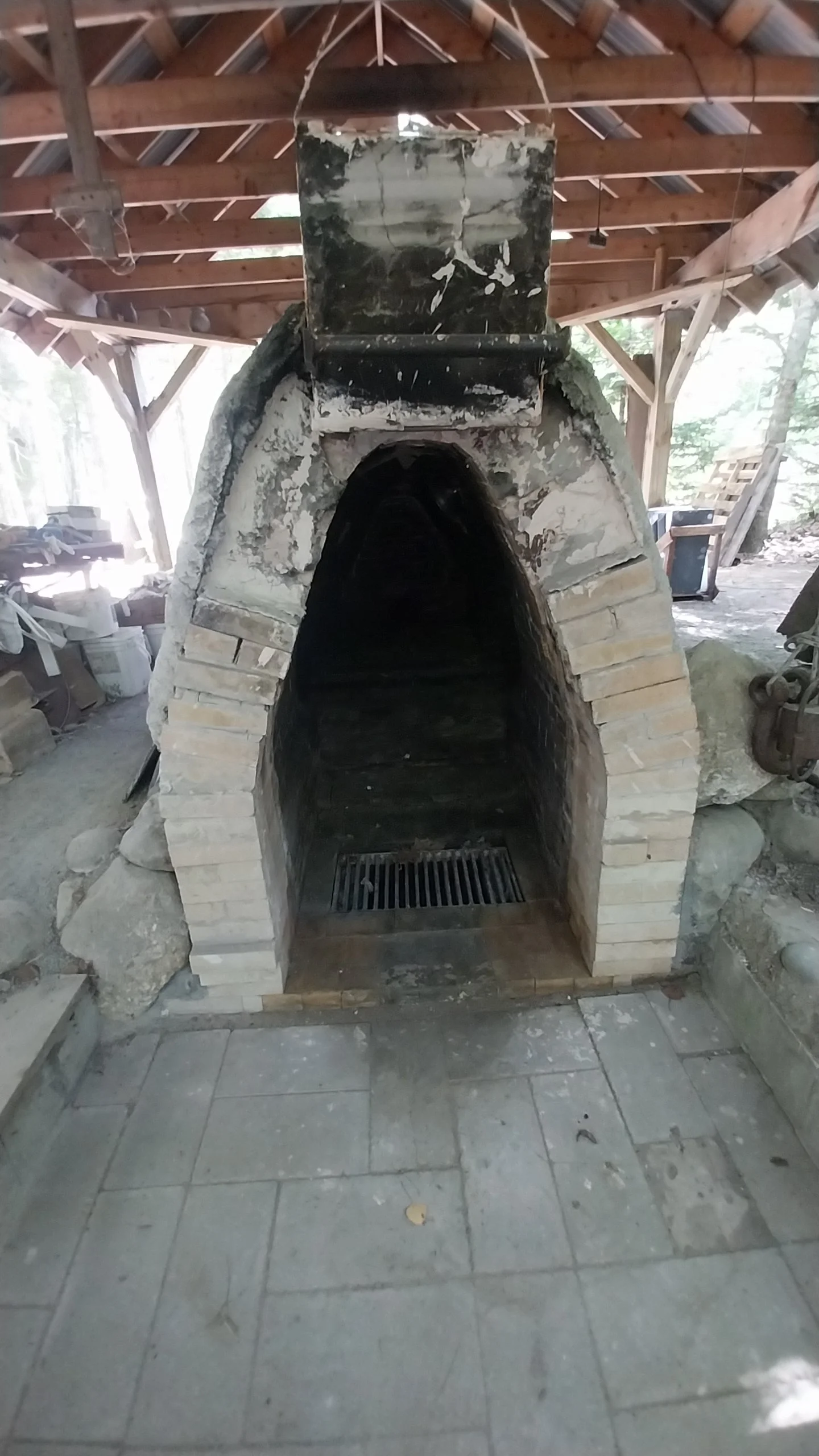
It takes several days — and several cords of wood — for Ellen Sedgwick’s kiln to be brought up to the right temperature for firing. Photo by Marilyn Eckberg.
Soda firing is Lansing Wagner's preferred kiln method because vaporized sodium oxide softens the edges of his meticulously carved images and provides unexpected color and texture on the brownstone clay he uses. These firings happen twice a year on his East Blue Hill studio, since the closest soda kiln is two hours away in Newcastle, Maine. Lansing also makes blue and white plates and bowls, decorated with lively fish, insects, birds and swimmers carved through blue slip onto porcelain and fired in his electric kiln. His illustrative skills are evident in his imaginative response to the colors of classic Chinese porcelain.
Vivian Pyle of VKP Studio in Surry is synonymous with functional pottery. She throws and builds mugs, plates, bowls, platters, teapots, table lamps, glass mosaics and tiles in a rainbow of colors. She mixes an impressive, cheerful range of glaze colors for porcelain completed in her electric kiln. Her work exemplifies how handmade pottery can elevate our daily routines.
My last stop on the Pottery Tour was Surry’s relatively new Tigermoth Pottery, a collaboration between Aimee Hunt and August Rolin. While they are enthusiasts for the chance look of wood fired clay, they have found methods of texturing and roughing up their functional and sculptural work, creating depth and complexity in electric kiln firings. A unique method mastered by Tigermoth Pottery is carving into porcelain slip – essentially using a thin layer of clay as pigment – applied over black clay. Rolin scratches fantastical creatures and demons through the white into the dark; a deliberate effect that looks simultaneously futuristic and primitive.
If you missed this amazing tour and the opportunity to support local artists, there will be another Peninsula Potters Tour on October 10-11. I know that next time I look forward to exploring Lowell Hill Pottery, Walker Pond Pottery, J Chase Ceramics and Lila Balch.
