

DOT film highlights history of iconic bridge
Recent screening is part of a new process to ‘mitigate’ demolition of historic infrastructure
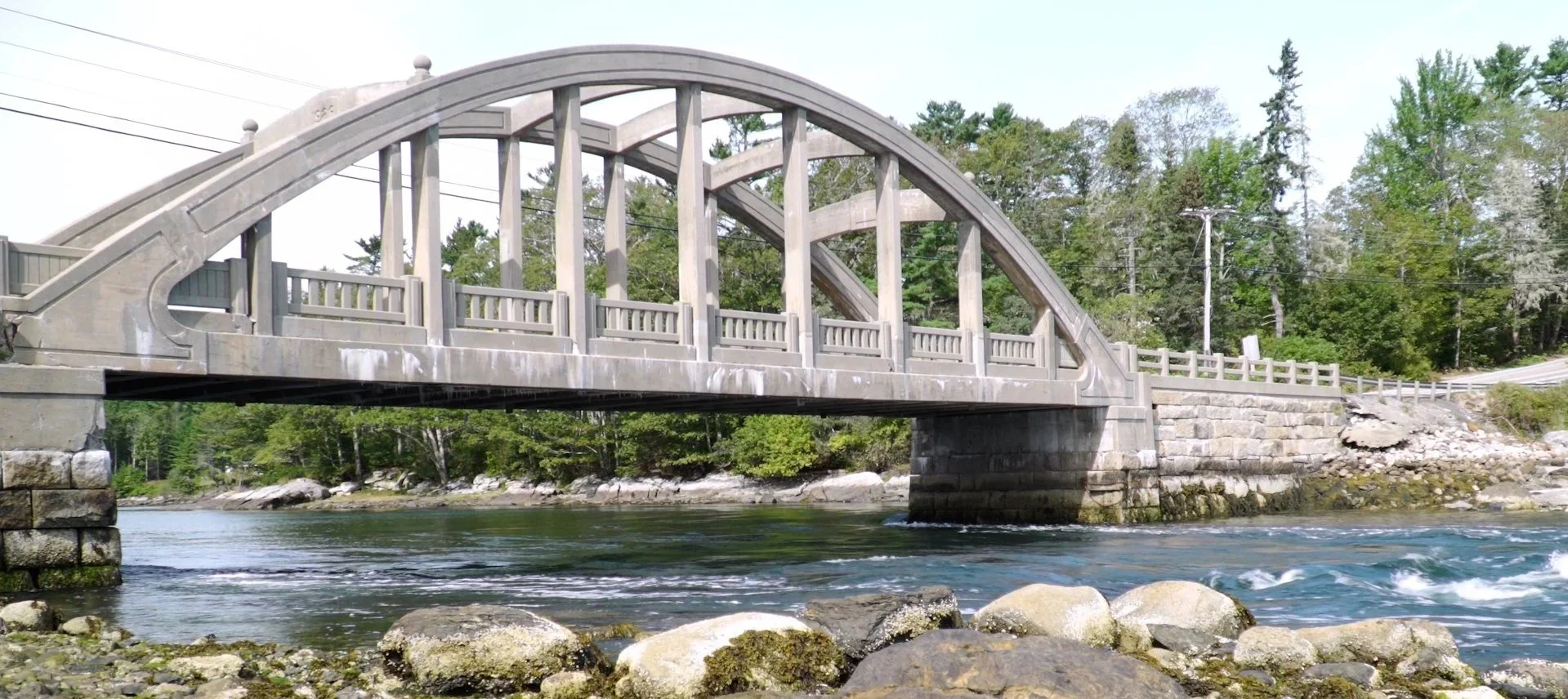
The film, “Connecting Blue Hill Through History: The Stevens Bridge,” will soon be made available for public viewing. Photo courtesy of the Maine Department of Transportation.
May 29, 2026
By Steele Hays
BLUE HILL—Blue Hill Falls, the bridges that have spanned it and the history and natural beauty of the Blue Hill Peninsula all play starring roles in a new 30-minute film produced by the Maine Department of Transportation that was screened May 28 for an invitation-only audience at the Town Hall.
Reactions from the approximately 20 people in attendance were positive.
“Awesome,” said Christine Guinness, whose home overlooks the falls, as the applause died down at the film’s conclusion. “It’s wonderful,” said Blue Hill Fire Chief John Chapman.
The DOT was required to produce the film as part of demolition of the historic and photogenic Stevens Bridge that spanned the falls from 1926 until late 2022 before being replaced by the current bridge structure completed in November 2023. That was part of an agreement reached by the DOT and state and federal agencies to comply with the National Historic Preservation Act, which requires agencies to evaluate and take actions to mitigate adverse impacts on historic places.
The film, “Connecting Blue Hill Through History: The Stevens Bridge,” will be made available for public viewing in the next three to four weeks, DOT officials said. It documents the demolition of the Stevens Bridge and features close-up images of the bridge’s underside, illustrating why engineers concluded that it needed to be replaced, with rusting steel, cracked concrete and other evidence of deterioration clearly visible.
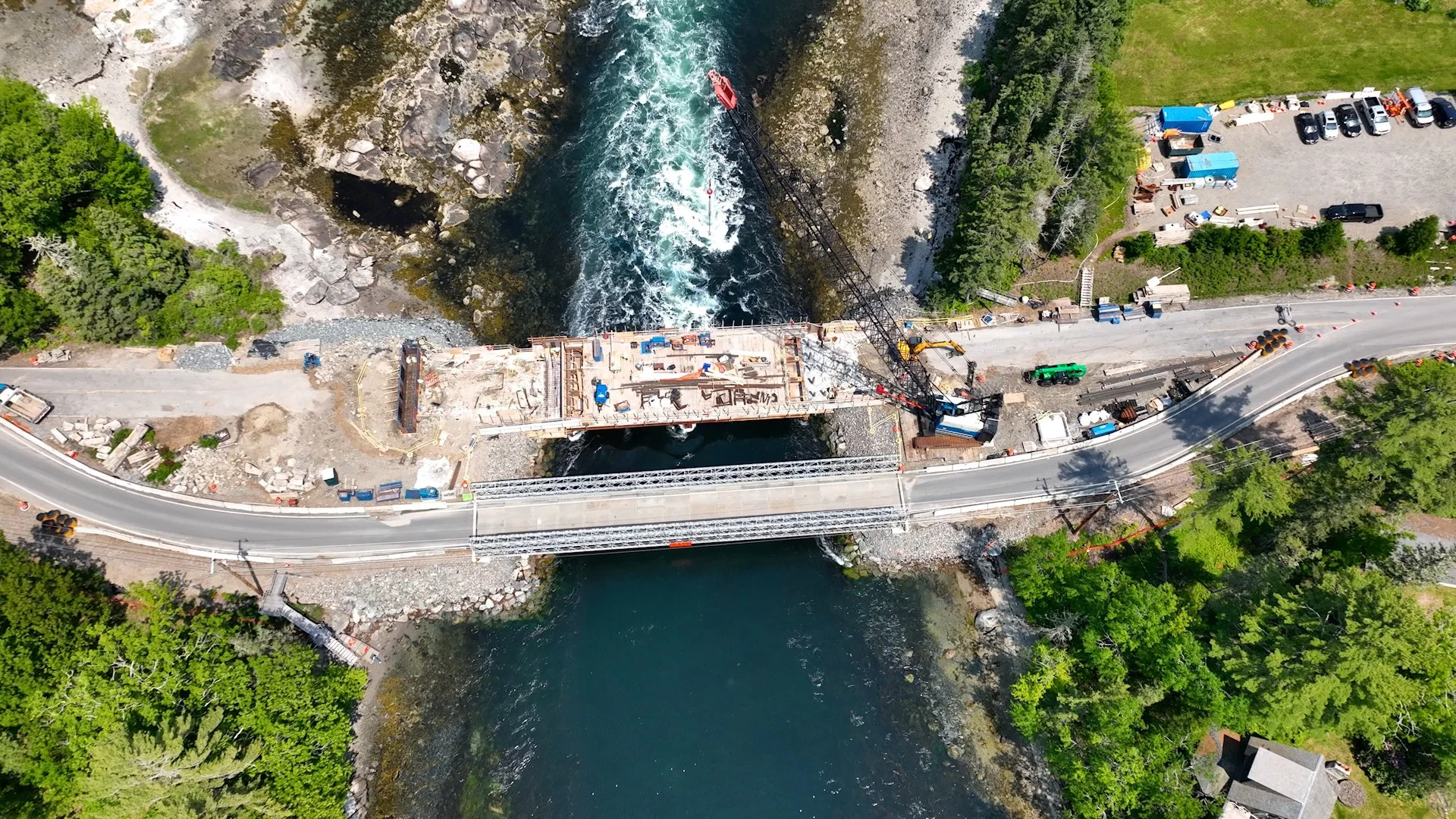
Stevens Bridge spanned the falls from 1926 until late 2022; the current bridge structure was completed in November 2023. Photo courtesy of the Maine Department of Transportation.
The decision to replace the bridge rather than repair it came only after several years of community debate and discussion. The Stevens bridge was described in the film as “a beloved local landmark” and “a touchstone for the town.” With its graceful arch, it was a favorite subject for artists and photographers.
Several local residents are interviewed in the film, including Select Board member Ellen Best, former Blue Hill Fire Chief Dennis Robertson, and amateur historian Butler Smythe, whose family once owned one of the oldest residences near the falls. Also interviewed in the film and in attendance at the screening was Chris Sockalexis, tribal historian with the Penobscot Nation. Sockalexis worked on several archeological explorations of the shoreline around the falls, which was used by native Americans for thousands of years for fishing and habitation and as a ceremonial burial site. The native people who occupied the site and other areas of Maine between 3000 and 1000 B.C. were called the “Red Paint People” because they used red ochre (iron oxide) in their burials. Also found in their burial sites were richly decorated tools and daggers made from moose bone and swordfish rostra or snouts.
“We consider ourselves Red Paint People still,” Sockalexis said. “I buried my father in that tradition.”
Sockalexis said he was pleased with the film and considered it to be well done.
The DOT-sponsored archeological explorations prior to the bridge replacement also discovered the exact site of the house built by John Roundy, one of the first two settlers of the Blue Hill area in the 1760s.
DOT officials asked audience members at the screening to provide comments on the film and distributed printed forms to collect feedback. One attendee noted that a section of the film referring to cattle owned by Blue Hill’s earliest settlers in the 1700s used a photograph from the late 1800s of ox teams at the Blue Hill Fair, saying that was an anachronism that should be corrected. DOT film editor Randell Stevenson said he would make edits to address the issue.
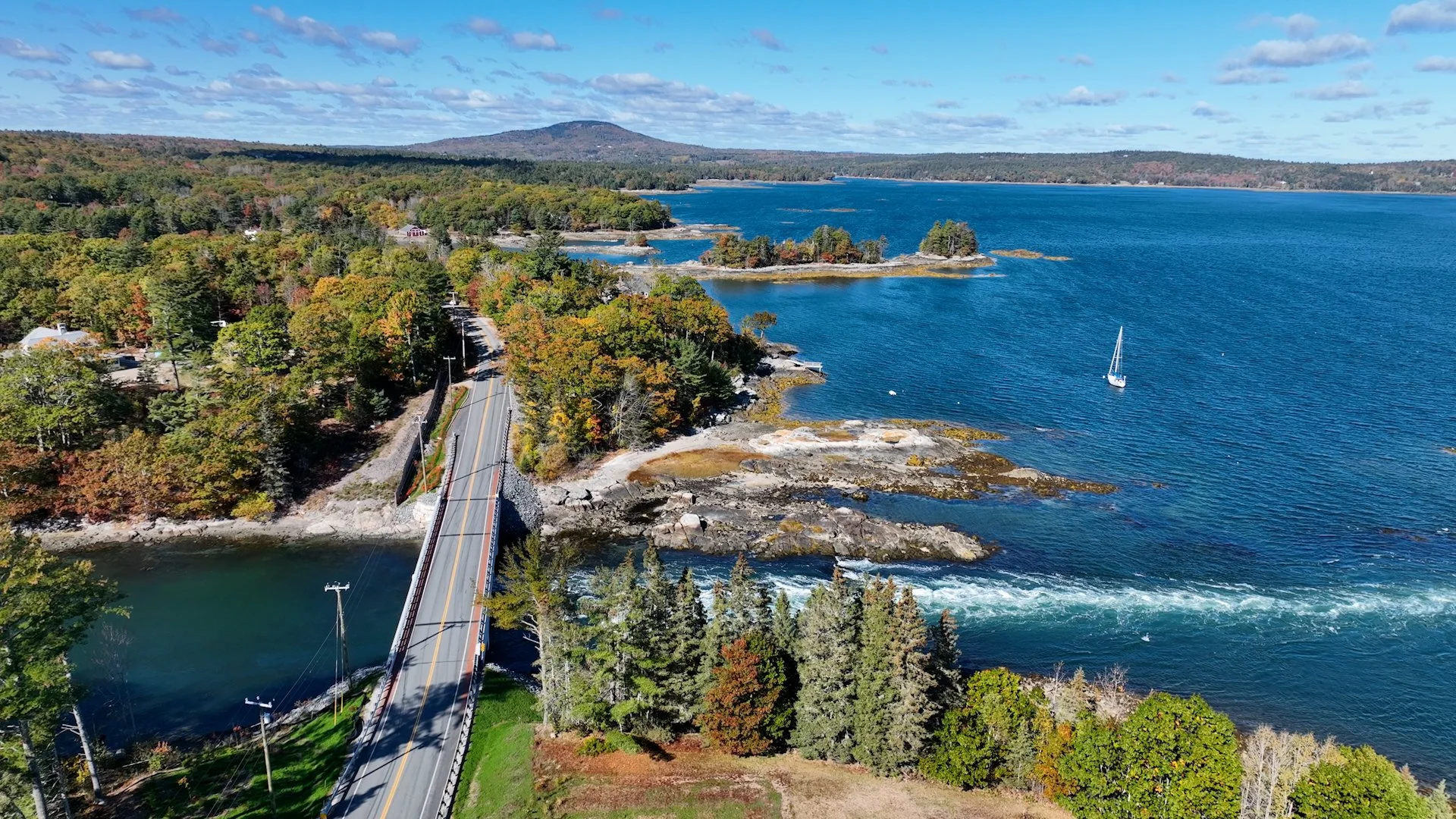
The shoreline around the Blue Hill Falls was used by native Americans for thousands of years for fishing and habitation and as a ceremonial burial site. Photo courtesy of the Maine Department of Transportation.
“We want to offer this film as an educational resource,” said Julie Senk, DOT’s historic preservation coordinator. “Using film like this is a relatively new process for us.”
Another element of the DOT’s mitigation agreement required the agency to design and install an informative panel providing information about the area’s history and the bridges that have spanned the falls. That panel is ready to be installed, but DOT officials are awaiting a decision by the Blue Hill Select Board as to the precise location. Fire Chief John Chapman said he had recommended placing the panel “near the Nub,” the town-managed public access area along the shore just north of Mill Island, because the parking area there would provide a safe place for motorists to stop and read the panel. That location is approximately 300 yards north of the Falls Bridge.
“It’s not ideal, but it’s far better than” placing the panel adjacent to the bridge, where there is very limited parking along the road and vehicles are traveling faster, Chapman said.