

‘There’s not a lot of times that I can use a scalpel, [much less] on a human brain,’ one student says. Plus, they’re working with Harvard.
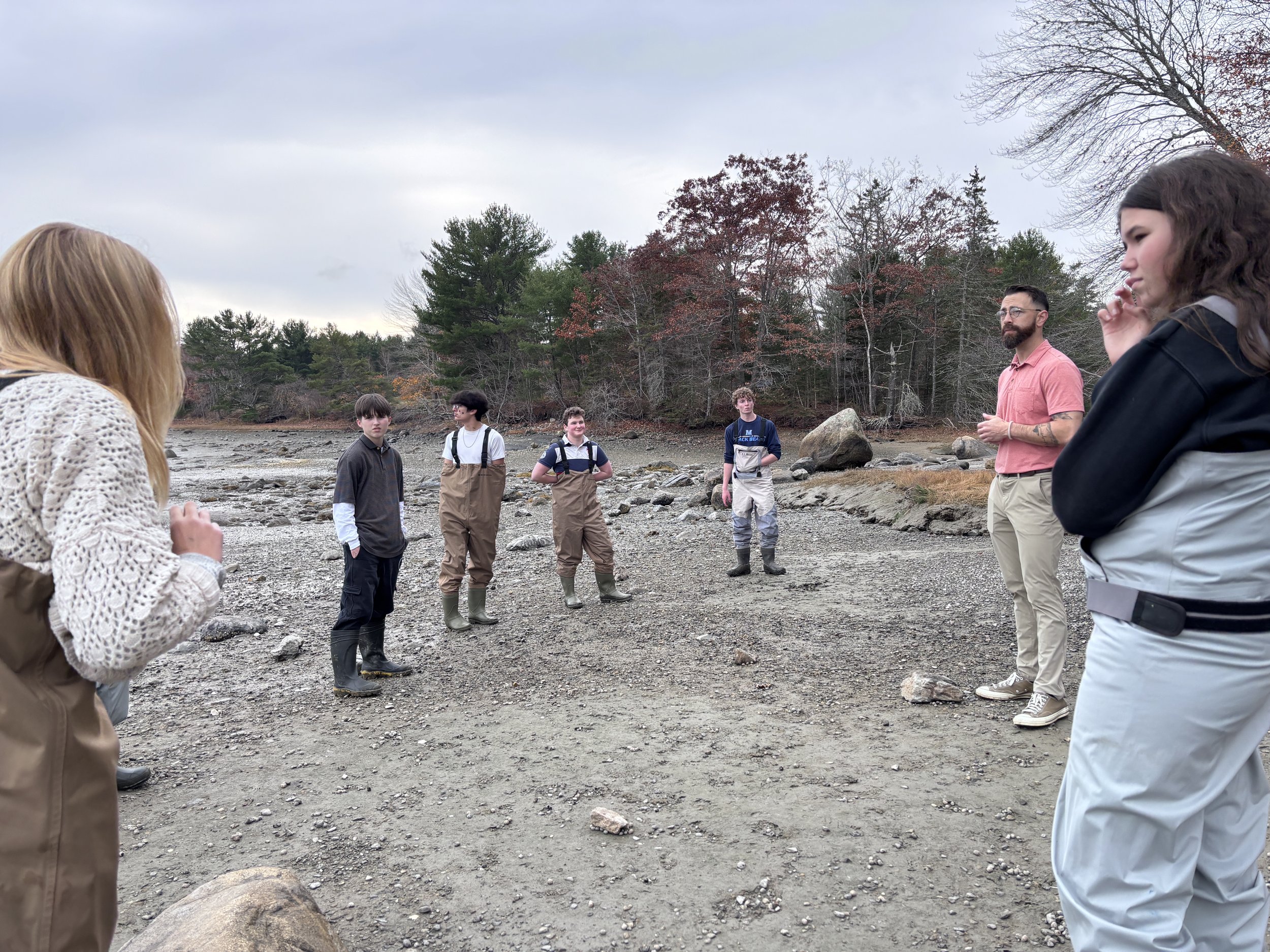
Not a desk in sight during fieldwork for GSA’s pilot program. Photo courtesy of the Shaw Institute.
Nov. 18, 2026
By Tatiana Heggestad

BLUE HILL–This fall, 11 students from George Stevens Academy have participated in a hands-on scientific research class offered by the Shaw Institute. Class time and resources have been volunteered by the institute as a pilot, giving students a unique entry point to the professional world of science beyond typical classroom learning.
Students are using water samples they collected in September from Blue Hill Bay and Town Park to test for bacteria to determine if any local bodies of water were unsafe for people after storm flooding. The water samples revealed bacteria levels higher than ever recorded in Blue Hill, according to the institute.
The Shaw Institute has performed such water tests regularly over the years. Student participation has allowed the institute to perform and process even more samples, offering valuable information to the town and the community about where not to swim.
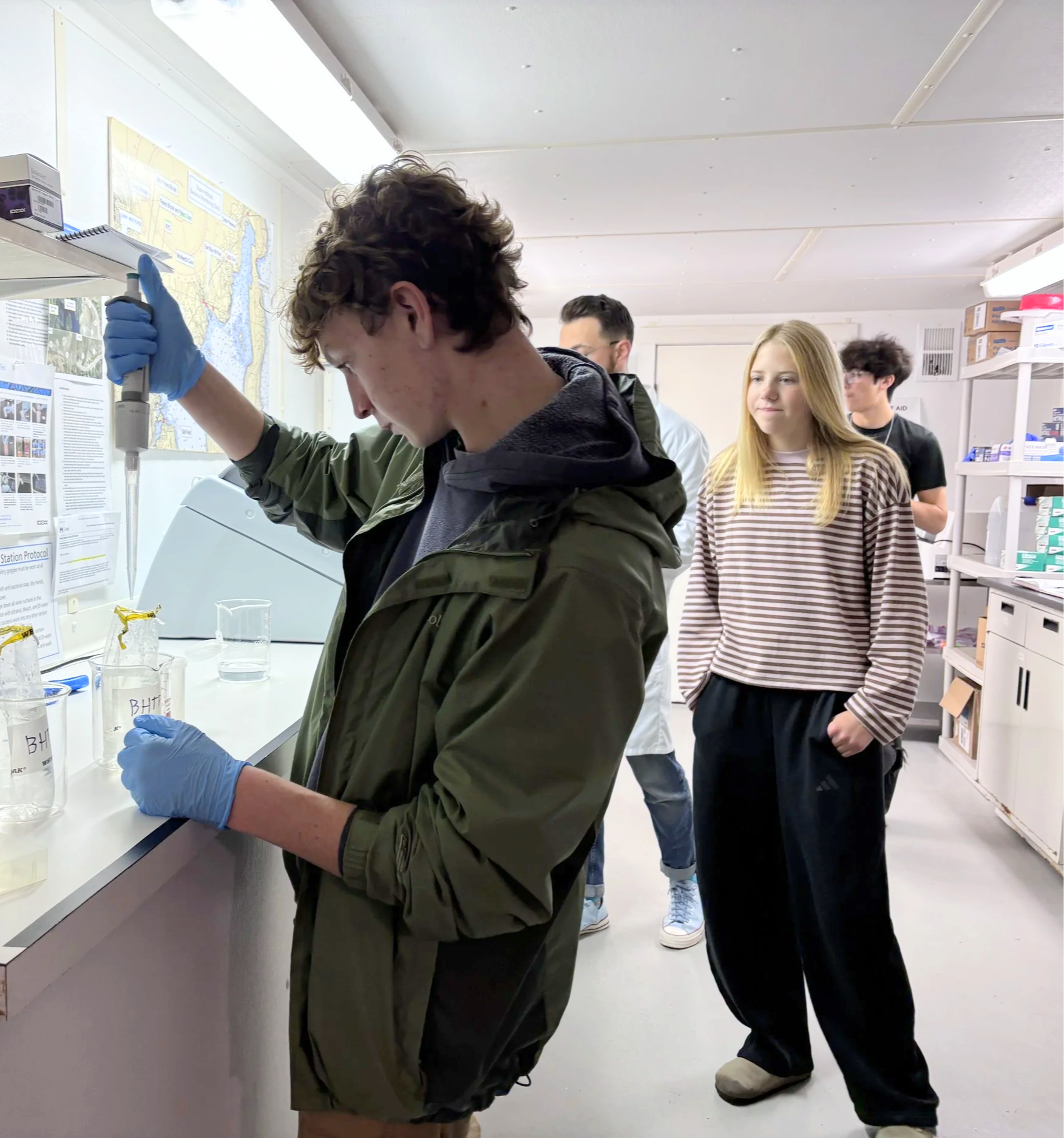
Jack Coolidge uses a pipette to conduct tests in the lab, next to fellow student Celia Chittenden. Photo courtesy of the Shaw Institute.
“We take samples from the water, we test them, and we get results, and then we tell the town that there’s a specific spot that is not safe for children or just anyone,” said Emilia Ruyle, a student in the pilot class.
Jack Coolidge, another student, described the work as a way of understanding “what’s in our waters right now.”
“It contributes to a lot of local safety,” Coolidge said.
Dani Rodriguez, the institute’s education and outreach manager, said the program gives students a hands-on approach to look at familiar places from a different perspective.
“The students are doing real-world science in their hometown. They’ve all known this place their entire lives, but now they’re seeing it from a different lens, an analytical one,” Rodriguez said.
Students have also been a part of research analysis collaborations with Harvard University, Arizona State University and New York University. They are working to analyze brain tissue samples for microplastics as part of research examining Alzheimer’s disease, Parkinson’s disease and other neurodegenerative conditions.
Dr. Charlie Rolsky, executive director of the Shaw Institute, said, “There’s not a single high schooler that’s doing what they’re doing probably in the country.”
In addition to gaining experience, students will also likely be acknowledged in research published as a result of their work, Rodriguez said.
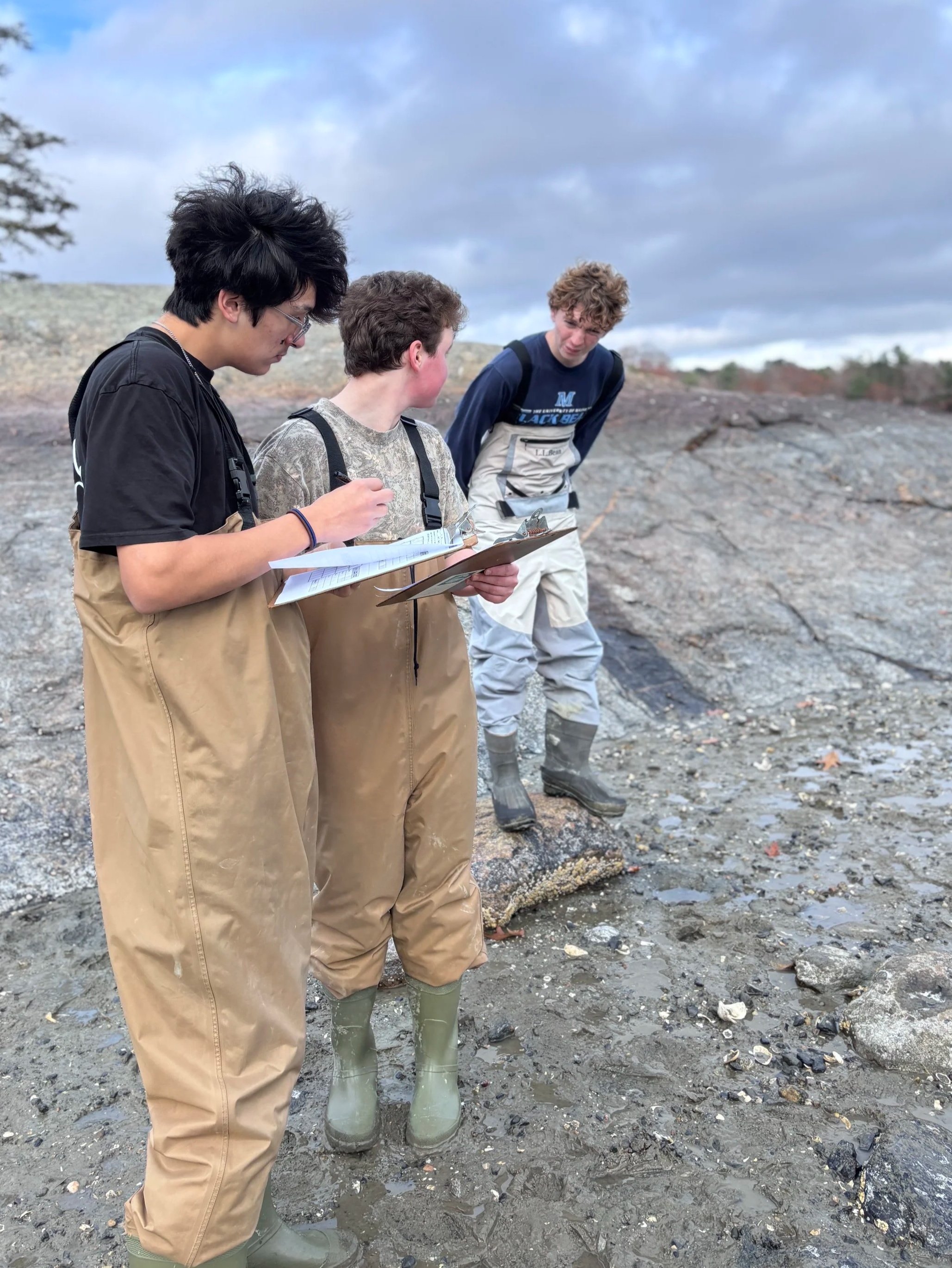
From left, students Anthony Morris-Nevells, Rhys Drach and Jack Coolidge gain hands-on experience along the shore in Blue Hill. Photo courtesy of the Shaw Institute.
Student researcher Celia Chittenden said working alongside institute staff Dani Rodriguez and Charlie Rolsky was one of the highlights of her experience.
“They have so much experience in this field that we get to work with really cool things like the brain tissue samples,” Chittenden said.
The program has gives students access to equipment and research opportunities they would not be as likely to encounter in a high school classroom.
“There’s not a lot of times that I can use a scalpel, [much less] on a human brain,” Finn Wootten, a student, said. He added that the experience has helped him consider what he might want to pursue after high school.
Wootten is applying to boarding schools this year and sees the research experience as valuable preparation for future education, as he hopes to receive recommendations “for working on a Harvard study”.
Rolsky said he believes students who are ready to handle the responsibility of research should be given access to real scientific work rather than simplified versions of it.
“This is not an example of what we do; it’s what we do,” Rolsky said
For Rolsky, offering the program is also a way to give something back to the community.
“For me it’s a little bit of a love letter to the community,” he said.
