

If you’re headed for ice fishing, ‘expect these salmon to be fat’
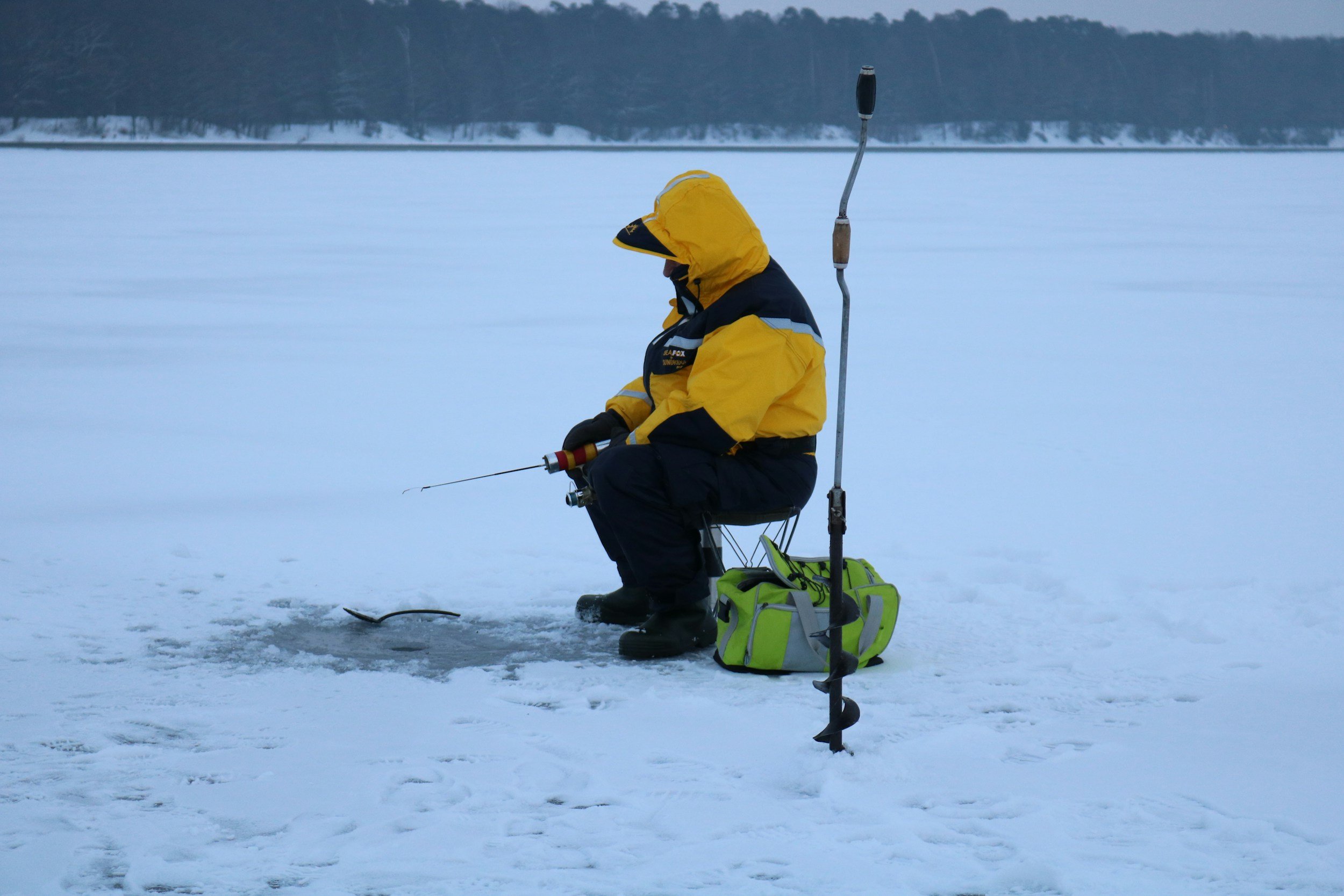
February looks to be “another great month for ice anglers,” according to the state biologist who writes a fishing report for the downeast region. Photo by Unsplash.
Feb. 2, 2026
By Jake Scoville
January was a good month here downeast. Most of the region had safe ice from start to finish. Anglers report fast fishing in trout ponds, big lake trout, and plenty of perch for perch feeds. Just to name a few highlights. February looks like it will be another great month for ice anglers as winter has fully set in.
Where to fish: February 1st marks the opening of West Grand Lake. It is the region's largest lake and offers some of the most diverse angling opportunities in Eastern Maine. Recent surveys suggest that lake trout fishing should be excellent, with most fish ranging between 18 and 22 inches. Salmon in West Grand are consistently 15 to 19 inches, and if our fall surveys are any indication, expect these salmon to be fat. If you're familiar with the lake, anglers will know that Junior Bay is the hot spot for catching lake whitefish. But don't be fooled—whitefish are present throughout all of West Grand and can even be caught well below Munson Island toward Grand Lake Stream. Lake whitefish in West Grand average 17 inches and about two pounds. Another lesser-known fishery in West Grand is the quality white perch fishing, especially in the Junior Bay area of the lake. Some of the perch caught there are upwards of 15 inches or more.
A few other lakes anglers should consider in February are the large lakes in Hancock County. Beech Hill Pond, Branch Lake, Green Lake, and Phillips Lake all have populations of salmon and lake trout. An often-overlooked lake, Donnell Pond, should also have salmon and lake trout, and recent surveys suggest that both species are in excellent condition.
Fishing tips: If you're interested in trying your luck with whitefish, which I highly recommend, here are some tips to help you learn faster. First, jigging is your best option. I suggest finding 30 to 50 feet of water with a flat, featureless bottom (no rocks). Whitefish feed mostly on the bottom, picking up small insects, bivalves, and even tiny fish almost out of the mud, so focus your efforts near the bottom. Small jigs tipped with bait work really well, but when the bite is hot, whitefish will chase and even strike larger spoons and soft plastic jigs. Keep your jigging motion subtle, and don't hesitate to dead-stick for a second or two. My favorite tip for jigging whitefish is to first drop a heavy jig to the bottom and bang the bottom for a minute. This creates sound and a plume of silt that attracts whitefish. Once you've made some noise, switch to a small jig. If you have a flasher or other type of sonar, you'll see this trick work quickly. If you prefer setting traps for whitefish, use very small shiners or smelt right on the bottom.
Reminder: As I write this, the state is about to be hit by an extreme cold front that will bring temperatures to single digits and well below zero for a 3- to 4-day stretch. What does this mean for Downeast ice fishing? Keep an eye on the conditions at Tunk Lake. Tunk is the last body of water in the region to freeze each year (if at all). This stretch of weather may button up the main portion of the lake and provide safe ice for February. Tunk is famous for its lake trout fishing, but it also has a healthy salmon fishery.
—Scoville is a Fisheries Resource Supervisor with the Maine Department of Inland Fisheries and Wildlife.
