

My Wild Neighbors: Maine’s crazy ‘Big Night’ pool parties
Local amphibians are about to get busy with their annual mating migration
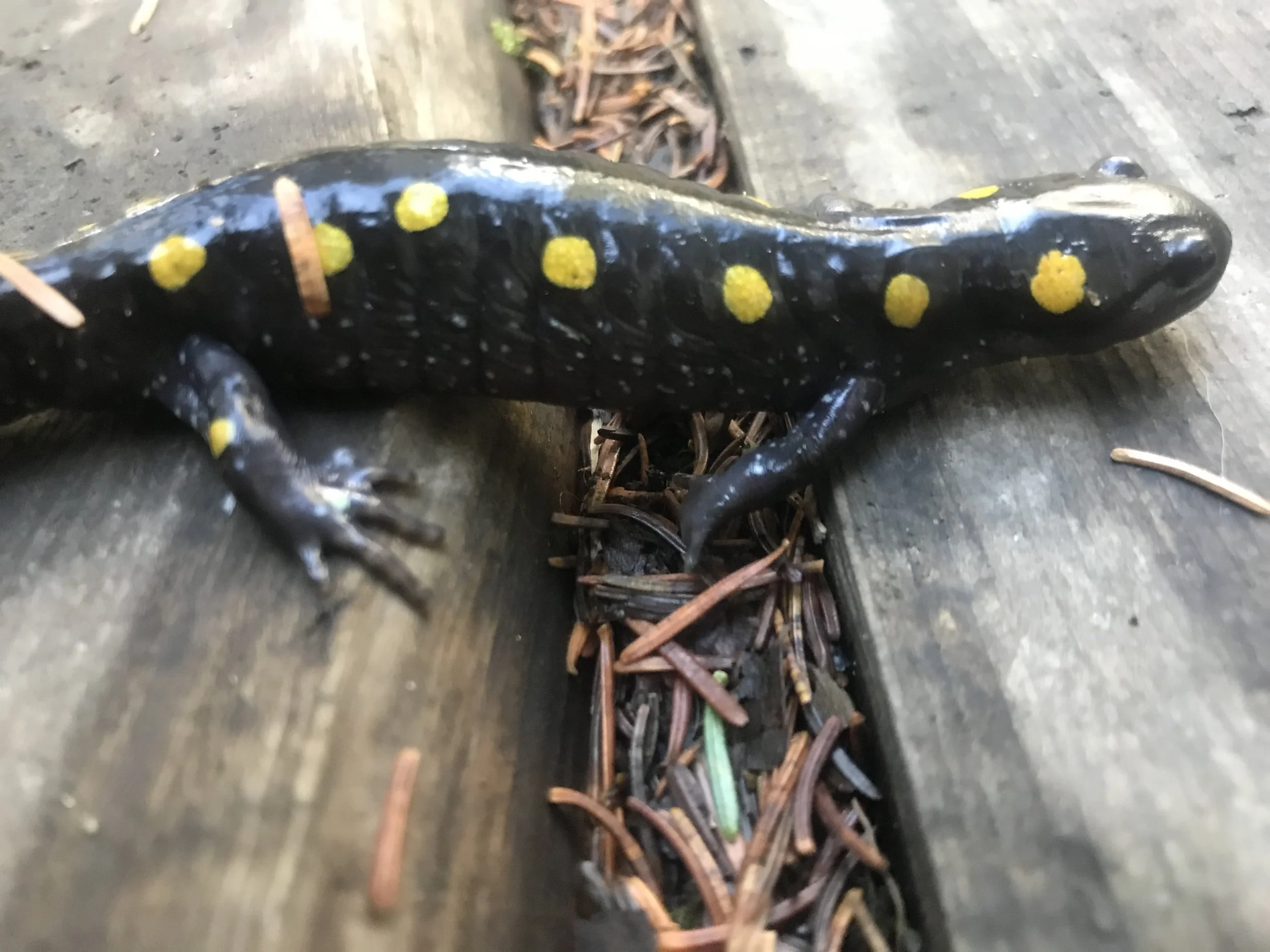
A spotted salamander. Photo by Kimberly Ridley.
April 7, 2026
By Kimberly Ridley
The UPS guy thinks I’m nuts. He glances askance at me when he delivers a package. That’s probably because, come spring, I’m often loitering on the roadside gazing into what appears to be a ditch when he zooms by on his late afternoon rounds.
Wish I could tell him this is no mere ditch. It’s a vernal pool, an ephemeral wetland where two of our most intriguing wild neighbors gather to spawn: wood frogs and spotted salamanders.
On the first rainy nights of spring when temperatures rise above 40 degrees, wood frogs and spotted salamanders and other amphibians hop and slither from their winter habitats to vernal pools—often the same ones in which they hatched. The largest surge of migrating amphibians is called “Big Night,” which usually occurs in Maine between early and mid-April. Smaller migrations of these and other amphibians can happen from mid-March to mid-May.
Wood frogs are literally the world’s coolest frogs: They survive winter as far north as Alaska by freezing into frogsicles under sheets of dead leaves on the forest floor. These brown, thumb-long frogs with black masks make biological antifreeze to keep their bodies from freezing solid. Their hearts stop beating and they stop breathing until the first rains of spring thaw them back to life.
Spotted salamanders shun daylight and spend most of their lives underground prowling for worms, beetle larvae, and other morsels. Brown-gray or blue-black with yellow polka dots and up to seven-plus inches long, these handsome salamanders emerge from their subterranean lairs to spawn when warming temperatures and spring rains soften the earth. Joining them are blue-spotted salamanders, their smaller and less common cousins.
Once wood frogs reach a vernal pool, they get right down to business. Males lure females with clattering calls that sound like quacking ducks. Within a few days, wood frog egg masses appear in vernal pools, with each globular, bubbly-looking clump containing more than 1,000 eggs. After their brief pool party, adult wood frogs return to life on land.
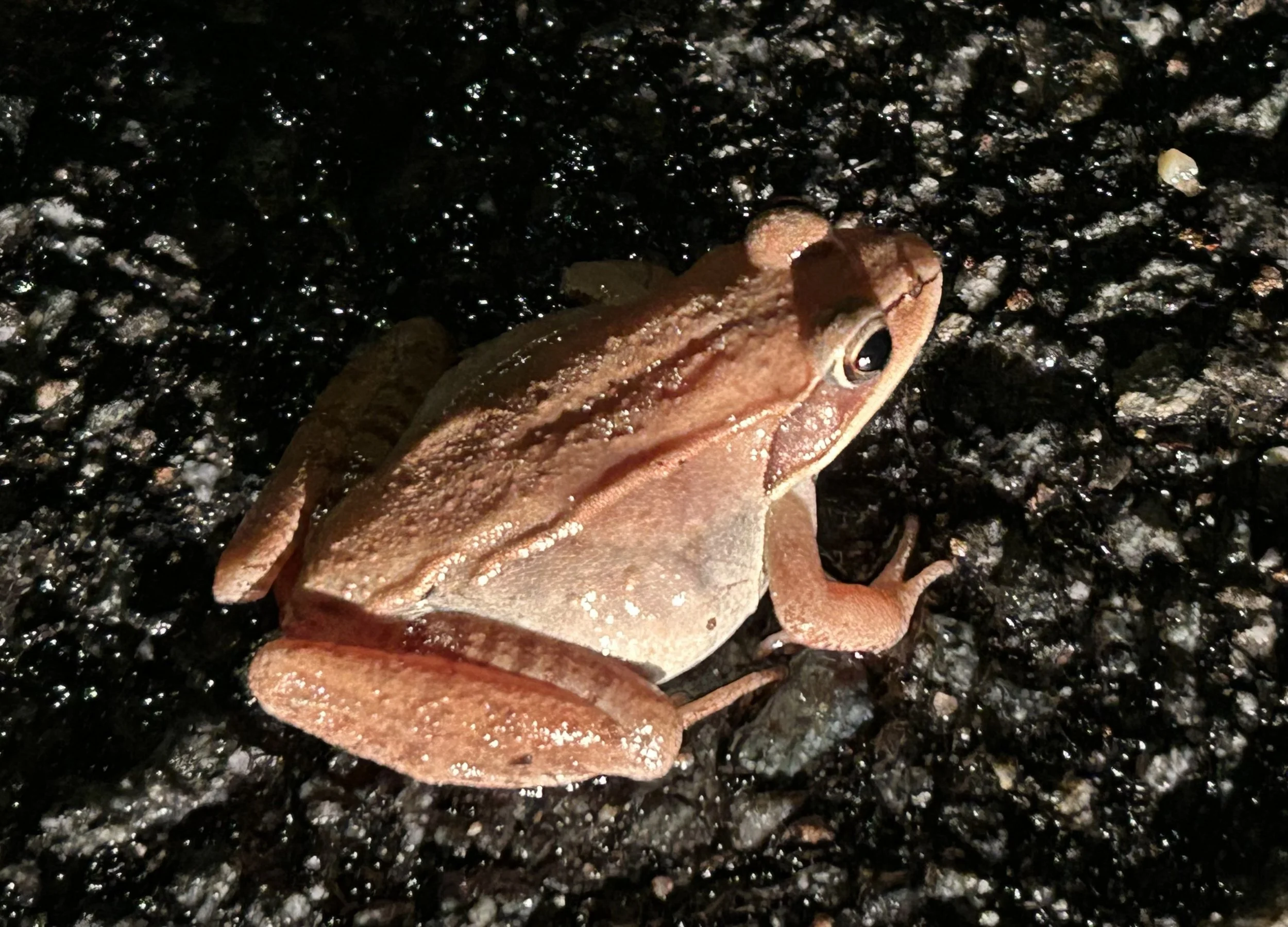
A wood frog. Photo by Kimberly Ridley.
Spotted salamanders have a more nuanced and leisurely courtship. They gather in vernal pools and glide around one another in an elaborate “nuptial dance.” Males deposit sperm packets called spermatophores on submerged twigs and leaves. Females pick up these packets with their cloacae and a few days later lay fertilized eggs in oblong masses attached to branches or twigs in vernal pools. Enveloped in a thick, smooth membrane, each egg mass contains up to 200 eggs. Spotted salamanders may linger in vernal pools for a few weeks before returning to their underground lairs. For a glimpse at their rituals, check out this video.
Wood frog eggs hatch in a few weeks, while spotted salamander eggs take up to two months to hatch, depending on water temperature. Tadpoles and salamander larvae are immediately in a race against time: they must metamorphose into land-dwelling juveniles with legs and lungs before vernal pools dry up in summer. Many don’t make it and become trapped. Evaporating vernal pools serve as snack bars for many creatures including raccoons, snakes and turtles.
Want to adopt a stretch of road to help amphibians get to vernal pools on Big Night?
Check this map to see the 19 sites available in our area.
I became smitten with our amphibian neighbors and vernal pools while doing research for The Secret Pool, my first children’s book. Getting to know these remarkable beings inspired me to want to help them flourish—especially after learning that many amphibians are killed by vehicles as they migrate across our roads to reach vernal pools.
Maine has two excellent resources on vernal pools and ways to help protect the creatures who depend on them. Of Pools and People covers the ecology of vernal pools, how to identify amphibians (and marvelous fairy shrimp who also spawn in vernal pools), regulations, and science-based conservation strategies.
For those who want to dive in, Maine Big Night trains and organizes volunteers to collect data and assist amphibians crossing roads. MBN’s resources include a detailed volunteer manual and a statewide map for those who want to adopt a stretch of road or join an existing group. The current map shows 19 available sites on the Blue Hill Peninsula and Deer Isle/Stonington.
Many other amphibians are on the move in spring, including spring peepers, gray tree frogs, toads, and red efts, the juvenile form of red-spotted newts. Walking to our roadside vernal pool on rainy spring nights to witness and help our wild neighbors has become one of my most cherished spring rituals. These creatures may be small, but their migration is truly a wonder—wood frogs are known to travel up to a half-mile to reach their vernal pool.
“It’s comparable to a Caribou migration in the tundra,” Maine Big Night Founder Greg LeClair told The Maine Monitor. “And it’s happening every spring time, right in our backyards…and many of us have no idea what’s going on.”
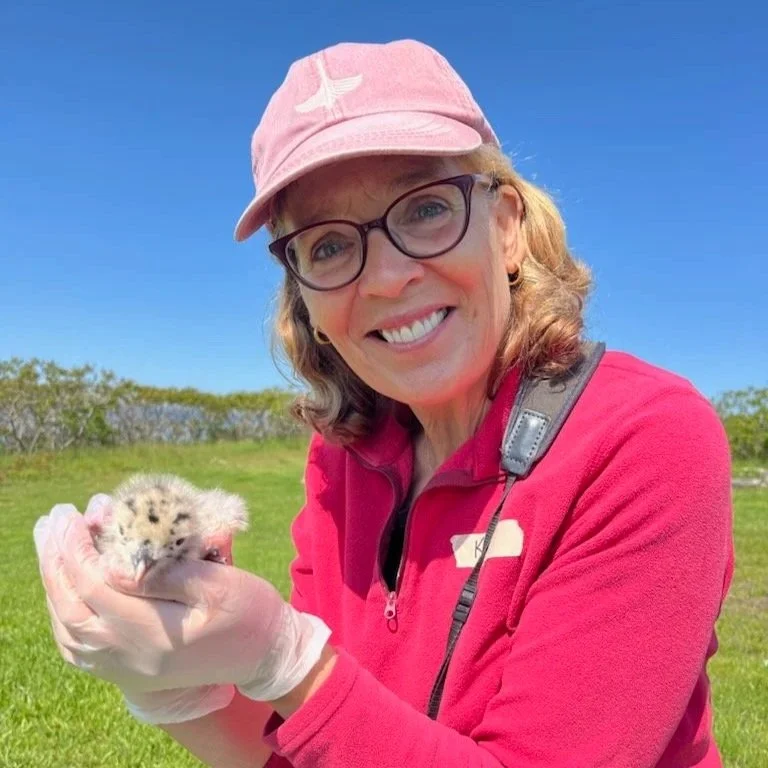
Brooklin nature writer Kim Ridley.
Now you do. And apologies in advance if you’re stuck driving behind me at 20 miles an hour on a rainy spring night. I’m scanning the roads for frogs, toads and salamanders, which resemble gravel and bits of twigs in headlight beams. When I find them, I pull over, pop on a headlamp and reflective vest, and flick on my flashers. I escort these lovely creatures across the road in the direction they’re heading. It’s the least I can do in gratitude for all the joy they give me.
Maine native Kimberly Ridley is the award-winning author of six creative nonfiction books about the natural world for children and adults, including The Secret Pool and Wild Design: Nature’s Architects. Her essays and articles have appeared in numerous publications including Down East Magazine, The Christian Science Monitor, and The Boston Globe. She lives in Brooklin with the painter Tom Curry and their cat Andy. www.kimberlyridley.org
