

My Wild Neighbors: Warm June nights and ‘dazzling’ lights
Maine is home to 15 different kinds of fireflies, 11 are ‘flashers’
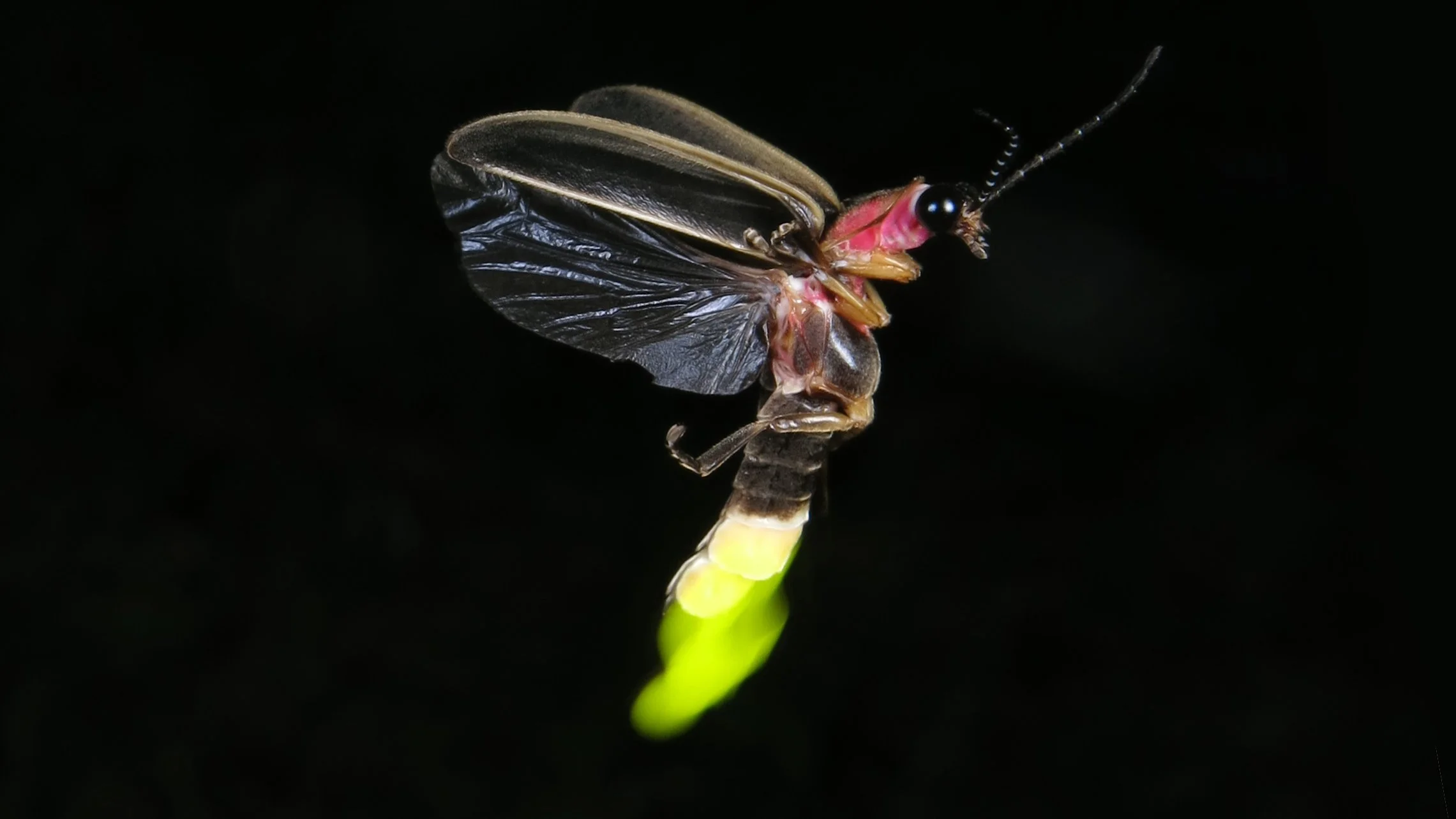
Males fireflies flash while flying and interested females flash back from the ground. Photo courtesy of Terry Priest.
By Kimberly Ridley
At a strawberry daiquiri party my bestie hosted one June evening a million years ago, a tall, bearded man with auburn curls and sea-green eyes sidled up to me with a large, empty jar. He asked me a question that would one day change my life.
“Want to catch fireflies?”
My bestie had introduced us a few weeks earlier. Sparks hadn’t quite ignited, but I was bored at the party, and I adored fireflies.
“Okay,” I said, downing my daiquiri.
I followed him into a lush field beyond the yard. Hundreds of fireflies sparkled over the tall grass. He turned out to be adept at catching them, gently cupping one after another in his hands and depositing them in the jar. I caught a few, too, and we soon had a jar full. We watched the fireflies for a few minutes before tipping them back into the grass. They flickered on the ground like yellow sparks.
Since that long ago night in an enchanted field, I’ve learned that the fireflies were courting. About half of the world’s 2,000-plus known species of fireflies flash to find a mate (daytime species use pheromones or “biological perfumes” to attract a partner). Each species uses a unique pattern of flashes. Males flash while flying, and interested females flash back from the ground or vegetation. Some fireflies flash pale yellow light, while others glow green, amber, red, or blue.
Here in Maine, 11 of our 15 kinds of fireflies are flashers. Step outside on a warm June evening and you might catch a light show featuring several different species. For example, the ignited firefly (Photinus ignitus) beams one flash every five seconds, while the double cousin firefly (Photinus consanguineus) flashes twice in six second intervals. The big dipper firefly (Photinus pyralis) flashes as it swoops, inscribing a glowing letter “J” in the dark.
Chemistry lights the firefly's lantern. Inside this tiny organ on the tip of its abdomen, luciferin, a light-producing compound, reacts with the enzyme luciferase in a process powered by ATP, the energy-carrying molecule found in all living cells. When oxygen enters the lantern, it helps trigger the reaction. FLASH! Energy is released as light in a process called bioluminescence. By controlling the flow of oxygen to the lantern, fireflies can flick their lights on and off in dazzling patterns.
Adult flashing fireflies live only a few weeks, just long enough to mate. Females lay upwards of 500 eggs on damp, undisturbed soil, favoring moist spots shaded by tall native plants and rich in leaf litter and rotting logs. Three or four weeks later, eggs hatch into armored larvae with segmented bodies that resemble a cross between a stumpy centipede and an armadillo.
Firefly larvae prowl the leaf litter for up to two years before metamorphosing into adults. They’re well equipped for the rough-and-tumble life. The larvae of all firefly species flash their tails to warn off toads and other predators. Voracious predators themselves, firefly larvae stalk slugs, snails, and worms, all of whom they dispatch with paralyzing venom and digestive enzymes that dissolves their bodies into slurpable goo.
But enough with the gory details. Learning that firefly larvae help control garden pests made me even more curious about how to help our flashy little neighbors flourish. I also worry about seeing fewer of these living night lights—up to one third of our firefly species may be at risk for extinction. The Xerces Society for Invertebrate Conservation offers excellent tips to help protect fireflies. In a nutshell, doing less is doing more. Easy steps include leaving fallen leaves in autumn, letting stumps and logs rot, avoiding pesticides, adding native plants to your garden (or letting natives such as asters and goldenrods grow as I’ve started to do), and turning off outdoor lights, which contribute to light pollution that can interfere with fireflies’ ability to find one another.
To me, there’s no lovelier way to spend a summer evening than watching fireflies. The green-eyed man and I have been watching them together ever since he invited me into that sparkling meadow forty years ago. When June rolls around with its grassy perfume, we step outside to the edge of our meadow at dusk. Green frogs plunk their syncopated banjo notes from the pond. The trees sigh. Finally, a tiny flash winks over the meadow and another winks back from the grass. Soon, the entire meadow sparkles. Time folds in on itself. We stand there, holding hands. Dazzled.
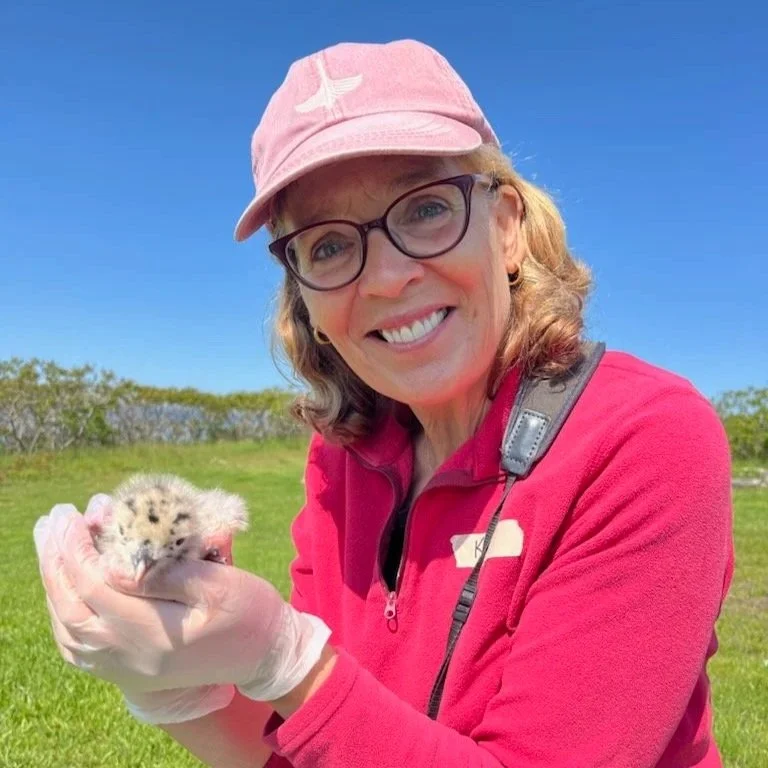
Maine native Kimberly Ridley is the award-winning author of six creative nonfiction books about the natural world for children and adults, including The Secret Pool and Wild Design: Nature’s Architects. Her essays and articles have appeared in numerous publications including Down East Magazine, The Christian Science Monitor, and The Boston Globe. She lives in Brooklin with the painter Tom Curry and their cat Andy. www.kimberlyridley.org