

Cultivating ‘calm’ at Maine Bonsai
John Ramsdell’s Verona Island nursery is one of only three in the state
July 13, 2026
By Steele Hays
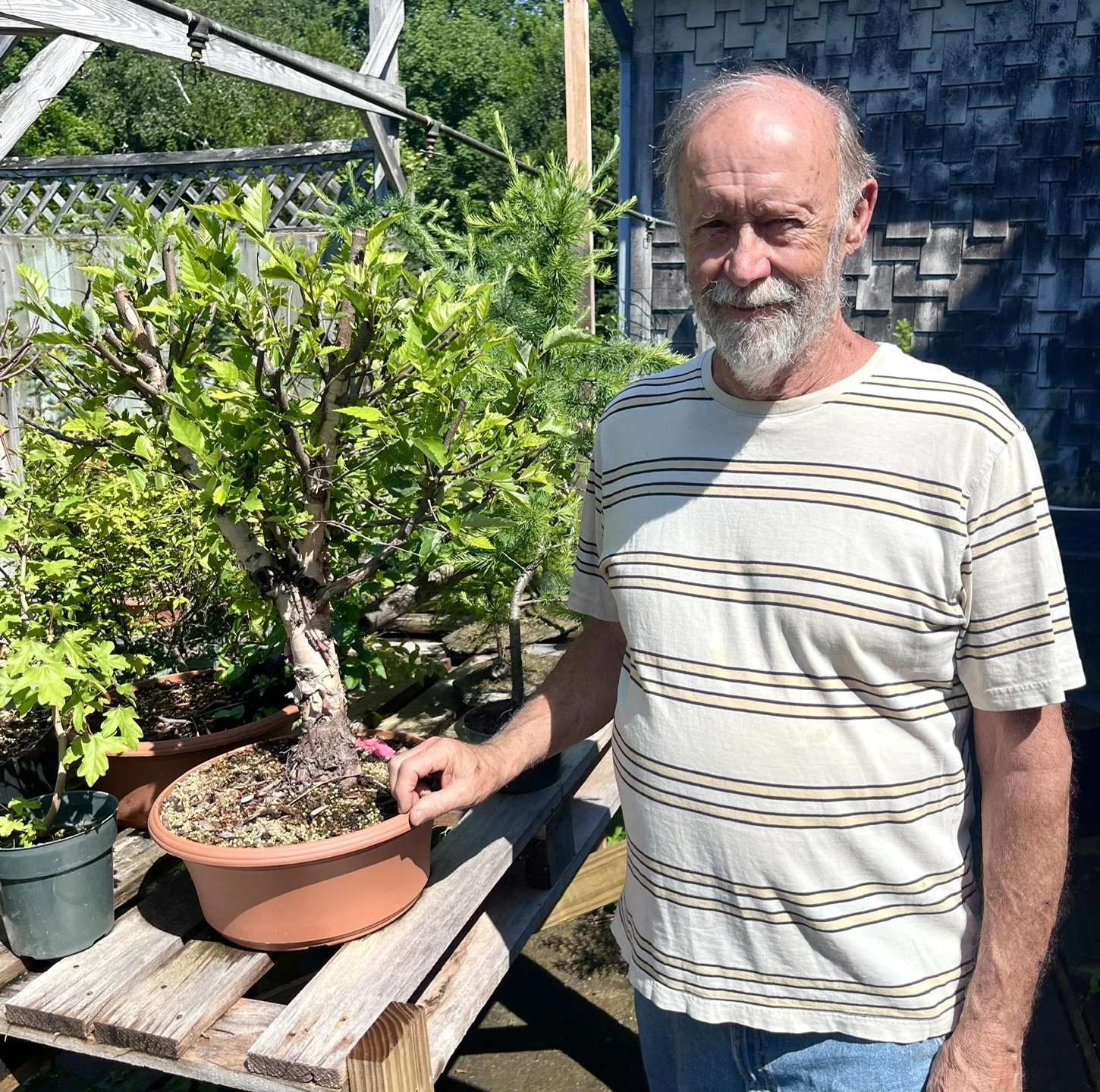
John Ramsdell has been studying and practicing bonsai for 55 years. Photo by Steele Hays.
VERONA ISLAND—Fifty-five years ago, when he was going through a dark period in his life, John Ramsdell, of Verona Island, visited a plant nursery and a bonsai tree spoke to him.
“It said, ‘Johnny, hold on. You’re still in there. Hold on,’” Ramsdell said. “I said to myself: I’m doing bonsai.”
Ramsdell has been studying and practicing bonsai since that day, first as a hobby and later as a one-man small business: Maine Bonsai, one of only three bonsai nurseries in the state. Now, Ramsdell cares for more than 200 bonsai trees and plants in several greenhouses and on the grounds around his home on Verona Island’s West Side Drive, just south of Bucksport. Almost all of them are for sale, at prices ranging from $10 to $500.
Maine Bonsai’s website says that bonsai trees let you “feel the calm.”
“That’s true,” Ramsdell said. “It’s better than a tranquilizer. They’re like having pets. Watering them and styling them [...] I find it relaxing.”
Several recent studies have confirmed what bonsai enthusiasts believe: That practicing bonsai cultivation has mental and physical health benefits, inducing feelings of relaxation and stress relief as well as promoting positive attributes like patience, resilience, attention to detail and an increased awareness of nature.
The word bonsai comes from the Japanese words “bon,” meaning tray or shallow container, and “sai,” meaning plant or tree.
Ramsdell collects many of his trees by ranging through the woods on his property and on 75 acres of forest land owned by family members. He is especially fond of white spruce trees, one of the 14 species of conifers native to Maine. When he finds a tree he likes, he digs it up by cutting the roots and bringing it to his nursery. He then begins “styling” or shaping each tree using bendable copper or aluminum wire—about the diameter of a pencil— which allows him to bend its branches and trunk into a shape he likes.
For bonsai enthusiasts, a “beautiful specimen” is chosen based on “the overall shape,” Ramsdell said. “A curving trunk is like the wandering path of life.”
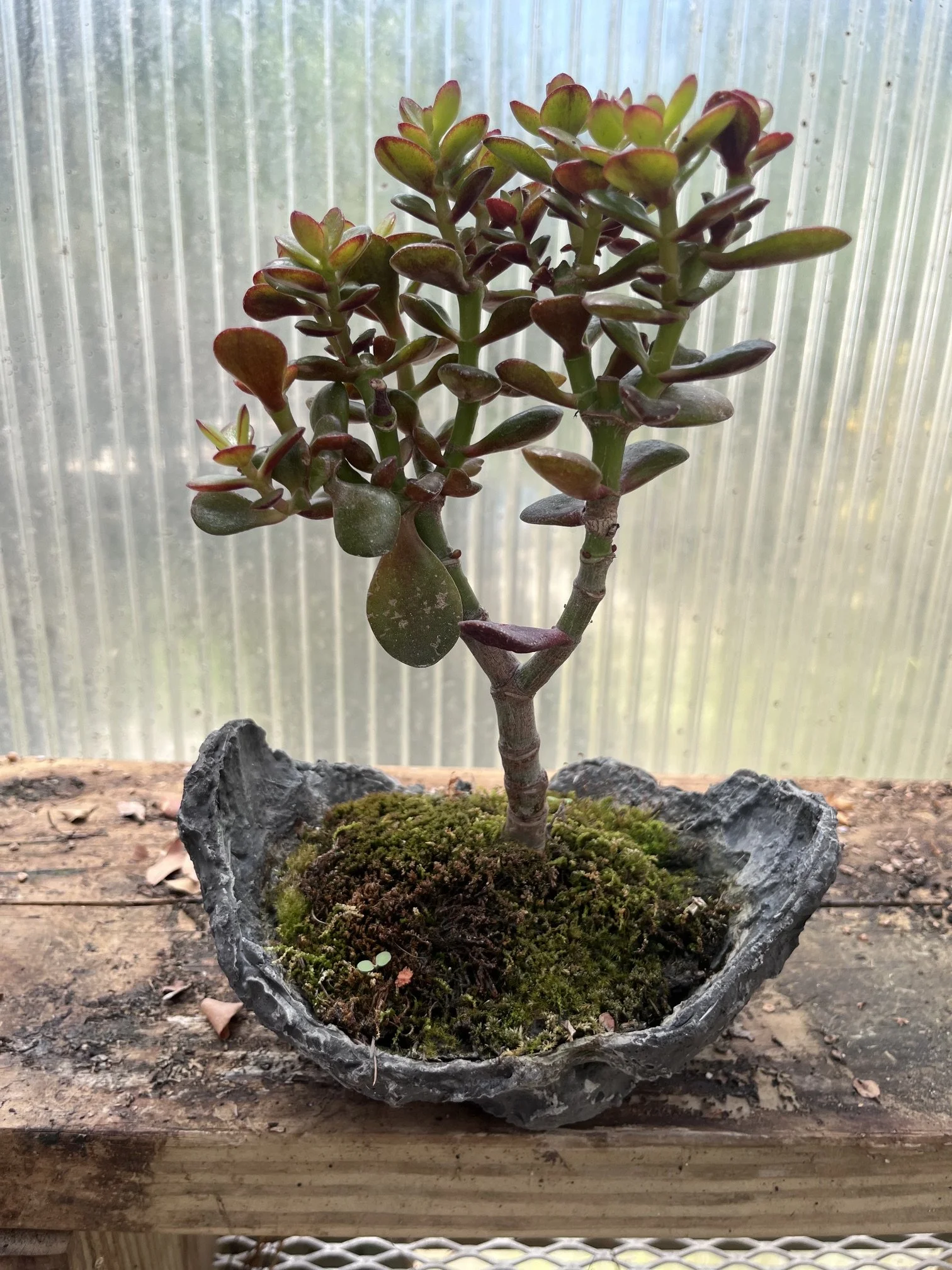
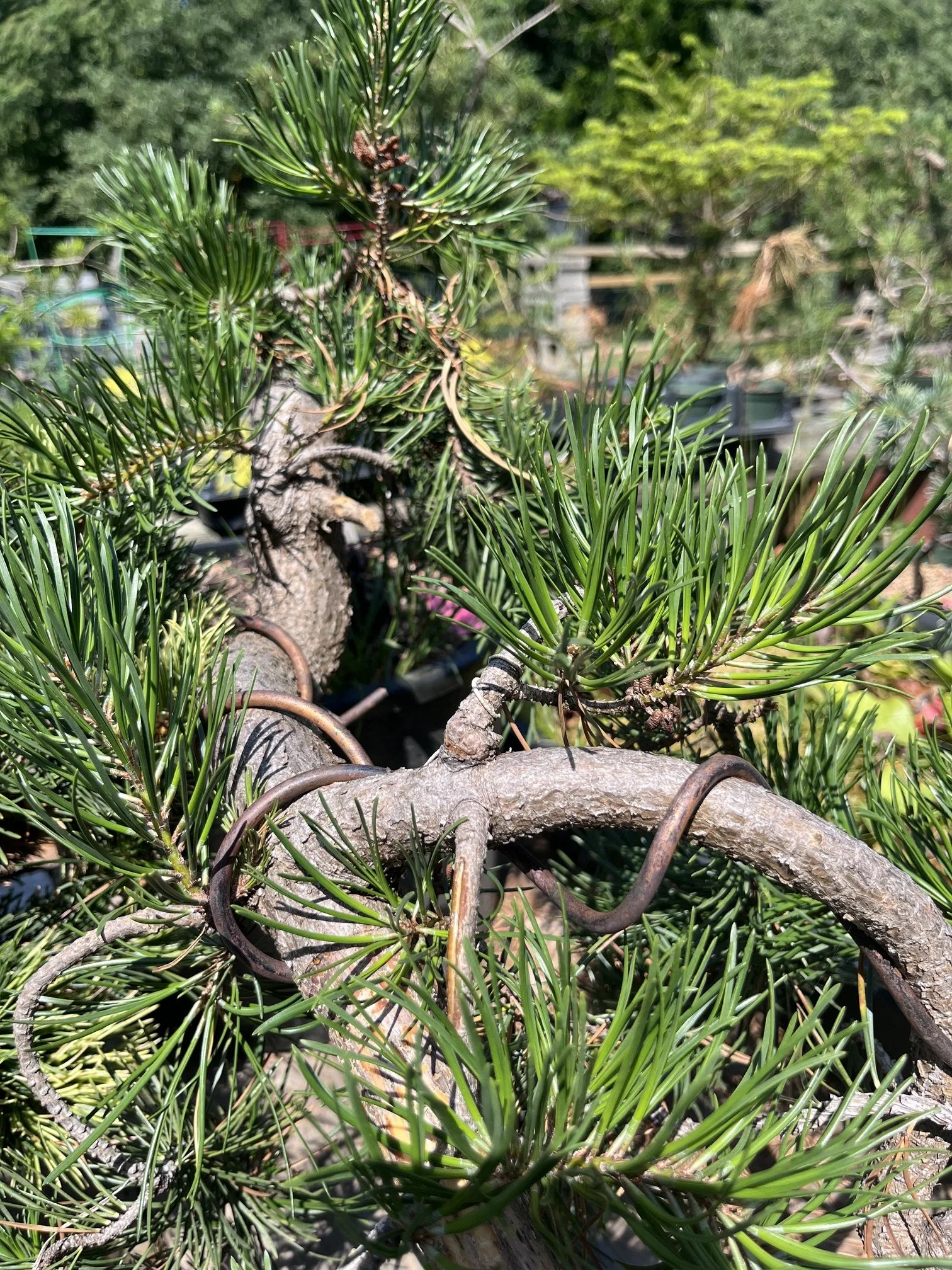
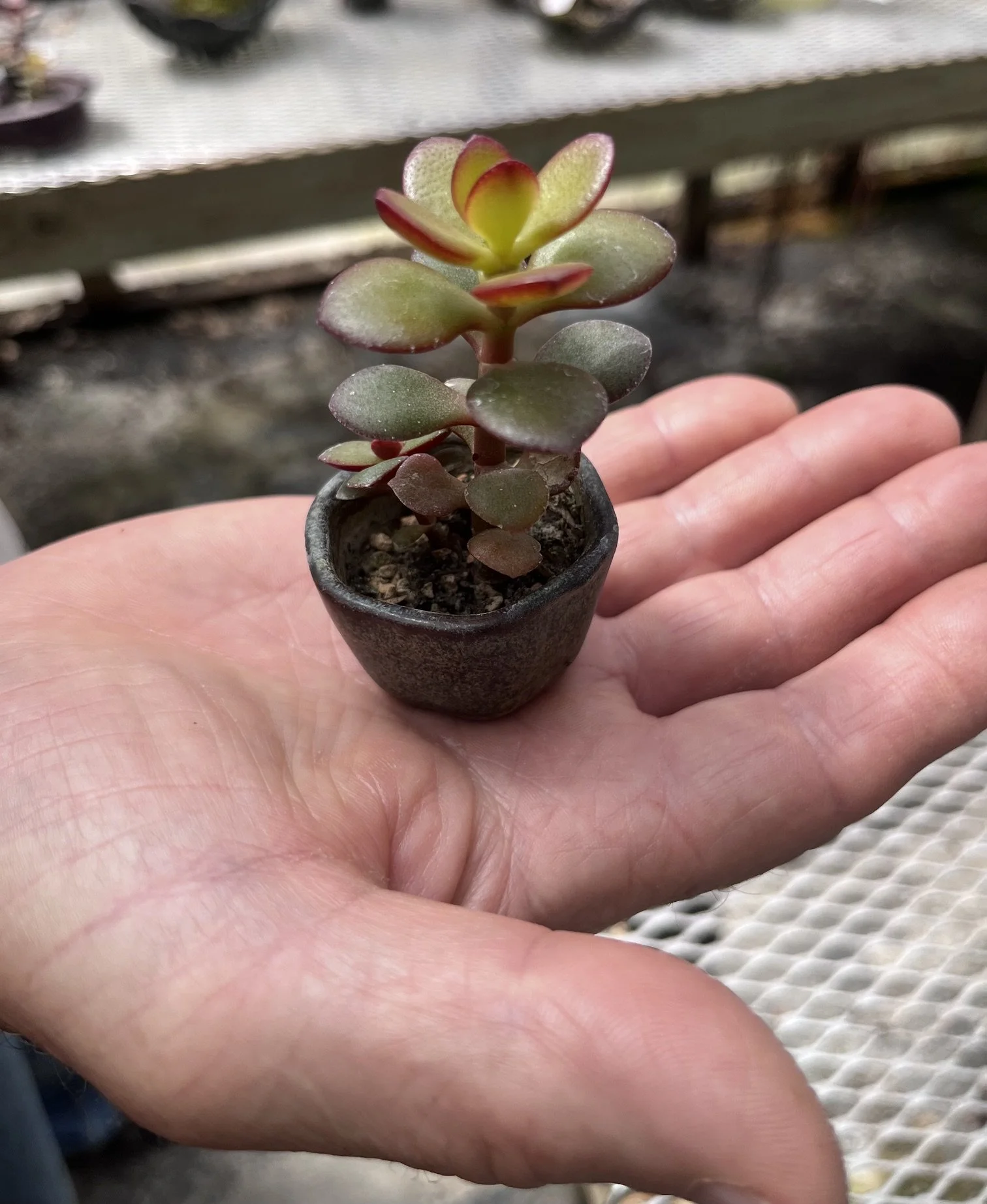
Ramsdell uses ‘bendable copper or aluminum wire’ to shape each plant and draws customers from all over the U.S. to his small nursery. Photos by Steele Hays.
Some of Ramsdell’s trees are four to five feet tall, with thick trunks, but they grow in remarkably small shallow pots or trays. They’re so top heavy, even a moderate wind would topple them, Ramsdell said, so he uses long screws to secure each pot to the wood frames and table tops on which they sit. In the winter, he moves the native and non-tropical trees into a hoop house-style greenhouse that is open on each end, allowing air to flow through. The greenhouse protects the trees from wind and snow, but allows the temperatures to fluctuate, matching the temperatures outside. He also keeps a smaller greenhouse heated all winter for his tropical tree and plant varieties, some of which are less than six inches tall. These small plants are in tiny ceramic pots, many of which Ramsdell crafts himself.
Ramsdell draws customers from all over the U.S. to his small nursery and has sold trees to three bonsai masters who have admired his work, he said.
Mostly self-taught, Ramsdell honed his skills through extensive reading and practice. For a few years, he regularly attended meetings of the Bangor Bonsai Society, but that group is no longer functioning, he said. Even after 55 years of practicing the art of bonsai, Ramsdell said he is still “learning all the time.”