

How Tinder Hearth came to be
Once a dishwasher and lobsterman, Tim Semler discusses how he and his wife created one of the hottest bakeries in the country
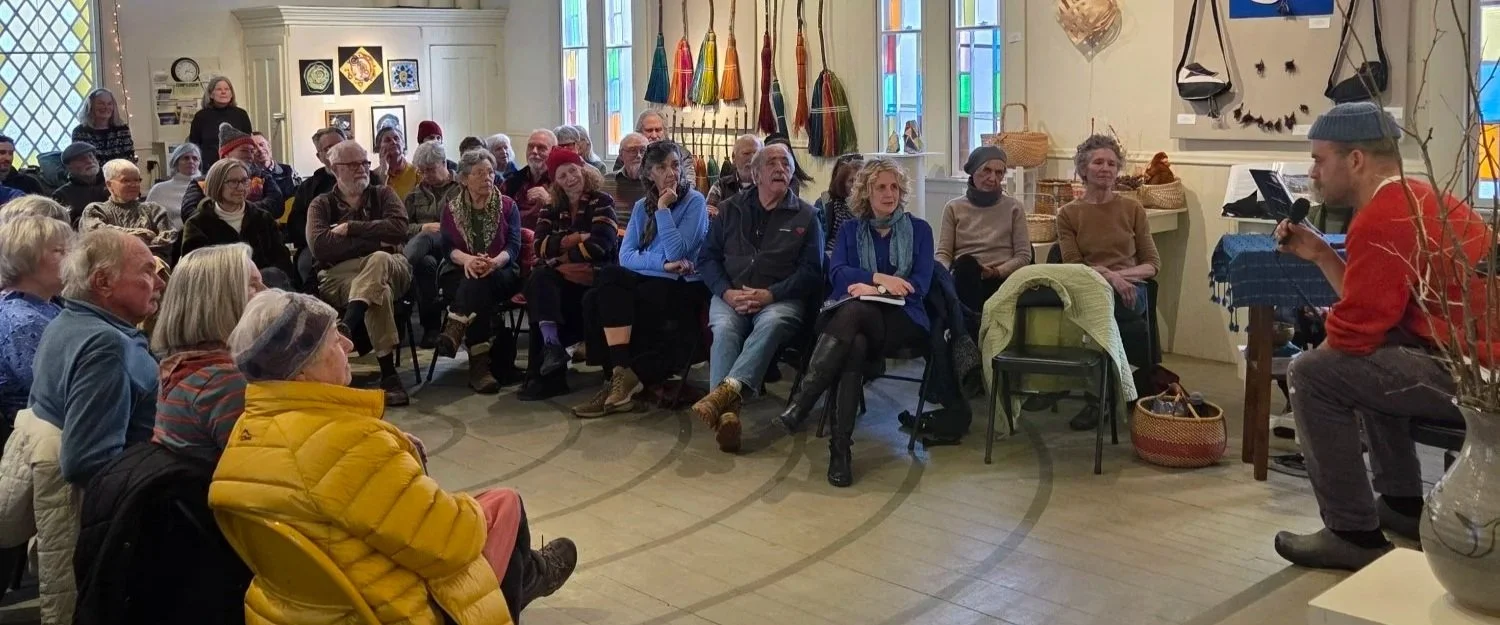
Tim Semler, who co-founded Tinder Hearth with his wife, Lydia, tells a rapt audience at Reversing Falls Sanctuary how the couple grew a business that has become a focal point of the community. Photo by John Epstein.
Feb. 25, 2026
By John Epstein
Dozens of people crowded into the Reversing Falls Sanctuary meeting room in Brooksville on Feb. 22 to hear the story of a successful bakery named several years ago as among the top 50 in the country.
With every folding chair taken, attendees took up seats on window sills. They came to hear Tim Semler describe the genesis of Tinder Hearth, the cafe, pizza place and bakery that he started with his wife, Lydia Moffet Semler, in 2011. Many in the room have known Semler since he was a little boy, and their affection for him was palpable.
A counter-cultural approach to life
Semler talked of his life in Brooksville in the early 1980s where he lived in the house that is now part of the Tinder Hearth building compound on Coastal Road. He said his parents, Derek Semler and Lake Larsson, both musicians, were artistic, counter-cultural folks.
“Artists were coming to the area and having children,” Semler said, “It was like [it was] the 1950’s or 60’s around here–the telephone numbers were just four digits.”
Semler’s parents split up and there was a period when he moved around a lot. He later went to and was inspired by the Liberty School, a progressive school in Blue Hill, now gone, where students shaped the curriculum. He found himself drawn to communal living, much like his parents had been.
“I like being with people in large groups,” Semler said. He attributed part of that feeling to his grandmother, whom he described as “a radical Catholic activist” who pushed him to see larger purposes in the world. “She would always ask me: ‘What are you thinking?’”
His grandmother also had nine children. “I had like 25 cousins who were always around in big groups,” he added, “I have a high tolerance for chaos.”
After a year at college, Semler dropped out. “I really wanted to move back here and start up a commune,” he said. But after working long days in various jobs like dishwashing and lobstering, he realized that he needed to travel in winter to learn from people of different cultures. So Semler went to Mexico.
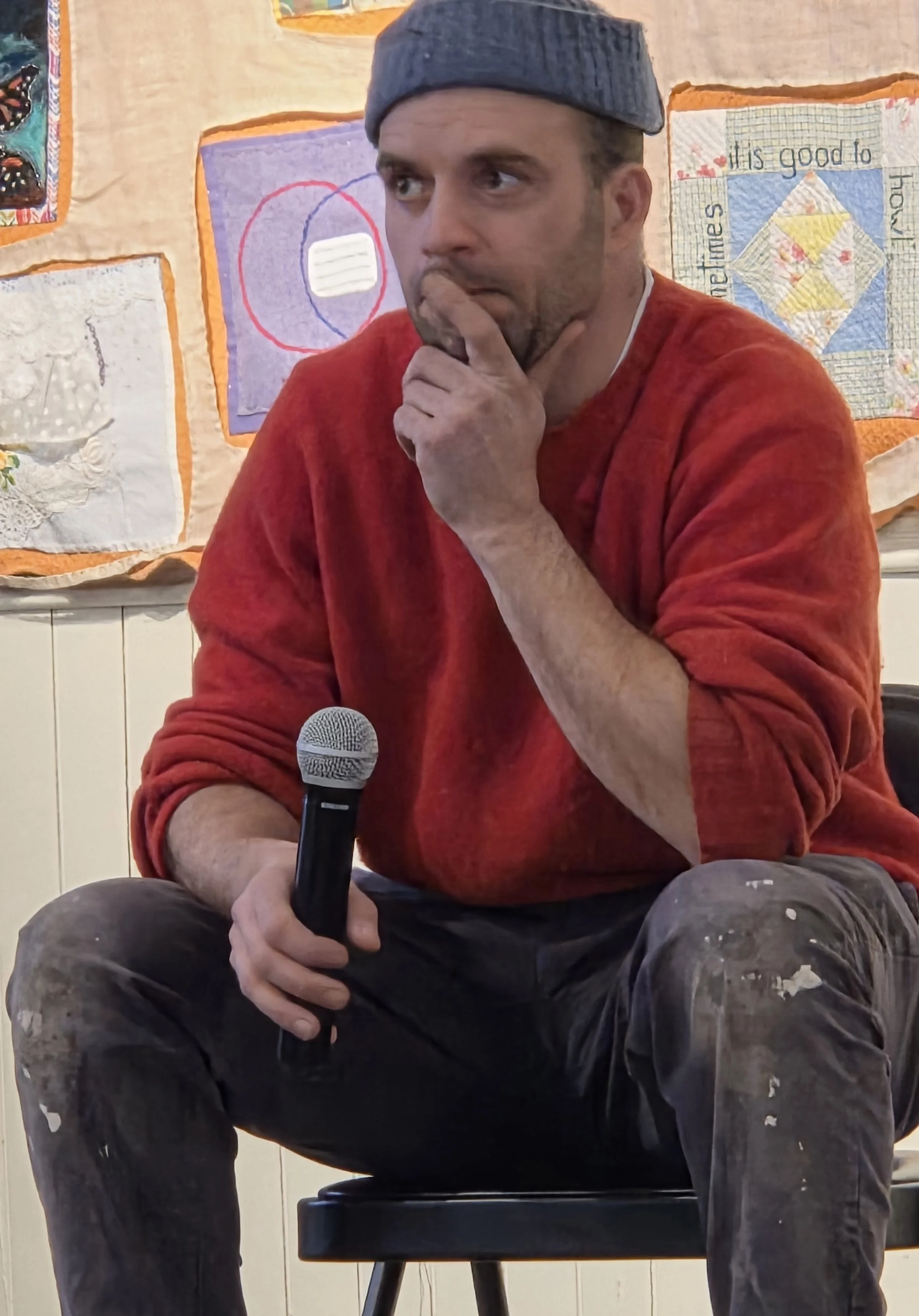
Tim Semler. Photo by John Epstein.
“I just fell in love there with ovens and fire,” he said. He started building ovens with a community of people. Later, when returning from a trip to Ghana, he secreted a batch of sour dough starter, brought it to Maine and started baking. Semler’s first hand account of the origin of his sour dough starter put to rest some rural legends floating around Brooksville, where some people thought his first starter batch came from Morocco or Algeria.
Getting down to business
“Around that time is when I met Lydia,” Semler said. She was finishing her last year of college. “I can’t say it enough, how much she means – without her nothing really would have happened,” he added.
Lydia joined him and a group of a dozen or more other like-minded young people to bake bread communally on the Coastal Road property where Semler grew up. He said that Lydia thought of expanding the baking business to provide dinners. As the business grew, transactions went from cash being dropped off in jars to credit cards.
The community helped the business expand by helping fund new ovens and kitchen renovations. Semler lamented that as Tinder Hearth grew it became necessary to switch from communal labor to wage labor.
“We pay our staff 20 percent more than what is advised,” Semler said. But in order to do that, Tinder Hearth has had to forego open mic nights that had been so popular before Covid.
“Just to survive with the economy, it’s gotten tougher to keep the ovens going,” he said. “We’ve had to become a little more typical as a business, just to survive. We are catering weddings now just to make it through the winter. But don’t get me wrong, I love being part of a wedding and bringing our magic.”
Semler manages much of the baking operation and Lydia wears many hats, including managing the hiring. They also are raising their two sons, Kieran, 11, and Alva, 9. On the day of the talk, Lydia was down in Portland because Kieran had a hockey game.
Semler’s talk was part of a series of programs that Reversing Falls Sanctuary will be presenting into the spring called “Refugia,” meaning a hidden place of refuge in a disaster zone, where plants, animals, and people, too, “can find a safe haven to preserve life” explained Anne Ferrera, an RFS founder, who moderated the event.
Attendees asked Semler about maintaining and baking in the many wood-fired ovens that have been in operation over the years. He admitted that cutting and stocking the 20 cords of hardwood needed each year sometimes has him thinking wistfully about switching over to propane. He said Tinder Hearth gets “great grain” from a farm in Aroostook County and white flour from Quebec. He also confessed that maintaining the quality of sourdough starter was always an interesting challenge.
Tinder hearth’s winter staff of 20 balloons to 70 people in the summer, Semler said. Asked where many of those find housing, Sermler said that, “luckily, many of the summer workers have housing because they live with their parents.”
That income from a short and intense Maine summer helps keep Tinder Hearth open during winter, creating time and space for year-rounders to meet for breakfast, as well as opening up evenings for musical performances and nonprofit fundraising events that support community engagement.
A 2023 article in The New York Times named Tinder Hearth one of the 50 best restaurants in the country, adding to its popularity with visitors.
“The summer is tight,” Semler said.
