

20 years after ‘Tire Tracks’ left a mark
Let’s use the anniversary of a film about burning rubber to figure out how longtime residents and newcomers can shape a shared future
Aug. 18, 2026
By Linda Nelson
STONINGTON–Twenty years ago the short local film Tire Tracks was released in Stonington to local and regional acclaim.
Tire Tracks captures without judgment the voices of those who delight in the local and rural practice of “burning rubber” – i.e., using the tools at their disposal to leave their marks on the world.
The creation of the film was a response to public complaints by new downtown Stonington residents of noise and disturbance in our hard working commercial fishing village. It is a cultural response to gentrification: the changing of property ownership and ultimately local culture and decision making toward those with more money, often from other places, increasing property values and taxes and pricing out working, lower income residents.
The film was made by a first-time Stonington filmmaker, John Steed. It was the first in a series produced by the public digital media studio at Opera House Arts (OHA) at the Stonington Opera House.
Tire Tracks documented the practice of burning rubber on local roads.
As OHA’s founding executive director and producer, I remain proud to have commissioned, participated in the making of, and presented this film. It is one of the most important works OHA created during my 17-year tenure.
Living in coastal Maine, I think a great deal about the impacts of gentrification. We all need to. Continuing to financially push our fishermen and working people away from the shore doesn’t serve our communities well.
Are there actions small municipalities can take to stem the losses of our authentic, commercial, working fishing communities to "destination housing" and too-short seasonal tourism? Are there policies and investments we can make to sustain our working waterfronts and year-round workers and businesses? Do we continue to allow "market forces" their own agency without balancing them against the common needs of whole communities, and especially those most in need?
In the aftermath of 9/11 just as after the pandemic, our coastal Maine communities experienced a surge of migration by those trying to escape urban life. Current influxes are often spurred by climate changes. Maine can look pretty good in the face of severe wildfires, floods, or extreme temperatures.
In 2001-2006, I was a fairly new resident here myself, having moved from the density and diversity of New York City to help restore and reactivate the Opera House. To our surprise, some of the other new residents didn't like that our young people were hanging out downtown, on its commercial piers, creating all the noise and trouble groups of young people make – including burning their tires going up the hill past the Opera House and, in more than one instance, causing us to scramble to be sure our stage lighting had not caught fire. And they didn’t hesitate to make their opinions known, calling for the “relocation” of our young people from downtown.
When we developed and released Tire Tracks, we learned that it is not only "young people" who enjoy the art, practice, and opportunity of using their vehicles to leave their marks on our roads, just as it’s not only young people who like to gather for music and make noise in downtowns.
This film was and remains important and popular because it gives visibility, voice, and pride to ways of living that “better resourced” Americans would like to make invisible and erase. One can understand accusations of elitism.
Working to balance economic trends is a tricky line to walk thanks to the famous “unseen hand” of market forces which makes many changes feel more like fate than choice.
Most of us want increased investment, prosperity, safety and opportunity in our communities. We strive for the "tide that lifts all boats."
How do we achieve an equitable prosperity, one that doesn't continue to drive up property values and rents and displace our generational, lower-income residents?
This tricky line is further complicated by the fact that those relocating to rural, less developed areas too often believe that success, wealth and education in and from those other places makes us "right." We arrive with confidence and credentials, even when our public positions might only represent prioritizations of self-interest.
Our communities need and want the resources new residents offer. We are grateful for and fond of seasonal residents, visitors, and new residents who listen, learn and understand the need for investment in year-round housing, business development, education and more.
Yet there remains too little of this.
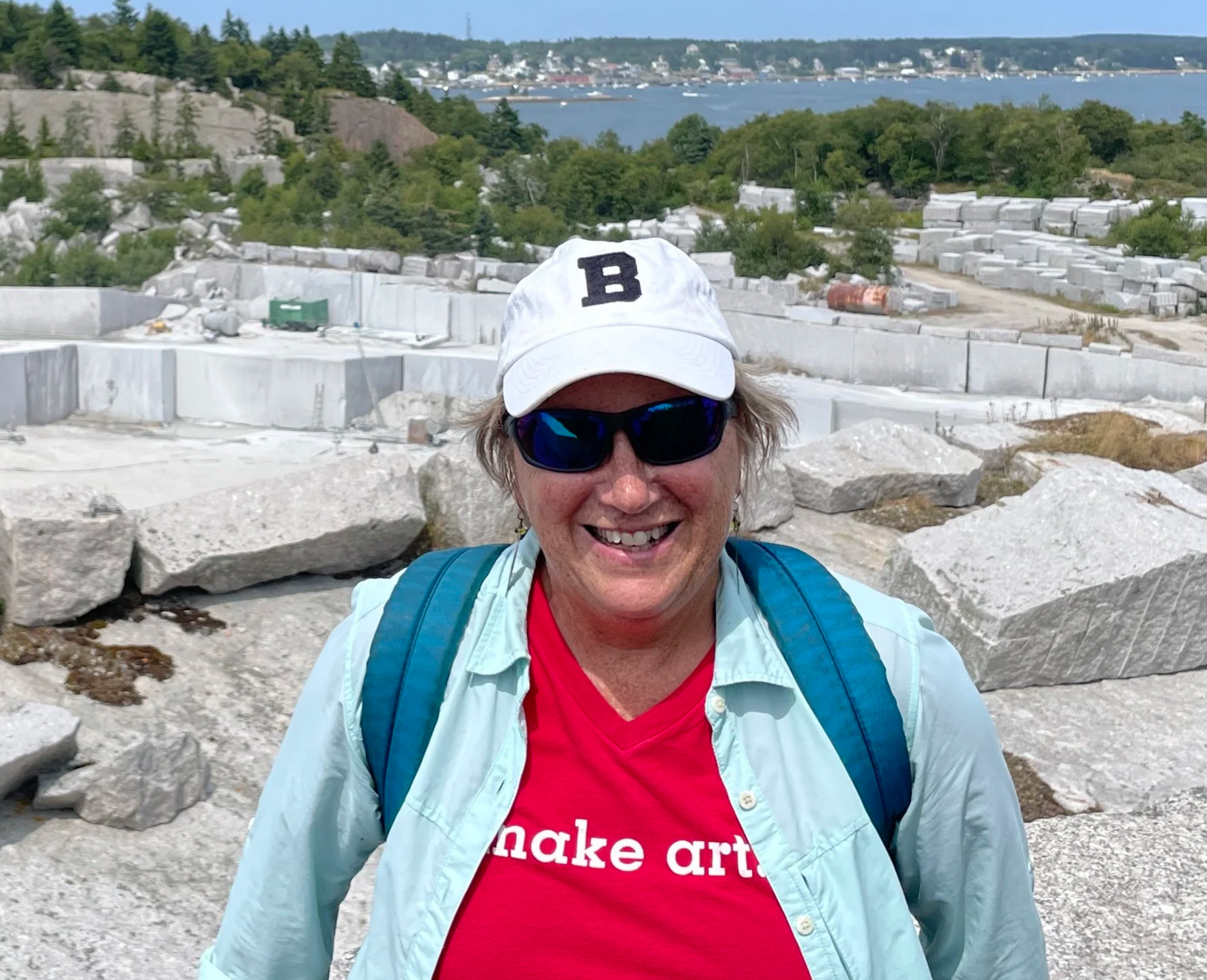
Linda Nelson. Photo by Christina Breen.
If you believe you are moving to a rural community "to get away from it all” (as my father, a campground manager, liked to say) then please use your privilege to respect and sustain the local workforce: learn about local culture, volunteer, and make significant and impactful financial investments that go beyond the usual $100 checks to 20 different nonprofits. To lift all boats, we need all hands on deck.
Long live Tire Tracks and its stars, the hard working, energetic, loud and smelly world of fishermen and their trucks. Let's use its 20th anniversary to shape change together.
–Nelson is a freelance writer and consultant who also serves as part-time economic development director for the Town of Stonington. The opinions expressed here are her own and do not reflect any official position by the Town of Stonington.
The Rising Tide welcomes letters and opinion pieces from a wide variety of viewpoints. Please review our guidelines for helpful tips on what we look for in letters and opinions. Published pieces do not reflect the editorial stance of The Rising Tide or its board, and are not endorsements. To submit a piece to us, email info@risingtide.media.
