

Finding the balance of AI in the classroom
A professor sees a decline in students’ writing. A student sees her teacher using AI. A look inside the AI classroom struggle.
Oct. 20, 2026
By Jessi Hardy
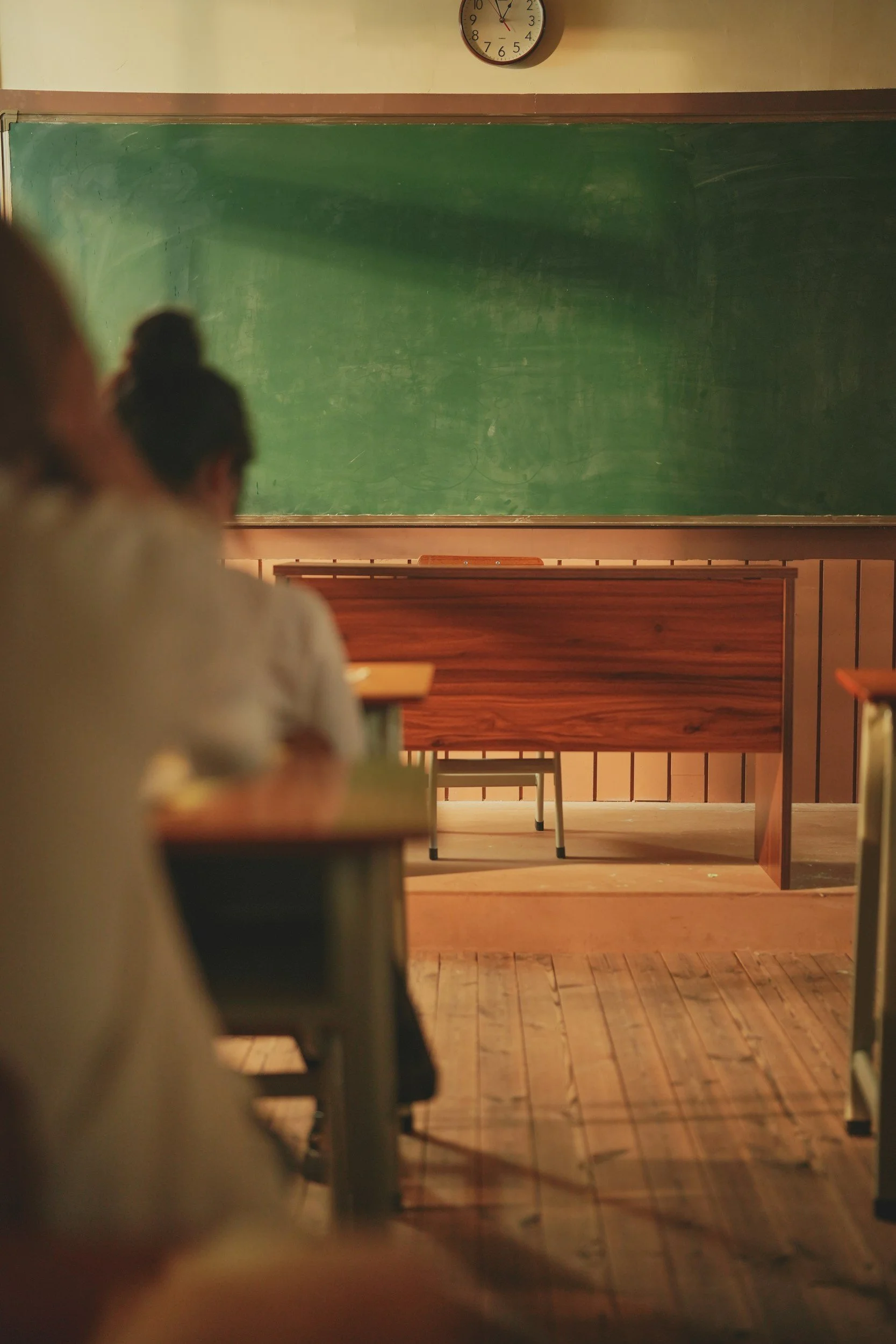
Artificial intelligence is rapidly shifting from a futuristic concept into an unavoidable part of daily life, especially within schools.
Schools and universities across the country are grappling with how to adapt to a world in which AI is getting better, smarter and more utilized by the day. There are even a dozen schools throughout the country that champion AI as a superior and more efficient way to teach young people.
Schools on the peninsula have developed AI policies as a response to the rapid acceleration of technological change, and students and teachers alike have strong thoughts about how AI is affecting the current and future of education.
Deer Isle-Stonington High School, George Stevens Academy, and CSD 13 classify AI into three categories within their policies: translative, integrative, and generative. The policies allow AI to be used for research and problem-solving under strict standards, but require such use to be disclosed.
Using AI to plagiarize other works, however, or using AI in a way that minimizes or hinders students’ learning, is not permitted by any of the policies.
Meanwhile, at the University of Maine, there is no overarching policy that governs all AI use for all students. Instead, professors each develop their own policies.
Caroline Bicks of Blue Hill, a UMaine English professor, has been an educator for 30 years. She described student writing over the past year as “disturbing.” (Full disclaimer: Bicks serves on the board of The Rising Tide.)
"They're just robbing themselves of the experience of engaging with and struggling with writing, which can be hard," Bicks said. "But that's why I'm here. That's why all of us are here as teachers. I'm just surprised that students want to rob themselves of that experience, and learn about themselves, through the act of writing."
Bicks, for example, does not allow electronic devices in her classroom unless accommodations are necessary. She said her students have better conversations holding an actual book. She added that AI affects classrooms differently and said she feels AI takes away individual creativity.
Maine Marine Academy has not yet responded with any details on an AI policy to The Rising Tide.
Hannah Billings, a senior at Deer Isle-Stonington High School, said schools must find a balance with the use of AI.
"We need to learn to embrace it, not use it to do schoolwork or find the easy way out," Billings said. "We need to teach students and our peers how to use it correctly as a resource, not as an answer key. Personally, I do not agree with AI or its principles, but I don't see our world going away from it. So instead of treating it like bad behavior, we should find a way to use it in classrooms and embrace it.”
Jessica Jenkins of Deer Isle, who recently graduated from Beal College, said she experienced hypocrisy with her own educators and their use of AI.
"I loved it when my college professor took the time to make an announcement about how students shouldn't be using AI to write papers, all while his announcement was clearly written by AI,” Jenkins said. "It's the em dash that is a dead giveaway."
While some educators adjust to AI's effect on learning and integrity, there are similar concerns for some students about creativity and authenticity. Ryder Bray, for example, a senior at Deer Isle-Stonington High School, has concerns about AI’s impact on art.
"The rise of generative AI has been so tremendously destructive not only toward me, but to many other artists across the globe. We all create beautiful pieces using our own unique creativity, creating memorable and heartfelt pieces for others as well," Bray said.
He described the “soul-crushing” aspect of AI on human creators.
"Artists put so much love, effort, passion and care into their work, and watching it slowly become invisible and unrecognized really takes a toll on us. Generative AI has not only caused a massive impact on artists, but it is detrimental to our health and the world around us ... it is beyond disappointing and soul-crushing," Bray said.
Despite concerns with the use of AI in the classroom from teachers and students alike, AI is already strongly integrated into many components of life. The current AI movement parallels the 1990s internet revolution, with new technologies reshaping established norms.
Justin Betts, a Sedgwick parent, said, "AI is another technological revolution. You can dislike it, criticize it, regulate it, or choose not to use it…But telling everyone to stop using AI is like telling people in the 1990s to stop using the internet because it was hurting newspapers and local stores. The technology isn't going back in the box.”
Emphasizing the need for a proactive approach, Betts highlighted the broader societal implications of this technological shift.
"The conversation we actually need to be having is how we adapt to it without leaving people behind," Betts added. "How do we make sure human creativity, craftsmanship, knowledge, and connection continue to have value while machines become capable of doing more of our work?"
Click here to view The Rising Tide’s AI policy.
