

Transfer station to soon send trash to Hampden facility
Manager Mike Laursen helps educate residents as transition for Blue Hill/Surry Transfer Station nears
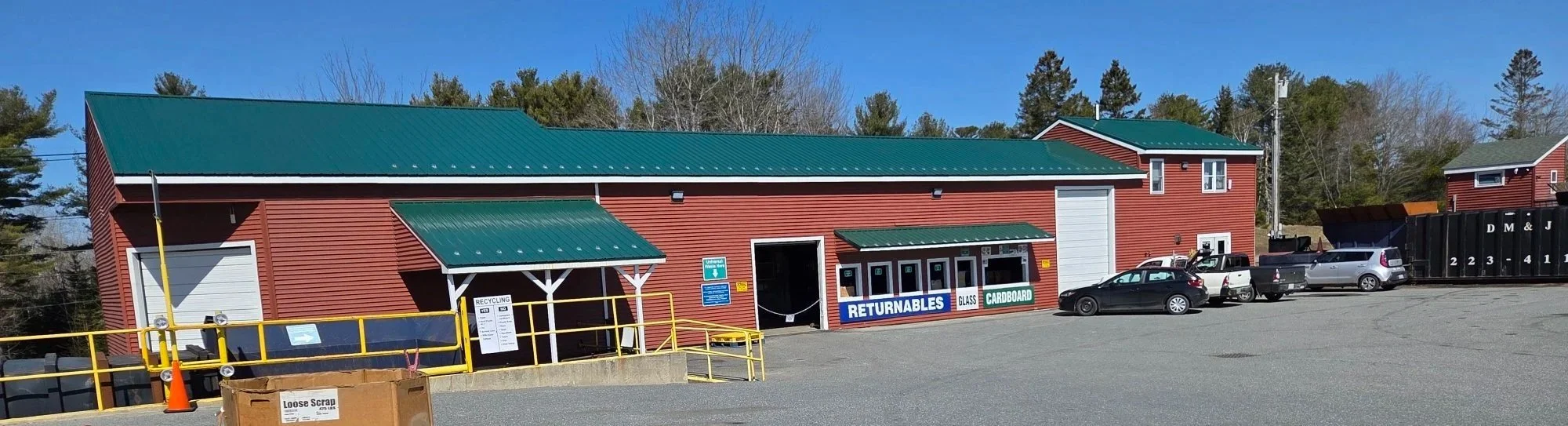
The Blue Hill/Surry Transfer Station serves the year-round and seasonal residents of Blue Hill, Surry, Brooklin, Brooksville, and Sedgwick. Photo by John Epstein.
April 14, 2026
By John Epstein
BLUE HILL— Three years ago, Mike Laursen and his wife moved from Toledo, Ohio to Surry, where they built a home near the sea. Soon after the move, Laursen started working part-time as an assistant manager at the Blue Hill/Surry Transfer Station, which handles the waste and recycling for five towns on the Blue Hill peninsula, including Blue Hill, Surry, Brooklin, Brooksville and Sedgwick.
In October 2024, he became a full-time manager of the facility. With 20 years of experience in jobs that required mechanical know-how coupled with organizational and people skills — like running blood drives for the American Red Cross and managing a large-scale production team at a Pillsbury Cakes factory — he had the right background for the job.
“It helps that I can fix a lot of the equipment around here,” Laursen said. But he’s also worked to make the facility more user friendly. In the 18 months since Laursen has been in charge of the transfer station, Laursen has worked hard to make a trip to “the dump” a positive experience.
“People used to be afraid to come to the staff office to ask questions,” said Laursen. “I had to change the culture.”
Rather than hunkering down in the small office, Laursen walks the transfer station grounds in his signature lime green sweat shirt and watch cap. If people have questions, he and his staff are available to answer them. There’s also signage around the facility to help patrons understand where waste items need to be placed. Some of the most effective signs are hand-made by Laursen on the fly.
“It’s easier on the staff if people understand where to put their trash,” he said.
At the far eastern side of the transfer station there are two large piles of debris in the storage yard. One is composed of demolition material from construction; the other, metal waste from appliances and machinery. Laursen explained that the demolition debris would be shipped to the Juniper Ridge landfill, but the metal would be hauled away by Grimmel Industries and sold as scrap. The transfer station recoups approximately $50,000 a year from the metal waste.
Laursen’s pride and joy at the transfer station is the “Take or Leave It” room. “It’s a labor of love,” he said.
“When I came here the place was a mess,” he added. “We threw away the nasty, dirty things and put the room in order. I put in a heater and an air conditioner, too. We want to make it a nice shopping experience.”
Off-site solid waste processing will transition to a new facility this spring
Later this spring, the Blue Hill/Surry Transfer Station will begin transporting all of its solid waste to a recently updated processing facility in Hampden, operated by the nonprofit Municipal WasteHub. Formerly known as the Municipal Review Committee, the WasteHub is an umbrella entity under contract with 115 Maine towns (including the five who use the Blue Hill/Surry Transfer Station).
According to MWH’s executive director, Michael Carroll, the towns contracted to send their solid waste to an earlier version of the Hampden processing facility, which was closed in 2020 because of funding shortfalls.
In a telephone interview, Carroll said that MWH has entered into a partnership with the management firm, Innovative Resource Recovery, which will operate and finance the Hampden waste processing plant. Innovative will have a 90% share of the partnership which will be known as Municipal Waste Solutions. MWS will receive payments from the 115 Maine towns pursuant to a long-term contract of approximately 15 years.
In an email, Carroll described the newly installed waste recovery equipment at the Hampden facility as having the capacity to provide “a long-term solution for waste processing in Maine” while achieving the state’s 50% recycling goal. The recovery system uses special automated screens and a separating apparatus to pull recyclables from unsorted, mixed waste. It can also process organic and pulp fiber waste, including clean or dirty paper products, into salable natural gas. Carroll said the facility will also process demolition debris.
Working with MWH will be a significant change for residents who drop off their solid waste at the Blue Hill/Surry transfer station. For years, folks have been dutifully separating their recyclable plastics, metal cans and clean paper from household trash and placing the material into a designated trucking container. That process won’t be necessary with the new WasteHub equipment–it will take unsorted household waste and separate it mechanically.
“I’m a little afraid that people will think we’re not recycling anymore because we’re not asking them to separate out recyclables here,” said Mike Laursen, “We are, but it’s a different process.”
While the transition to MWH presents a major shift in the station’s operations, Laursen welcomes the change and the opportunity to talk to people about the change. Transfer station users can be sure that he’ll have new signs, too.
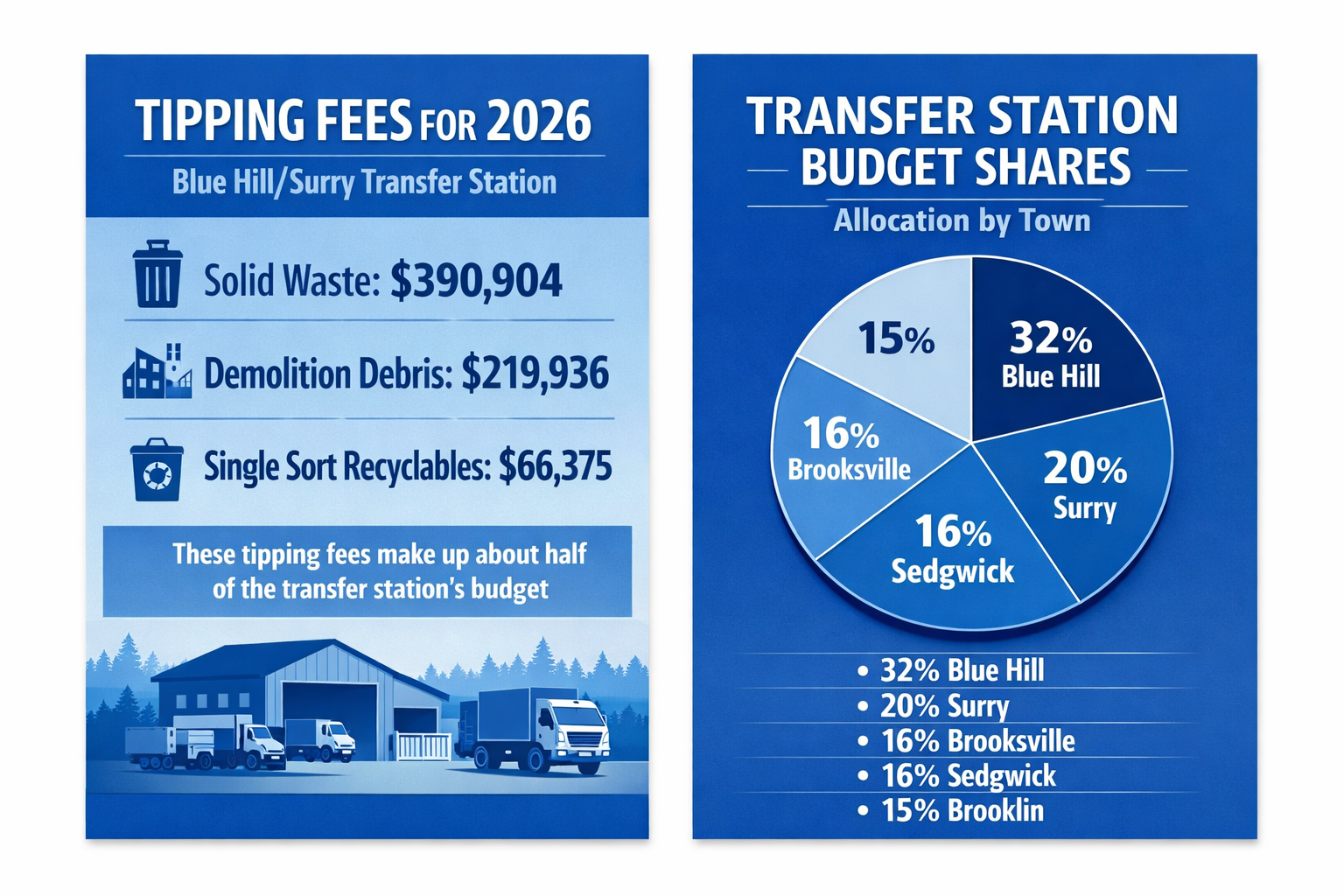
The information above was provided to The Rising Tide by the Town of Blue Hill.
