

Blueberry grower optimistic that 2026 harvest will top last year’s yield
Some fields producing as much as 6,000 pounds of berries per acre
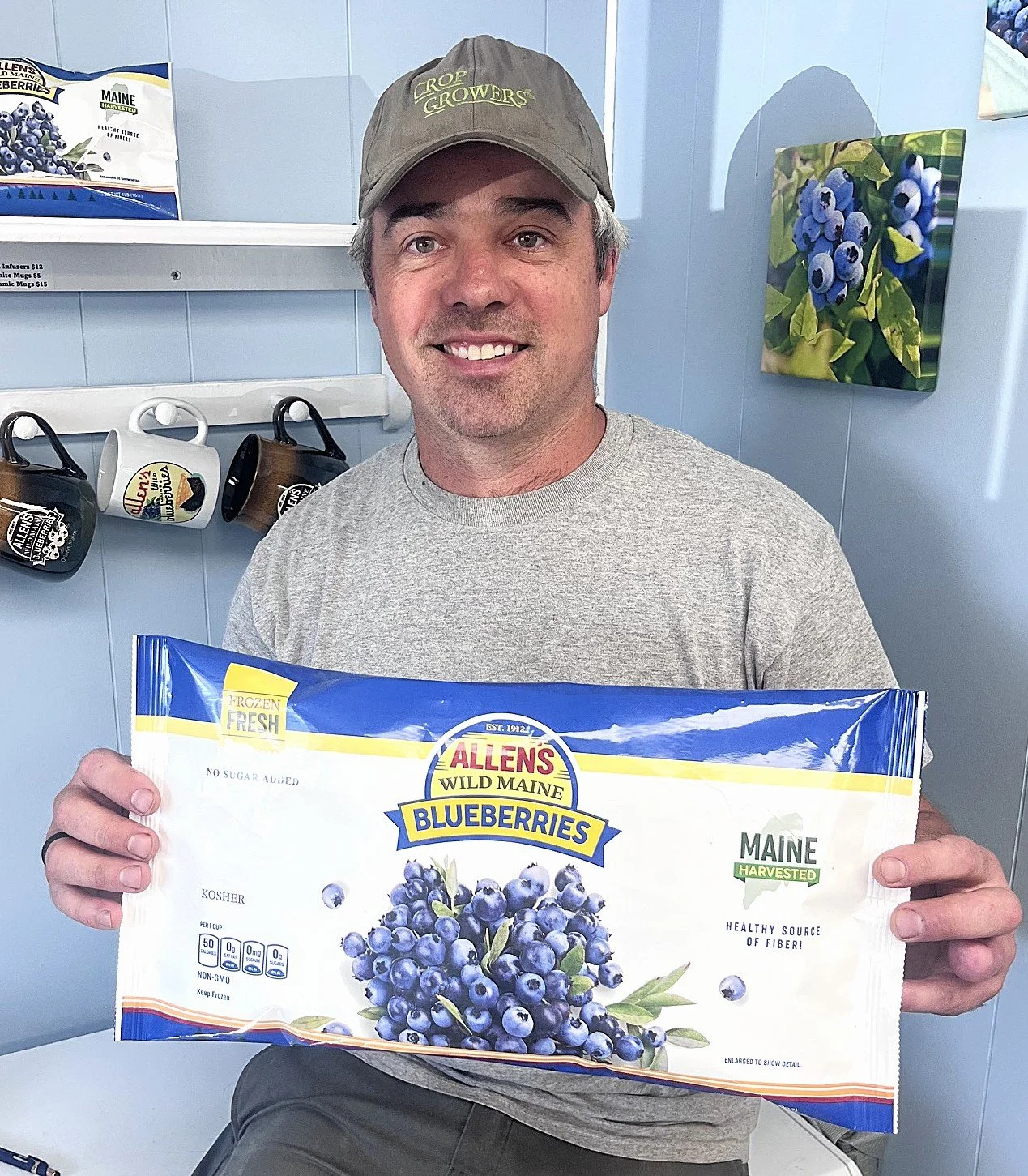
Simeon Allen with his company’s new retail blueberry packaging. Photo by Steele Hays.
Aug. 26, 2026
By Steele Hays
After suffering through four years of poor growing conditions, the Blue Hill Peninsula’s largest blueberry grower, the W.R. Allen Company, says its crop this year is a good one – 50 percent larger than last year’s.
“All in all, I am pleased with where our crop is,” Simeon Allen, the company’s general manager, said in an Aug. 20 interview.
The company began harvesting on July 29 and expects to wrap up harvest operations this week.
The company processes berries from 51 fields around the peninsula, where rainfall and growing conditions have varied from location to location. Several fields have produced yields of 6,000 pounds per acre, which is outstanding, Allen said. Hancock County is Maine’s second-highest blueberry producer, trailing only Washington County.
This year, for the first time in many decades, the company is selling blueberries at retail stores. So far, the only retail customer is the Market Basket chain of supermarkets, a privately-owned company with more than 90 stores across New England. The sales results have exceeded his expectations, Allen said.
“I had hoped we could sell 100,000 pounds, but we are on target to sell more than 150,000 pounds” through the Market Basket chain, he said.
The closest location where shoppers can find Allen brand blueberries is in Topsham, Maine, just north of Portland. Topsham and Westbrook are the only two Market Basket stores in the state.
Allen’s entry into retail was made possible by the company’s purchase last year of a high-speed bagging machine, which can load 30 plastic bags of berries a minute. The frozen berries are sold under the Allen brand in one- and three-pound bags.
Retail sales launched in May and have climbed steadily since. In recent weeks, unit sales have grown more than 100 percent compared to the first few weeks, Allen said. All the berries sold through retail so far this year are from the 2025 harvest – held since last year in storage prior to packaging and shipping this year. In the next few weeks, Allen employees will begin sorting and packaging the 2026 crop.
Prior to this year, the company has focused its sales efforts exclusively on wholesale buyers, primarily food service companies purchasing 30-pound boxes of frozen berries for use in baked goods, jams and jellies, pies, ice cream and other food products.
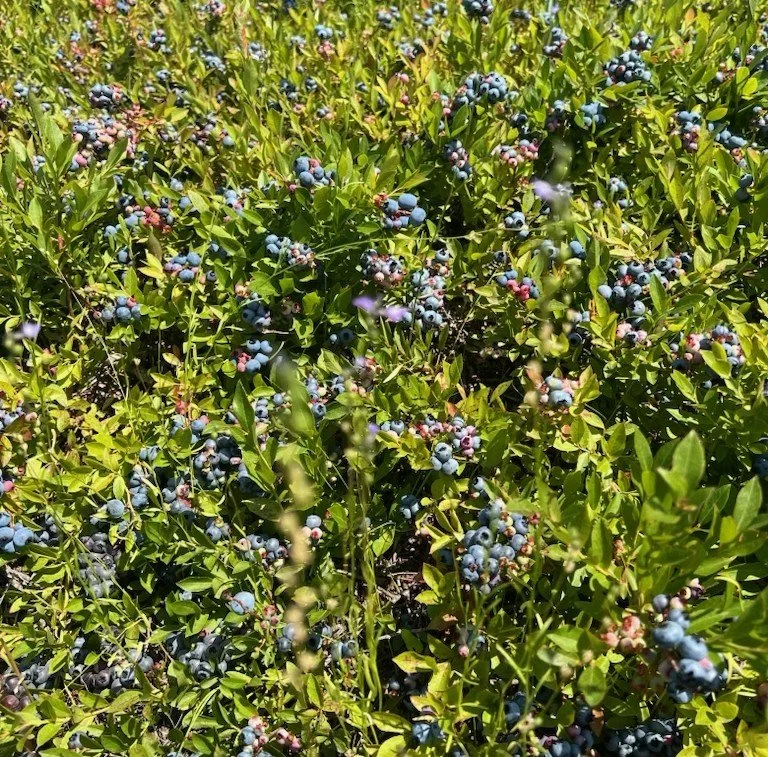
"This is what a healthy blueberry field looks like," said Simeon Allen. Photo courtesy of Allen's Wild Maine Blueberries.
With the new bagging equipment and the ability to offer one, three and five-pound bags of berries, Allen has ambitious plans to expand the company’s retail sales. He has hired a marketing manager to call on potential retail customers and plans “an aggressive campaign” to sell to food cooperatives, grocery stores, schools and hospitals, he said.
Later this year, the company also plans to offer frozen organic blueberries, sourcing berries from a select number of fields and growers that have gained the “organic” certification.
Even with the harvest season wrapping up, Allen keeps a close eye on the weather forecasts. The Blue Hill Peninsula is now in a “severe drought” status, according to the latest weekly update from the U.S. Drought Monitor, a collaboration between the University of Nebraska, the U.S. Department of Agriculture, and the National Oceanic and Atmospheric Administration. That is one of four levels of drought in the USDM’s scale, exceeded only by “extreme” and “exceptional” levels.
Late summer rainfall is critical to wild blueberries. The fruit needs adequate moisture during this time of year to form the buds that will produce berries in 2027, Allen said.
“We are very optimistic that next year’s crop will be better than this year’s,” he said.
Allen, who currently serves as vice chairman of the Maine Wild Blueberry Commission, is the fifth generation of his family to work in the industry, managing the company with his cousin, Brandon Allen. His great-great-grandfather, George M. Allen, founded the company in 1912 and built a cannery in North Sedgwick, then later moved the operations center to Orland.
The Wild Blueberry Commission staff publishes weekly updates on weather and growing conditions on its website, but has not yet estimated Maine’s total blueberry production for this year. The 2025 crop was estimated at 54 million pounds. Allen predicts that this year’s statewide total will be around 70 million pounds.
