

Dyce’s Head Light opens regularly to visitors this summer
Town of Castine to offer tours to the public every two weeks
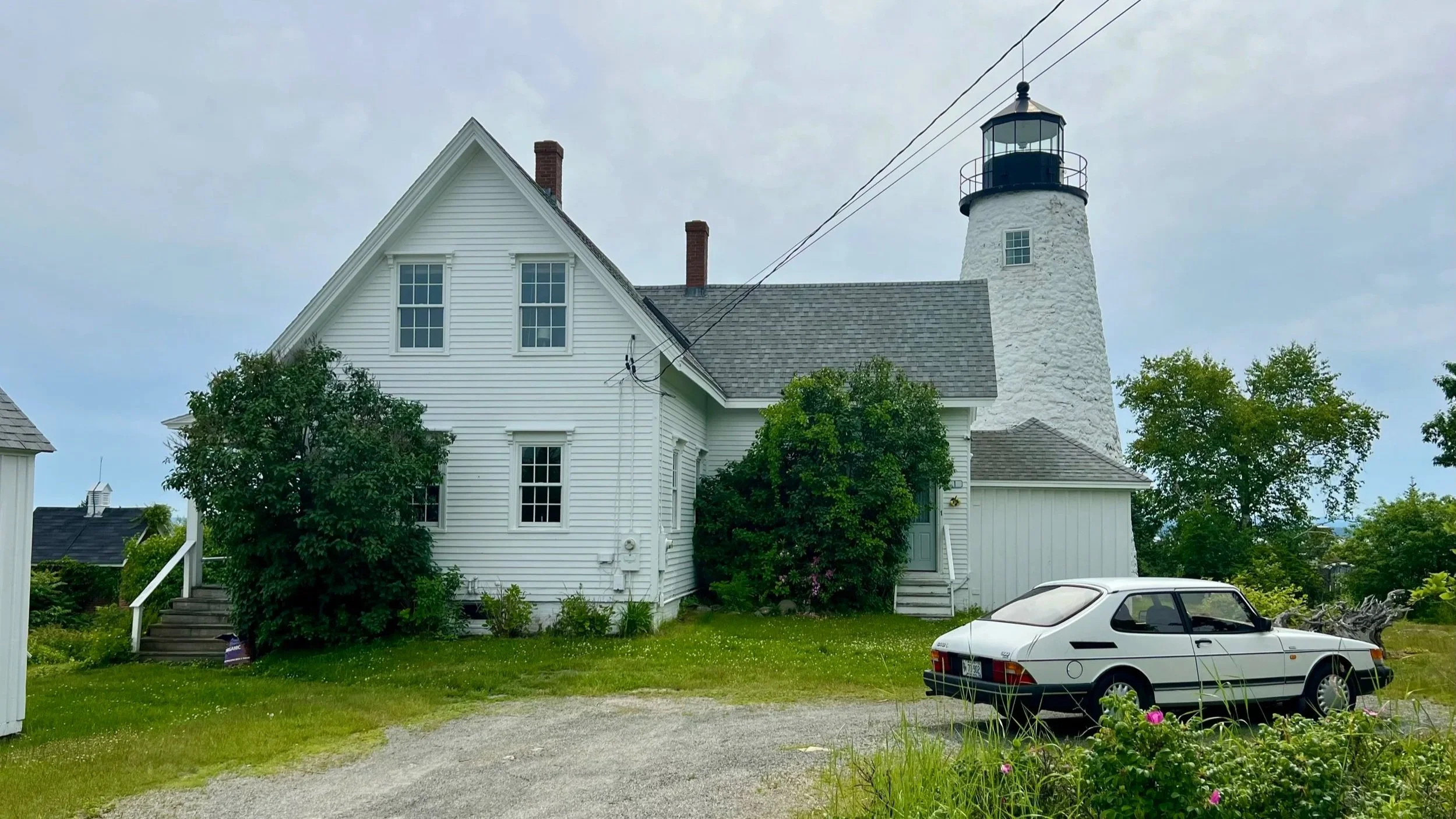
Built in 1828, the tower earned its name from the Dyce family, who previously owned the site where the lighthouse now stands. Photo by Annie Means.
June 24, 2026
By Annie Means
CASTINE—For the first time in its history, Castine’s Dyce’s Head Light will offer tours to the public every two weeks this summer.
Previously, Dyce’s Head had only held open days twice a year: on July 14, when the town celebrates Bastille Day, and again on Aug. 7, National Lighthouse Day. Now, from June 30 to Aug. 25, a group of volunteers will open the lighthouse every other Tuesday from 1-4 p.m.
“What we have is really special,” says Ina Schonberg, Castine’s Community and Economic Development Director, and the driving force behind the new open days. The lighthouse and adjacent keeper’s house are owned by the town of Castine.
Built in 1828, the tower earned its name from the Dyce family, who previously owned the site where the lighthouse now stands. Jacob Shelburne, a ship’s captain, became its first keeper that same year, each night lighting 10 oil lamps in 14-inch reflectors to aid passing vessels. Another dozen lighthouse keepers later rotated in and out of Dyce’s Head, occupying the adjacent keeper’s house.
In 1937, the lighthouse became electrically automated and Gurney L. King retired as the last keeper. Two years later, the navigational light was moved to a skeleton tower closer to shore, making the actual 42-foot stone lighthouse superfluous. A powerful storm in September of 2007 destroyed the skeleton tower, providing an opportunity to reinstate the navigation light back in its rightful home, where it has remained in the lighthouse ever since.
Among Maine’s lighthouses, Dyce’s Head is one of the more accessible. Rather than being planted along a bluff or trail, it sits at the end of Battle Avenue where guests can park and walk to the base of the tower. Visitors may climb the winding spiral staircase and view the navigational light up close. The adjacent keeper’s house is privately rented and unavailable for public viewing.
Opening the iconic structure has become a major draw for visitors and locals alike.
Last October, the organization Walks for Historical & Ecological Recovery, featured Dyce’s Head on its Castine tour. The group says on its website it is “committed to surfacing the truths of colonization, oppression, freedom-making, and resilience in the place known for millennia by the Wabanaki people as the Dawnland.”
Signage and posters from that event will join a specially crafted Castine Historical Society exhibit at the base of Dyce’s Head. On open days, visitors can find this exhibit in the vestibule beside the lighthouse tower.
“We want people to engage with the history of Castine, both the colonial and Wabanaki history,” says Schonberg.
The lighthouse now resides on the National Register of Historic Places.
To tour Dyce’s Head Light, find more information on Castine’s calendar of events.