

School of fish: Brooksville kids assist in annual alewives count
Brooksville Elementary School, MCHT, and MMA team up to help students get their feet wet
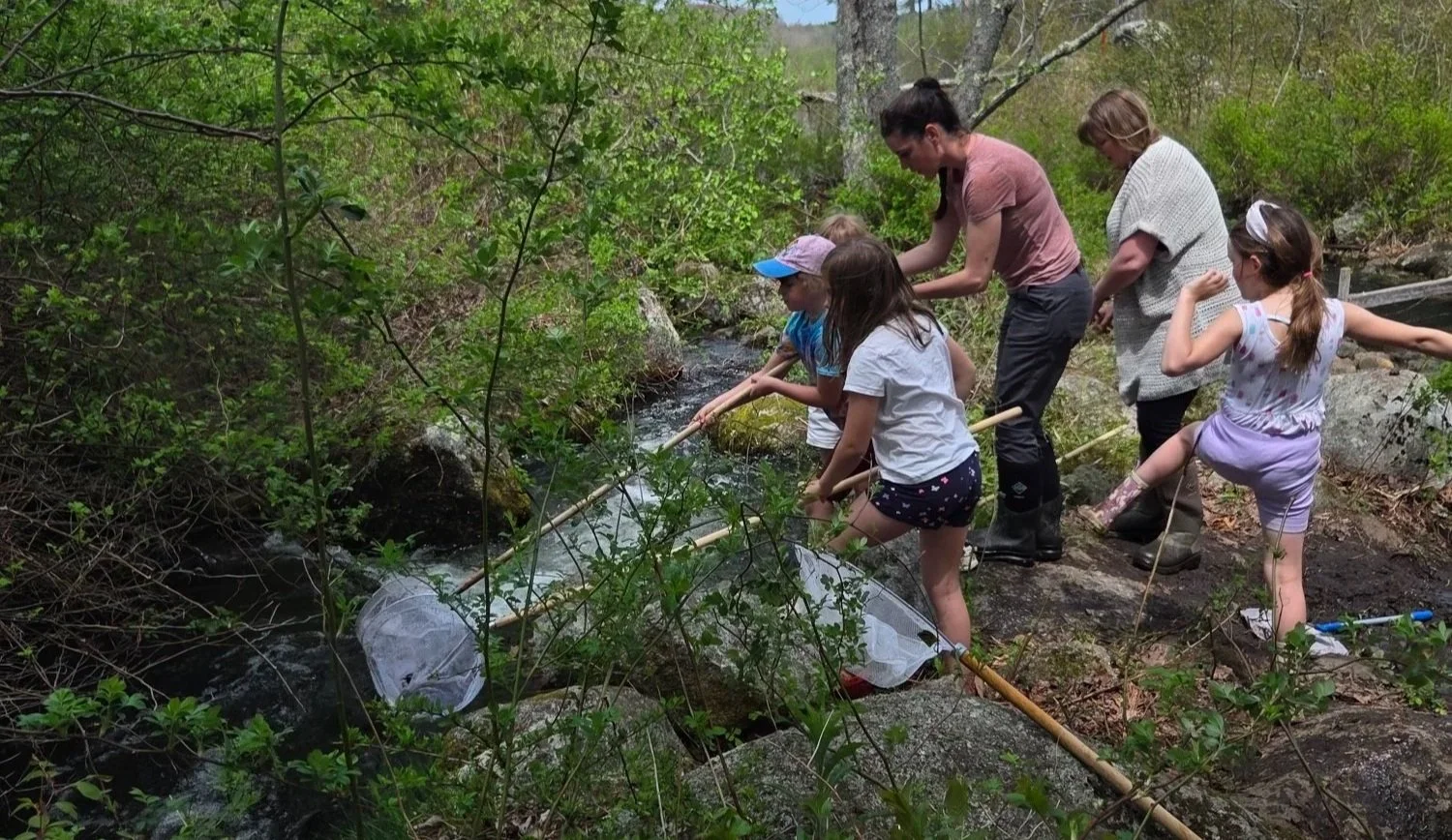
Student “dipping” for alewives at the stream that feeds the Walker Pond fishwas. Adults Shelly Griffin, left, a volunteer chaperone from Penobscot, and teaching assistant Natasha Allen, right, assisted. Photo by John Epstein.
May 20, 2026
By John Epstein
BROOKSVILLE—It was a warm spring afternoon when the Brooksville Elementary School bus parked near the fishway that feeds into Walker Pond and a dozen excited children piled out.
“We’re on a field trip to count alewives,” said first grader, Cecelia “CeeCee” Freedman.
Along with their teacher Justine Appel and teacher assistants, Michaela Osborn and Natasha Allen, the students met up with trip organizer Mike Thalhauser, project manager for Maine Coast Heritage Trust. Matthew Glidden, a Maine Maritime Academy undergraduate and a summer MCHT intern, and Shelly Griffin, volunteer from Penobscot, also chaperoned the event.
The alewife is a vital source of food for many species and an important bait fish for the lobster industry. Its population has dwindled over the years due, in large part, to loss of access to freshwater. But efforts to construct fishways, like the one MCHT funded at Walker Pond, are helping to increase the population of this important species.
Students grabbed long-handled fish nets supplied by MCHT and headed into the woods to the stream that feeds into the fish ladder. There, under the guidance of Griffin and education tech Allen, they “dipped” for alewives, redirecting those who looked like they were headed the wrong way—towards a dead-end portion of the stream. Thalhauser called it “making friends with fish.”
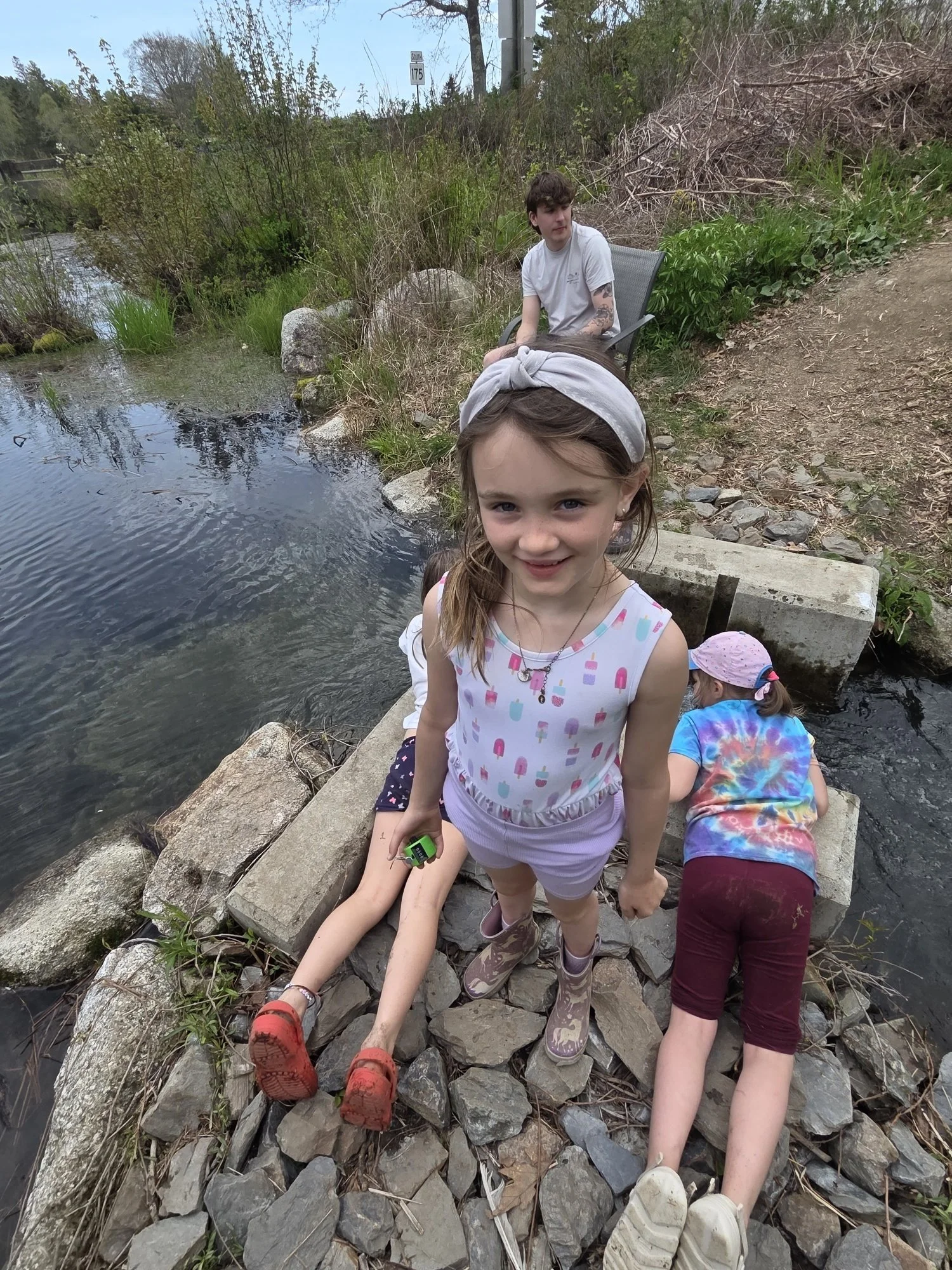
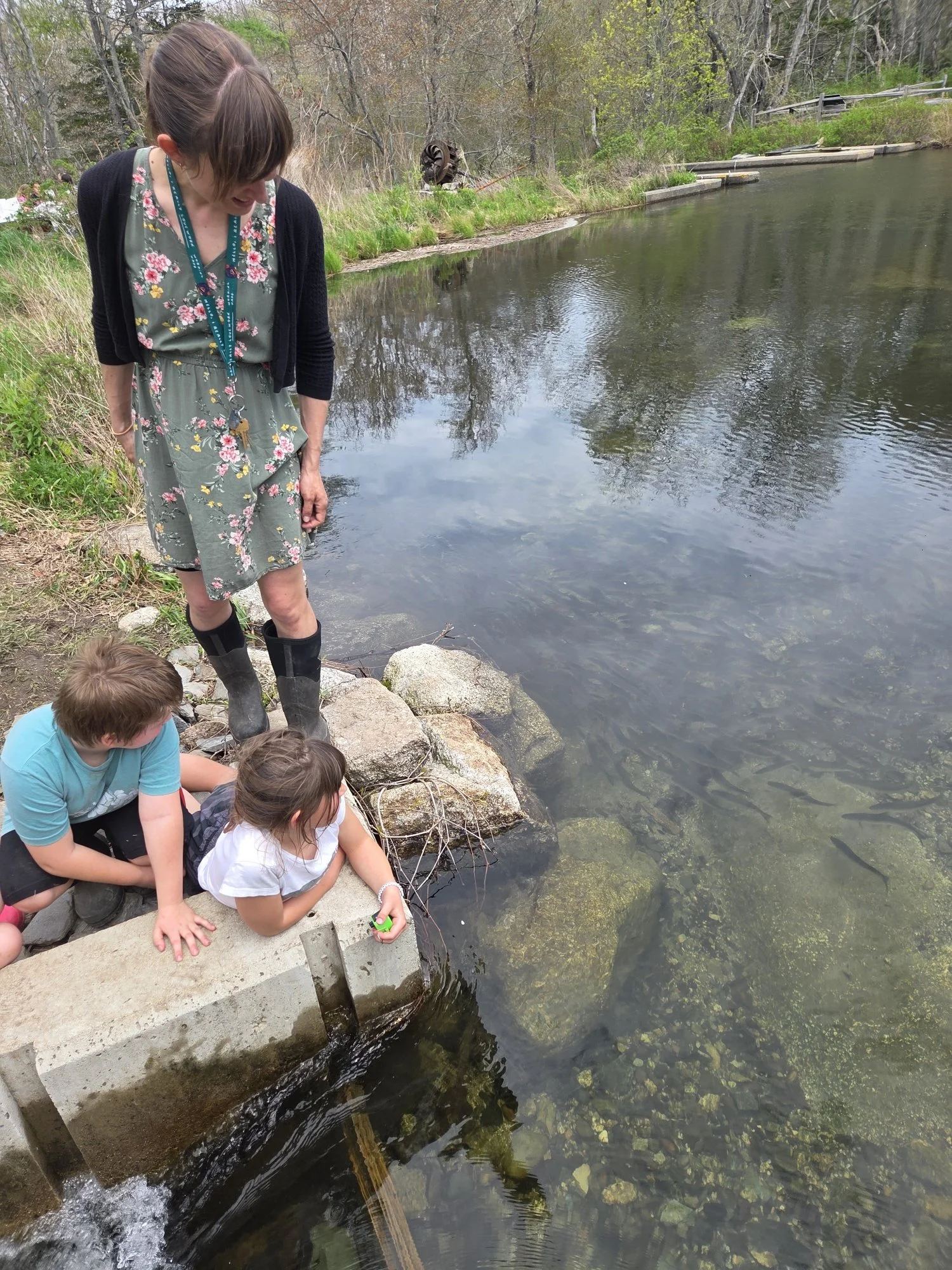
From left: Brooksville Elementary School first grader, Cecelia "CeeCee" Freedman holds the counter while two of her classmates tabulate. MMA undergraduate Matthew Glidden, supervises; teacher Justine Appel and students watch a school of alewives getting ready to return to the ocean after spawning. Photos by John Epstein.
The real business of the day was counting alewives, or at least learning the rudiments of counting the anadromous—which in Greek means “running upward—fish that migrate from the sea to freshwater to spawn every spring.
Armed with hand counters, the first and second graders clicked away beside the cement fish ladder as scores of alewives glided up the fishway into the shallow lower pond that feeds into Walker Pond. Glidden, who is studying coastal marine environmental science at MMA, provided guidance to the kids, urging them, with mixed results, to keep their eyes on the fish as they flashed by to get an accurate count.
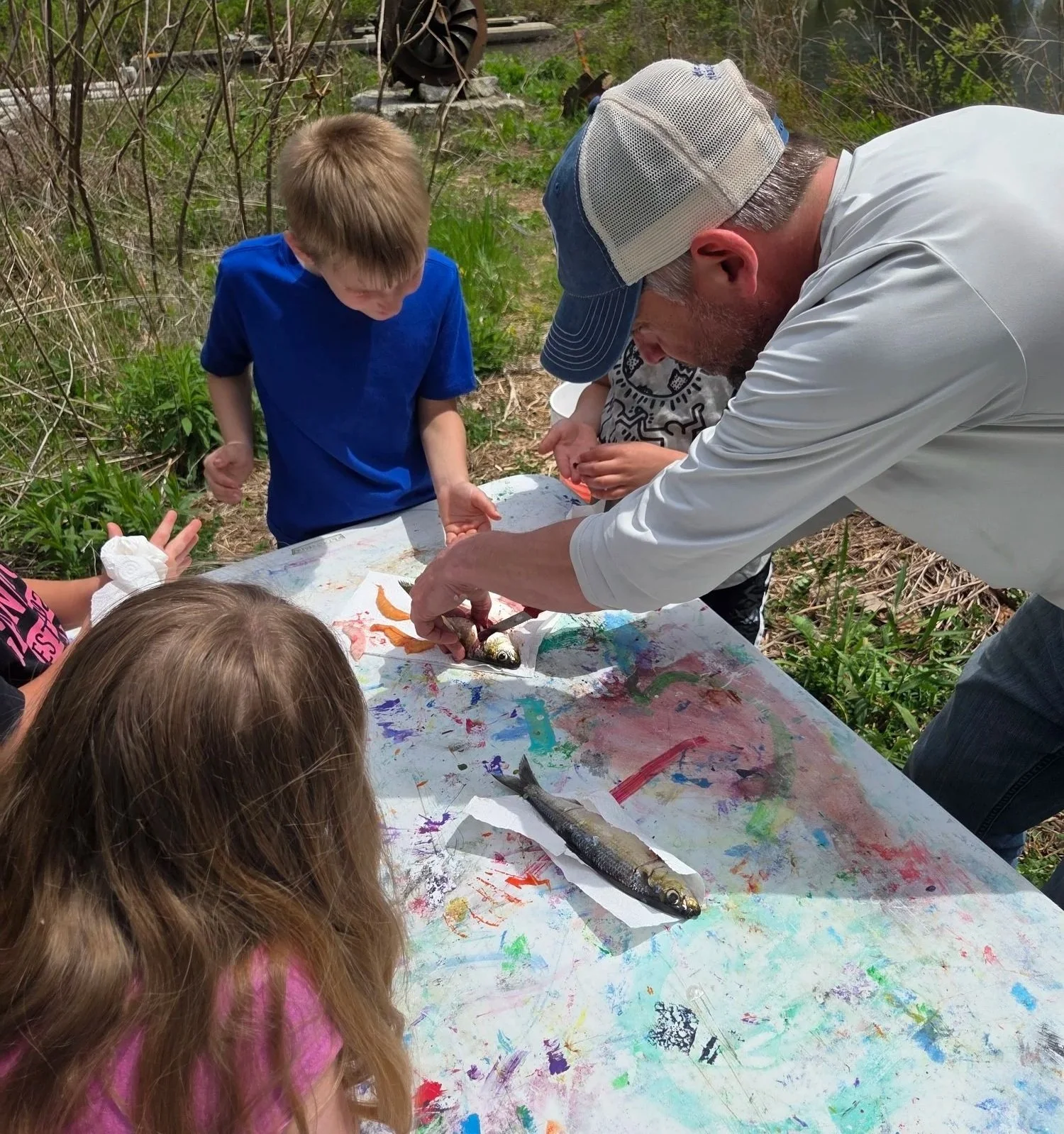
Mike Thalhauser, Maine Coast Heritage Trust Project Manager, dissects an alewife to the wonder of a few Brooksville Elementary School kids. Photo by John Epstein.
“When the fish climb up the ladder, they need to take a break at each level to catch their breath in the aerated water,” Glidden said. Glidden said that alewives travel in large schools that contain a mix of male and female alewives. “They don’t pair up like salmon do,” he explained. “They make their way into the pond, do their business dropping eggs and sperm, and then head back to the.” Glidden then pointed out a large school of alewives circling up to head back down the ladder. “When the fish go down the ladder they swim backwards,” he said.
Thalhauser later set up a table where kids observed him dissect a female alewife. “You see this? That’s the fish’s stomach, but look how small it is compared to her egg sack,” he added. “They didn’t come here to eat; they came to lay eggs and spawn,” he said to four wide-eyed students.
