

GSA to fully open board meetings, share school ‘governance’ with sending towns
Discussions of tuition contracts are on the back burner for now, town academy says in letter to local officials
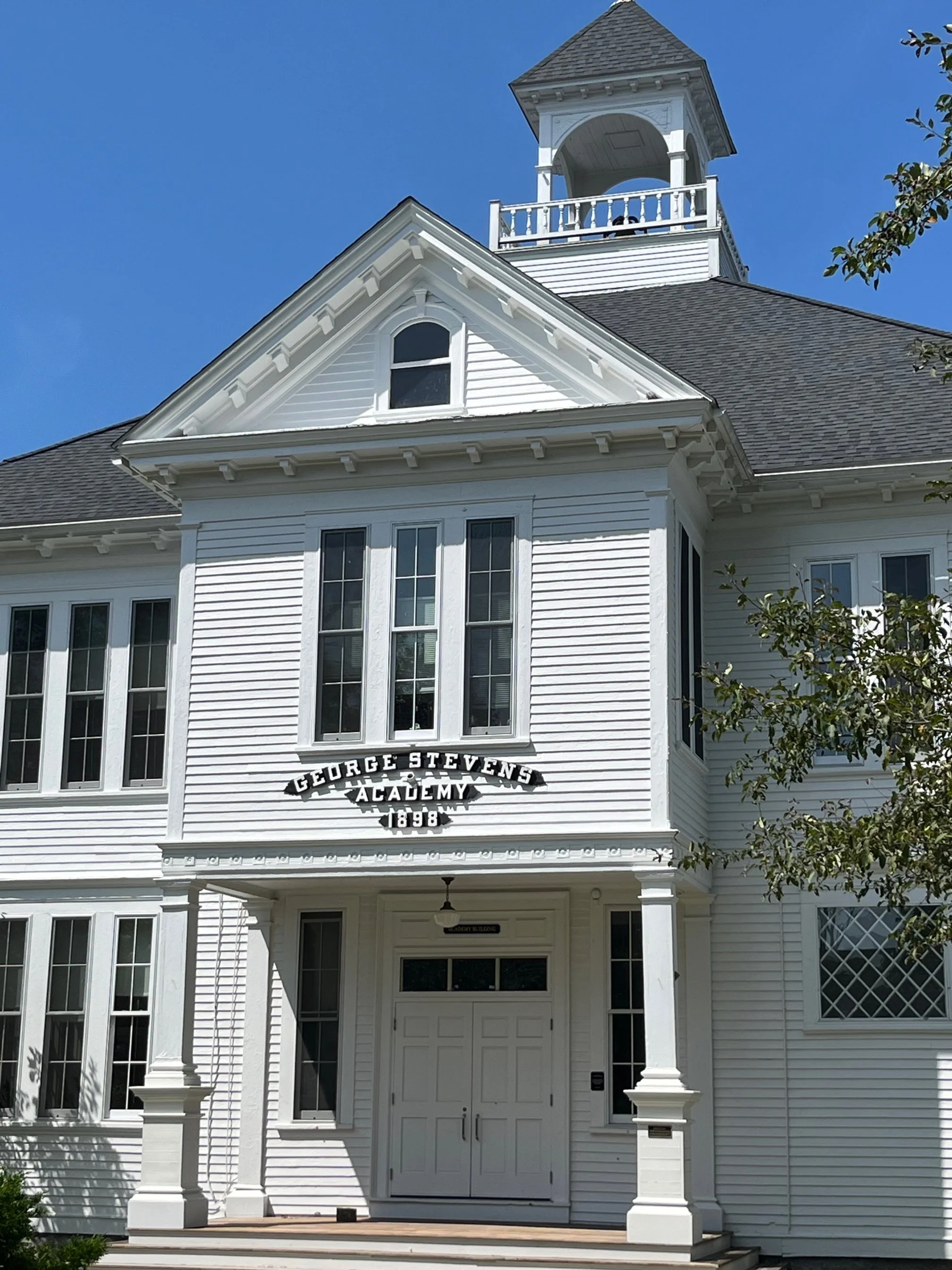
The doors to board meetings at George Stevens Academy will be fully open to the public starting next month. File photo.
Feb. 11, 2026
By Tricia Thomas
BLUE HILL—George Stevens Academy has announced that it plans to change the way the private school is governed and will seek a new head following Dan Welch’s resignation at the end of this school year.
According to a statement emailed to select boards and school boards in the seven peninsula towns that send students to GSA, the private school will consider “shared governance” with those towns while it simultaneously searches for a new head. Meetings of the GSA board of trustees also will be fully opened to the public starting in March, and an earlier initiative to seek enrollment contracts from sending towns will be postponed, the school announced.
“The Head of School’s unanticipated decision to step down at the end of the academic year, while a bit unsettling, has created a natural moment for reflection and alignment,” the school stated in its letter to area town officials. “The Board sees this transition as an opportunity to ensure that the school’s leadership and governance structures are fully responsive to the needs, expectations, and priorities of the communities GSA serves.”
While GSA stated that it is “very much business as usual” within the school, it will seek “deeper collaboration” with sending towns, which include Blue Hill, Brooklin, Brooksville, Castine, Penobscot, Sedgwick and Surry.
“We will be talking to sending towns about shared governance models to ensure we stay connected and responsive to those we serve,” GSA stated in its letter.
In addition to exploring new governance models, the board will, for the first time in its history, fully open up its meetings to the public. Last year, the board opened the first 30 minutes of its meetings to hear comments from the public, and then took up its regular business behind closed doors. GSA’s first fully open trustees’ meeting will be held on March 19, said school spokesperson Amy Strother. Meetings routinely are held on the third Thursday of each month, beginning at 6:30 p.m. in GSA’s library.
Board member Chris Gleason said in a telephone interview following the announcement that details on the “shared governance,” initiative won’t be available until after the school receives input from officials in each of the sending towns.
“That needs to be a conversation with the people that would be on the ‘other side’ of the governance. I don’t want to presume what it will look like until we have a conversation with the other people who are willing to help us govern the school,” Gleason said.
Gleason did not know how long those conversations would take, or when the school could provide more details on the plan.
At the same time, GSA is still working out the particulars of a “faculty and staff transition committee” that will co-lead the school for the remainder of the school year, Gleason said.
“I don’t have a timeline yet, but we will be working with faculty and staff over the next weeks to define it,” he said.
Welch officially resigned from the post he has held for nearly two years on January 28, a day after his hiring as RSU40’s new superintendent was announced by the Union-based school district at an evening meeting.
Welch’s decision to leave GSA for a post closer to his hometown in midcoast Maine came as a surprise to the school and its board of trustees. Less than two weeks earlier, Welch had headed a press conference and impromptu public forum on GSA’s plans to boost flagging enrollment by seeking contracts with sending towns that would guarantee their students attend GSA.
While GSA said that exceptions would be granted, the proposal would effectively end school choice on the peninsula, Welch explained at the January 15 press conference. Currently, students in Blue Hill, Brooklin, Brooksville, Orland, Penobscot, Sedgwick and Surry can use their towns’ tax-funded tuition money to attend schools other than GSA–something that one out of every three high school students do at the moment.
The contract initiative, GSA stated in the letter, now will take a back seat to solidifying the school’s leadership.
“While we remain interested in exploring school contracts with our sending towns, we also recognize that those conversations cannot happen productively in the midst of a transition.”
“While we remain interested in exploring school contracts with our sending towns, we also recognize that those conversations cannot happen productively in the midst of a transition,” GSA said.
Although a date and location have not yet been set, the school also is planning a “community forum” for residents this spring, and will release a “three- to -five-year plan” for GSA’s future after that.
“Prior to the forum, the Board will meet with faculty and staff for a visioning session to help shape ideas and priorities for the school’s future,” GSA stated in its letter. “At the forum, Board, staff and faculty will share these options to invite community discussion and feedback. This collaboration will guide the school’s next steps, and we will aim to have a three- to five-year plan to share by the end of June.”
The Feb. 9 letter to towns was the latest in a series of recent announcements the school has made about its efforts to increase enrollment, strengthen its finances, and bolster both transparency and community support—all promised by the school since it began seeking financial support in the form of supplemental tuition from sending towns six years ago.
Some of those efforts already are paying off, Gleason said. While the school year started with 200 students enrolled, 8 more have since transferred to GSA from other schools, bringing the total enrollment to 208. In addition, a new “pre-enrollment process” that targets peninsula middle-schoolers has already yielded a total of 45 non-binding “self-identifying” matriculation commitments from local students.
“That’s new this year,” Gleason said. “We’re looking for more predictability. I think that’s apparent, and this gives us a little bit more predictability so we can better plan for the upcoming year and the future.”
GSA is “optimistic about what lies ahead,” the school stated in the closing of its letter.
“GSA has long been a regional asset, and its future is strongest when it is shaped by and accountable to the communities it serves,” GSA stated. “By prioritizing dialogue, transparency, and shared decision-making now, we are expressing our desire to build durable, productive partnerships and lay the groundwork for thoughtful, long-term planning. We look forward to the conversations ahead and to working more closely together.”
