

Fans remember ‘The Kave,’ downeast Maine’s underground hardcore scene
After running an ‘almost top secret’ venue for 15 years, Bucksport’s matriarch of metal is subject of doc film to be released this month
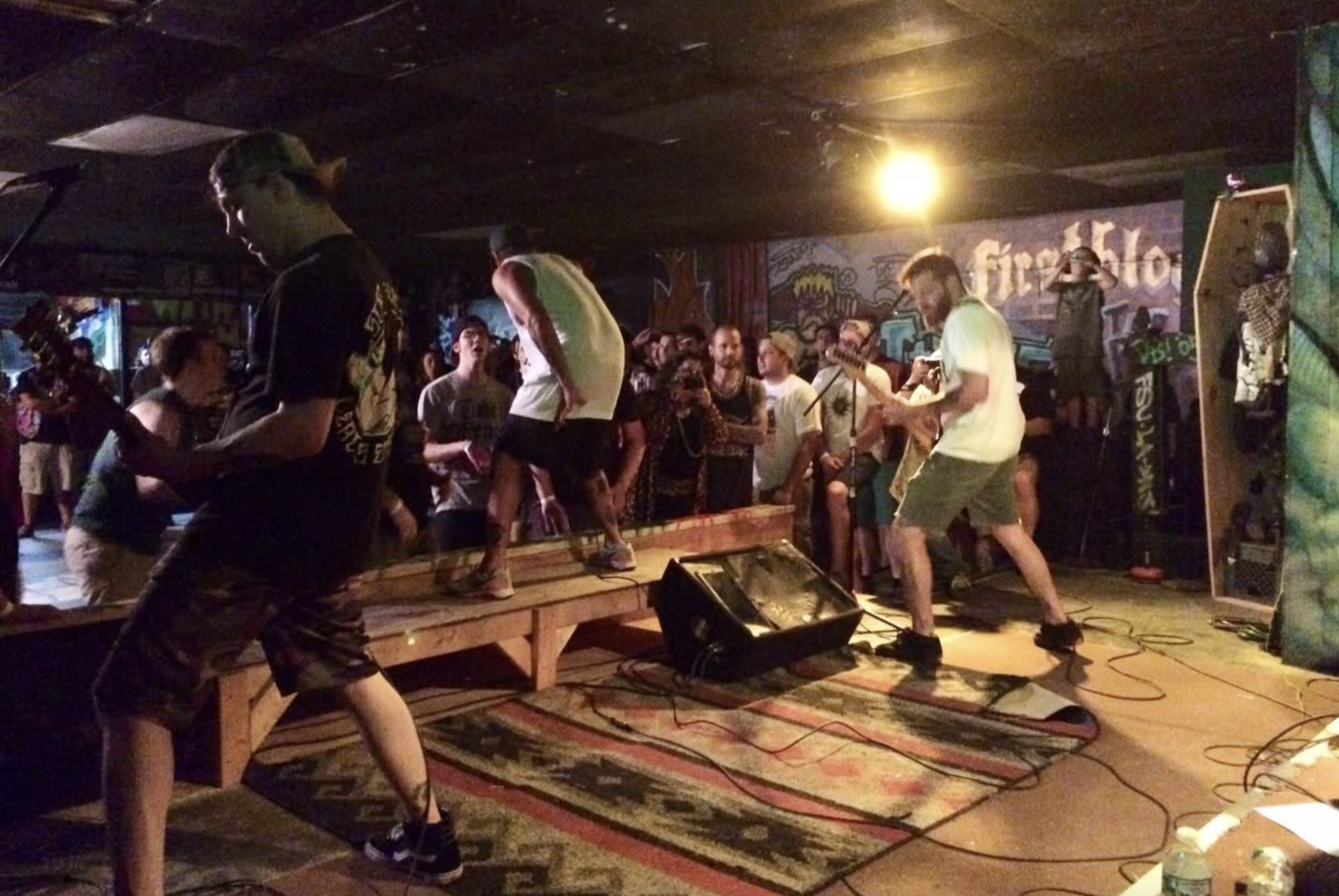
Maine-based band Cruel Hand at the Kave. Photo courtesy of Kathy Kave.
By Joey Jett and John Boit
BUCKSPORT—The Blue Hill Peninsula is known for a variety of music scenes.
Kneisel Hall for chamber music. Bagaduce Music for indie folk. Blue Hill’s Town Park for weekly steel drum concerts. And contra dancing – lots of contra dancing – from Surry to Isle au Haut.
But once upon a time, there was “The Kave.”
Located in a barn on a quiet country road in Bucksport, the Kave was the ear-splitting, pounding pulse of the area’s underground hardcore and metal music scene. For 15 years, it drew die-hard crowds that regularly reached 300 or more fans, mostly teenagers and young adults who had found their music, their place, and their people.
“It was very underground, almost top secret,” said Kathy “Kave” Findlay, who first founded the local hardcore scene in makeshift music venues — churches, community halls, Elks Lodges — and later at the barn on her Bucksport property. “The kids would say, ‘If you know, you know.’”
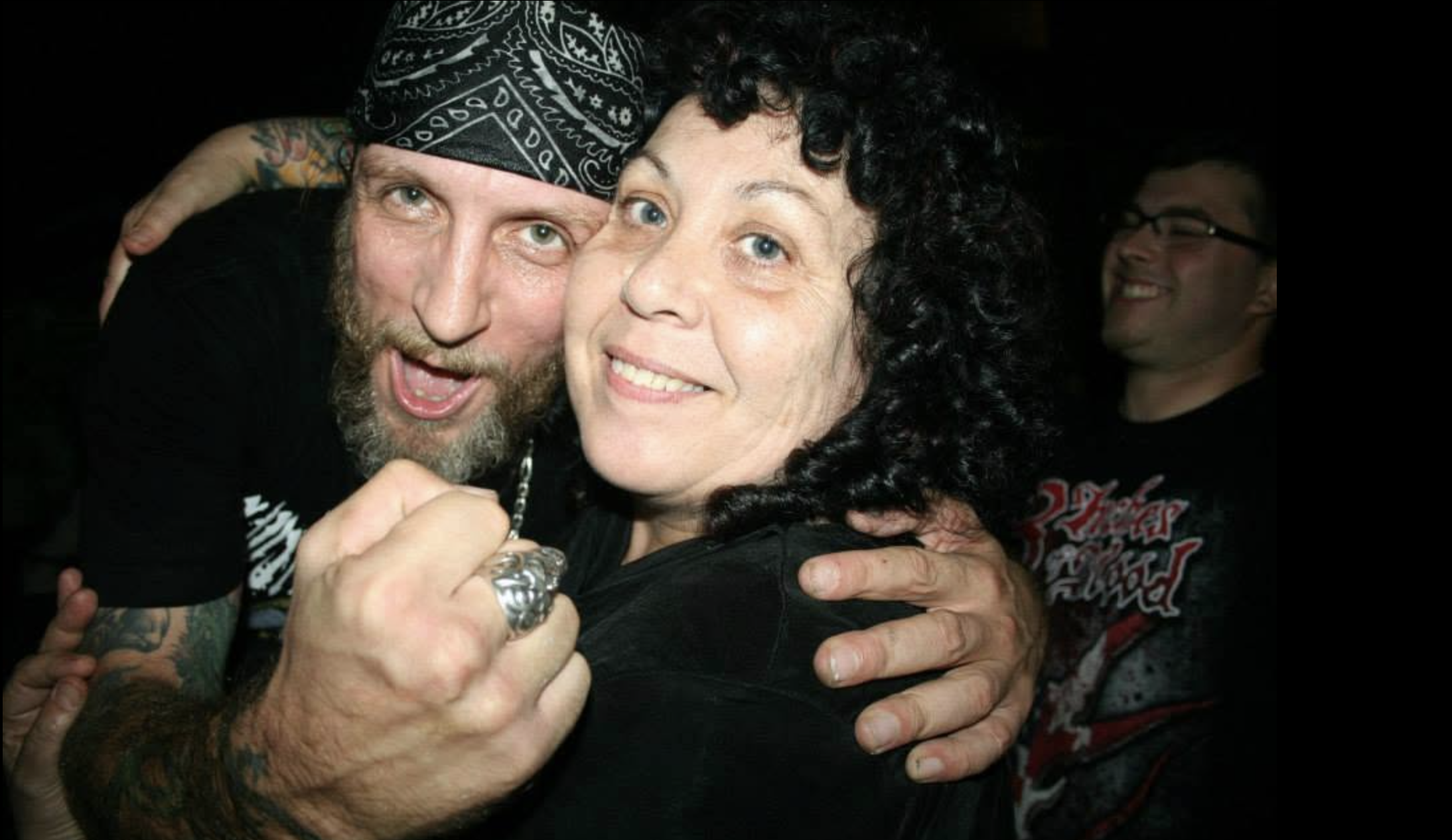
Kathy Kave and Bobby Hambel, guitarist for Biohazard. Photo courtesy of Kathy Kave.
Known simply as “Kathy Kave” – the name was an adopted moniker – Kave became a legendary figure in that underground scene. Equal parts business owner, music promoter, and den mother, Kave had a knack for understanding the bands and music styles that weren’t represented elsewhere in coastal Maine—and the kids who wanted to hear it.
Kave, now in her 60s, was a natural leader of the movement, a counter-culture figure right down to the car she still drives: a 1972 Cadillac hearse named “Kreeper.” The vehicle, which she estimates gets eight miles to the gallon, has become as much a symbol of the iconoclastic music movement as the Kave itself.
From 2001 to 2016, the Kave drew bands from across the United States and from as far away as Iceland and the Netherlands. Hundreds of young people would converge at Kave’s house and barn on a quiet road just steps from Silver Lake, a mile and a half from downtown Bucksport. Kave would handle the promotions, open up the barn, and let the music rip.
The Kave kids
Concert goers became more than just ticket holders. They were family, and had their own name: “Kave kids.”
Kave kid Adam Hughs said the venue and its matriarch “literally directed my life to where I am at now.”
“My best friends are still the people I met there,” said Hughs, who grew up in Eddington and now lives in Hampden. “Kathy is still one of the closest people I have in my life. My mom is even ok with me calling her my Kave mom and wishing her happy Mother’s Day. She helped me find my own set of ethics that I live my life by to this day.”
The rules were simple: Bring an item to donate to the local food pantry, no booze or drugs in the Kave, and be respectful of others and the property.
Failure to do so brought on the threat of the “testicle skewer,” a three-foot antique fork used to roast hot dogs.
“I wanted the kids to police themselves,” Kave said. “Of course, when you have bands coming from Boston, New York, California, wherever, they don’t know the rules. But I had the testicle skewer sitting right in the kitchen so they could see it at all times. There were rumors – lots of rumors – that if you mess around, Kathy’s gonna get the testicle skewer out.”
When concerts were over, she’d make sure the musicians had a place to sleep and a good meal to send them on their way to their next gig.

Joe Riley, one of the original "Kave kids,” rocks out to Madball, a New York band, in 2005. Photo courtesy of Kathy Kave.
Documentary film debuts this month
Now Kave’s role as a driving force in Maine’s underground music scene is the subject of a new documentary, Downeast Hardcore: Stories from the Kave, by Penobscot filmmaker Ricky Leighton. The film will debut in Waterville on July 18 at the Maine International Film Festival.
“What Kathy gave everyone was not just a place to hang out, it was a safe haven for kids to learn new skills and make great friends,” said Leighton, who grew up in Blue Hill and first attended Kave concerts as a teenager. “But the secret sauce, her magic power, was making people feel cool while they were doing it. The scene had an aesthetic. It had style, which you could apply to your identity. It was something to be a part of and, most of all, it promoted acceptance.”
When Leighton put out a call for people’s recollections of the Kave, more than 90 testimonials from Kave kids around the world came flooding in from former concert attendees, as well as from bands that performed there.
“I think what’s amazing is that she did it all without any assistance from town or government,” Leighton said. “She had more impact on rural Maine youth than most of those programs could ever attempt to do. Imagine what could be done if they took unconventional approaches or actually empowered kids to have some say in what they need.”
Tom Allen, another frequent attendee and volunteer at the Kave, agrees. He first started coming to the Kave as a teenager, and soon found himself drumming on stage with local bands.
Now Allen, 42, who grew up in and still lives in Penobscot where he co-owns a landscaping company and is a volunteer firefighter, said he couldn’t even begin to add up the number of hours he spent at the Kave. When he wasn’t playing a gig there or moshing to other bands, he helped with maintenance projects, took tickets at the door, or volunteered for whatever was needed.
Allen said the Kave was a haven for those “who didn't have other places to go or no one kind of understood them.”
Fight for Blood performs at the Kave in 2009.
“It was like CBGB, but for kids,” Allen said, referring to New York’s famous nightclub that launched America’s punk rock scene in the 1970s. “Not to say that there weren't jocks and cheerleaders and whatever, but it was definitely, like, the downtrodden and the outcasts. We didn't fit into the normal niches of society, the normal cliques…It was a matter of just being different and listening to something that wasn't the normal [music]. It wasn't what you heard on the radio. You never heard one of our bands on the radio.”
Those bands included names like Agnostic Front, Terror, 100 Demons, Slapshot and Hatebreed.
“They show up in the middle of the woods in Maine, not knowing what to expect,” Allen said with a laugh. “And then, all of a sudden, they're having, like, beanhole beans and lobster. Like, what the f**k? What are we doing? Where are we? What is this, Narnia?”
In addition to being treated well, bands could always count on super fans who were excited to be up close and personal with the artists who played a kind of music not found elsewhere on this stretch of the coast of Maine.
The fans were like one big family. Even at high-intensity concerts, Kave’s own young grandson, dressed in a shirt and tie, would sometimes come out on stage at intermission and play country and bluegrass tunes with a washboard and harmonica. Despite the radically different music genre, the crowd would cheer for the child with the same exuberance they did for the hardcore headline acts.
“What I always loved about the Kave was how you could have a kid from a rich family, a kid from a trailer park, a kid that has trouble with school, and a kid with a 4.0 average all in the same room laughing and singing together,” said Jon Milan, who grew up in Orland and was a member of the band Inbound that regularly played at the Kave. “Just as soon as everyone entered those walls they were family and belonged no matter what else was going on in their lives.”
That sense of belonging was most important to Kave. She made sure that local Maine bands always opened for the big name bands, giving budding musicians a taste of the stage.
While aggressive dancing in the mosh pit could become physical, it was rarely maliciously harmful, Allen said.
“If you wanted to just groove out [and have] a laid back listening experience, that was not it,” Allen said. “That's like going to a friggin’ bullfight and expecting fine dining. You're going to get pretzels and beer, you know, and maybe punched in the face. Hopefully not, but it's not going to be gentle and, you know, refined. It's gonna be raw and real.”
That said, Allen pointed out that if anyone was hurt, “99 percent of the time” the mosh pit would immediately clear and people would make sure the person was ok.
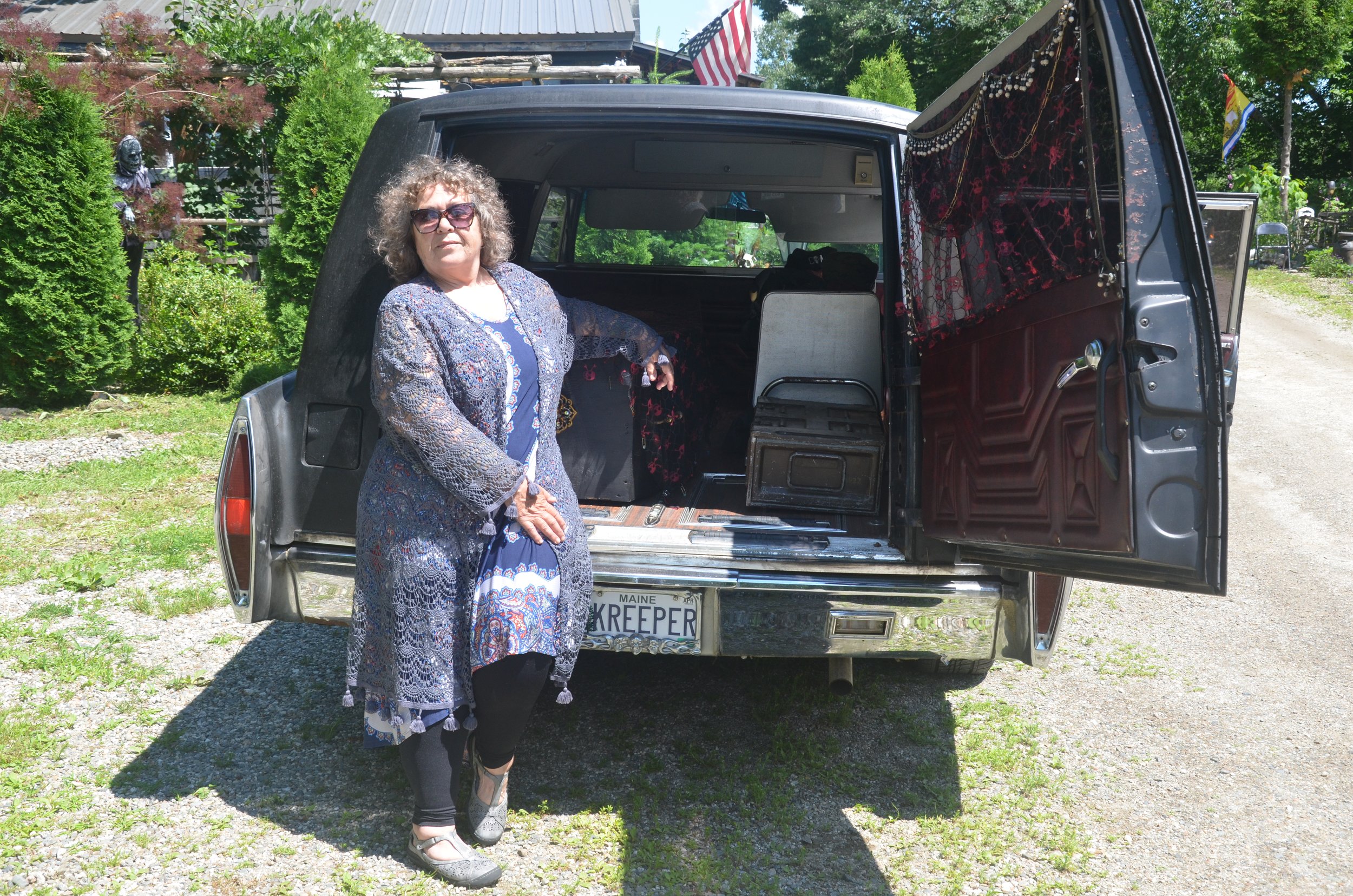
Kave today with “Kreeper,” her 1972 Cadillac hearse at her home in Bucksport. Photo by John Boit.
Health diagnosis
It was the family that came first, and attendees protected the family – and Kave herself.
In 2016, Kave was diagnosed with leukemia. She said doctors in Maine gave her a 17 percent chance of survival. A bone marrow transplant in Boston, followed by months of medical care in Boston, saved her life. An army of Kave kids were among those who helped her through those years, she said.
That was the year the Kave concerts ended. Today, Kave rents other venues for different concerts, mostly in Old Town. She said she’s often asked if the Kave will ever reopen.
“I think what’s amazing is that she did it all without any assistance from town or government. She had more impact on rural Maine youth than most of those programs could ever attempt to do. Imagine what could be done if they took unconventional approaches or actually empowered kids to have some say in what they need.”
“A lot of people have asked. It’s a lot of work. You’ve got to have insurance, licensure…I’m really careful about how much stress I’m managing.”
As for the documentary film, Kave said she was “kind of still in disbelief.”
“I couldn’t believe anyone could be interested in everything that’s gone on, but it seems like it does matter,” Kave said.
Allen is among the hundreds of people who emphatically believe that the Kave and its matriarch most certainly do matter. When asked what he would say to Kave, the normally animated Allen grew quiet for several long seconds.
“Thank you for everything,” Allen said, breaking the silence. “Thank you for giving us a place to be, as outcasts and potentially forgotten about and dangerous youths. To have that outlook and that venue, that outlook to the future, like, here's something for you – I didn't know what it meant at the time…That shaped who I wanted to be as a person. I just wanted to be helpful. I wanted to volunteer my time. I wanted to throw down, have a good time and dance it up.”
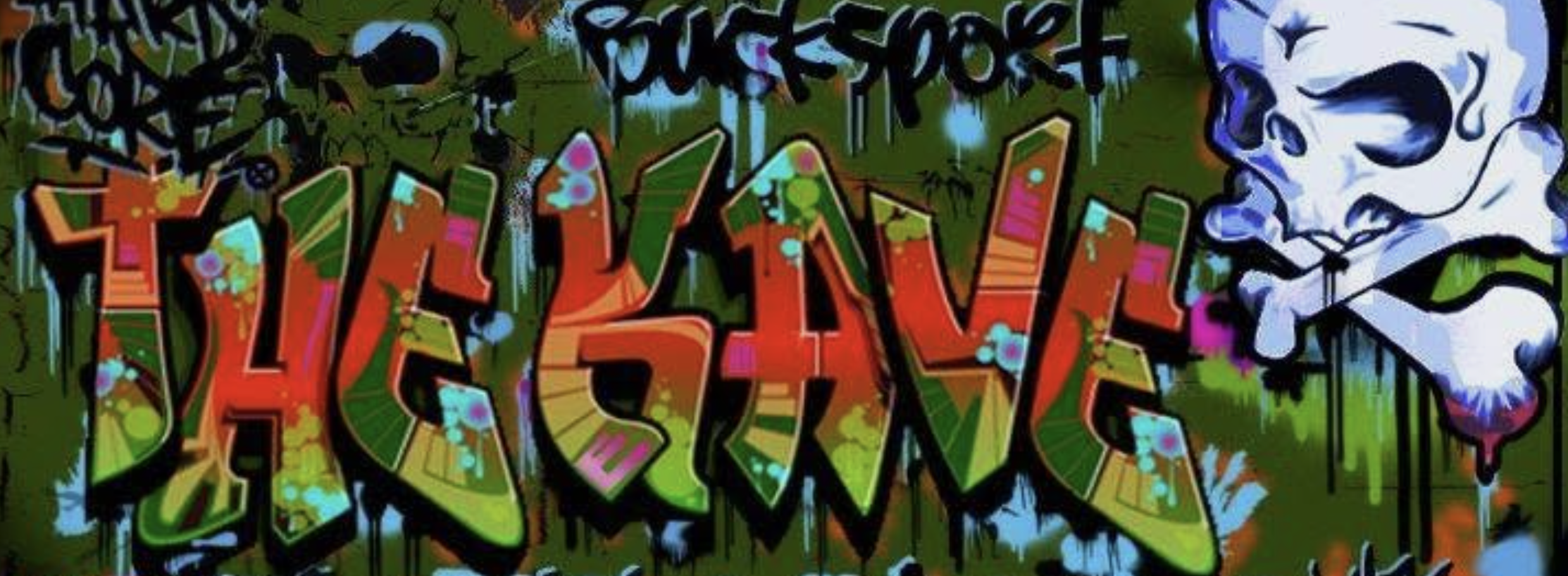
A mural inside the Kave. Photo courtesy of Kathy Kave.
