

MMA faces $1.4M budget shortfall
‘Our job right now is to win at the appropriations table,’ MMA president says
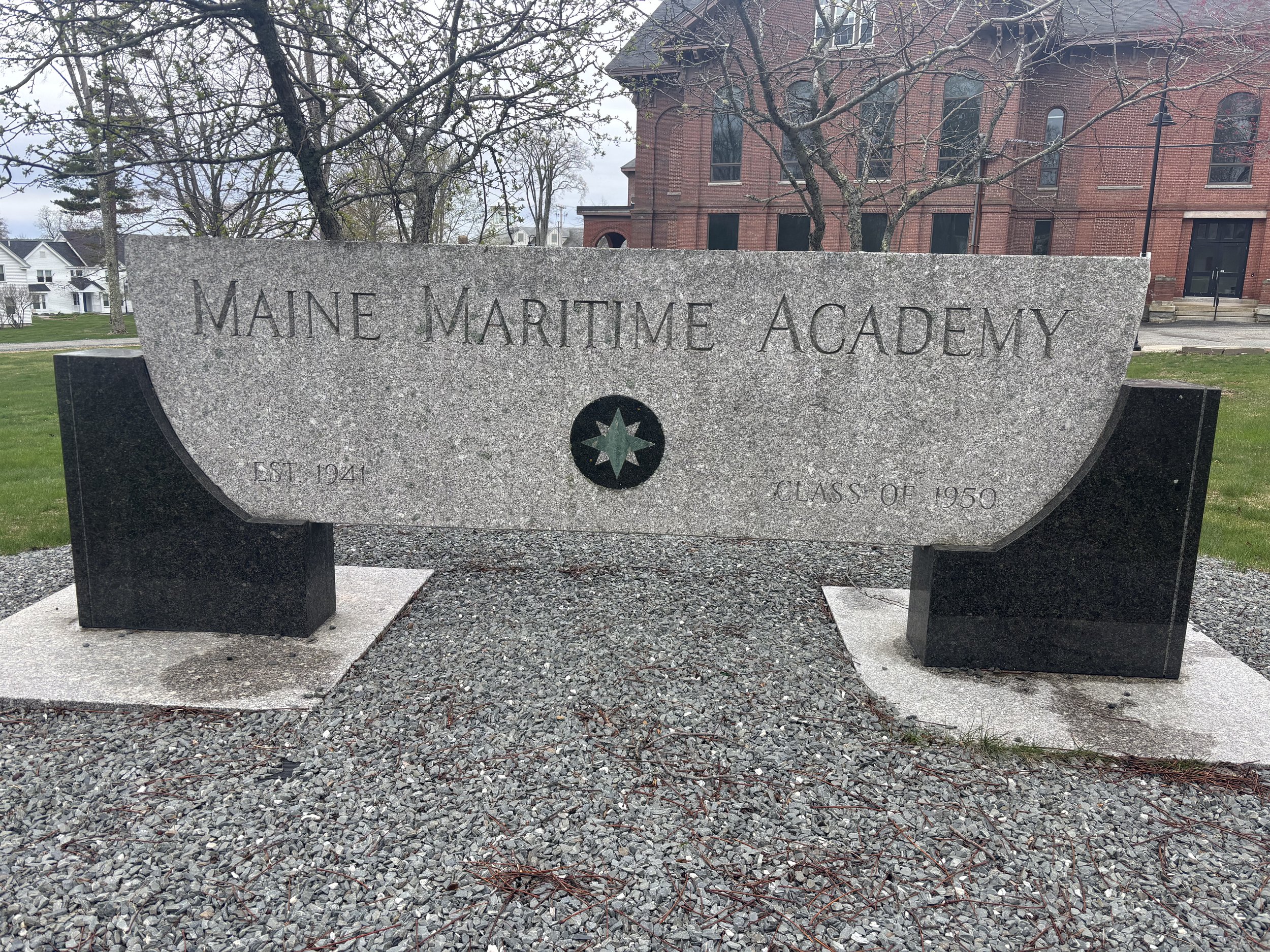
“I do not believe that we have an expense problem at the academy. We have a funding problem,” says school finance official. File photo.
This story has been updated.
Feb. 18, 2026
By Emily Baer
CASTINE—Maine Maritime Academy officials discussed the institution’s $1.4 million shortfall in fiscal year 2026 during a Feb. 12 board of trustees meeting.
The shortfall reflects a sluggish annual fund performance–raised from alumni donations–and recent investments in critical campus infrastructure and supports, as well as increased operational expenses related to the academy’s new training ship.
“We've taken on a ship with an extra $1 million in operational expenses [a year],” said MMA president Craig Johnson. “And we've received less federal and state funding than we've ever gotten.”
Johnson believes that there is a strong possibility of closing the budget gap, but much depends on how state funding decisions unfold over the next several months.
“Our job right now is to win at the appropriations table,” Johnson said. If funding for MMA moved through the state appropriations process successfully, it would result in ongoing funding, the most sustainable form of state support.
At the same time, the academy will continue to pursue funding opportunities at the federal level, he said. U.S. Sen. Susan Collins, who chairs the Senate Appropriations Committee, recently secured nearly $4 million in congressionally directed spending–essentially earmarks–for MMA in FY26.
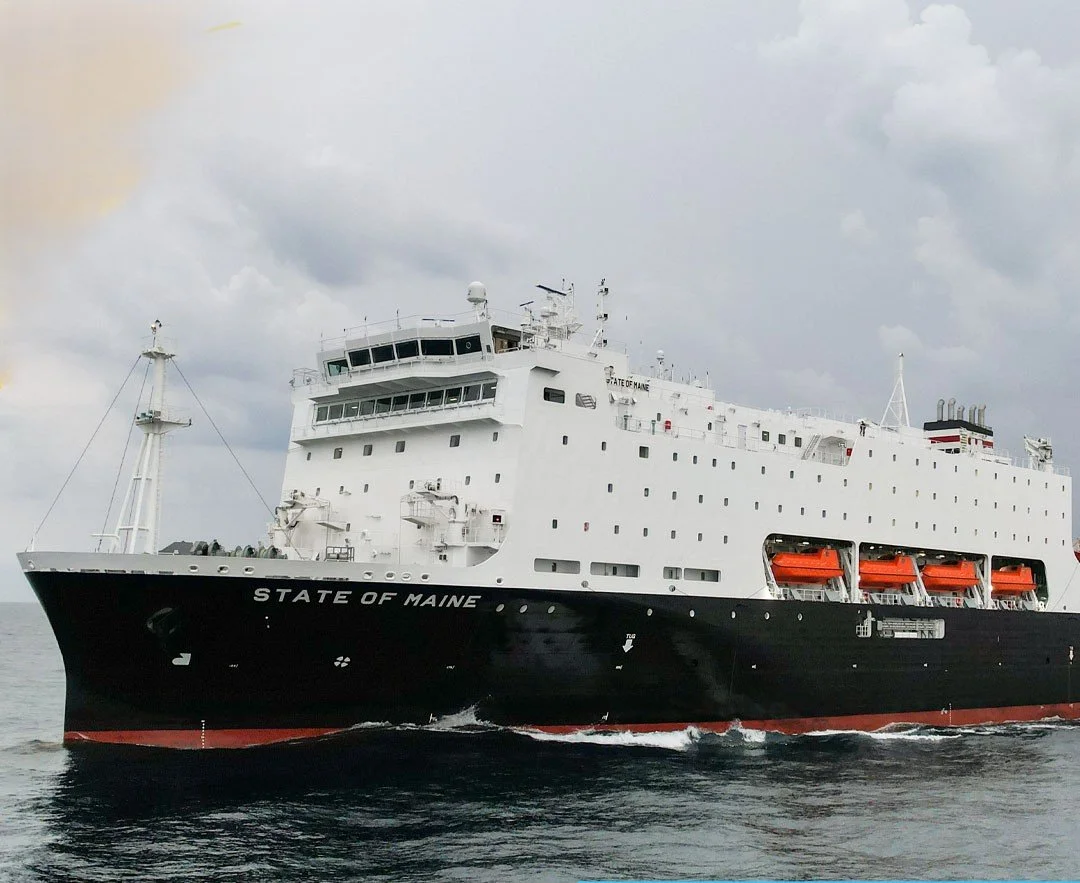
MMA’s new training ship, expected to be delivered later this year, adds $1 million to the academy’s annual budget, school officials say. File photo.
Miles Theeman, chair of MMA’s finance committee, said the academy already operates on a tight budget.
“I do not believe that we have an expense problem at the academy,” Theeman said. “We have a funding problem. I believe that the leadership team in this organization has squeezed every dime out of the expense side that they reasonably can.”
Brock Muir, director of advancement, told school officials that donor participation from alumni is down. He said the annual fund is not expected to reach its $2 million goal for the current fiscal year, but would instead reach around $1.6 million. The academy has several large fundraisers coming up in the next few months.
Enrollment will also play a key role in closing the gap, MMA officials say.
David Markow, the academy’s vice president for enrollment management, admissions and financial aid, said that the enrollment outlook for the fall class is trending ahead of last year.
“Right now we are looking very strong all through the enrollment funnel,” Markow said. “Just in the last week our deposits have started to surge.”
After years of relying on net tuition discounting, financial aid director Ryan French said that his team is currently focusing on determining “how MMA is going to be defining discounting moving forward.”
By looking towards national trends, MMA is working to determine a new and more sustainable tuition discount rate for the institution.
“We [are] able to look at the most recent [data] and compare us to the national average,” he said. “[It] actually has us looking pretty good.”
MMA gave roughly $3.2 million in net tuition discount scholarships in FY25 with a 10.3% “overall tuition discount” French said. The academy generated $31 million in student revenue.
The academy is serving a growing number of students with significant financial need and is committed to ensuring those needs continue to be met, French said. The recently launched Horizon Scholarship is a “a combination merit-based award or merit-based offer and need-based offer” that leverages internal funding sources and demographic information to provide a “holistic institutional award and commitment” to incoming students. That commitment is “filled in from as many [internally] funded sources as we can find” he said.
So far, efforts seem to be paying off, French said.
“This is the first year we’ve offered [that scholarship] so we don’t have a ton of data to refer to,” French said. “But initial results show that the Horizon Scholarship has worked.”
CORRECTION: An earlier version of this story incorrectly reported that MMA’s student revenue was $3.1 million. The correct number is $31 million. We apologize for the error.
