

‘Truffle seaweed’: a culinary curiosity with market potential
Maine Maritime Academy leads efforts to build ‘foundational knowledge’ of common seaweed through MEIF grant
Jessie Muhlin, professor of marine biology and chair of the Corning School of Ocean Studies at MMA, is leading a project to study truffle seaweed. Her research team includes Hannah Webber, Schoodic Institute; Seraphina Erhart and Steve Eddy; Kyle Pepperman, Downeast Institute. Photo courtest of Jessie Muhlin.
May 26, 2026
By Emily Baer
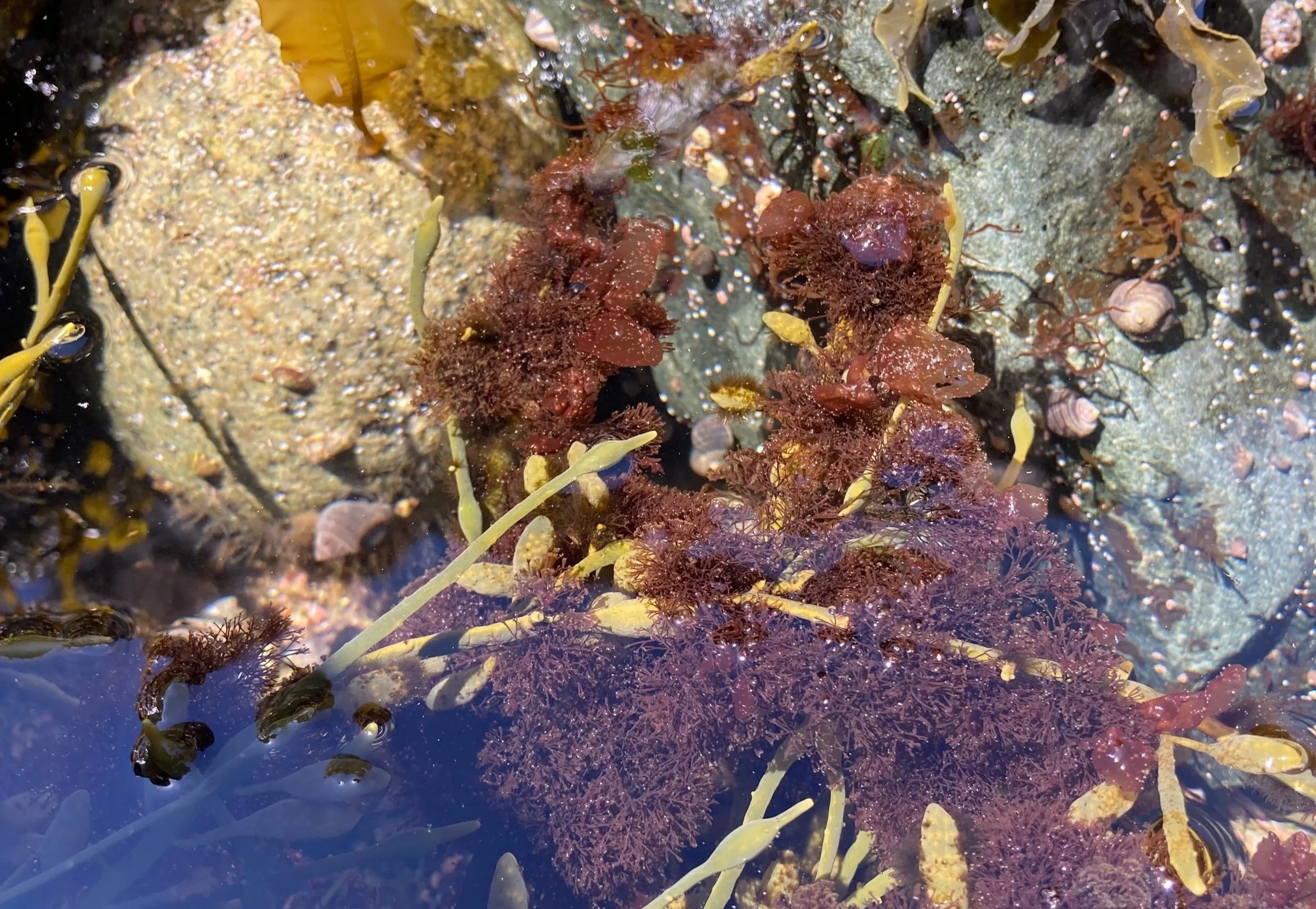
CASTINE—Vertibrata Ianosa is the kind of marine vegetation that you see, but never really see. Known commonly as “truffle seaweed” the plant grows along Maine’s rocky coast. To the common eye, it’s just another seaweed. But for researchers at Maine Maritime Academy, the Schoodic Institute, Maine Coast Sea Vegetables, and the Downeast Institute, truffle seaweed is pure potential.
Thanks to a $179,000 grant through the Maine Economic Improvement Fund Small Campus Initiative for a two-year project, Jessie Muhlin, professor of marine biology and the chair of the Corning School of Ocean Studies at Maine Maritime Academy, and her team will develop basic knowledge of the seaweed and explore its potential economic impact on Maine’s burgeoning aquaculture industry.
MEIF grants are designed to fund university-based research and development projects in seven key industry sectors, including aquaculture, Muehlin said. The Small Campus Initiative is for, as its name suggests, small campuses like MMA.
The goal of the grant is to establish a baseline understanding of the native red seaweed while also exploring the potential for scalability and market impact.
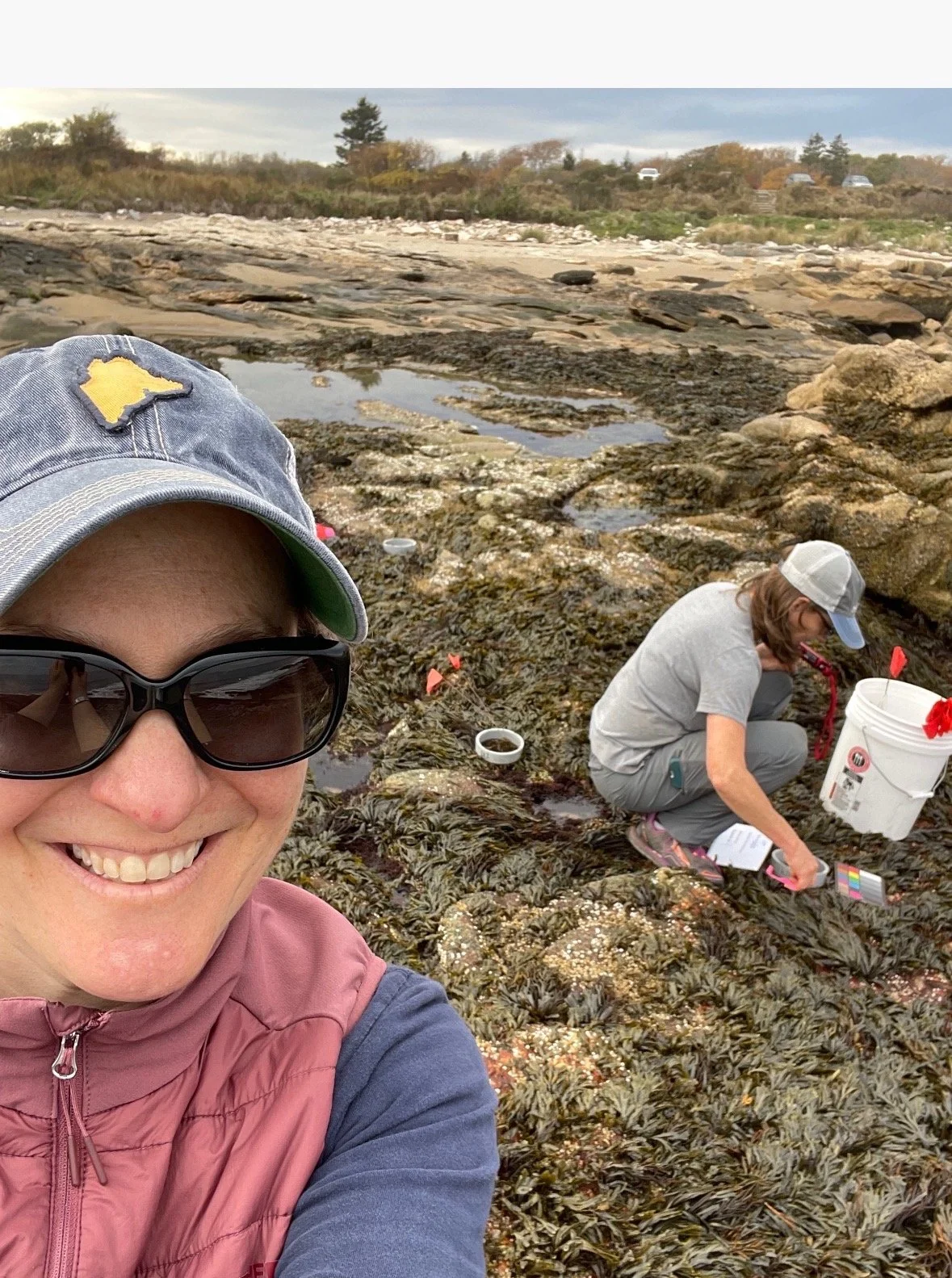
Muhlin and Webber at a harvest site. Truffle seaweed is known for its unique, appearance: it is reddish and looks fluffy. Photo courtesy of Jessie Muhlin.
“What’s really exciting about this is that we’ll be able to conduct basic scientific research on a species we know very little about,” Muhlin said. Truffle seaweed products are already on the market, she said, but it hasn't really been researched since the early 2000s.
Locally, truffle seaweed is abundant. It “embeds” itself in another common northern Atlantic seaweed, rockweed, and tends to favor “high-energy coastal environments,” Muhlin said.
Truffle seaweed has been largely overlooked in the past, but that’s changing.
“I would say that [truffle seaweed] became culinarily interesting about 15 years ago,” Muhlin said. “Europeans decided to play around with it and it’s grown since then.”
Muhlin also credits social media influencers like Alexis Nikole Nelson, widely known as the Black Forager (@blackforager), with generating enthusiasm for experimenting with the seaweed as a substitute for truffles.
“Unlike other seaweeds, like a kelp that you might make a noodle or something else out of, you use truffle seaweed like a spice,” Muhlin said. “It's best when it's like emulsified in oil. When you put it in butter or a nice olive oil it takes on a really nice, rich truffle flavor.”
Despite the growing enthusiasm for the unique characteristics of truffle seaweed, Muhlin said there is a lot that is unknown about the species.
“What we’re going to be looking at [with this grant] are questions like, ‘what is [truffle seaweed’s] nutritional profile?’ or ‘what do its amino acid profiles look like over time?’”
The team will also be working to determine the specific environmental conditions--like light and temperature-- that the seaweed needs to reproduce.
“I've never seen it reproduce in the field,” Muhlin said. “But it has a complex life history and we need to know what we’re eating. We want to understand how [truffle seaweed’s properties] might change over time.”
In terms of economic development, understanding truffle seaweed’s natural history will allow industry leaders to make sound decisions going forward, Muhlin said. “This [research] will help determine how we want to harvest it— if that’s just wild harvesting or if we are going to try to move it into the lab to cultivate it.
The project bridges basic science and applied science, and commercialization and sustainability, by relying on a unique, collaborative "transfer of knowledge" model to leverage MMA, DEI, the Schoodic Institute, and Maine Coast Seaweed’s resources over time.
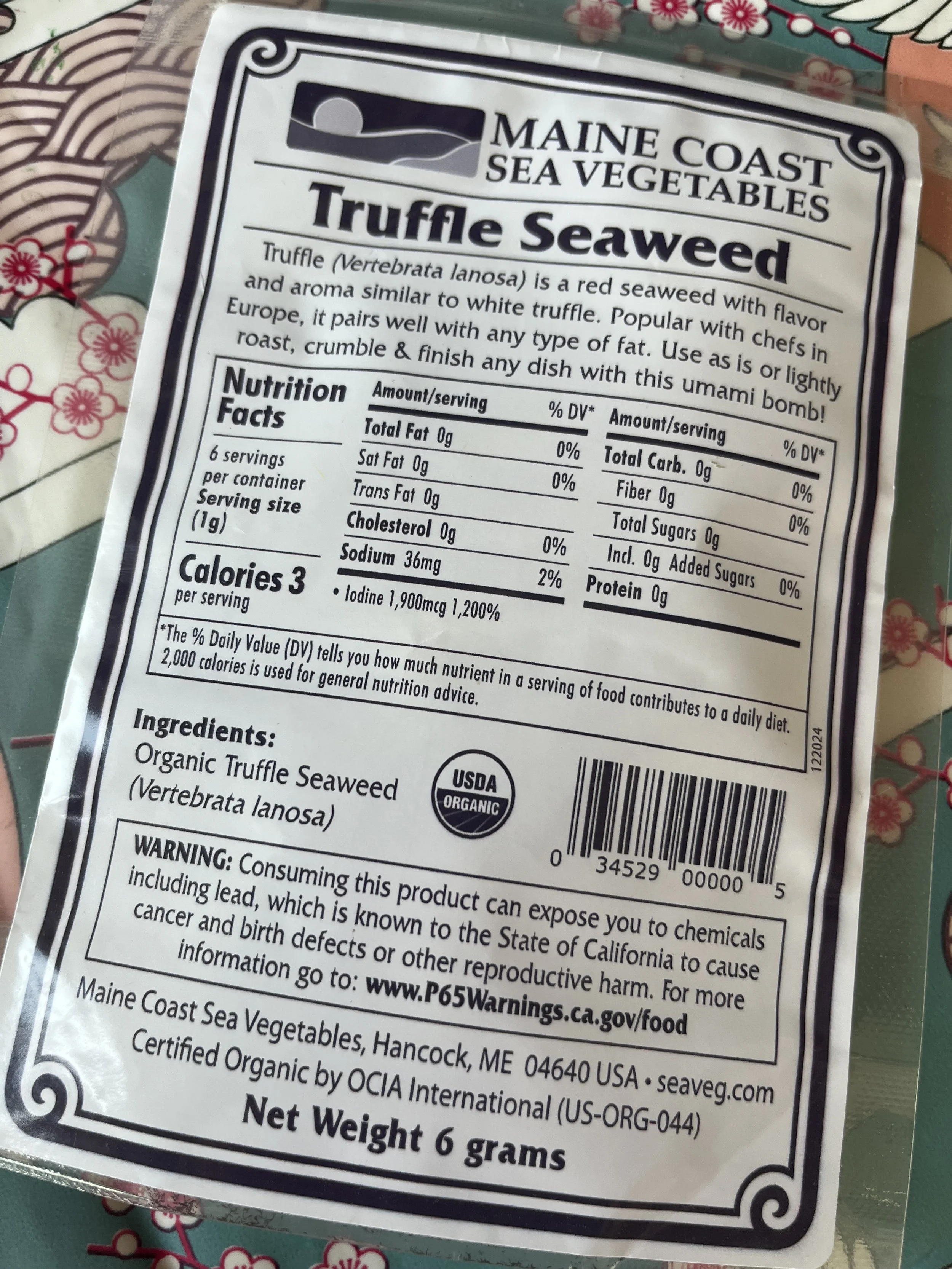
Dried truffle seaweed is used ‘like a spice,’ Muhlin said. It is best when paired with a fat, like olive oil or butter. Photo by Emily Baer.
This summer, technicians at the Schoodic Institute will develop the initial field sampling protocols and run collections through October. DEI technicians will handle spring sampling and provide “specialized infrastructure” to experiment with commercial cultivation possibilities toward the end of the grant. Maine Coast Sea Vegetables will help oversee third-party lab food science analytics and evaluate truffle seaweed’s market sector impact.
The grant also funds two undergraduate students at MMA who will work alongside the technicians from Schoodic and DEI. Muhlin will leverage the project for even greater impact by using it as a “real-world case study” in her marine botany course this fall. Students in that class will help harvest seaweed samples at local sites, like Dyce’s Head Light.
“It’s an amazing opportunity to help students really understand that the content that they're learning in class has real life, direct applications,” she said, including by helping students network and make connections in the field.
Muhlin also sees the grant as an example of MMA’s impact on a broader scale.
“This project really showcases how faculty are engaged in scholarship of discovery,” Muhlin said. “That's a really important element of what we do. We have faculty who are really competitive in getting research grants and workforce development is key to our work.”
Their project will start this June and run through June 2028.