

Opioid prevention group announces new ‘ambassadors’
Four ambassadors have personal ties to the Island, as well as to substance abuse
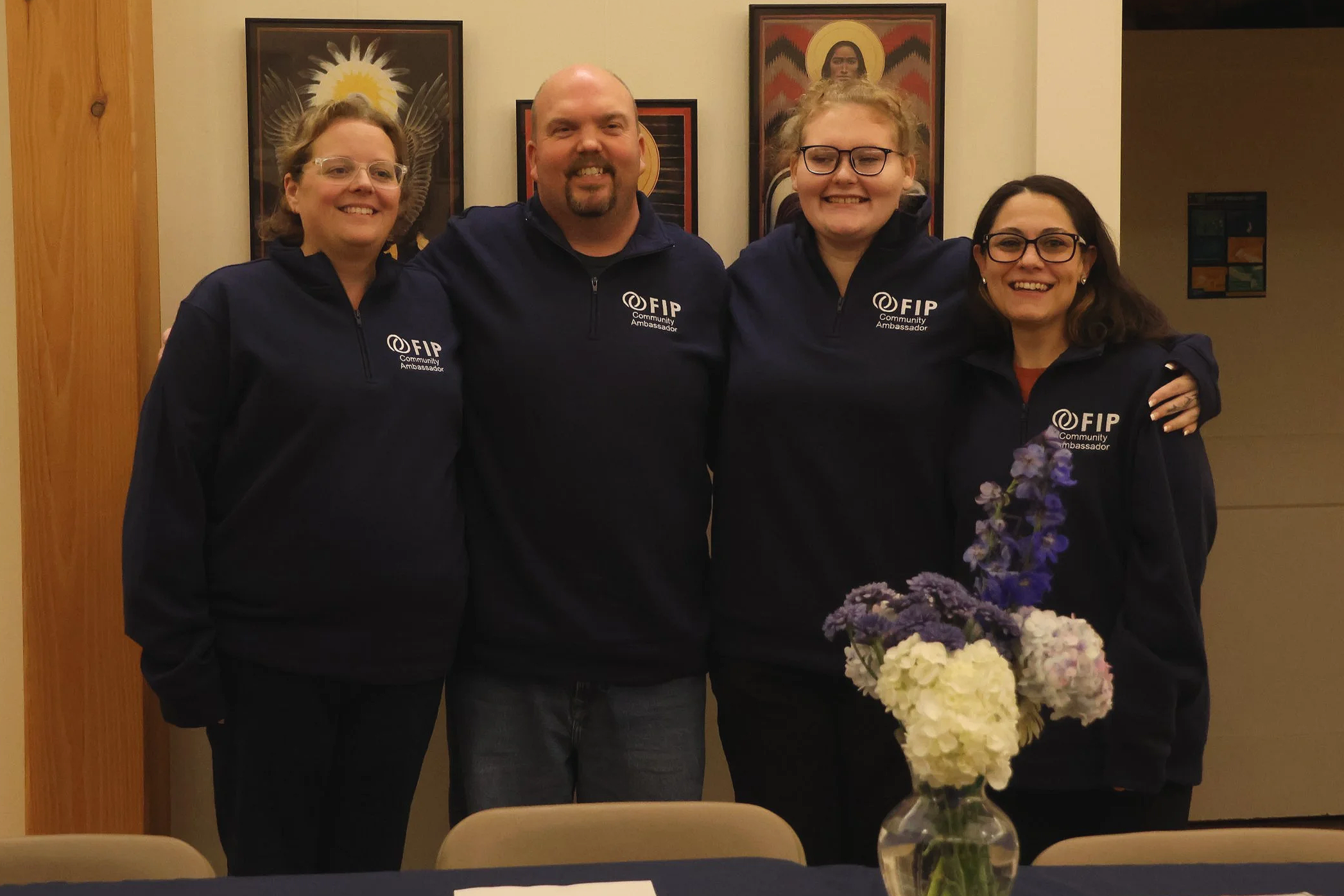
The four new community ambassadors for OFIP. From left to right: Deena Staples, Dwight Staples, Kiersten Heroux, and Jessica Jenkins. Photo by Maizy Weirich.
Oct. 6, 2026
By Maizy Weirch
DEER ISLE — The Opiate-Free Island Partnership introduced four new community ‘ambassadors’ to offer compassion, education, and resources to those in addiction, in recovery, or in need of assistance for substance abuse in Deer Isle-Stonington.
OFIP, located in the Island Community Center, has been active for nearly a decade. On the first Thursday of every month, the organization hosts a syringe service program, a friends and family group, and rapid HIV testing at St. Brendan the Navigator Episcopal Church in Deer Isle.
The program also has a partnership with Deer Isle-Stonington High School, where they typically host one event a month, said Ashley Pesek, program director of OFIP.
“A really important part of the work we do is prevention work with the kids at the high school,” Pesek said.
Meet the ambassadors
On Oct. 1, OFIP hosted a community ambassador launch, highlighting four additional members who all have personal ties to the island, as well as to substance abuse.
Dwight Staples of Stonington is a father and fisherman who struggled with addiction in his younger years.
“I know that it is difficult to talk to people that are outside of that group. To find a shoulder to lean on or to talk to, that has experience,” Dwight said.
Dwight hopes that his presence, based on his personal experience, will allow him to give back to the same community that helped him, he said.
Dwight's number is (207)469-8124
Deena Staples of Stonington, and married to Dwight, is an elementary school teacher and parent of three.
“I would want, if my children were struggling with anything in their lives, that there was some person they felt comfortable enough to talk to and reach out for help.”
Deena’s number is (207)812-8994
Kiersten Heroux, a student studying mental health, believes that everyone is an “affected other,” somebody who experiences harm from someone else’s addiction.
“I’m a daughter of an addict, so being able to watch my mother through her struggles, and also her success, it kind of gives me hope for the future, but also the experience to help other people,” Heroux said. “I’ll always meet people with compassion, instead of shame or judgment.”
Heroux’s number is (207)460-2547
Jessica Jenkins has a bachelor's in addiction counseling, and has three brothers who are in active addiction and one brother in recovery.
“It’s kind of always been a passion of mine to help people with a substance abuse disorder because I’ve watched it for over 20 years,” Jenkins said.
Jenkins number is (207)322-6674
Opioid use on the island
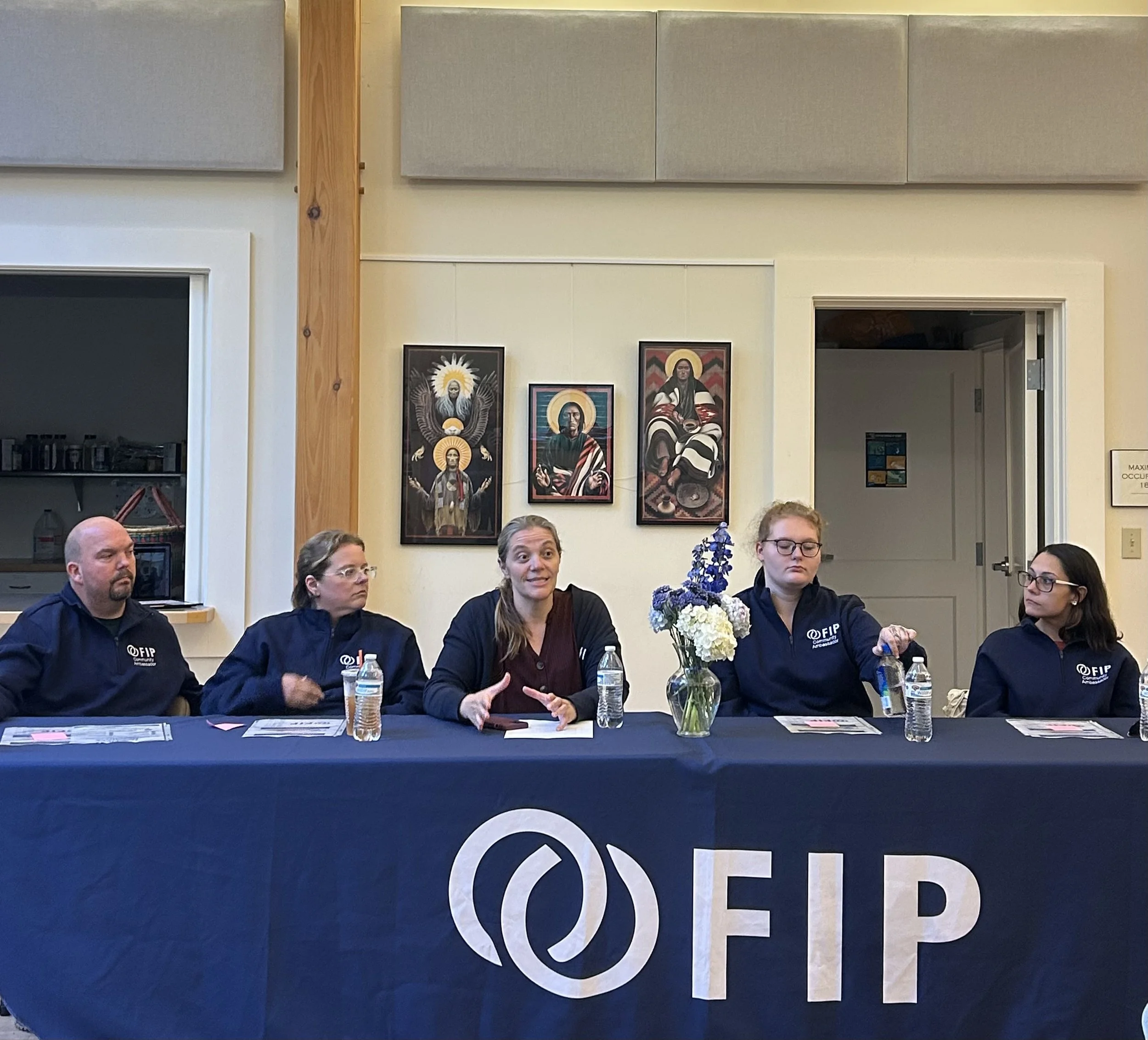
Ashley Pesek, center, answering questions from the public during the ambassador launch. Photo by Maizy Weirich.
Pesek does not think people on the island are more vulnerable to addiction than other populations because “this can happen to literally anyone, and it does every day.” But she does believe Maine was targeted for opioid use beginning in the 1990s when pharmaceutical companies and the healthcare industry began pushing more use of drugs like OxyContin.
“They literally targeted the communities that were small, isolated, rural, and where the primary industry is people working with their body,” Pesek said.
Charlie Osborn, board chair of OFIP, also called attention to certain working demographics on the island that may increase the likelihood of opioid use.
“I think one of the challenges on the island is that the major industries here, fishing and construction trades, are among the most injury-prone. And the second thing is, very few people here have insurance. So they don’t get to doctors,” Osborn said. “And the Downeast Coast has this cultural rugged independence.”
Rebecca Gratz, principal of Deer Isle Stonington High School, who was in the audience, chimed in, “And you don't have sick days, or, if you don’t work, you don’t get paid. And if you’re hurt, you have to figure out a way to keep working, and you know, there’s a pill for that.”
Future of OFIP
OFIP, with the addition of the new community ambassadors, hopes to continue to reduce stigma regarding substance abuse in the community and be available for when people are ready to get help.
“This community takes really good care of each other. And I think there was a willingness to take care of people with these disorders and who are affected others, but stigma made it so that the two groups couldn't connect. So who do we bust that up?” said Pesek, while talking about the presence of OFIP.
The launch of four new community members for OFIP is an outcome and symptom of increasing support regarding substance abuse as well as decreasing stigma.
“There’s been a significant shift, and I think this is sort of the next branch of growth. What we’ve realized is that the secret sauce is community members. If we build community around substance abuse disorder, people know where to get help when they’re ready,” Pesek said.
An example of this growth is the presence of Narcan now available and accessible around the island.
“That box [which holds four doses of Narcan] is now in 100 locations around the island. Because businesses and nonprofits, and fishermen are willing to carry it,” Osborn said.
Gratz added that there is Narcan available next to the AED (Automated External Defibrillator) at the high school, too. The association between the two “breaks the stigma,” Heroux said.
“When we’re out there, and we’re talking, and we’re public about it, we are planting those seeds. We are saying you matter,” Pesek said.
With more information at the high school level, Deena said she is hopeful that this preventative education will continue through generations.
“Hopefully in 20 years, OFIP won’t be as necessary,” Deena said.
“Those seeds that we built will be trees,” Heroux added.
