

Local activists celebrate preservation of blueberry barrens
Efforts to establish the property as a nature preserve began in 2023
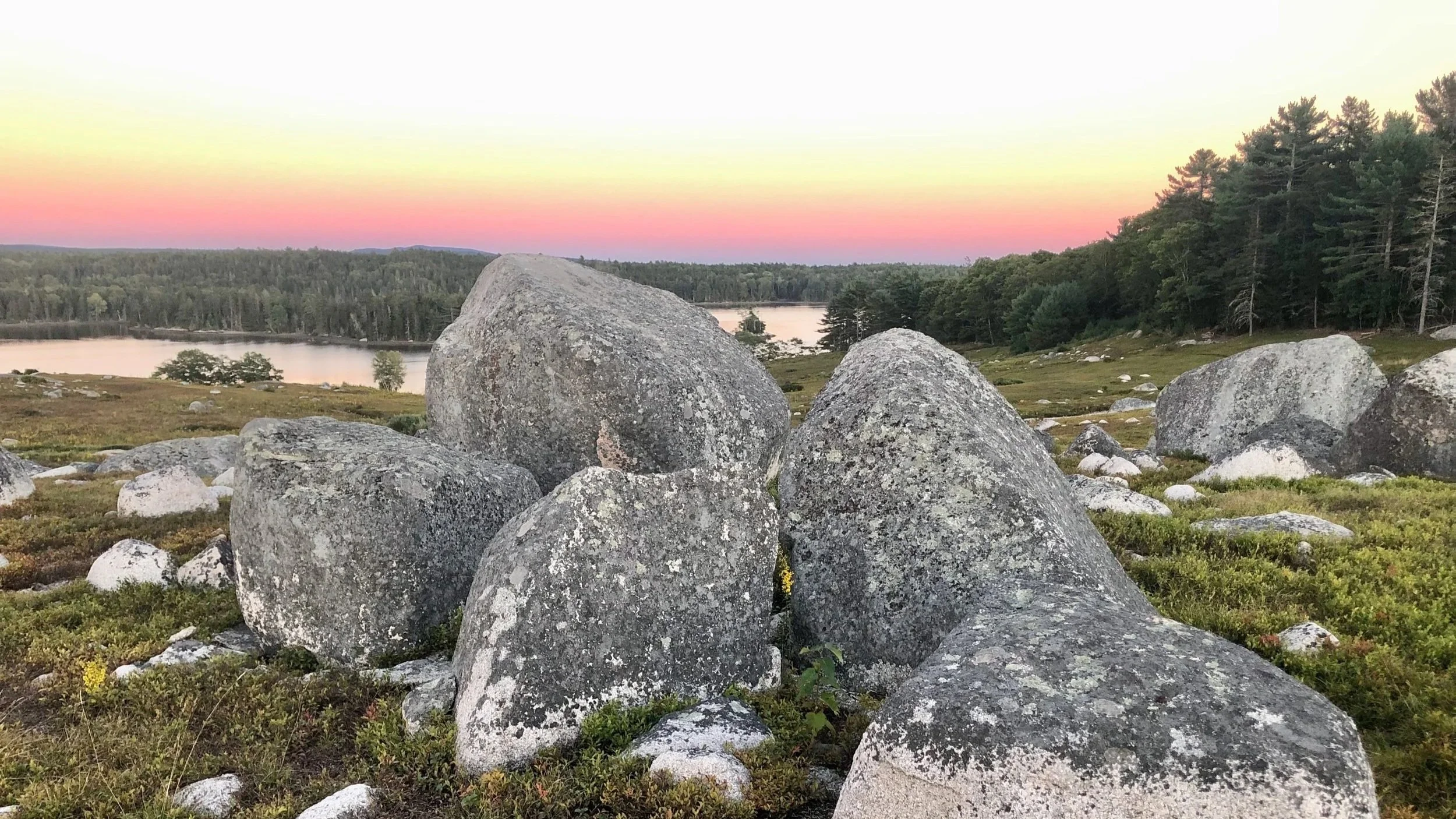
A boulder's eye view of Salt Pond from the blueberry barrens. The 38-acre property was bought in 2023 by a developer who proposed 9-houses on the site. Photo courtesy of Amy Brubaker.
July 13, 2026
By John Epstein
BLUE HILL–More than 60 people—organizers, activists, volunteers and donors—gathered at The Farmhouse Inn in Blue Hill on July 8 to celebrate the successful preservation of the Salt Pond blueberry barrens. Their combined efforts had led to the establishment of a nature preserve protecting the 38-acre property along Route 172, saving it from becoming a nine-house sub-division.
“Sometimes if enough people get together, talk, stand up, make commitments of time and money, sometimes you can save a property,” said Shelley Latham, a member of Save the Salt Pond Blueberry Barrens, the ad-hoc, grass roots group of citizens who organized the efforts to save the barrens. Latham handled communications and fundraising for SSPBB.
At the celebration, Blue Hill’s Larry Lefkowitz, a key organizer behind the effort, spoke about how the deal came about. Lefkowitz is a computer systems manager, relocated to the area from Boston with his wife, Amy Brubaker, nature photographer. Their home abuts the Salt Pond blueberry barrens.
“I met Kermit Allen, who owned the Allen Blueberry Farm business, including the Salt Pond blueberry barrens,” Lefkowitz said. “We had coffee and talked about the beauty of the place.”
Allen died in 2022 and his heirs decided to sell the Salt Pond blueberry barrens. Developer Geoff Bowley, of Kennebunkport, bought the property for $900,000 in 2023. Bowley planned to build nine large houses on the site.
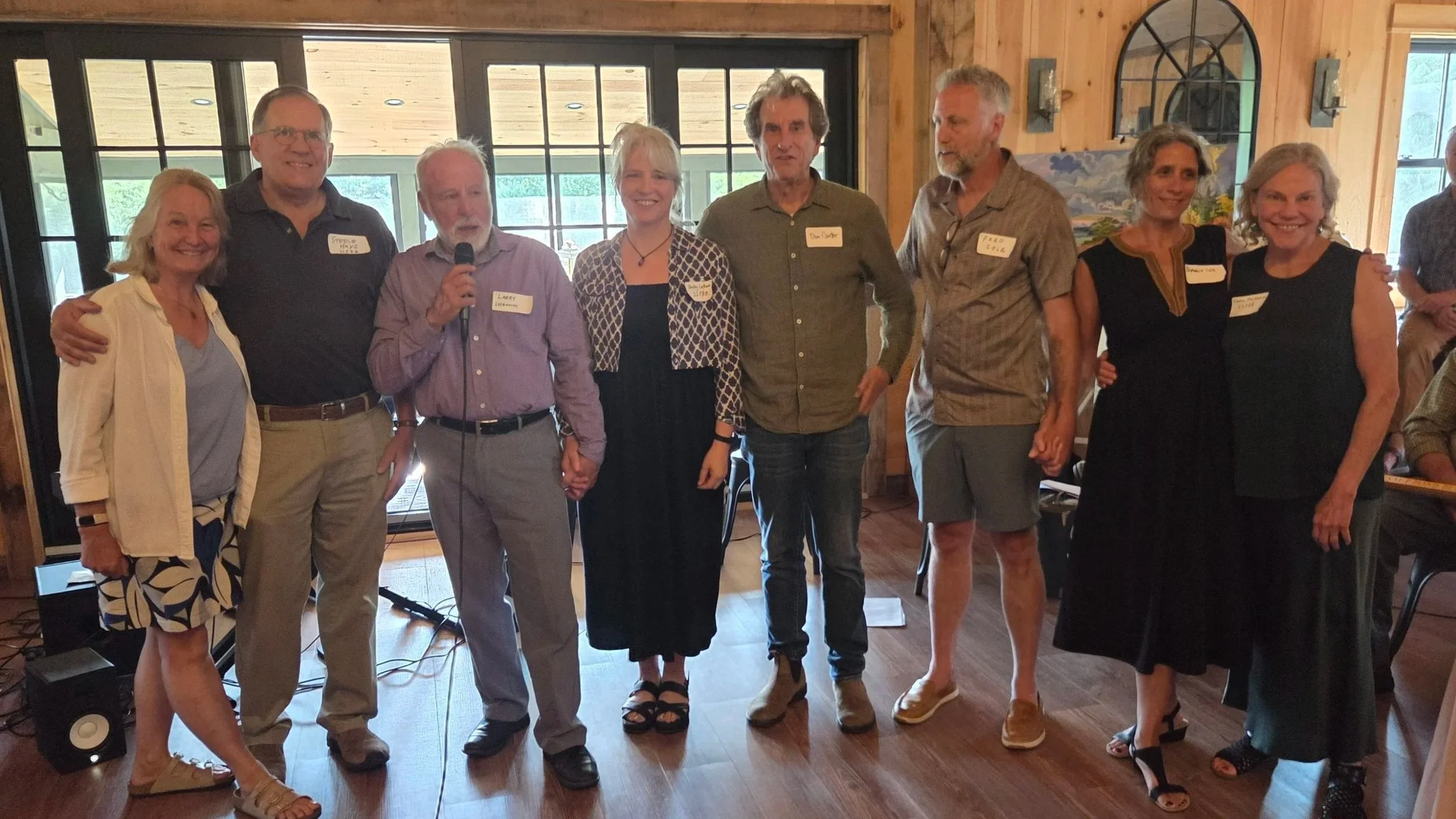
SSBB’s ‘dream team’ spearheaded efforts to preserve the property by turning it ino a nature preserve managed by BHHT. Left to right: Amy Brubaker, Steele Hays, Larry Lefkowitz, Shelley Latham, Dan Cantor, Fred Cole, Stephanie Cole, and Laura Markham. Skip and Barbara Simon, Tim Dawson, Lucy York, and Geoff Bailey were unable to attend. Photo by John Epstein.
The planned development included removing boulders, installing septic systems, and creating a network of driveways. Lefkowitz, by virtue of being an abutting property owner, received early notice of the proposed development from the planning board. He quickly began meeting with friends and neighbors to see what they could do to push back against the plan.
“We put together a core group of people to discuss what actions we could take to save the barrens,” Lefkowitz said. “They had a lot of skills—construction, real estate, project management, journalism—but most of all they had a passion for the place.”
“We educated ourselves about the law, we argued, we made up,” Lefkowitz said. “We put up signs, spoke to the press, wrote letters to the editor, hit social media, [and] went to nine planning board meetings and three public hearings.”.
The public hearings were so well attended that local officials had to move the hearing to a larger meeting room. Even though they were able to accommodate a bigger audience, many people were still turned away due to lack of space.
The first thing the opponents of the sub-division had to do to stop the development was to keep Bowley’s application from being approved by the planning board. SSPBB accomplished this on April 9 by convincing the board that the barrens had scenic, cultural and wildlife value.
A complicated transaction
Then came the next step: Getting the 38 acres back from Bowley. The developer filed an appeal with the Maine Superior Court, but agreed to talk to SSPBB about selling the blueberry barrens. His asking price was $1.9 million, more than double what he’d paid.
“Before we could have conversations about purchasing the property, we needed a not-for-profit organization with 501(c)(3) status to be our fiscal sponsor,” Lefkowitz said.
Blue Hill Community Development stepped in to fill that role. In July 2025, BHCD took on a $1.5 million interest-free loan from an anonymous foundation on SSPBB’s behalf. The funding helped secure SSPBB’s ability to purchase the barrens. After negotiations, which chair Latham described as “arduous,” SSPBB and the developer finally agreed to make a deal. They settled on a purchase price of $1.8 million.
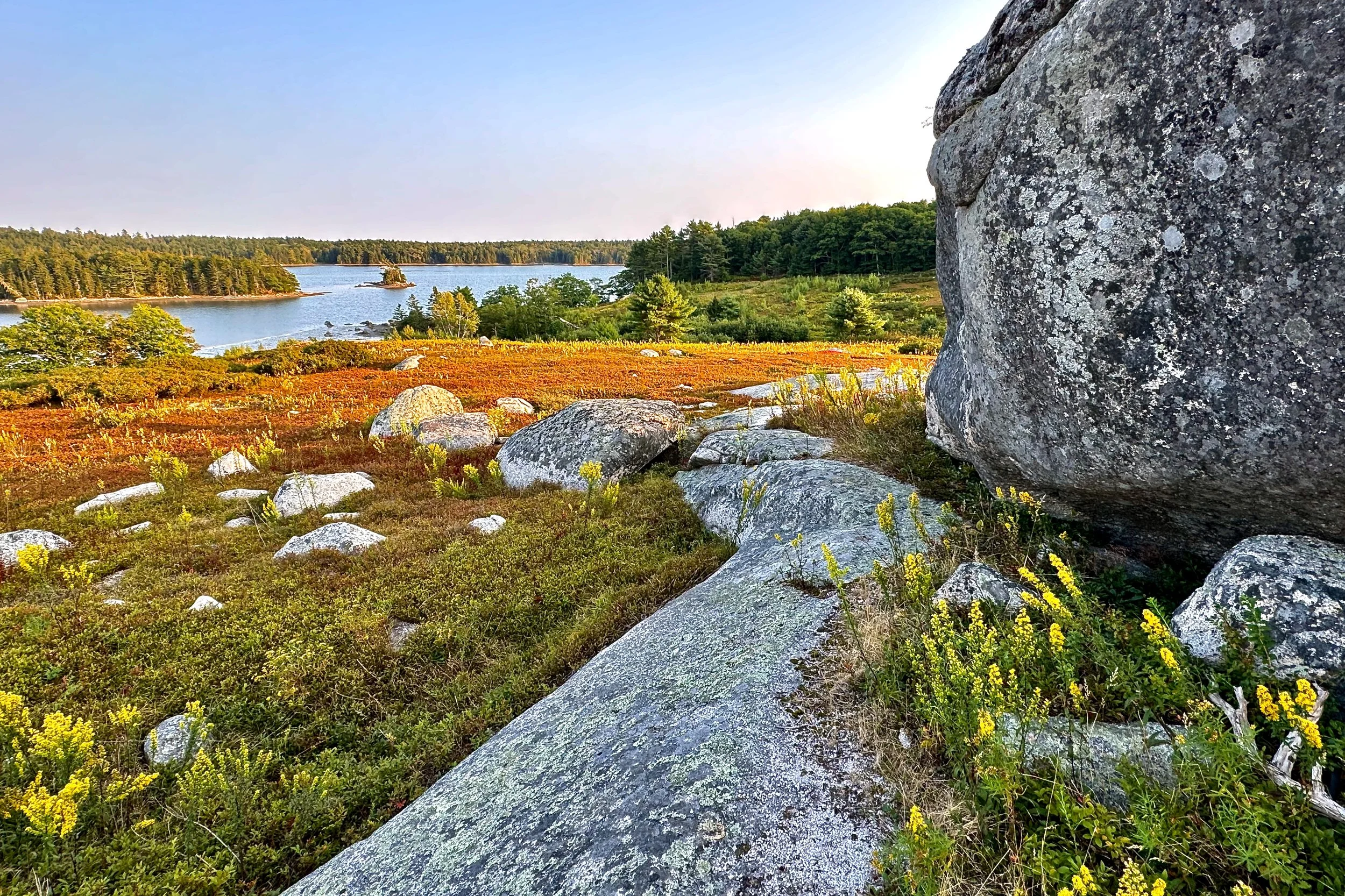
Then came the final step in the process. On June 25, 2025, BHCD transferred the blueberry barrens to BHHT for permanent stewardship and conservation. Photo courtesy of Amy Brubaker.
Later that summer, Blue Hill Heritage Trust committed $300,000 towards the purchase to complete the transaction with the developer, on the condition that BHCD would hold the property until Save the Salt Pond Blueberry Barrens raised the funds to pay off the $1.5 million loan. As an accredited land trust governed by IRS rules, BHHT was precluded from buying the blueberry barrens outright because the asking price exceeded the appraised value by more than $500,000.
Over the next ten months, SSPBB, with BHCD as its fiscal sponsor, was able to raise more than the loan balance, generating $1.5 million in over 340 individual donations. Some gifts were as small as $5, but several exceeded six figures, including two that topped $200,000. With that funding in hand, BHCD was able to pay off the loan from the anonymous foundation.
Then came the final step in the process. On June 25 of this year, BHCD transferred the blueberry barrens to BHHT for permanent stewardship and conservation.
“This was a once-in-a-lifetime opportunity to conserve the largest scenic overlook of the Salt Pond, provide public access to its trails and blueberries, protect a productive tidal ecosystem, and maintain historic fishing access, " said George Fields, BHHT’s executive director.
It wasn’t just local residents who were happy about the preservation of the Salt Pond blueberry barrens. Brian Francis, member of the Mi’kmaq Nation, traveled from New Brunswick for the celebration.
Francis had visited Maine in the summer with his family to pick blueberries on the barrens. “When I heard the land was in danger of being developed, I came to meetings and spoke, and I did ceremonies on the land with offerings of food and tobacco on a spirit plate,” he said.
Dwayne Tomah, a member of the Passamaquody Nation and director of the Sipayik Museum, drove two and half hours from Perry, Maine, to celebrate. “I came to give thanks because the Earth, our Mother, is being taken care of, and that is so important,” he said.