

State closes scallop area off Deer Isle
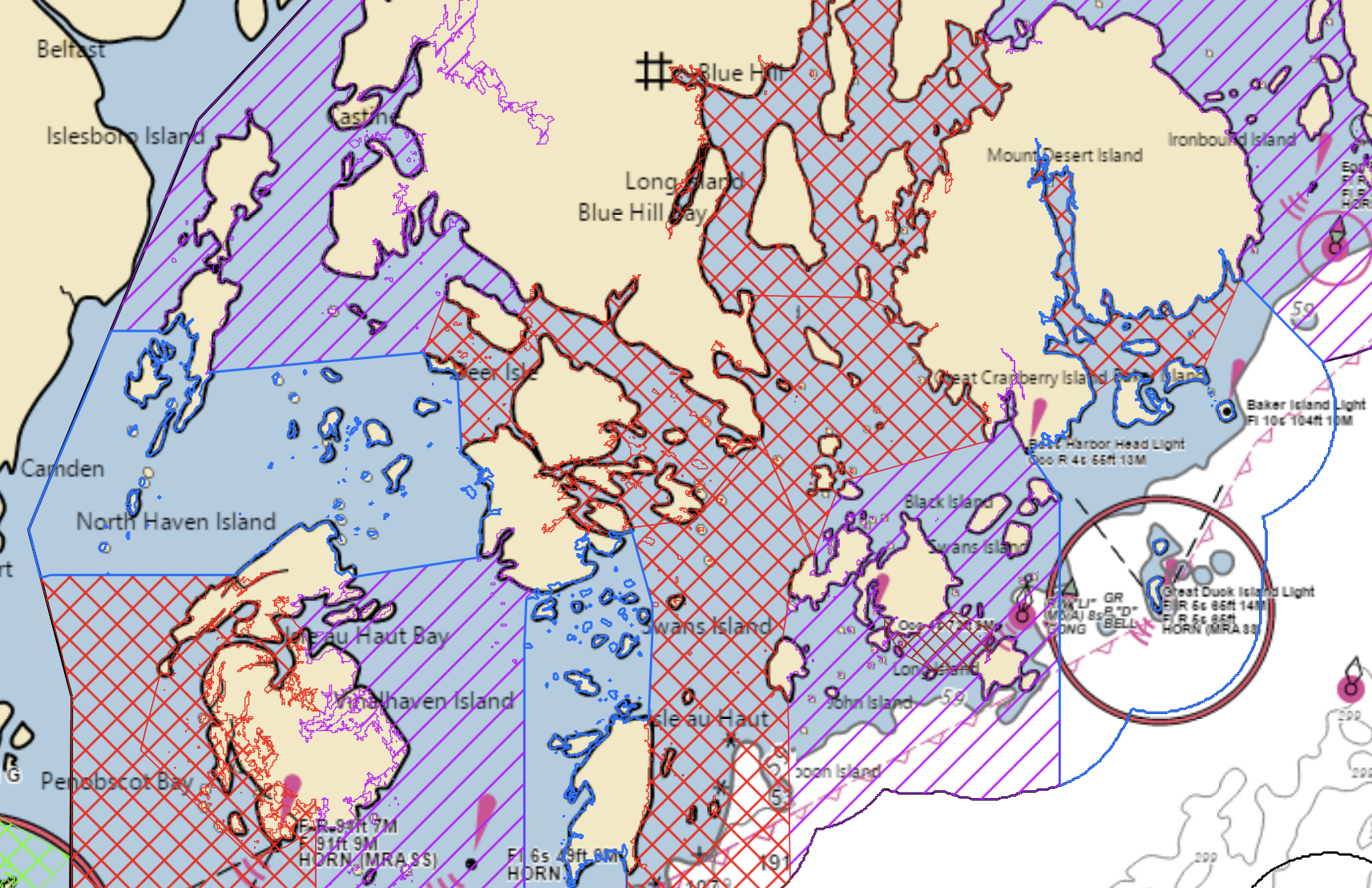
A map showing the current rules for scallop harvesting. Red cross marks indicate closed zones. Purple lines indicate where scallops may be harvested by divers. Blue areas allow fishermen to drag for scallops. Source: Maine Department of Marine Resources.
Feb. 2, 2026
By John Boit
DEER ISLE—After seeing a decline in the amount of legal-sized scallops harvested in the waters immediately northwest of Deer Isle, the Maine Department of Marine Resources has closed the area for the remainder of the fishing season. Other areas west and south of the Island remain open.
The area closed to all harvesting on Feb. 1 runs south from Little Deer Isle to Pickering Island, and northwest off Deer Isle. Locally, diving and dragging for scallops are still allowed in designated spots in Penobscot Bay.
The Deer Isle ruling follows the Jan. 8 closure of scallop fishing areas in Lower Blue Hill Bay and Jericho Bay.
DMR spokesperson Jeff Nichols told The Rising Tide that the action, while technically called an “emergency conservation closure,” is a part of the state’s normal process to monitor and adjust fishing rules as the season goes on.
“In-season surveys have shown that the abundance of legal size scallops in that area have declined by an amount that, per regulation, triggers a closure. Regulation specifies that if harvesters remove between 30-40 percent of the legal size scallops, the Department may close that area. The Department has chosen to implement an immediate conservation closure, which is what the emergency regulation does, to reduce the risk of unusual damage and imminent depletion of the scallop resource in [these] important scallop harvest areas,” Nichols said.
In order to be harvested, scallops must be four inches across the shell. Allowing smaller-sized scallops to remain undisturbed “are essential to the ongoing growth and recovery of the scallop resource,” DMR said in its notice.
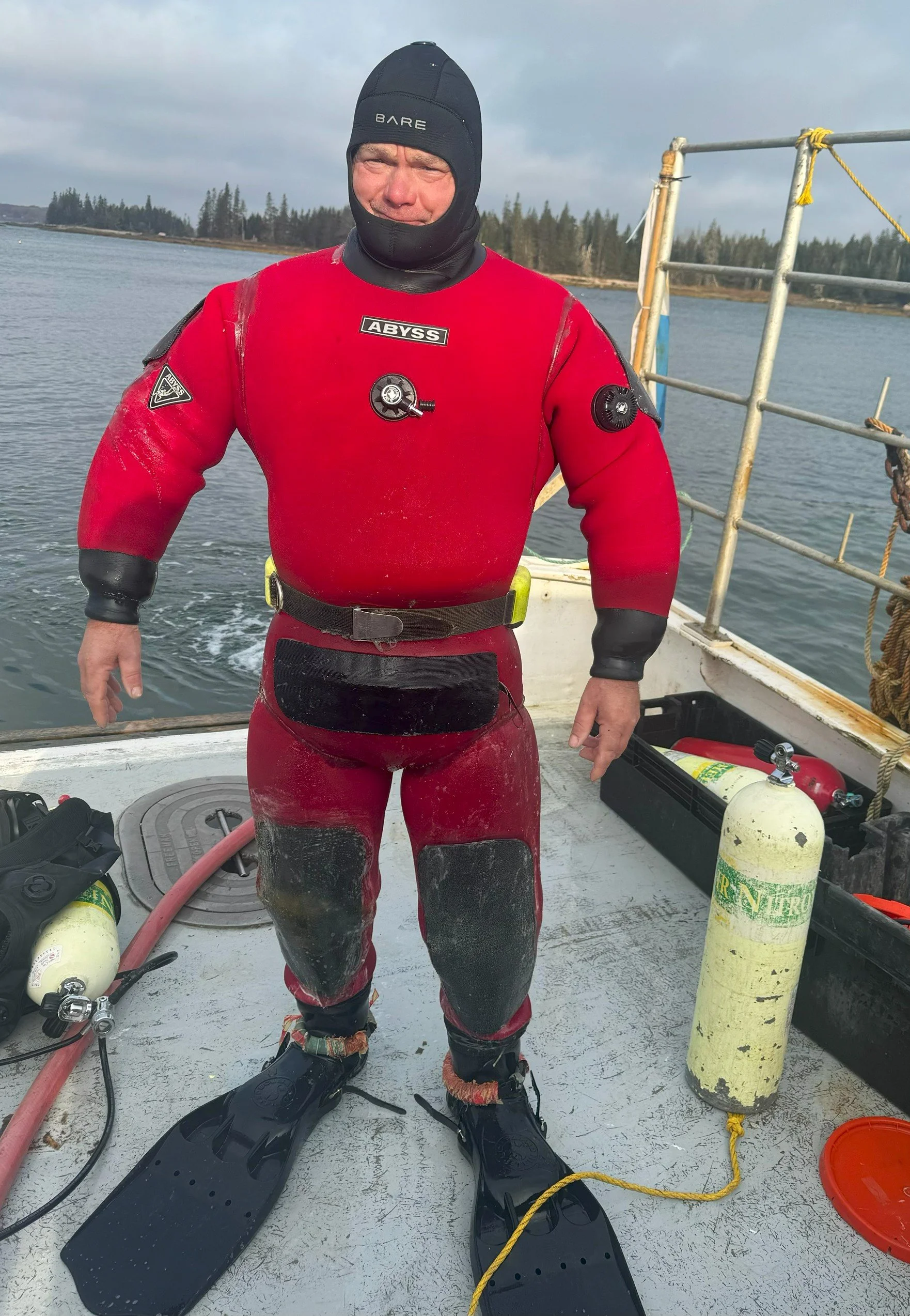
Brooklin scallop diver David Tarr. File photo.
Brooklin scallop diver David Tarr said the closures are generally in areas where dragging is allowed, as opposed to diving. That’s because, with only about three dozen divers in the whole state, those who dive for the catch tend to spread out, he said.
“The dragging gets a lot more concentrated effort as there are more harvesters,” Tarr said. “The closures are intended to put the brakes on in areas that have been hit hard, have seed stock present or there was poor recruitment to begin with. I do support them myself but the biggest complaint from fishermen is that when one area closes more boats end up in the areas still open. It’s all a kind of balancing act that is always some sort of compromise.”
As fishermen adjust to a shrinking amount of water that is open for harvesting, Tarr said he expects the closures will affect where he decides to fish for the rest of the season.
For additional reading on scallop diving, be sure to check out The Rising Tide’s feature story on Tarr when the season opened in December.
