

Scallop season is on, and restaurants across U.S. pay top dollar for this Maine product
‘Scallops are like wine…chefs know what to expect when they buy Maine scallops, and they pay a lot of money for that,’ says one local diver. But it’s a cold and dangerous business.
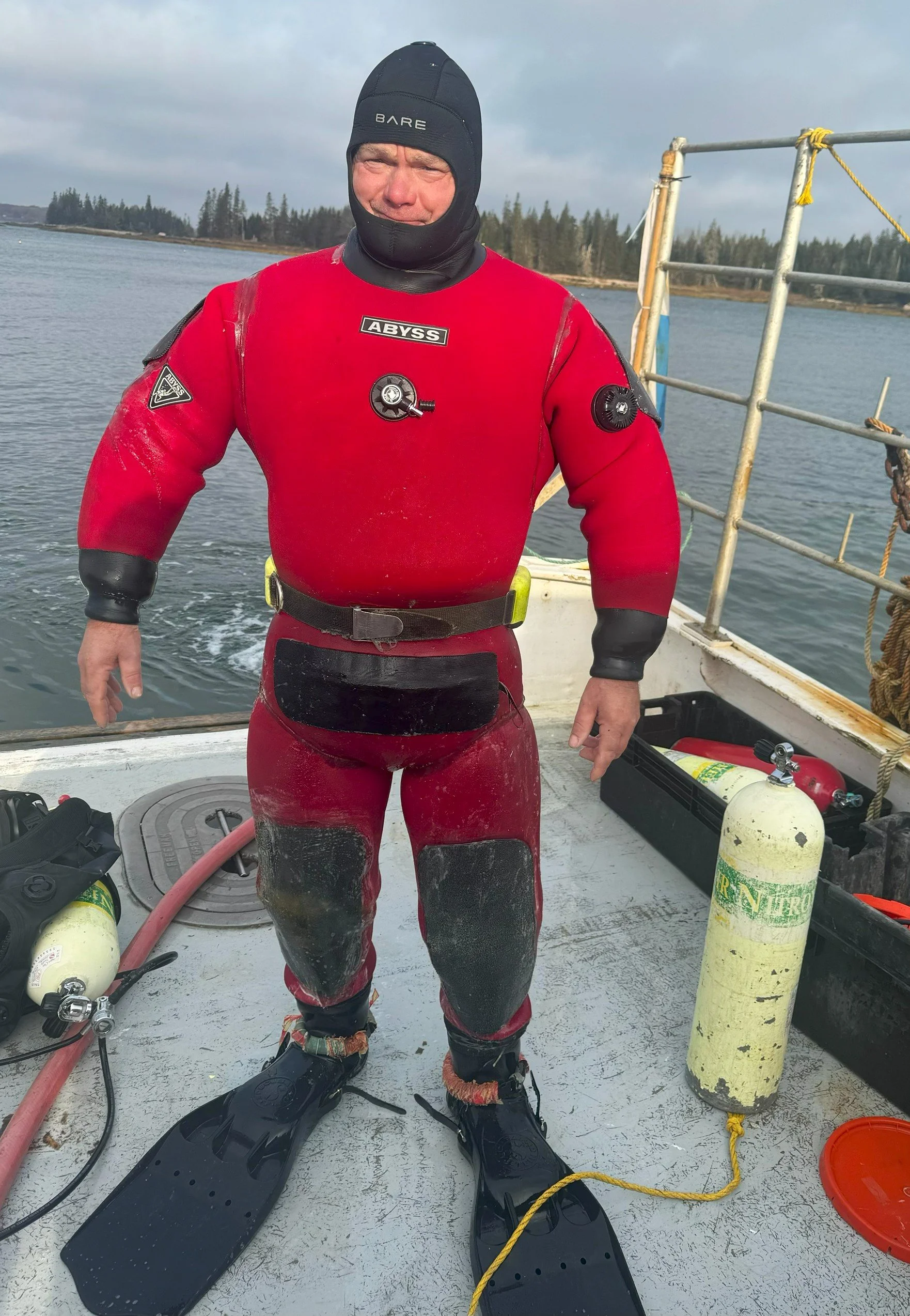
David Tarr of Brooklin dives as much as 60 feet down in Maine’s frigid winter waters to put scallops on dinner plates across the country. Photo courtesy of David Tarr.
By Steele Hays
Diving for scallops is dangerous work, requiring hours underwater in cold, hazardous conditions. But for Brooklin’s David Tarr, it’s worth it.
Tarr takes great pride in bringing high-quality, fresh scallops to market and seeing them command premium prices from top restaurants all over the country.
“Scallops are like wine. They really are,” Tarr said in a recent interview with The Rising Tide. “There’s a difference in flavor by where they come from. And it’s a trust issue… chefs know what to expect when they buy Maine scallops, and they pay a lot of money for that.”
Tarr, 58, has been scallop fishing for more than 40 years. On some days, he dives. And other days, he drags, pulling a chain sweep across the bottom from his 38-foot boat Tarrfish. Diving is harder, he says, adding that he’s not sure how many more years his body can handle the physical demands of diving. He is one of only about 35 currently-active divers in the state.
He sells two thirds of his catch to a trusted seafood dealer in Stonington, with the majority of those scallops shipped out by air freight to restaurants across the country, commanding premium prices of up to $30 per pound. The rest he sells directly to a list of individual customers he’s built up over many years.
Tarr is a day-boat fisherman, fishing inshore waters in Blue Hill and Penobscot Bays and around Deer Isle and bringing his catch to the dock at the end of each working day. Day-boat fishermen account for less than five percent of the nation’s scallop catch. The other 95 percent comes from “trip boats,” fishing far offshore from ports like New Bedford, Massachusetts and staying out at sea for up to 10 days at a time.
Many seafood professionals say those factors make a major difference in taste and freshness–to the advantage of Maine scallops.
When he dives, Tarr usually works in 40 to 60 feet of water, filling a mesh bag with scallops he picks up from the bottom. When he has a bag filled, he unclips a line running to a buoy on the surface, clips the bag to the line and begins filling another bag. Overhead, in the boat his fishing partner–called a “tender”--is watching and sees that the filled bag is ready to be pulled up. The crew’s daily catch is limited by state regulations to 135 pounds, although on many days they fall short of that, Tarr said.
This year’s scallop season opened Nov. 18 for divers and will run through April 18. The draggers' season opened Dec. 1 and will end on March 31. In recent years, regulators have closed many sectors early, based on catch levels and other information fishermen are required to submit.
Deer Isle and the Blue Hill Peninsula are in Zone 2, one of three sectors regulators have designated to manage scallop fishing. Since 2012, regulators have used a three-year rotation for each sector and sub-sector so that each area is closed one year, open for dragging one year and open for diving one year. That system has helped scallop stocks stabilize and be protected, according to Tarr, who serves on the state Department of Marine Resources’ Scallop Advisory Committee.
Tarr’s production so far this year is down compared to last year, which he attributes to less-than-ideal weather since the season opened. Last year was “a great year” for him and other Maine scallop fishermen, he said, with a total catch statewide of more than 517,000 pounds valued at $8.8 million. But those numbers are minuscule compared to Maine’s lobster industry, with a catch valued at $528 million in 2024.
In 2025, three Maine scallop fishermen died in fatal accidents. Jaxson Marston, 26, died in April after he was struck by a snapped rope while fishing off the coast of Massachusetts, and a father and son, Chester and Aaron Barrett, were lost in January when their boat went down near South Addison in a storm. The Barretts were not fishing when they were lost, but were moving their boat from one port to another.
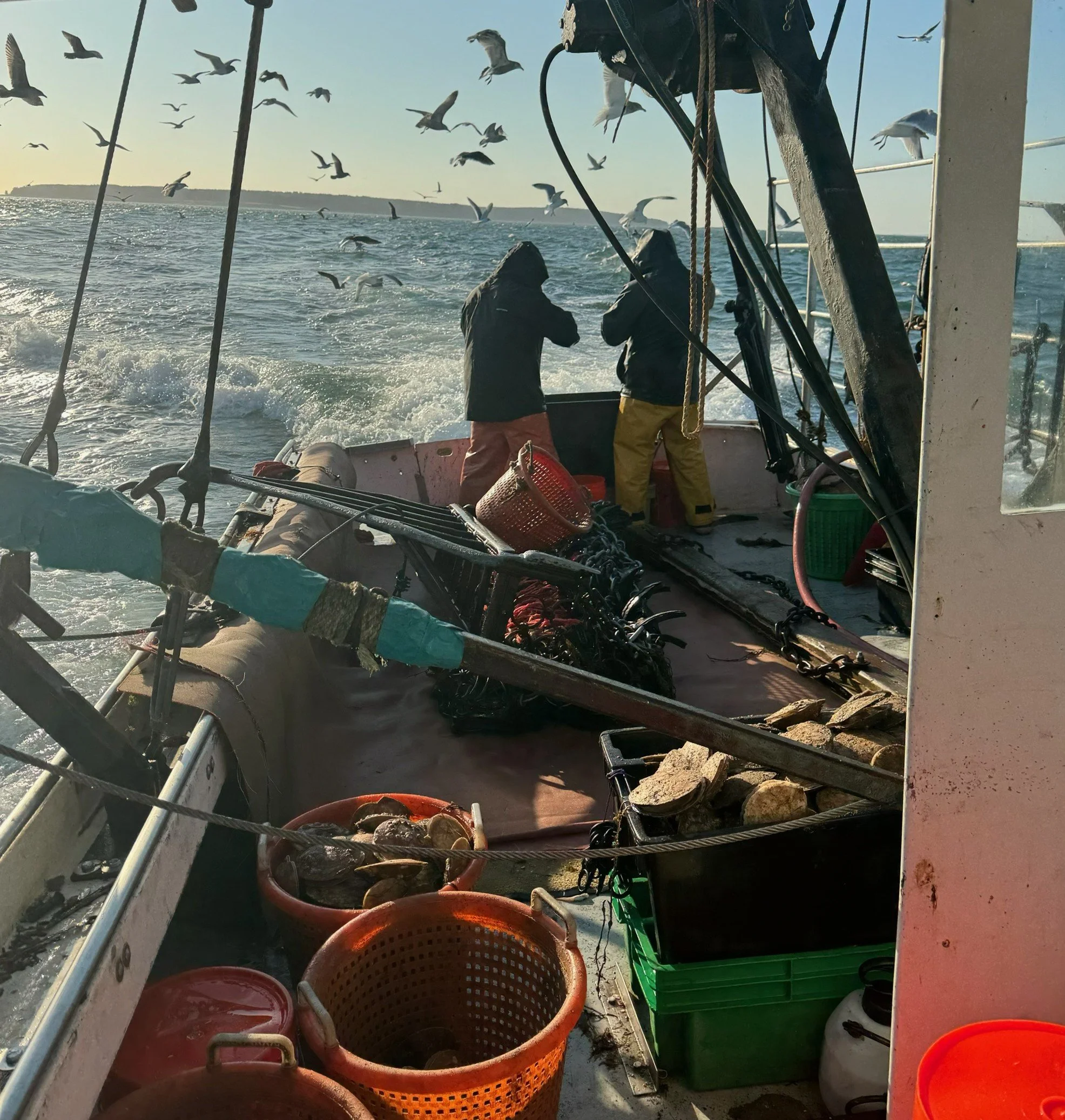
Gulls follow closely behind Tarrfish, the fishing boat owned by David Tarr of Brooklin. Photo by David Tarr.
