

Stanford researcher studies Maine’s accent for clues to its evolution
PhD student conducting dozens of interviews to study downeast’s iconic way of speaking
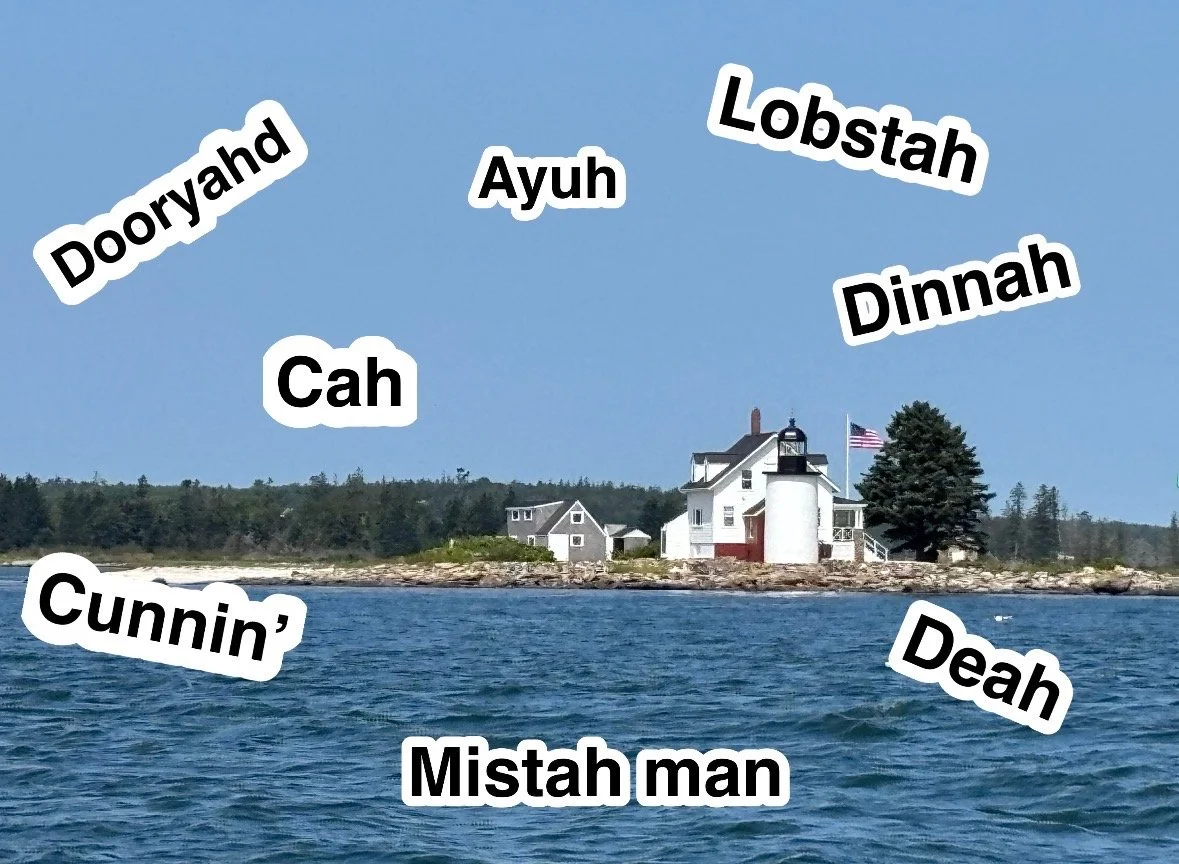
Just a few of the phrases that can signal someone’s downeast heritage. Photo by John Boit, graphic by Jessi Hardy.
July 28, 2026
By Jessi Hardy
From the iconic, "ayuh" to the soft, rhythmic "deah," the Maine dialect has long served as a rugged cornerstone of the state's cultural identity. Characterized by its famously dropped "r"s and elongated vowels, the accent is recognized across the country as a regional “tell”—a phonetic shorthand for deep community roots and a maritime way of life.
Yet, as the modern world grows more interconnected and more people “from away” move into the state, the question arises: Will Mainers’ unique way of speaking slowly vanish into the fog?
Michael Senko, a PhD student at Stanford University specializing in sociolinguistics, is seeking an answer to that question. For Senko, the mission is as personal as it is academic: His mother is a native of Augusta, and his parents still call Maine home.

Stranford PhD student Michael Senko is conducting as many as 60 interviews to research Maine’s iconic coastal accent. Photo courtesy of Michael Senko.
This summer, Senko traded the California sunshine for the Maine coast to document varieties of North American English in regions that have long remained under-researched.
"We have data on people from southern Maine and as far north as Bar Harbor, but no one really from downeast proper," Senko said, referring to Washington County, the last stretch of coast before the Canadian maritime border.
Senko is currently focused on the Eastport border area, driven by a desire to fill the critical gap in the map of American speech. In these communities, every conversation is a piece of a puzzle that explains how history, geography, and heritage intersect, he said.
Senko’s methodology is intentionally slow, moving far beyond simple word lists. He conducts recorded interviews lasting one to two hours, creating a space where the real, raw voices of up to 60 people can emerge naturally. By capturing these long-form reflections, he can analyze specific elements of speech like non-rhoticity—where the "r" sound in words is dropped—and vowel shifts, tracing how the state’s history with the Maritimes and French Canadian roots continues to echo in modern speech.
While it is true that local features are receding in some areas, Senko said his findings offer a more nuanced, hopeful narrative. His data suggests the accent is shifting but not dying. The change is less dramatic than any "death of the dialect" headlines might suggest, he said.
"One fact about language is that it’s always changing," Senko said. "It changes slowly, but it does change."
Senko says the traditional accent remains remarkably consistent in coastal regions, particularly among younger generations of fishermen who wear their speech as a symbol of their heritage.
While the accent’s evolution is driven in part by the reach of national media and the internet, local flavor persists in phrases that bind the community together, he said. One of Senko’s favorites is "right out straight," a classic Maine expression for being overwhelmed or incredibly busy.
"I just love that," Senko said. "It's such a useful, evocative phrase."
Ultimately, Senko’s research suggests that while the Maine accent is undeniably in flux, it is not vanishing into the ether. Certain traditional features may soften under the weight of modern influence, but the dialect remains a resilient feature of the state's heritage.
But on the Blue Hill Peninsula, some say the accent is undeniably less prevalent than just a generation ago.
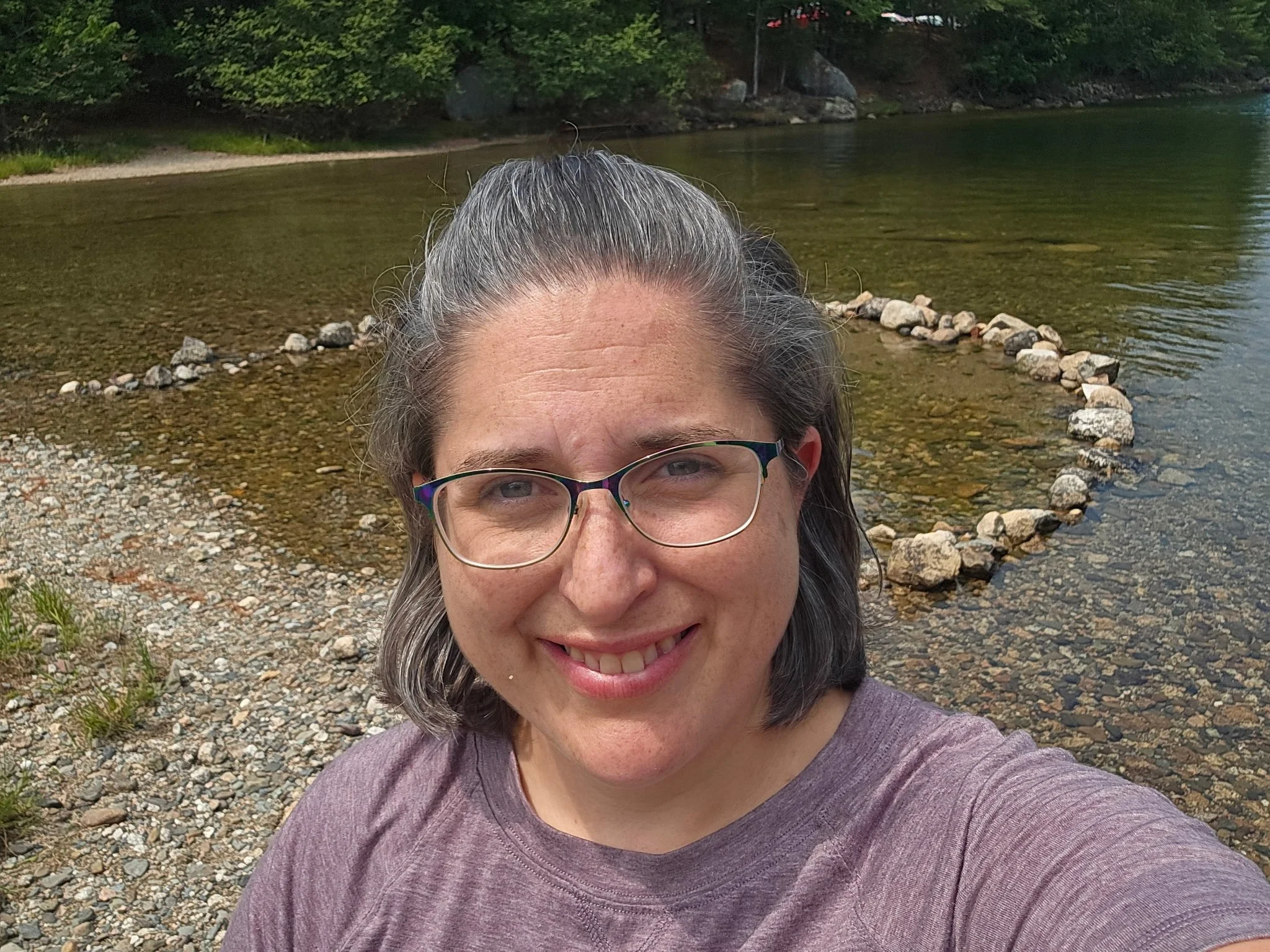
Jessie Conley Allen of Penobscot says the Maine accent is disappearing with each generation. Photo courtesy of Jessie Allen.
Jessie Conley Allen is an 11th generation Mainer, with roots going back seven generations on the Blue Hill Peninsula.
“We run deep,” said Allen, who lives in Penobscot.
Allen said her mother tried to train her not to have an accent because she wanted her to “sound intelligent.”
“Mum didn't want me to have an accent when I was little, but my dad was thick with the accent,” Allen said. “My first words to my dad were, “Hi deah.” Not ‘dad,’ not ‘pops,’ but ‘Hi deah.’ So I’ve been saying ‘deah’ since I first learned to talk.”
Allen said she has sometimes felt a negative connotation associated with people with accents.
“I’ve heard people from away say, aw, listen to that person, they sound like a dumb hick. It’s a bit difficult to be yourself when people look down on you for having an accent,” she said.
Allen, who also works as a substitute teacher, said she sees the accent disappearing among school children.
“It’s a lot of the older generation that held it together, but there are so many people from away living here now, there aren’t as many diehard Mainer’s around,” she said. “The more the generations pass, the harder it is to keep it going.”
—John Boit contributed to this article.
