

Research suggests Atlantic salmon, sturgeon likely in Bagaduce River
eDNA samples show the historic fish may have returned to the area
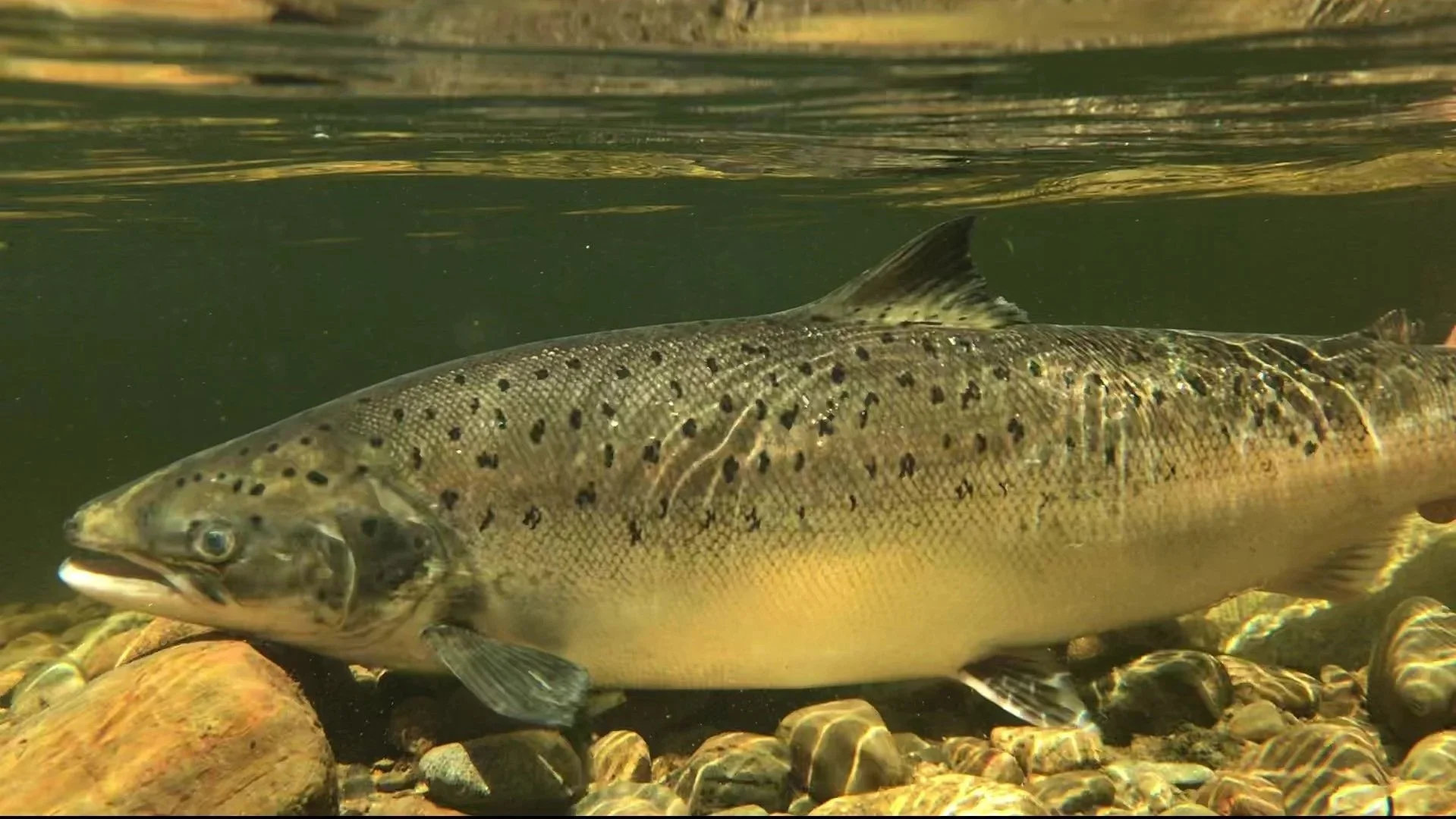
Maine Maritime Academy researches have use eDNA to identify the DNA presence of Atlantic salmon and sturgeon in Bagaduce River waters. Photo courtesty of the Maine Department of Maine Resources.
June 29, 2026
By John Epstein
CASTINE—Maine Maritime Academy researchers, under the direction of Associate Professor Kerry Whitaker, have found evidence that Atlantic salmon and sturgeon may be present in the Bagaduce River. Whitaker and her students have been analyzing DNA in water samples from the waterway.
“We gather liters of water and take them back to the lab to look for fish and phytoplankton life using genetic targets,” said Whitaker, who teaches Oceanography and Coastal and Marine Environmental Science at MMA.
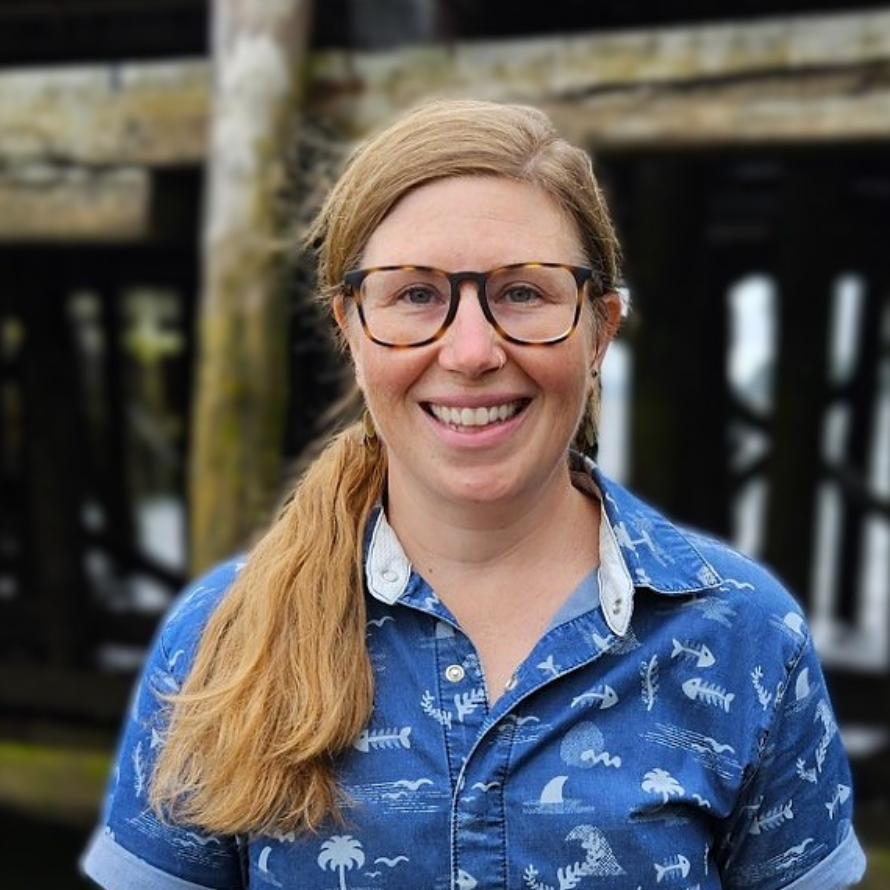
Associate Professor Kerry Whitaker teaches coastal and marine environmental science and oceanography at MMA. Photo courtesy of Kerry Whitaker.
Whitaker’s second-year students gather water samples at two locations: Near the docks in Castine and further up river. Once the water is brought back to the laboratory, testing begins. “We monitor for species using environmental DNA primers,” Whitaker explained. The primer is a short DNA sequence—particular to each species— that will bond to DNA in the water if it matches the DNA sequence researchers introduce. In other words, if Whitaker’s students test the water against sturgeon DNA, it will bond with sturgeon DNA if any is present in the water. This environmental DNA, called eDNA, can be discovered from traces of fish, such as their skin cells or body excretions.
According to Whitaker, students have used specific eDNA primers over the last two years to identify the DNA presence of Atlantic salmon and sturgeon in Bagaduce River waters. The discovery was confirmed after the students subjected the water samples to a laboratory process known as quantitative polymerase chain reaction.
The results are promising, but questions remain.
“The qPCR process detects the presence of the species, but not the quantity,” Whitaker, noting that her classes are limited to gathering samples between January and May, and most come from the mouth of the Bagaduce not far from the Castine docks. The prime period would be late spring into early summer, when the anadromous salmon and sturgeon return from the sea to spawn Maine’s fresh water or coastal estuaries. Sampling at different times of the year and at different locations may produce different results.
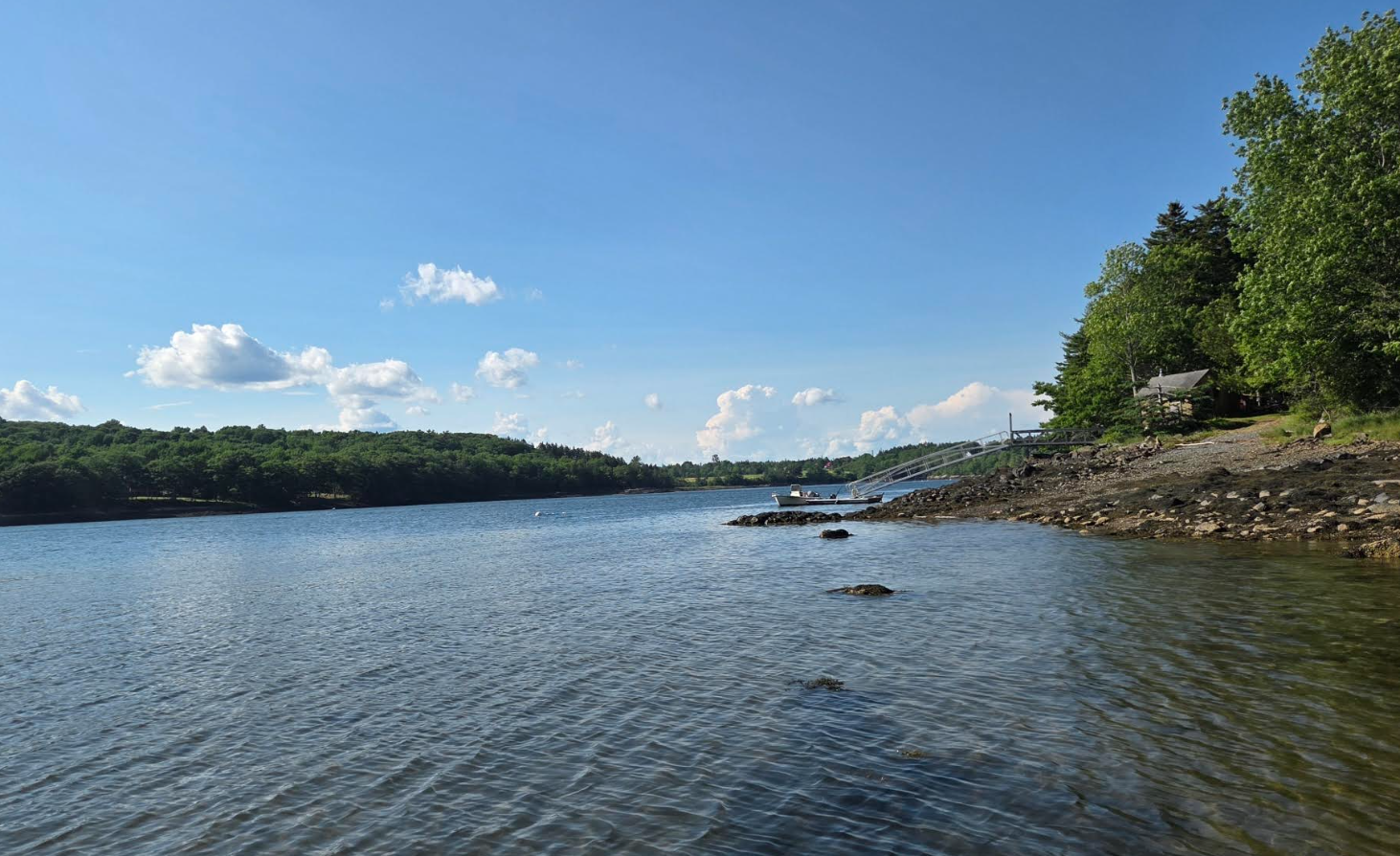
A northerly view of the Bagaduce River flowing between North Castine and Brooksville towards the Narrows and Southern Bay. Photo by John Epstein.
Sturgeon and Atlantic salmon were once part of the Blue Hill peninsula fishing economy, but their populations were decimated in the 20th century by overfishing and pollution. The construction of dams and road crossings limiting access to creeks and streams further diminished the population of these native fish.
The impact to local communities has been long lasting, but over the last several decades many have launched conservation efforts to bring the fisheries back–at least in part. The removal of dams, and the construction of fish ladders and better culverts, as well as the monitoring of pollution, and careful limits on harvesting have spurred the upsurge in the alewife migration up the Bagaduce. Similar efforts have helped increase the population of sturgeon and Atlantic salmon in some Maine rivers.
According to the Maine Department of Maine Resources, Atlantic salmon are spawning in eight Maine rivers, including the Penobscot. MDMR reports that, at this time, the only known spawning area for sturgeon is the Kennebec River where they move upstream in June and July to spawn and can be seen leaping from the water.
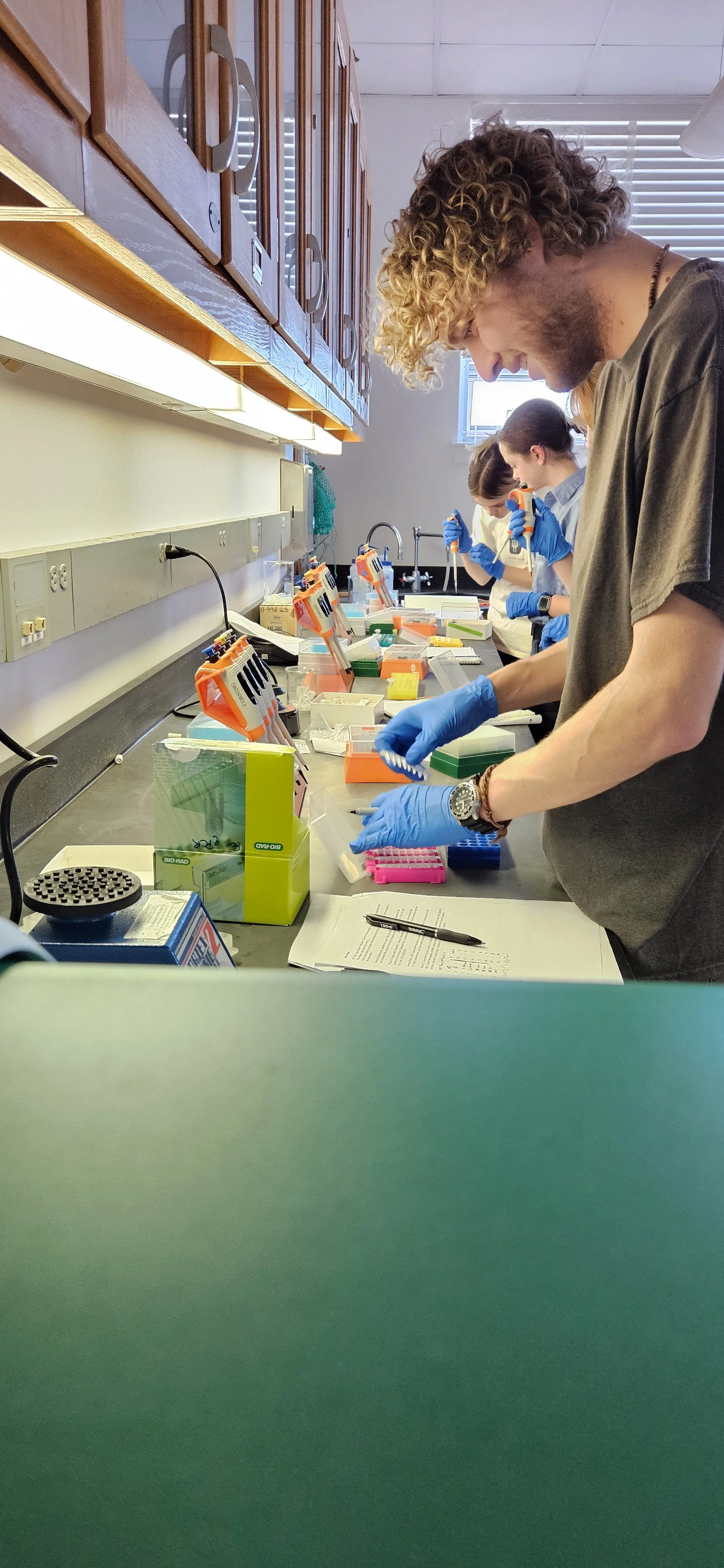
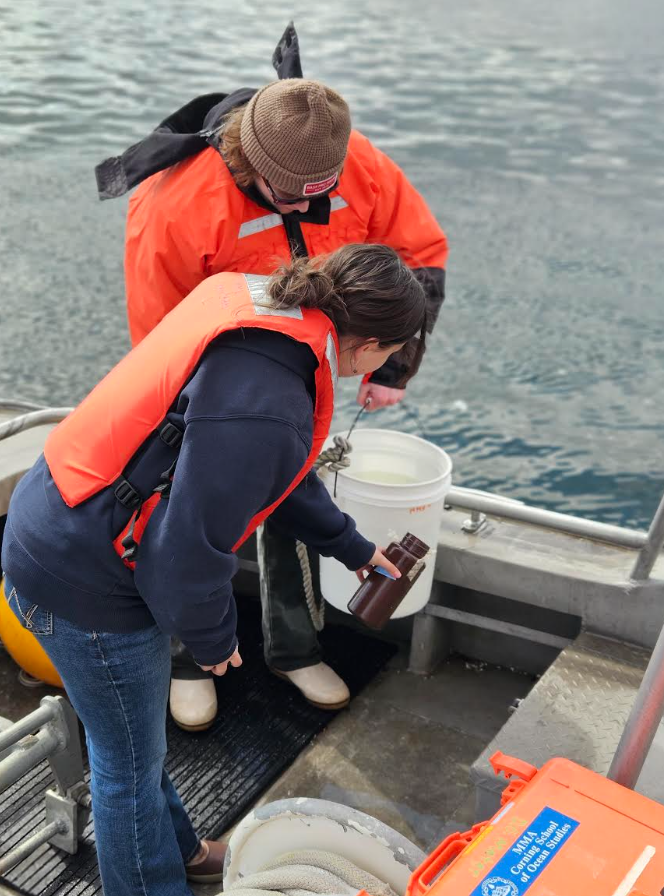
MMA students Eva Wasko and Will Costanzo gathering samples from the Bagaduce River this spring(right); Jake Allison, Hannah Mellor and Riley Sullivan analyzing samples for eDNA (left). Photos courtesy of Kerry Whitaker.
Bailey Bowden, chair of Penobscot’s Alewife Committee, helped spearhead the efforts to improve conditions for the alewife migration up the Bagaduce. He said there is also anecdotal evidence of sturgeon sightings in the Southern Bay section of the river.
Whitaker describes the Bagaduce River fishery as part of a “land margin ecosystem,” where returning sea-run species travel through waterways closely bordered by land. She is hopeful that careful stewardship of the waterway continues and that sightings of sturgeon and Atlantic salmon will become frequent and measurable.