

Tick talk: Maine outdoors come with a warning this summer
Tick-borne disease research sees increased funding, awareness
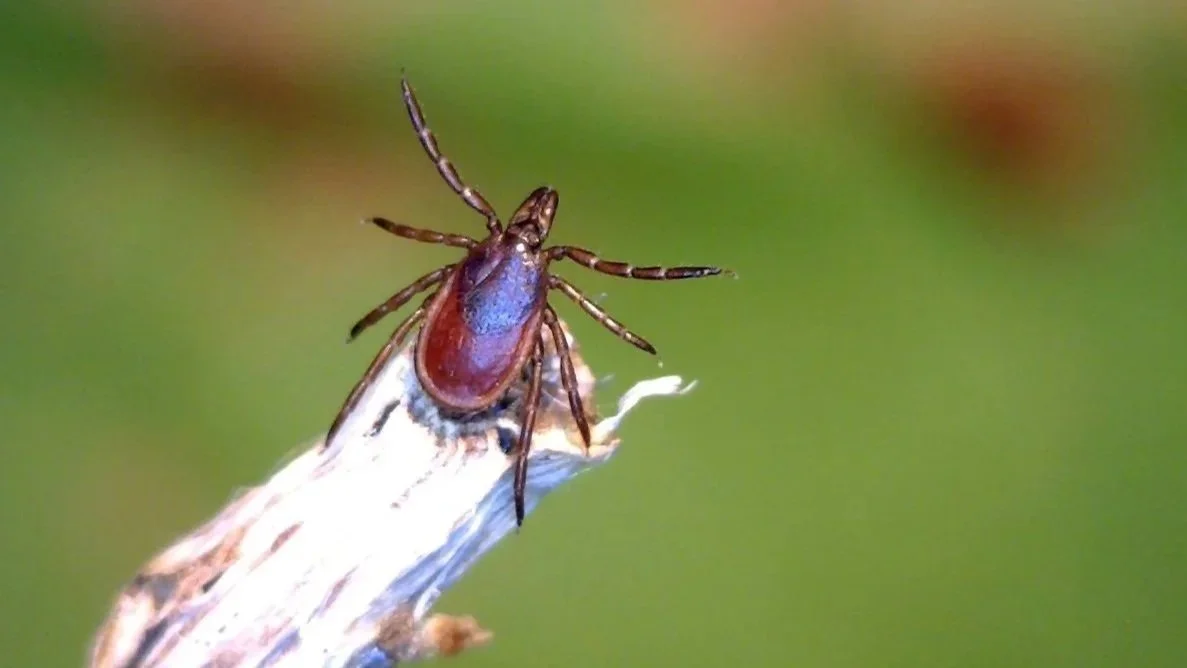
Deer ticks, also known as blacklegged ticks, have a two-year life cycle. Photo courtesy of the UMaine Cooperative Extension Tick Lab.
June 10, 2026
By Jessi Hardy
BROOKLIN—10 years ago, Tammy Blodgett started experiencing muscle aches, spiking headaches, stiffness in her joints, and issues dealing with stress. Her symptoms were similar to fibromyalgia, but doctors thought she should be tested for Lyme disease.
“I went and got a Lyme test and it came back negative,” Blodgett said. Thinking they’d ruled out a tick-borne illness, Blodgett’s doctor didn’t refer her for any further testing.
Her symptoms only got worse.
“My tendons hurt,” Blodgett said. She began experiencing fevers, night sweats, and sensitivity to temperature, but her doctors couldn’t help her pinpoint the cause of her symptoms–or a way to alleviate them. Blodgett said she was ultimately referred to eight different doctors and despite visiting a rheumatologist, a cardiologist and trying several medications, she found no relief from the pain.
“I got to the point where I was really just tired of these specialists,” Blodgett said, adding that one physician suggested she was a hypochondriac and might benefit from counseling.
Beyond just the pain, Blodgett’s symptoms were debilitating. As an extrovert, Blodgett said that being able to attend or host social gatherings was “heartbreaking.”
“There have been years where I had to give up,” Blodgett said. “[The pain] absolutely strips your life away. I don’t look like I’m hurting but I can barely make it sometimes.”
Finally, after being connected by her husband to Claire Mortimer, a nurse practitioner at Many Paths to Healing, LLC, in Blue Hill, Blodgett found relief. Mortimer specializes in Lyme disease and other co-infections. After evaluating Blodgett’s symptoms, Mortimer ordered new tests. The tests revealed positive results for Lyme disease and bartonella.
She had been suffering with both tick-borne diseases for years.
“I've been on a combination protocol for a year now,” Blodgett said. After another tick bite last fall, she is being treated for Lyme disease, anaplasmosis, and babesiosis.
Slowly, she’s been able to return to the life she loved.
According to the U.S. Center for Disease Control and Prevention, an estimated 476,000 Americans are bitten by ticks annually– but most people don’t ever know they were ever bitten. Lyme disease is by far the most commonly reported illness, but CDC tracks over a dozen distinct tick-borne diseases in the United States.
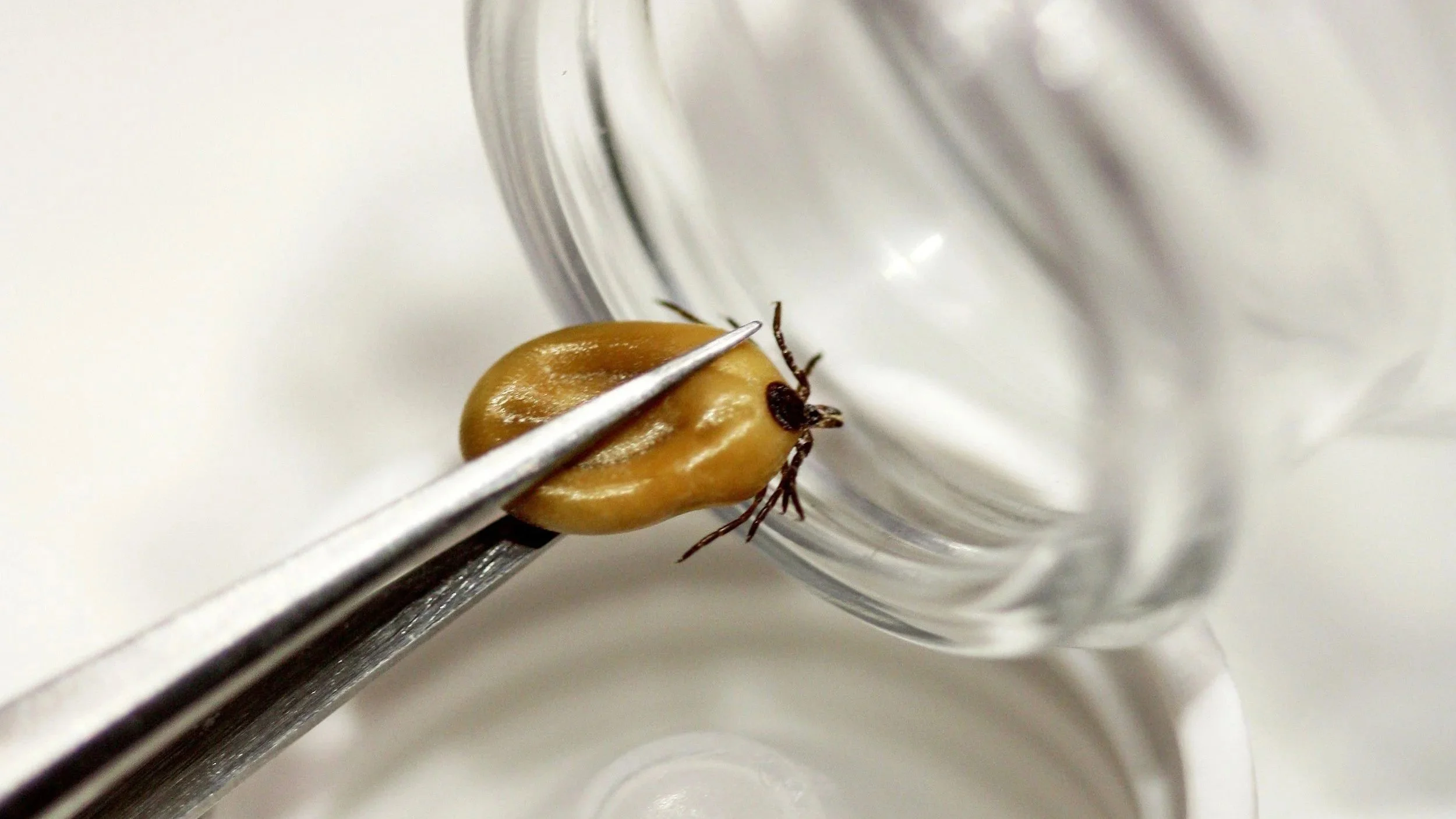
Experts say it takes 24 to 72 hours for a tick to transmit disease after it latches on. Photo courtesy of the UMaine Cooperative Extension Tick Lab.
Fifteen different tick species have been found in Maine, but not all are permanent residents. The most common ticks in Maine are the deer tick, American dog tick and the woodchuck tick according to the Maine Center for Disease Control and Prevention. Deer ticks carry six different types of diseases including anaplasmosis, babesiosis, hard tick relapsing fever, Lyme and Powassan virus disease. Each disease has a different time lapse before symptoms appear ranging from one to four weeks.
In recent years, public interest in alpha-gal syndrome, which causes an allergic reaction to red meat and dairy, has spiked in Maine after a York resident tested positive for the syndrome in 2022. Last year, a U.S. CDC study showed that the syndrome is transmissible through deer ticks, despite being associated primarily with the lone star tick. The lone star tick is native to the southeastern United States but its range has expanded northward in recent decades.
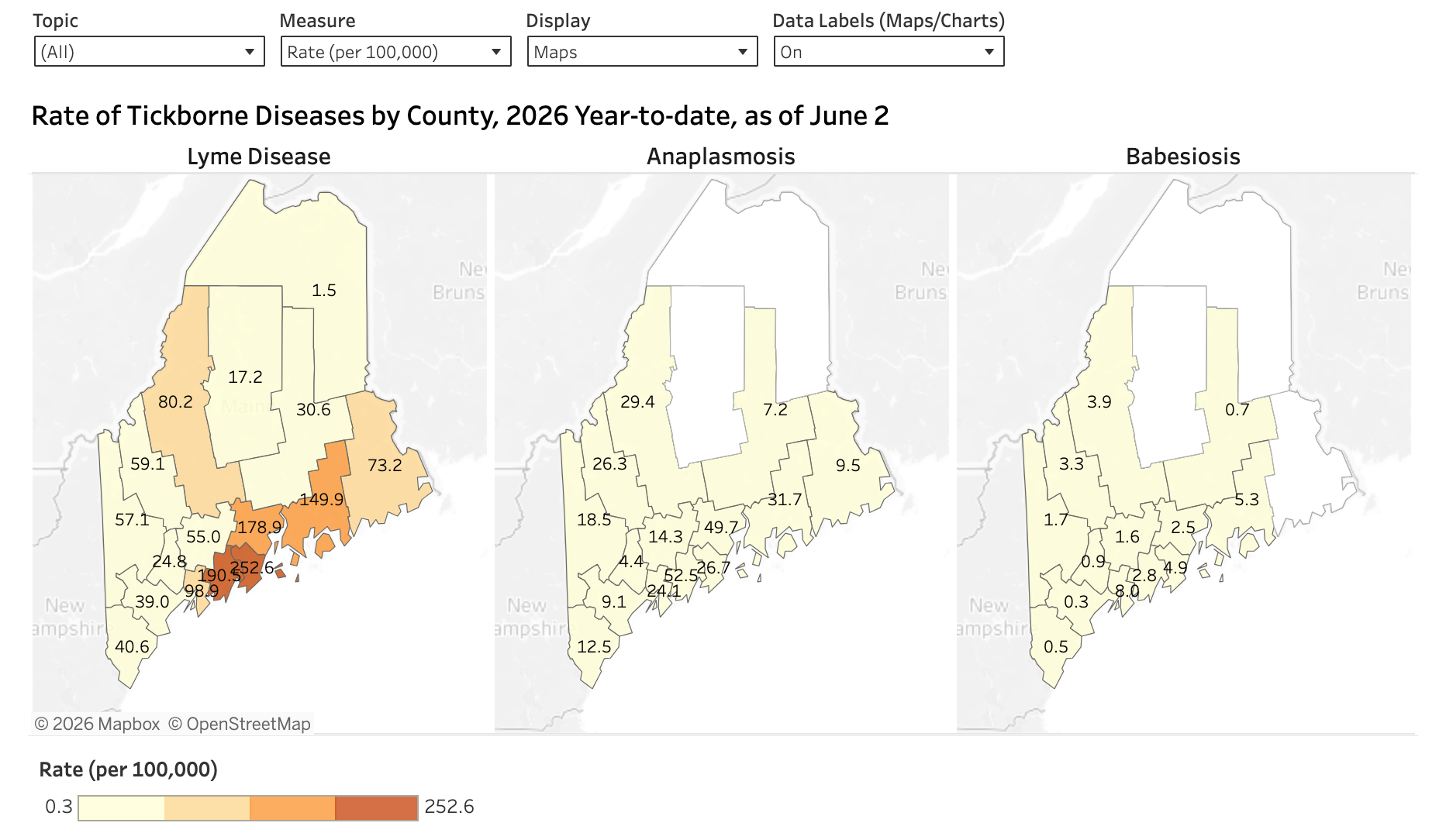
The Maine Tracking Network, operated by the Maine Center for Disease Control and Prevention, tracks tick-borne diseases throughout the state. They offer year to date totals and historic data for each county. Courtesy of the Maine Tracking Network.
Ticks are highly adaptable and resilient. They produce a protein called “iIxodes scapularis antifreeze glycoprotein” that prevents them from freezing. They prefer humid climates but will burrow into leaf litter or soil to survive drought conditions as well as winter cold, and can go months without a blood meal. In Maine, where there are ample animal “hosts,” increasingly mild winters, and extensive forests, they’re thriving.
For Mike Murnik, a family medical doctor at Blue Hill Memorial Hospital, the best way to prevent tick-borne disease is through public education.
“We want people to be outdoors. We know it's great for mental health and physical health to be active and outdoors,” Murnik said, adding that people need to be vigilant in protecting themselves against ticks.
Murnik recommends wearing light colored clothing, tucking socks over pant legs, and using bug spray whenever possible. He said it is important to be cautious of what chemicals are in sprays and, in particular, what is safe for different ages and for women who are pregnant or breastfeeding. DEET bug spray and permethrin are powerful chemical options, but Murnik said to look for sprays that include lemon eucalyptus.
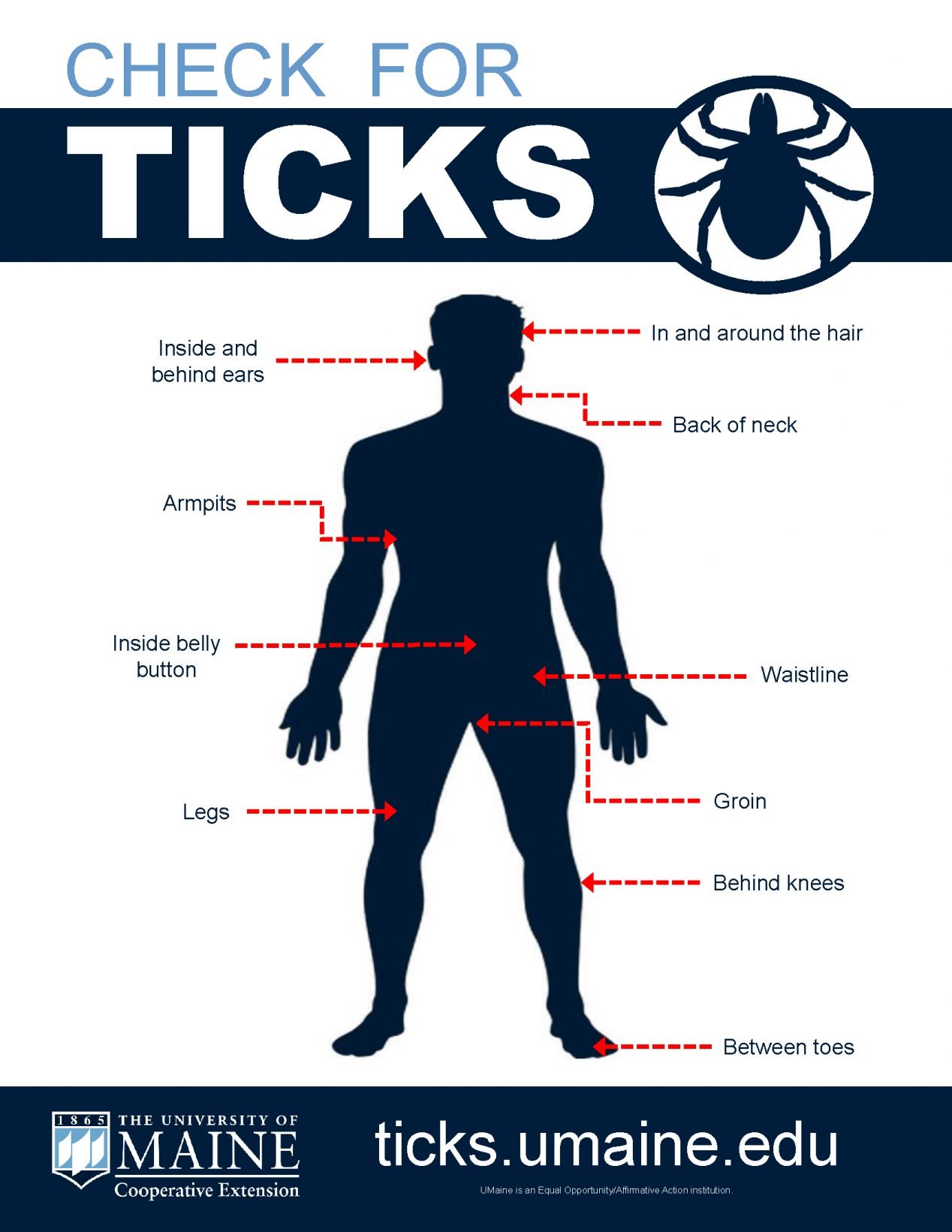
Careful and consistent tick checks are one of the best ways to prevent disease. Image courtesy of the UMaine Cooperative Extension Tick Lab.
“The biggest thing I think is the tick check. Look everywhere,” Murnik said. He recommends that arm pits, scalp, hair, groin, and behind the knees be carefully checked after spending time outside. The best thing is to check all over.
If you do find a tick, don’t panic.
“Most of the time, if you get them off 24, 48, 72 hours, they're not gonna give you anything,” Murnik said. “They don't have a chance to [feed].”
If you are bitten, try not to irritate the tick while it's still attached. Use tweezers or a tick spoon to remove the tick and its head without squeezing its body.
“Don’t annoy them,” Murnik said. “Squeezing them might inject what’s in their belly.
Murnik said it is important to monitor a tick bite if the tick is engorged or if 24 to 72 hours have passed since it attached. In that case, keep aware of onset symptoms including fever, joint pain, a bull’s-eye rash, headache and exhaustion.
So far, this year’s tick season seems to be off to a slow start, Murnik said.
“In terms of disease, I haven't seen a whole lot yet. There's some, but [so far] it doesn't look like a big trend or wave like it has in the past couple of years,” he said. “It's still high, but [anecdotally] we haven't seen a big increase this year,” Murnik said.
The University of Maine Cooperative Extension Tick Lab provides tick analysis services to the public and residents can “submit a tick” for identification and testing for various pathogens. They also offer helpful resources, like this video on tick removal.
Mortimer also offers guidance for tick bites on her website.
Mortimer said that bacteria from ticks can do damage over time and that researchers are studying herbal remedies to support or supplant pharmaceutical treatments. Historically, herbs have long been used to help treat tick-borne disease.
“Nature provides solutions to problems,” Moritmer said, adding that plants, herbs, and weeds such as broadleaf plantain and Japanese knotweed are being studied for use against tick-borne disease.
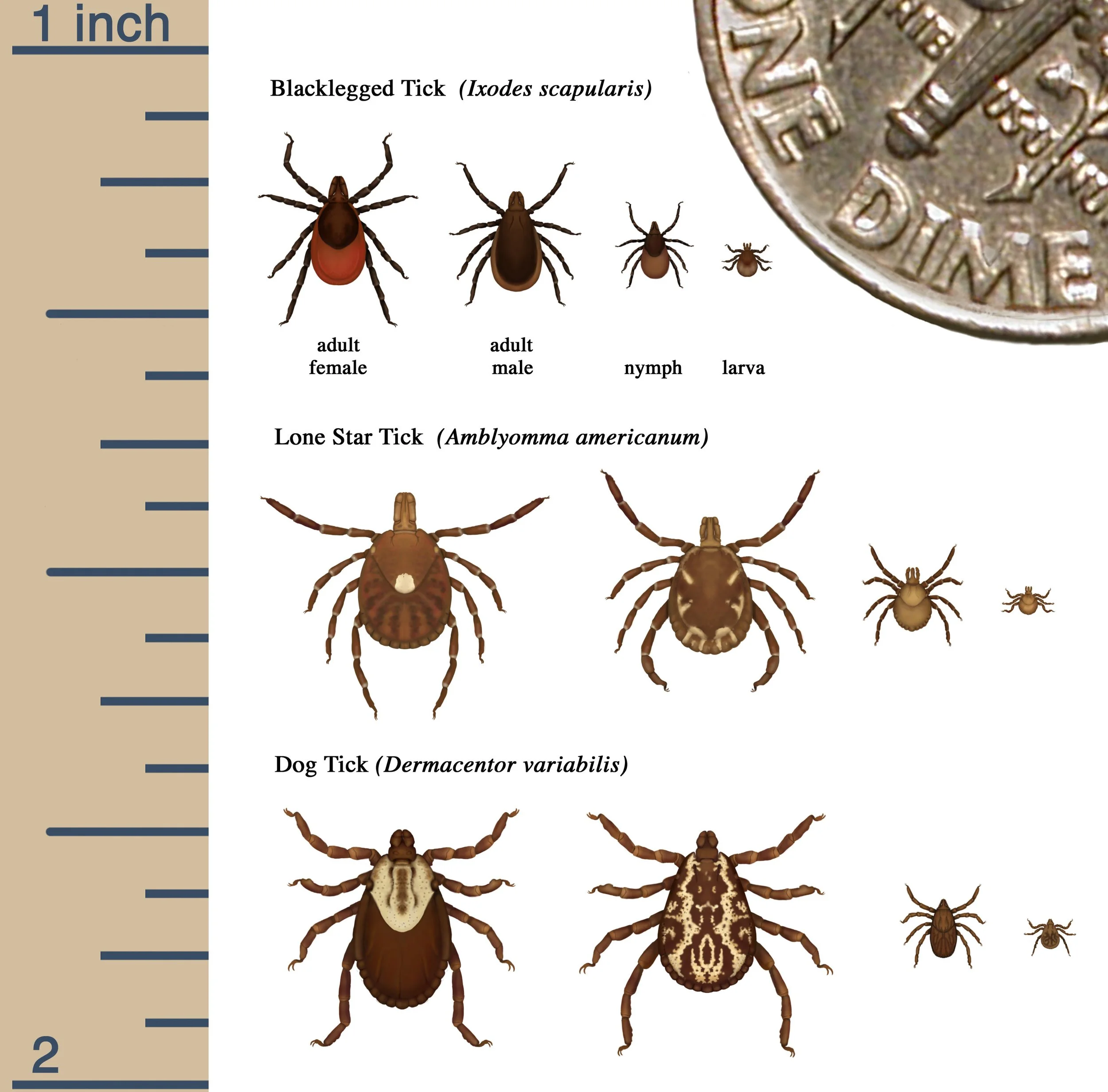
Fifteen different tick species can be found in Maine. Some are as small as a poppy seed. Image courtesy of the UMaine Cooperative Extension Tick Lab.
Pharmaceutical giants Pfizer and Valneva announced in March that they have developed a Lyme disease vaccine candidate, LB6V, that recently completed Phase 3 human trials. According to the CDC, the vaccine is designed to protect people against North American and European strains of Lyme disease and showed a 70 percent efficacy rate. Pfizer and Valneva hope to release the vaccine in 2027, but for local providers, the relief can’t come soon enough.
“We're all waiting with bated breath for the vaccine,” Murnik said.
In May, U.S. Health Secretary Robert F. Kennedy Jr. announced a series “of major initiatives to strengthen the nation’s response to Lyme disease and other tick-borne illnesses.” According to a press release, the “actions include a multi-million-dollar pilot program focused on tick control, up to $2.5 million in innovation challenges, funding for NIH researchers to combat Alpha-gal syndrome, and a public-private collaboration to help patients connect with experienced providers.”
A timeline for the federal initiatives has not been released yet, but the department reaffirmed its goal of reducing Lyme disease cases by 25 percent by 2035.
Interest in addressing tick-borne disease at the federal, state, and local levels promises to help patients recognize and understand tick related symptoms and will hopefully limit the number of people who, like Tammy Blodgett, struggle to understand why they are suddenly so sick and in so much pain.
In the meantime, the best defense against ticks is at the personal level. Dress appropriately, avoid tick dense areas whenever possible, and perform thorough tick checks–including on your pets–as often as possible.
For more information about ticks in Maine and across the United States, visit these resources: