

My Wild Neighbors: Maine’s eater of twigs, stripper of bark
Plus, learn what killed ‘72 percent of the tracked moose calves this year’
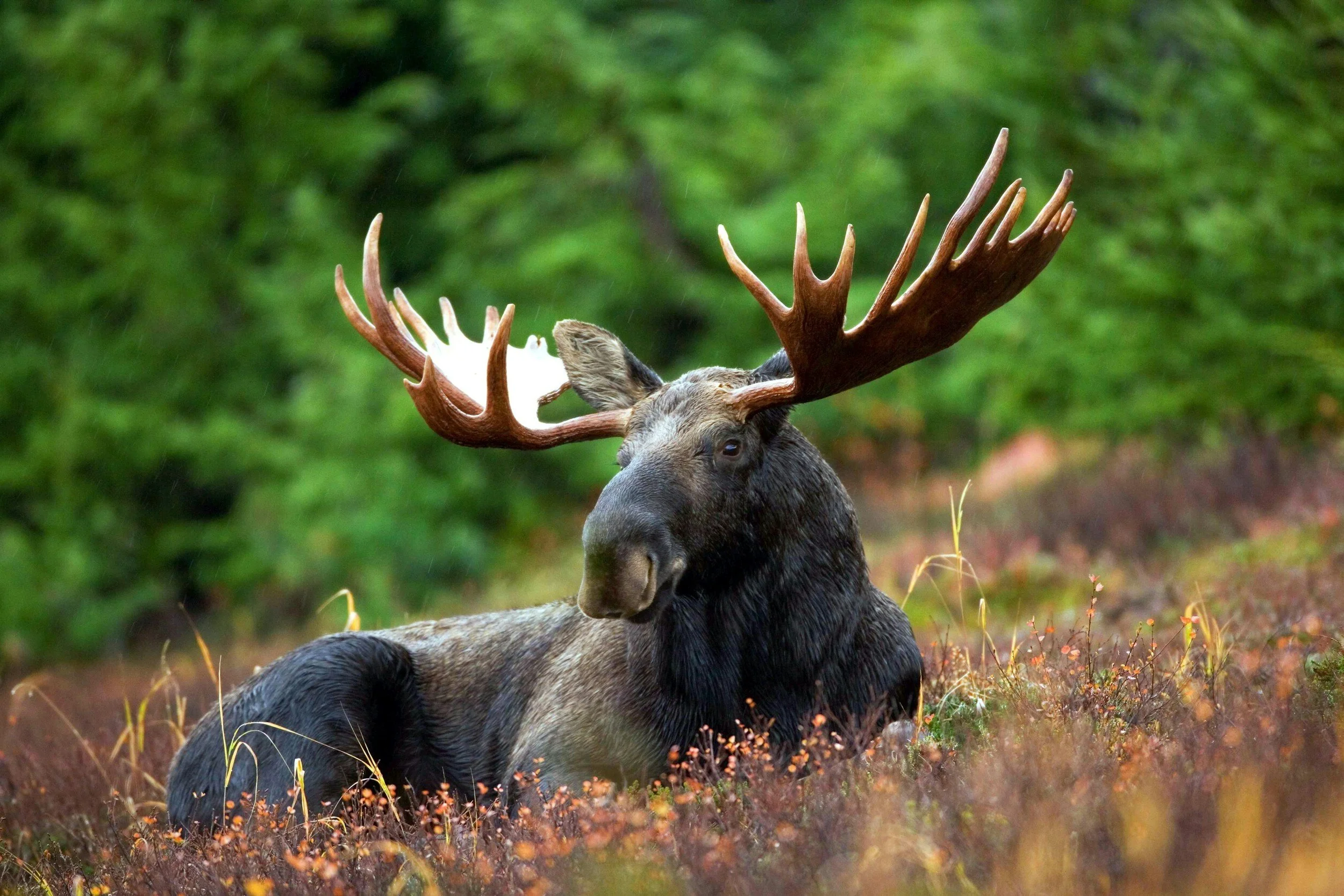
Bull moose live up to seven years, and cows up to eight years. Photo by Unsplash.
Oct. 5, 2026
By Kimberly Ridley
The tide was high, the water calm. I was watching a rock ’n’ roll October sunset from our neighbor’s cove on Center Harbor when I heard the sound of twigs snapping on the wooded trail behind me.
Expecting to see the neighbor’s black lab, I stood up and glanced over my shoulder. Bullwinkle Junior stared at me from the top of an embankment ten yards away. He blazed in golden light from his knobby legs to his palm-sized antlers.
I froze. He flattened his ears and pawed the ground.
There was nowhere to flee, so I beelined into the water fully dressed, not even stopping to take off my sneakers. Heart pounding, I turned toward shore just in time to glimpse the young moose wheel around and trot back up the path. Still, I swam across the cove and bushwhacked the long way home through the woods, sodden and singing (badly) at the top of my lungs to avoid surprising him again.
I didn’t know then that moose are champion swimmers in both speed and endurance. They clock six miles an hour—the maximum speed of Olympic record holder Michael Phelps—and can keep a steady pace for seven miles or more. Moose swim regularly to escape insects, cool off, and feed on aquatic plants, diving as deep as 20 feet.
That close encounter made me curious about moose, whose name means “eater of twigs” or “stripper of bark” in Eastern Algonquian languages. Moose devour a whopping 60 pounds or so of plant material every day. They browse on hardwood twigs year-round. In summer, they feast on fresh leaves of maple, birch, aspen, and other hardwoods, along with waterlilies and other aquatic plants to obtain sodium and other essential minerals. Come winter, hungry moose also feed on balsam and other conifers, and they wander out to roadsides to lick up salt.

Maine hosts somewhere between 60,000 and 70,000 moose, the largest population in the Lower 48. Their numbers have fluctuated over the years, dwindling to a low of about 2,000 in the early twentieth century due to a combination of factors, including unrestricted hunting and increasing cases of brain worm attributed to rising deer populations. Improving habitat, namely forest harvesting practices that led to a banquet of browse, as well as new laws limiting hunting, eventually helped bring moose back to an estimated population of 76,000 in 2012, according to the Maine Department of Inland Fisheries and Wildlife.
The largest member of the Cervidae family, which includes deer, elk, caribou and moose, tower six feet or better at the shoulder and can weigh more than 1,500 pounds. What might appear like a wonky assemblage of spare parts makes moose perfectly suited to life in the boreal forests of North America, Europe and Asia. Longer front legs and shorter back ones allow moose to leap over fallen trees and plow through snow. The hollow hairs of their hide trap heat that keeps them toasty in subzero temperatures. Massive specialized hooves prevent them from sinking deep in bog muck and serve as snowshoes and swim paddles.
Moose rarely attack people, but during the fall rutting (breeding) season when I encountered Bullwinkle Junior, males can get aggressive, as can females protecting calves in spring. By far the most dangerous encounters with moose happen on roads at dawn and dusk, their most active times, as well as at night. Their dark hides make them almost impossible to see despite their huge size, which they use as a main defense. Moose typically don’t budge when a vehicle approaches. Between 2003 and 2017 the Maine Department of Transportation logged more than 6,700 moose-vehicle collisions.
The number of collisions involving moose, however, is falling in large part because of winter ticks. These parasites have been found in Maine for at least a century, but they’re now proliferating during our warmer and shorter winters. Winter ticks latch onto moose in clumps of hundreds or thousands. Although they don’t spread disease or bite humans like deer ticks, they stay attached to moose by the tens of thousands from fall through spring, sucking so much blood that their victims can develop anemia. Some moose die from blood loss. Calves are particularly vulnerable. According to the Maine Department of Inland Fisheries and Wildlife, winter ticks killed 72 percent of tracked moose calves this year.
The long-term effect of winter ticks combined with other stressors is unknown, but for now Maine’s moose population is holding steady. In the meantime, we can keep an eye out for our iconic wild neighbors and help keep them (and ourselves) safe, particularly on our roads, according to the Maine Department of Transportation.
Despite countless walks at dusk, driving miles of gravel roads in Jackman, and pulling over at a popular lookout just outside Greenville, I’ve only seen a moose once when out looking for one. She lived at the Maine Wildlife Park in Gray, where I was writing an article for Down East. A caretaker was feeding her raw sweet potatoes, her favorite treat. I’ll never forget her velvety nose and how she smelled like a horse, only sweeter.
Maine native Kimberly Ridley is the award-winning author of six creative nonfiction books about the natural world for children and adults, including The Secret Pool and Wild Design: Nature’s Architects. Her essays and articles have appeared in numerous publications including Down East Magazine, The Christian Science Monitor, and The Boston Globe. She lives in Brooklin with the painter Tom Curry and their cat Andy. www.kimberlyridley.org
