

Seaweed seems to remain healthy despite growing demand
Insights from the only wild seaweed harvester working in Penobscot Bay who’s ‘almost drowned’ three times
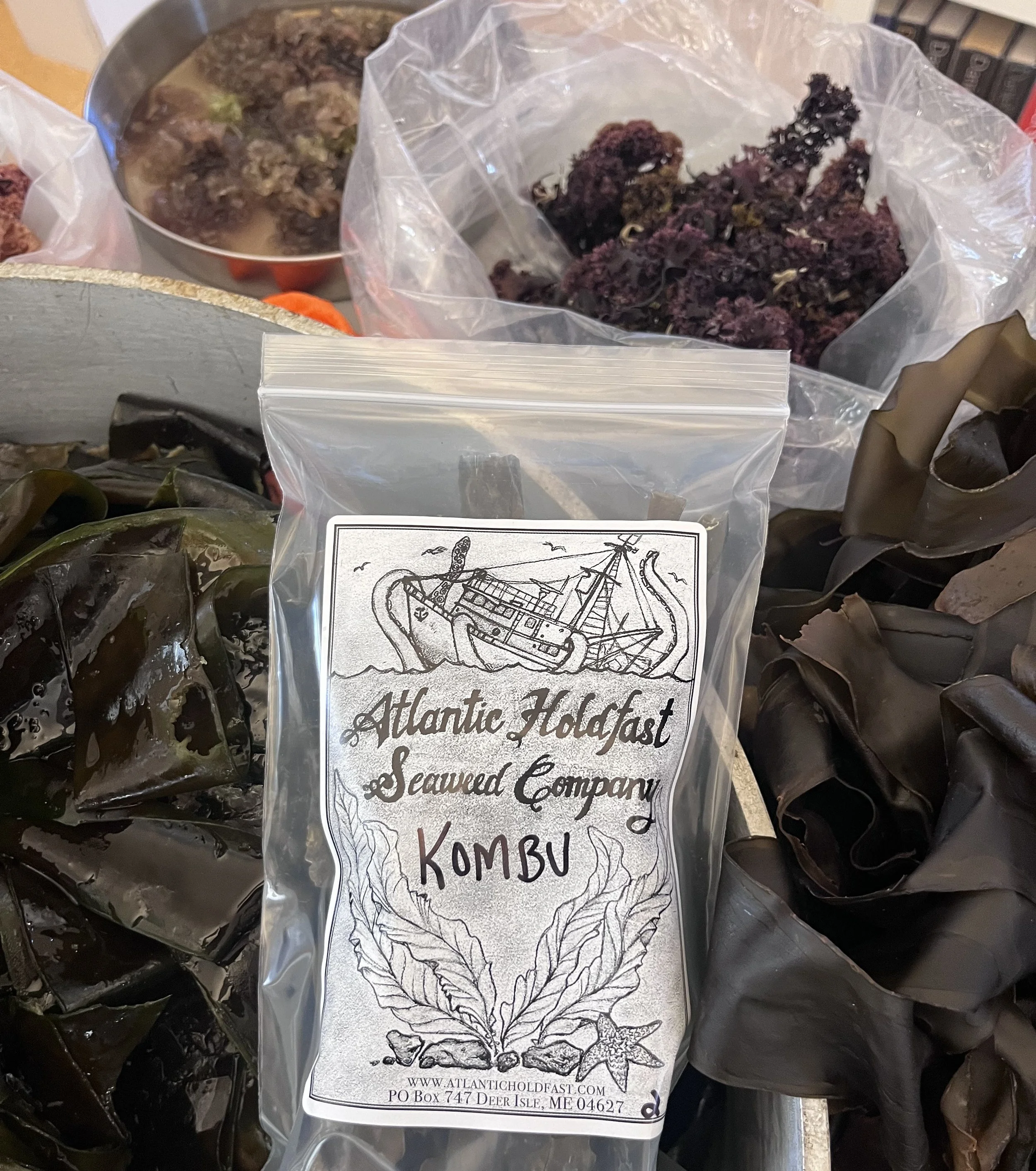
Seaweed samples and packages from Micah Woodcock’s business, the Atlantic Holdfast Seaweed Company. Photo by Steele Hays.
Oct. 19, 2026
By Steele Hays
BROOKLIN – Seaweed consumption is growing, according to the U.S. Department of Agriculture, and one of the harvesters working in Maine to meet that demand spoke Oct. 17 at Brooklin’s Friend Memorial Library about the risks and rewards of seaweed harvesting.
Micah Woodcock of Deer Isle is a rarity. He works alone, usually five to seven miles offshore from Stonington, harvesting wild seaweed from “half tidal ledges” – rocky outcrops that are underwater at high tide, but exposed at low and mid-tides. He has “almost drowned” three times in his 16 years of experience, and his greatest fear is falling and hitting his head, he said.
He is licensed by the state and is the only wild seaweed harvester working in Penobscot Bay, he said.
“It’s a very tiny and artisanal industry,” Woodcock said.
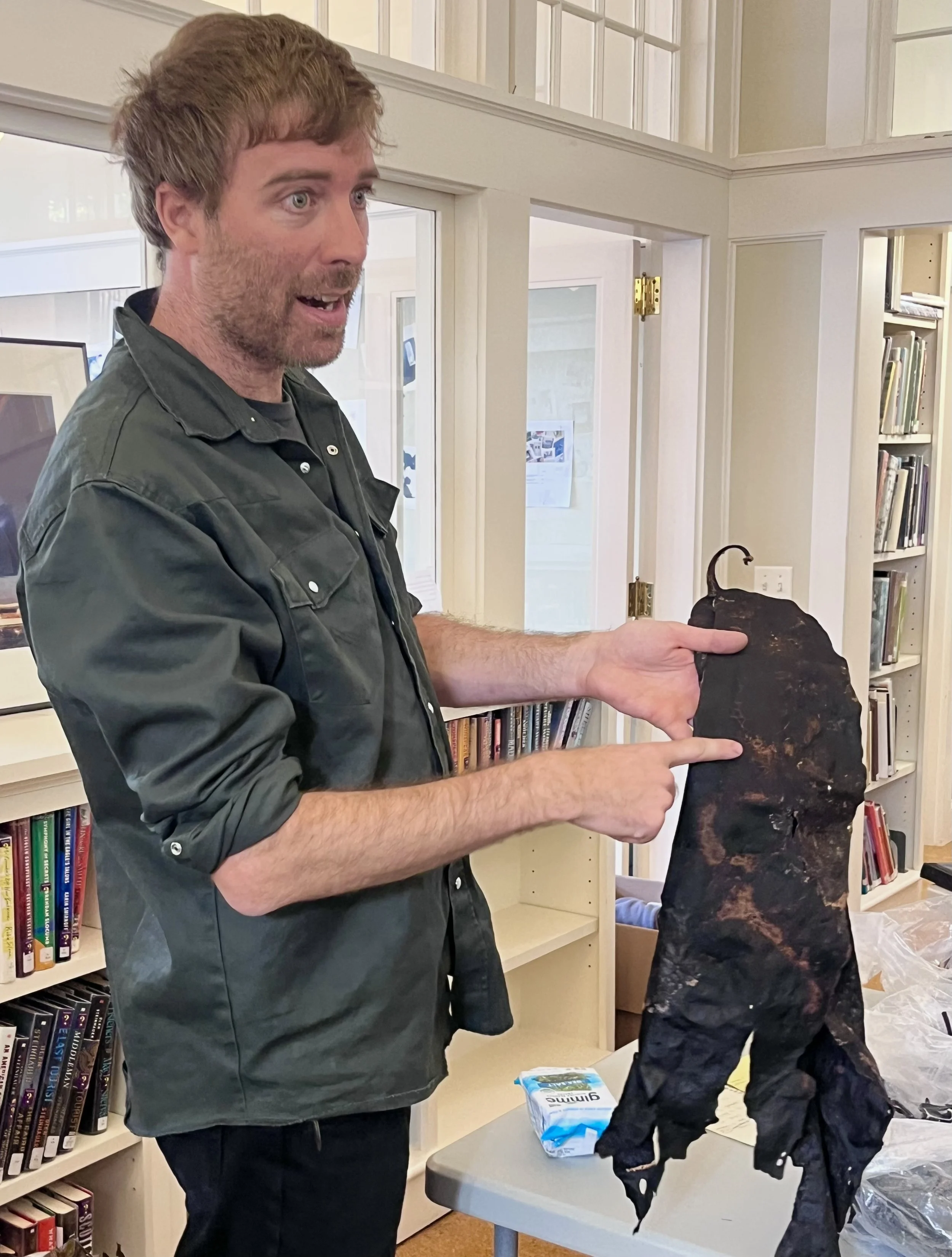
Woodcock shows a sample of the kelp he harvested. Photo by Steele Hays.
When he harvests, Woodcock wears a wetsuit and uses a knife and specialized rake to cut and gather the seaweed.
Most of the seaweed harvested in Maine is rockweed, which is then processed into products applied to farm fields and pastures as a biostimulant that promotes plant growth.
The 10 varieties of seaweed that Woodcock harvests are sold for human consumption. He dries, packages, and sells it in small quantities through his website, Atlantic Holdfast Seaweed Company, and retail outlets like the Blue Hill Food Co-op.
Seaweed, especially kelp, is one of the richest food sources of iodine, a trace element that the body needs in small amounts. Seaweeds also provide other trace minerals like calcium, iron, and magnesium, as well as some vitamins and antioxidants.
Seaweed has long been a part of human diets in many Asian countries, especially Japan, where it is considered a flavor enhancer in many dishes. Seaweed chips are now sold in many grocery stores as a salty alternative to potato chips. Seaweed farming is the fastest-growing aquaculture sector in America, according to the National Oceanic and Atmospheric Administration.
Woodcock serves on Maine’s Seaweed Fisheries Advisory Council, which advises state officials on seaweed policies and issues. Much of the council’s focus in recent years has been on rockweed harvesting and its sustainability.
Woodcock has harvested from more than 100 locations around Penobscot Bay, including around Deer Isle, and monitors the health and resiliency of seaweed varieties growing there. He observes variations from year to year in seaweed volume and growth rates, he said, based on weather, but doesn’t see any long-term trends in seaweed health. In fact, the volume and density of kelp beds seem to have increased in recent years, he said. Kelp beds provide cover for fish, lobsters and other species.
At the presentation, Woodcock shared samples of several types of seaweed, including dulse, one of the most popular varieties for eating as a stand-alone snack rather than an ingredient in recipes.
“I should have a trophy for the amount of seaweed I have consumed,” Woodcock said. His “go-to” way to eat seaweed is to cut it into bite-sized pieces and put it into soups, stews and rice dishes.
Woodcock was the last of three local food producers or harvesters who appeared at a “Food from the Sea” speaker series sponsored by the Brooklin Food Corps. The Corps defines its mission as “connecting people to the knowledge, local resources, and tools that will empower them to feed themselves and their neighbors.”
More information on Maine’s seaweed industry and on the nutritional value of seaweed can be found at Nutrition Information | Maine Seaweed Council
