

A winter reading list: A dozen books with local connections
Historical accounts, thrilling mysteries, and a raunchy lobstering novel may be the antidote to the winter blues
Oct. 19, 2026
By Steele Hays
Reading is one of the great pleasures of late fall and early winter. When it’s dark and cold outside, and there’s a fire crackling in the wood stove or fireplace, losing yourself in a good book is a joy.
But what to read?
The Rising Tide asked several well-read residents for help in assembling a list of local-oriented books. Our recommenders included Blue Hill Library Director Rich Boulet; Kendall Chapman, teen services and outreach librarian at Blue Hill Library; Samantha Haskell, owner of Blue Hill Books; Matt Shaw of the Blue Hill Books staff; and members of our own team.
Between content and authors, every book has a connection to the Blue Hill Peninsula or the Maine Coast. Plus, there’s something in almost every category: fiction, non-fiction, biography, horror, essays, mysteries, novels and short stories.
Here’s the list:
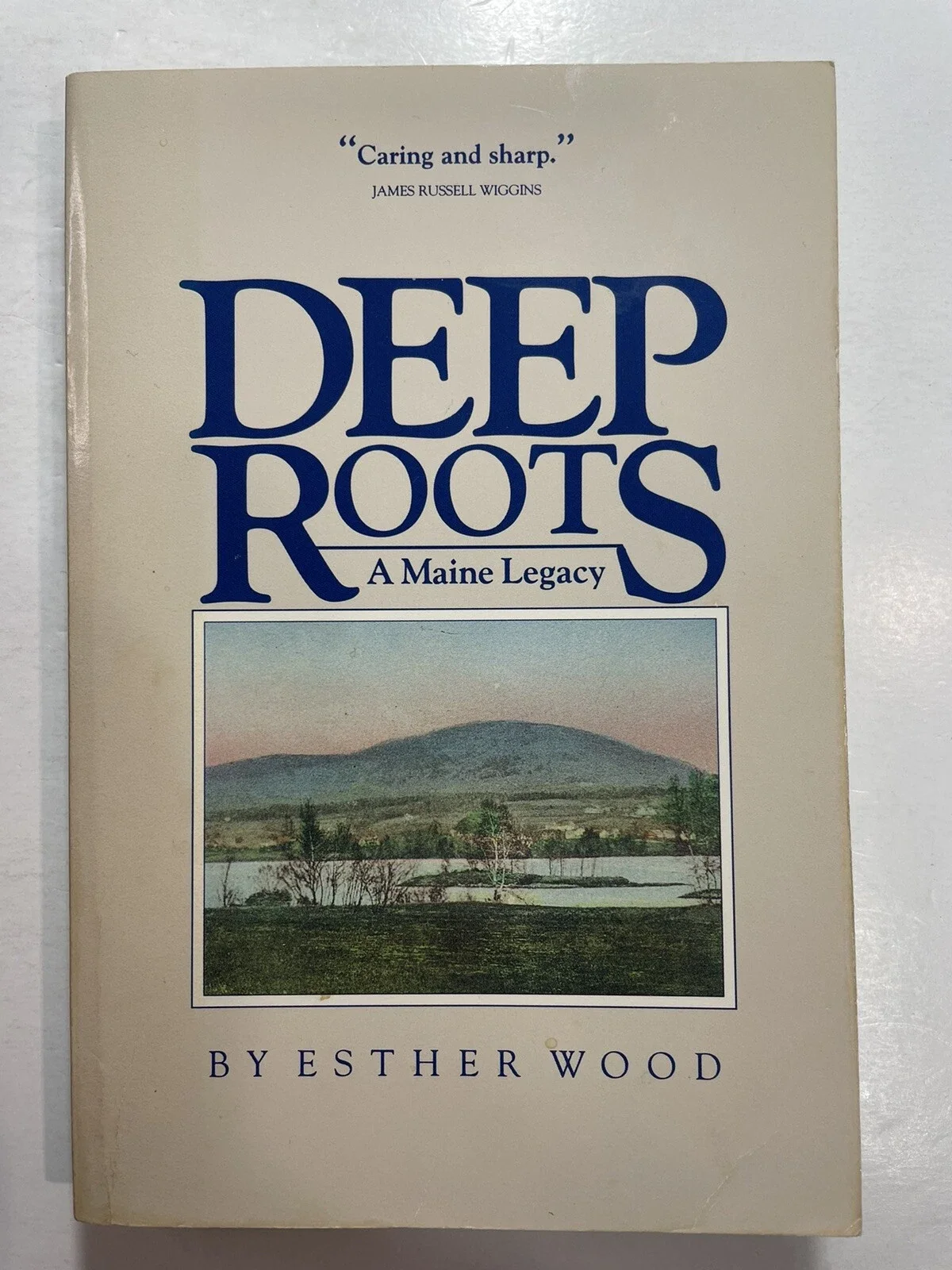
Deep Roots by Esther Wood
If you’d like to learn a great deal about Blue Hill’s history in a short amount of time, this is the book. It packs a remarkable amount of history and knowledge about the area and the people who have shaped it into its 279 pages. And the stories are beautifully told.
Wood, who was a college teacher and granddaughter of a sea captain, grew up at Friend’s Corner, the spot in the Blue Hill-East Blue Hill Road where the highway makes a 90-degree turn to the northeast. She profiles the area’s earlier settlers and leaders like Jonathan Fisher, Thomas Lord, and George Stevens as well as later arrivals like the early “rusticator” families from away who built their summer cottages here.
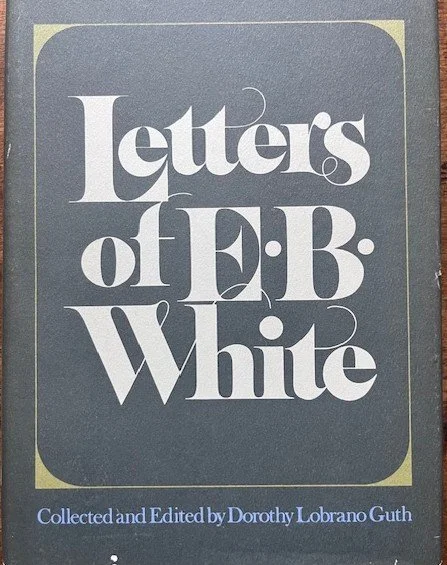
Letters of E.B. White
This collection of White’s letters was first published in 1976, while White was alive. It provides a wonderful tour through his eventful life and shows that his talents for humor, close observation and expression were manifested not just in his professional writing, but also in his personal letters to friends, family members and others. Remarkably, the earliest letter was written when White was just 11 years old. The last letter dates from 1975, when White was 76 years old. He died in 1984. Many of the letters were to his wife, Katharine White, while others offer insight into White’s relationships with other successful authors and editors, including Harold Ross, James Thurber, John Updike and William Maxwell.
Life on his Brooklin farm is brought vividly to life in many letters, including one in which he writes about watching a mother raccoon carry her kits one by one from the hollow tree flooded by a rainstorm to a safe place under a nearby house and then back again several days later. White timed each trip at eight minutes.
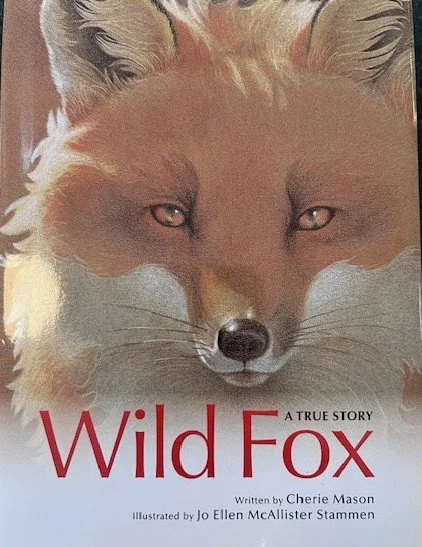
Wild Fox: A True Story by Cherie Mason
This is a book that both children and adults can enjoy. It’s based on the true story of a wild fox that came into the yard of Deer Isle resident Cherie Mason after being injured in a trap and losing a leg. Despite the fox’s fear of human beings, Mason is able to build a kinship with the fox with her kindness and food scraps from her kitchen. The book is beautifully illustrated by JoEllen McAllister Stammen.
Wild Fox won the 1993 Lupine Award from the Maine State Library. A longtime Deer Isle resident, Mason was an environmental advocate and hosted her own show on WERU radio.
Walk Down Main Street by Ruth Moore
Ruth Moore was born on Great Gott Island at the mouth of Blue Hill Bay and probably ranks second only to E.B. White among famous local authors in terms of success as a writer and best-selling author. Moore wrote 13 novels between the 1940s and 1970s. The most well-known was Spoonhandle, which was made into a popular Oscar-nominated film in 1948, titled Deep Waters, starring Cesare Romero, Jean Peters and Dana Andrews.
Walk Down Main Street explores what happens in a small Maine town that goes crazy over the success of the town’s school basketball team. As in all her books, Moore paints rich and authentic portraits of Maine people.
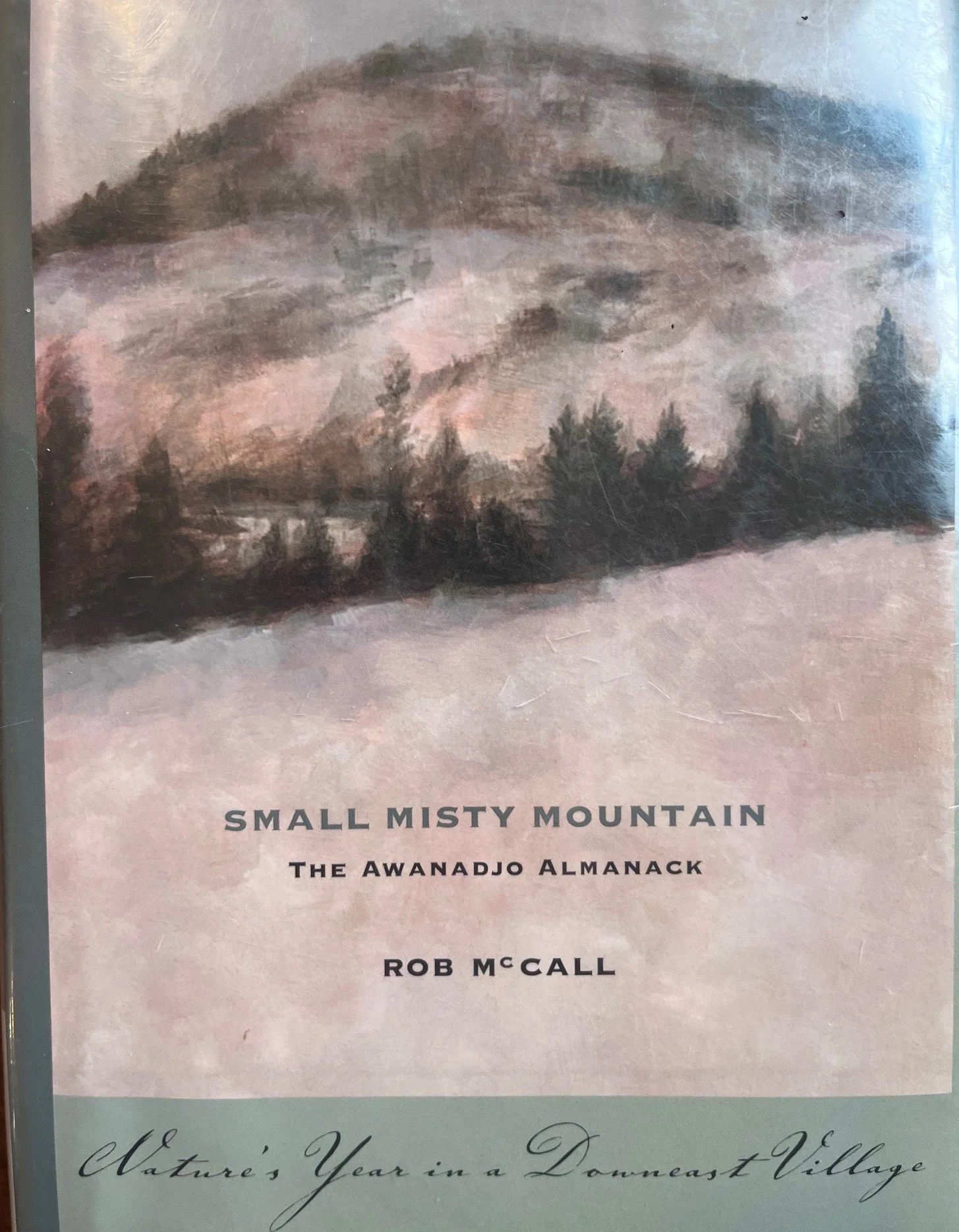
Small, Misty Mountain by Rob McCall
This is a lovely reflection on the natural beauty of the Blue Hill area, written by the longtime minister of the Blue Hill Congregational Church. The full title is Small, Misty Mountain: The Awanadjo Almanack with the subtitle “Nature’s Year in a Downeast Village.” Awanadjo is the Algonkian term for “small, misty mountain” and was the name of the Blue Hill Mountain by indigenous peoples.
It was also the name used by McCall for his regular radio program on WERU. McCall borrows the style or format of an almanack in structuring the book by lunar cycle or month. It’s a mixture of natural history, reflections on local life and spirituality. McCall ends each chapter with this challenge: “That’s the Almanack for this moon, but don’t take it from me. Go out and see for yourself.”
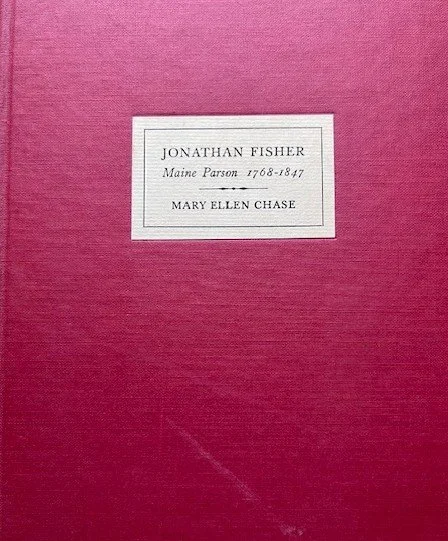
Jonathan Fisher by Mary Ellen Chase
This is the definitive biography of Blue Hill’s most famous and revered historical figure by its most famous native author, first published in 1948. Fisher lived in Blue Hill from 1796 to his death in 1847 and saw it develop from a raw early settlement to an established, much larger town. Fisher’s industry and talents demonstrated in so many areas are remarkable: minister, builder, farmer, artist, surveyor, scholar, naturalist and writer.
Chase based her work on Fisher’s diaries, letters and writings, but all of his writing was done in his own unique shorthand code, which required years of work by Chase’s sister and several Fisher family members to decode. Reading this book, with its fascinating descriptions of life in Blue Hill in the early 1800s, reinforces how fortunate it is that Fisher’s house and orchard have been preserved as a museum, and his life story told by Chase.
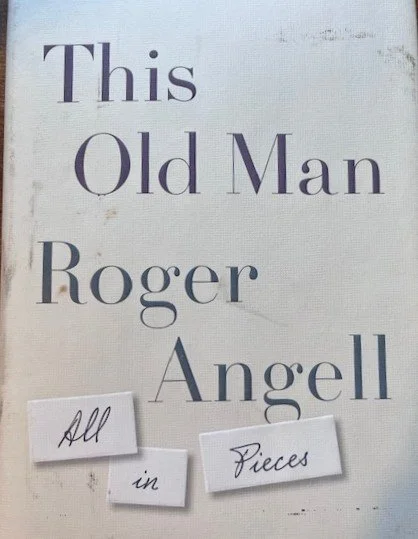
This Old Man by Roger Angell
One might suspect that Roger Angell would be a great writer. He was the son of the New Yorker editor Katharine White and stepson of the New Yorker writer and author E.B. White. And he was indeed. Like his parents, Angell was a longtime seasonal resident of Brooklin. This Old Man is a collection of Angell’s writings: many appeared first in the New Yorker, where Angell served for decades as the fiction editor and a contributing writer.
The book takes its title from one of Angell’s most celebrated essays, which won the 2015 American Society of Magazine Editors’ Best Essay award. It is an absolute gem — a poignant reflection on growing old, and on life. It’s laugh-out-loud funny, sad, endearing, profound and brilliant.
A Countryman’s Journal by Roy Barrette
Barrette did not make his living as a writer until he retired from a successful career as an insurance executive in 1958 and bought an old saltwater farm on Naskeag Point in Brooklin, which he and his wife named Amen Farm. While late to the writing game, he quickly showed his talents. He wrote an award‑winning weekly column for The Ellsworth American and The Berkshire Eagle, and also wrote for Down East and Yankee magazines. He had a deep appreciation for the traditions of rural Maine — from canning vegetables and steaming clams to caring for livestock, A Countryman’s Journal is a collection of his essays and columns. One critic praised Barrette’s writing as flowing “without effort, telling not only a story but serving up a slice of Maine life as only a seasoned writer can do.”
The Wooden Nickel by William Carpenter
Carpenter was the first faculty member at Bar Harbor’s College of the Atlantic and sails his 30-foot sloop out of Castine. He is the author of three novels and several books of poetry.
Blue Hill Public Library director Rich Boulet recommends The Wooden Nickel, which has been described by reviewers as “the punchiest, raunchiest Maine coast lobstering novel you’ll encounter in a long while,” and its central character, lobsterman Lucky Lunt, is “so real that you can smell the chum wafting off his oilskins… you have to love him.”
The Wooden Nickel is a boat. Its owner’s world is changing faster than he can manage, and his heart is failing, too. He finds himself in a turf war that forces him to abandon what he should hold most dear: family, health, financial solvency, and even the rules of the sea. And Lucky’s partner in crime is the sexy, not-quite-ex-wife of the local lobster wholesaler.
-Kendall Chapman, Teen Services and Outreach Librarian at the Blue Hill Library, recommended and provided mini-reviews for these next three books, two written for teens and young adult readers and one for adults.
Sugaring Off by Gillian French
An emotionally charged mystery set amongst the maple trees, Sugaring Off reads like you’re taking a leisurely stroll through the autumnal woods, until a sudden snowstorm rolls in. The author is a former resident of Castine.
A teenage girl named Owl lives with her aunt and uncle on a farm where they harvest sap and produce maple syrup. She spends her days in the woods observing wildlife and helping with the harvest, trying not to think about her incarcerated father and the tragic incident that left her partially deaf. Owl mainly keeps to herself until Cody shows up to work on the farm. The two teens connect over similar struggles and begin to form a connection that’s hard to ignore. Unfortunately, there’s much more to Cody than Owl realizes. When she starts to notice odd behavior from people around her, Owl finds herself on the verge of another tragic incident waiting to happen.
Wilder Girls by Rory Power
Set at a girls’ boarding school on a remote island in Maine, this is a chilling and ultimately hopeful novel that’s hard to put down. As a mysterious illness strikes the school and forces everyone into quarantine, the girls are left to fend for themselves after the illness takes the lives of their teachers and causes the girls to have horrific physical mutations. With meagre supplies and no cure in sight, the students develop a hierarchy to survive. Then girls start to go missing, pushing the central character, Hetty, to explore the island and brave mysterious dangers to find some answers and a missing classmate.
We Sent Them Down Singing by Libby Edwardson
This adult horror novel was just published in July, and the author is a Blue Hill resident.
Equally horrifying and heartwarming, We Sent Them Down Singing is the perfect book to curl up with by the fire and read straight through. Set in Appalachia and Arizona, the book follows 15-year-old Phinnie Caldwell, who has grown up in the shadow of her mother’s disappearance and fear of the man who made her vanish. When Zell Dorsey returns to the town of Jubilee, Phinnie feels like all her nightmares have come true, and that she might finally have the opportunity to stop them. But when canaries start falling dead from the sky and her neighbors start acting strangely, Phinnie realizes that this will be a fight for her life and her loved ones. This book will suck you in and make you want to hold your loved ones a bit more closely. Full of unsettling scenes balanced with wholesome character moments, We Sent Them Down Singing is a unique and engaging tale.
