

Avast, matey: A small pirate ship takes form, built by local experts
Designed in Castine, carved in Surry, and built in Brooklin is a 36-foot brigantine commissioned by the former owner of the tall ship Bounty.
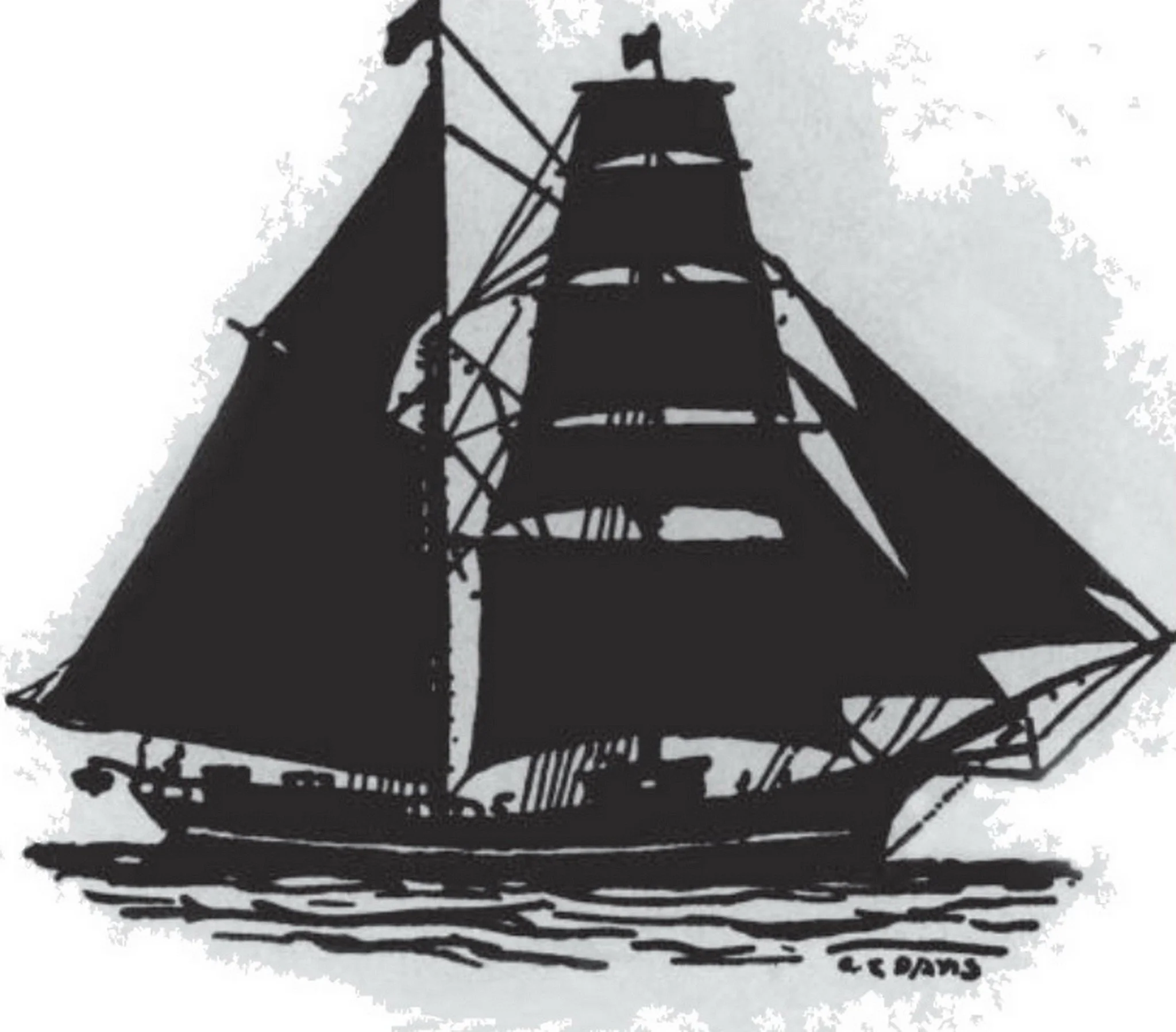
A brigantine is a two-masted vessel with square sails like a brig and triangular sails like a schooner. They were designed for maneuverability and once favored by pirates. Image courtesy of Creative Commons/Adventure George.
Jan. 20, 2026
By Steele Hays
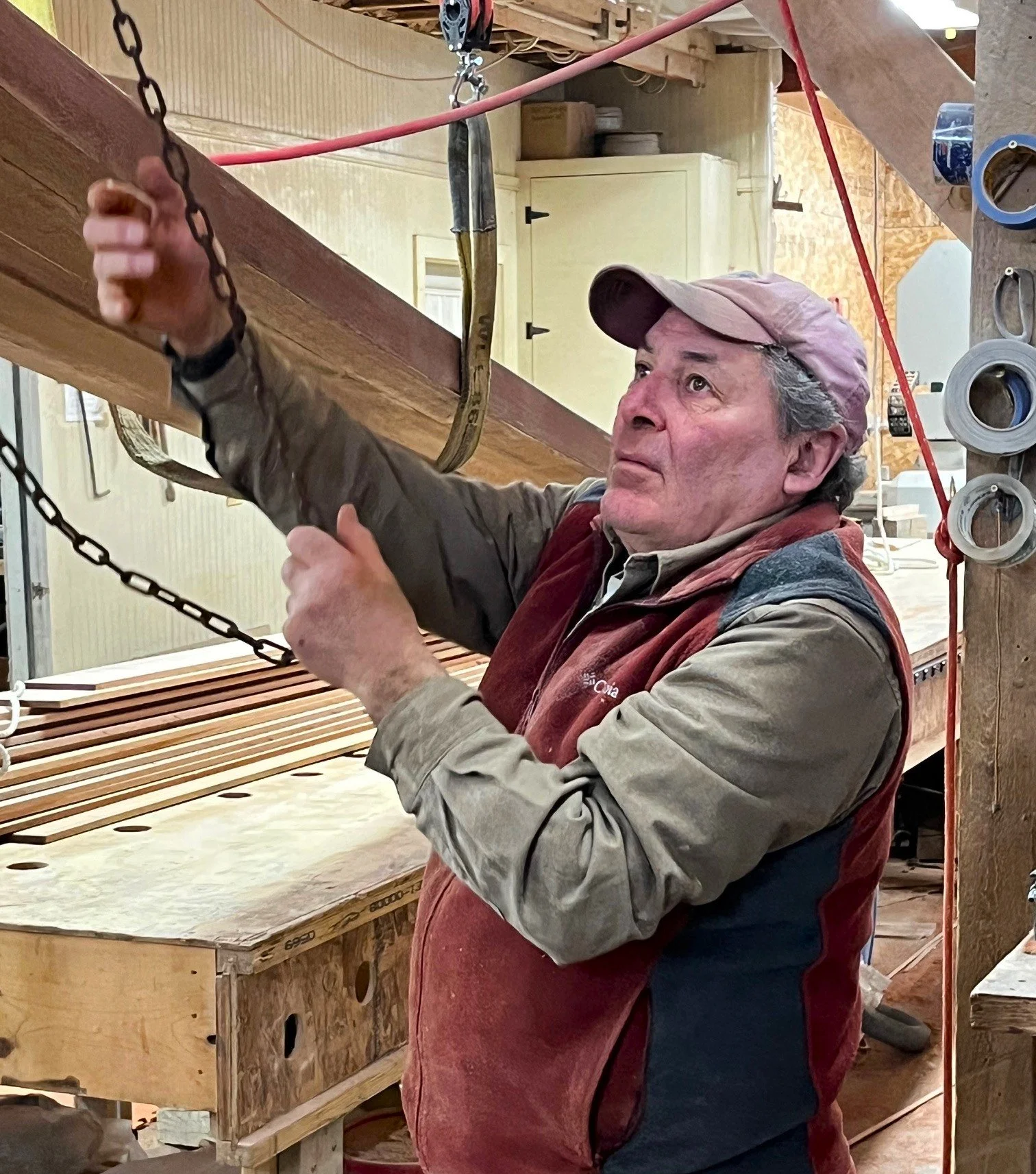
Brion Rieff uses a pulley to maneuver Bethea’s keel into place. Photo by Steele Hays.
BROOKLIN–Brigantines–two-masted sailing ships with square-rigged sails on the foremast and fore-and-aft sails on the mainmast–were one of the most commonly built rigs in the golden age of sail, and were especially popular with pirates and privateers due to their speed and maneuverability.
One is now being built on the Blue Hill Peninsula.
While very few such square-rigged vessels are built today, the new brigantine–just 36 feet in length–is now taking shape in Brion Rieff’s boatyard in Brooklin, with a team of local craftsmen from across the Blue Hill Peninsula responsible for bringing her to life.
The Bethea is being built for an owner with a history of replica ships: Robert Hansen, the principal owner of the tall ship Bounty, a replica of H.M.S. Bounty, that was built in 1960 and used in the 1962 film Mutiny on the Bounty, and later in Pirates of the Caribbean.
The tall ship Bounty sank off the coast of North Carolina in 2012 in Hurricane Sandy with the loss of one crew member and the captain. The other 14 crew members were rescued by the U.S. Coast Guard.
Designed by naval architect David Wyman of Castine, Bethea will have a beam of 9.5 feet and a draft of only 30 inches, thanks to a retractable centerboard. The shallow draft design was driven by the owner’s plans to sail Bethea primarily in the relatively shallow waters around New York’s Long Island Sound.
One of the ship’s most striking features will be its traditional carved wooden figurehead featuring a woman in an elaborate flowing dress, created by maritime woodworker Reed Hayden of Surry.
Bethea will be a daysailer with no overnight accommodations for cruising, only a small cabin in the stern and–for guests’ comfort and convenience–a small enclosed head amidships. An inboard diesel engine will provide power to supplement the sails.
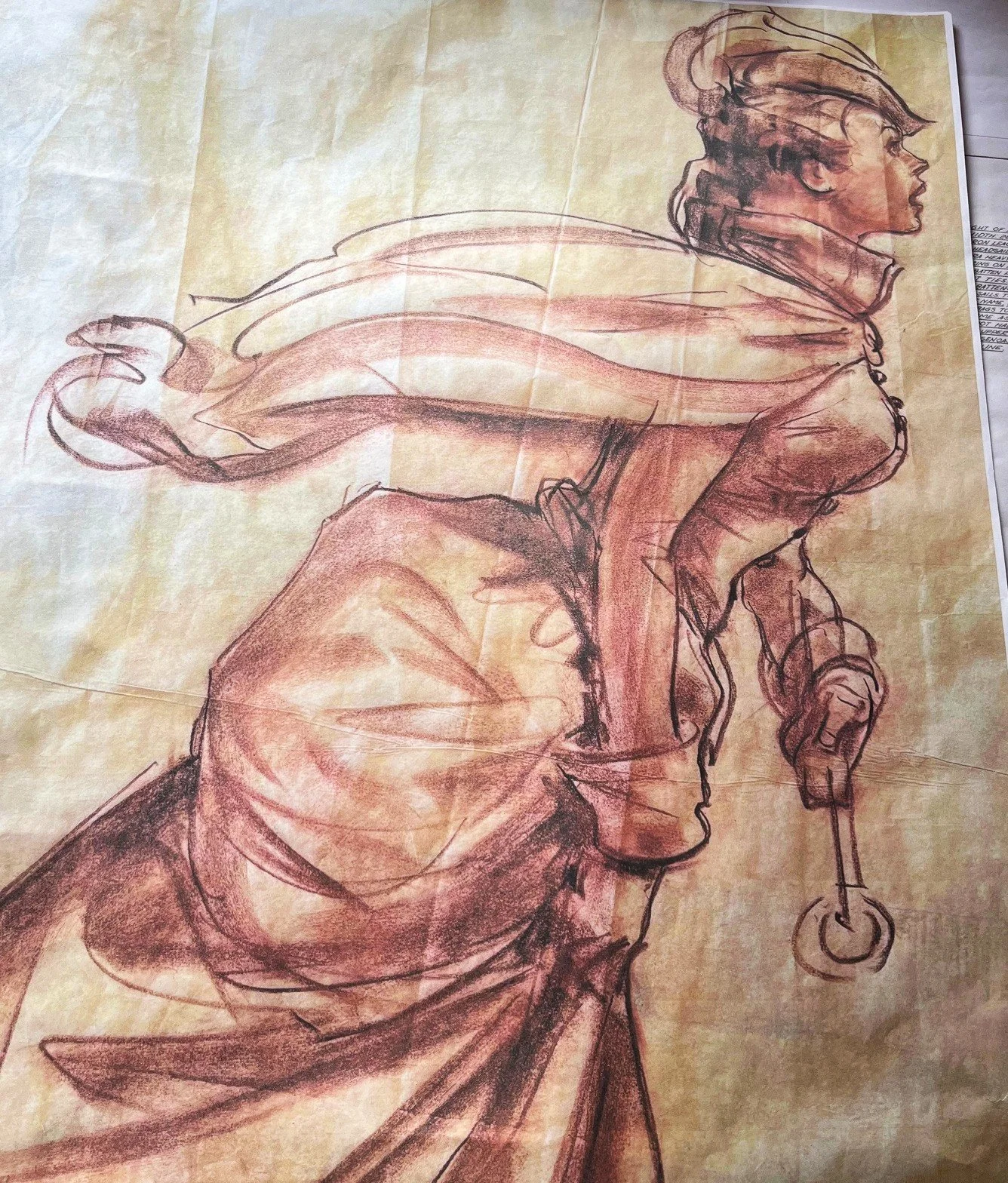
A sketch of the figurehead that will be carved by Surry woodworker Reed Hayden. Photo by Steele Hays.
Asked what he considers the most rewarding aspect of this project, Rieff responded: “Just seeing it come together and take shape.”
Each week brings its own challenges as the construction progresses. On a recent January day, Rieff and an employee were carefully maneuvering the 700-pound wooden keel into place, using an overhead pulley to slowly inch it forward so that it could be flipped over and then lowered into position. The ship is being built with marine plywood frames and southern cedar planking. The keel is made of sipo, also called sipo mahogany, a tropical hardwood from Africa. Once the planking is in place, multiple layers of fiberglass and epoxy will be applied.
When will Bethea be ready to launch? Rieff gives the same practiced response to that question for all his projects: “When it’s done.”
The terms “brigantine” and “brig” are closely related. Both are two-masted ships, but on a brig, both masts carry square-rigged sails, while on a brigantine, the mainmast carries a fore-and-aft sail, usually gaff-rigged. The term “brig” is also widely used in the military to describe a jail. That usage apparently developed in the 17th and 18th centuries when prisoners were locked up in an area below deck, and brigs were a common ship design of the era. Over time, the term came to be used for any military jail whether on land or sea.
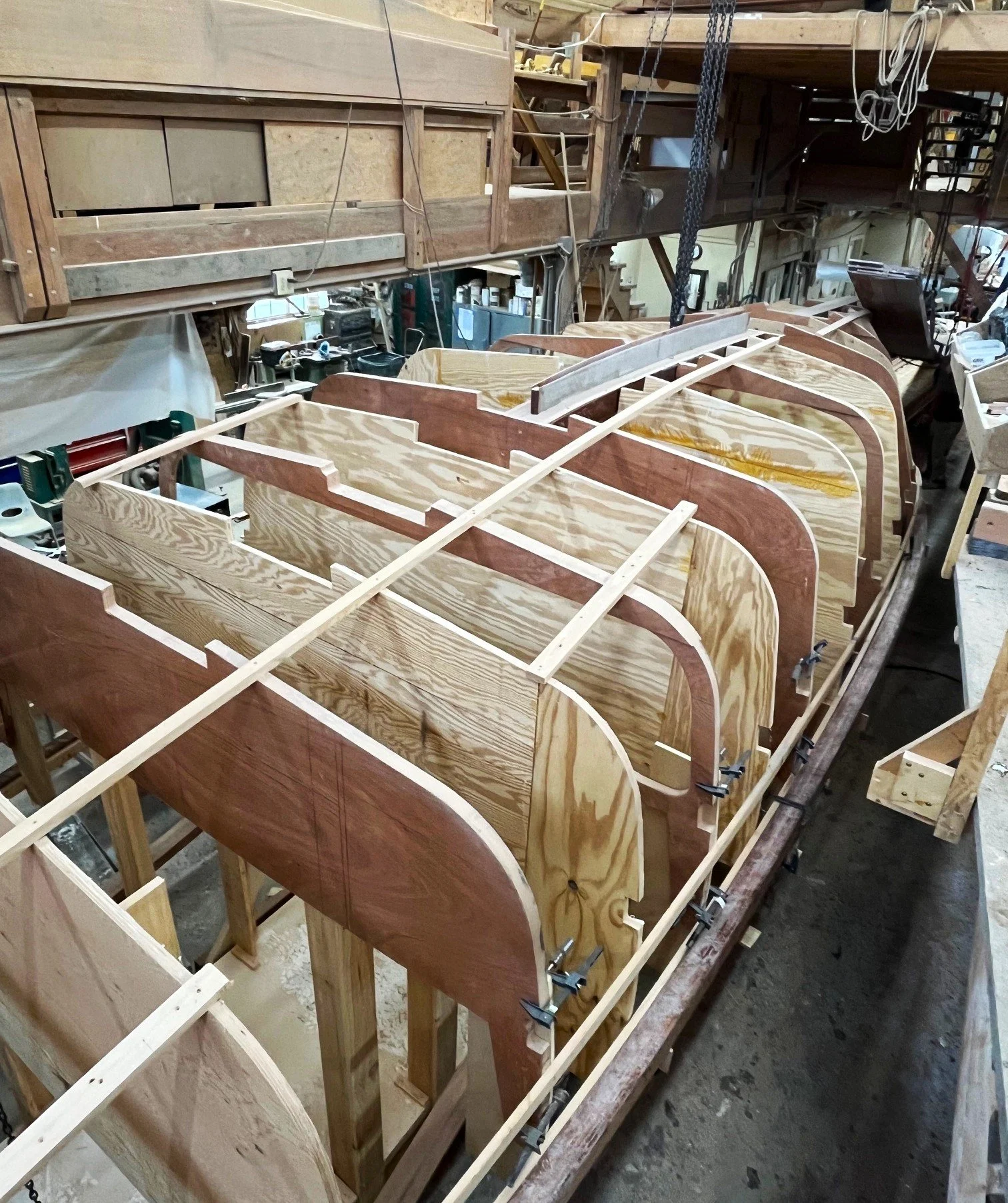
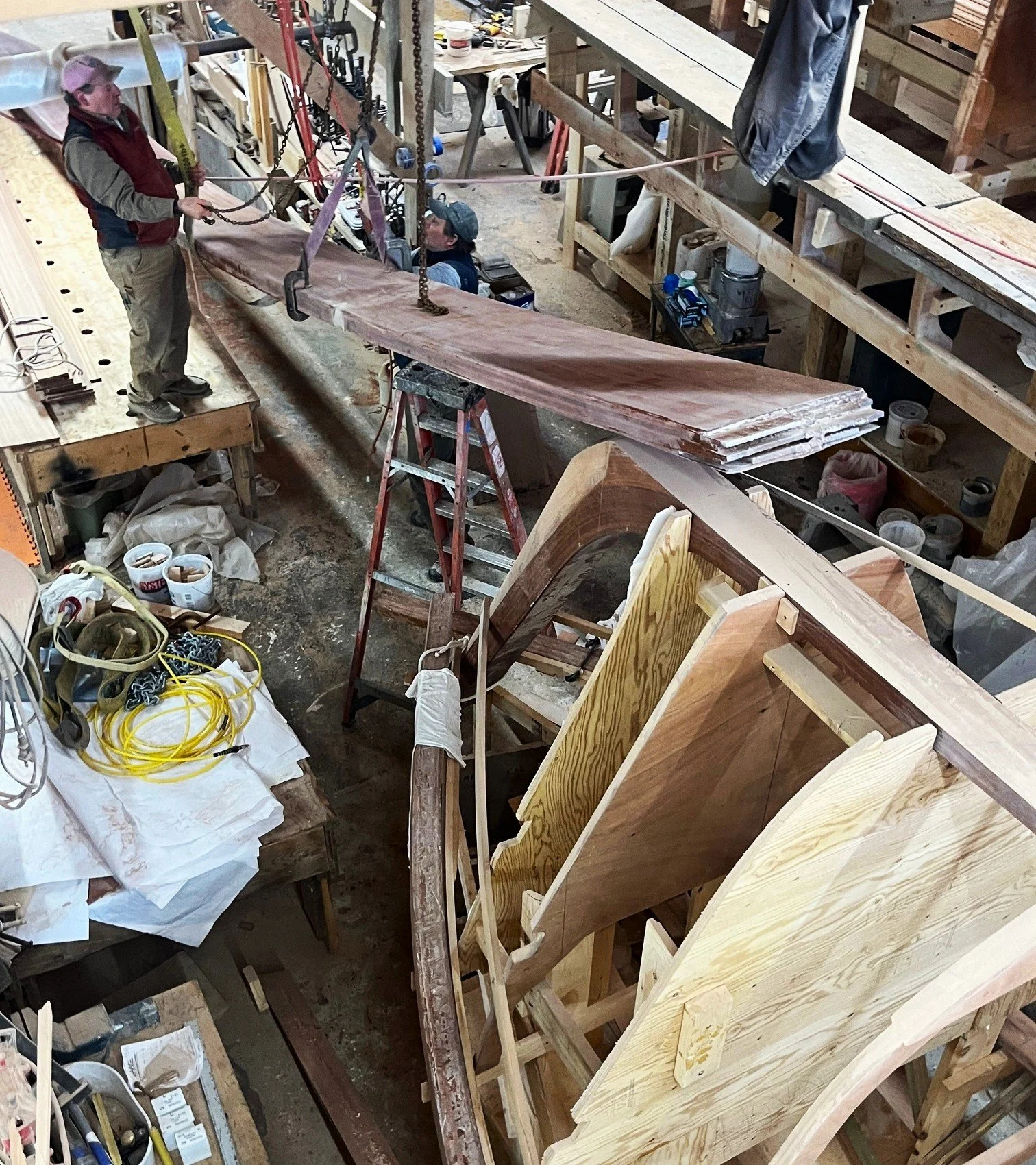
Bethea’s hull takes shape in Rieff’s boatbuilding shop in Brooklin. Photos by Steele Hays.
