

Displaced by war, a local student returns from family visit in Ukraine
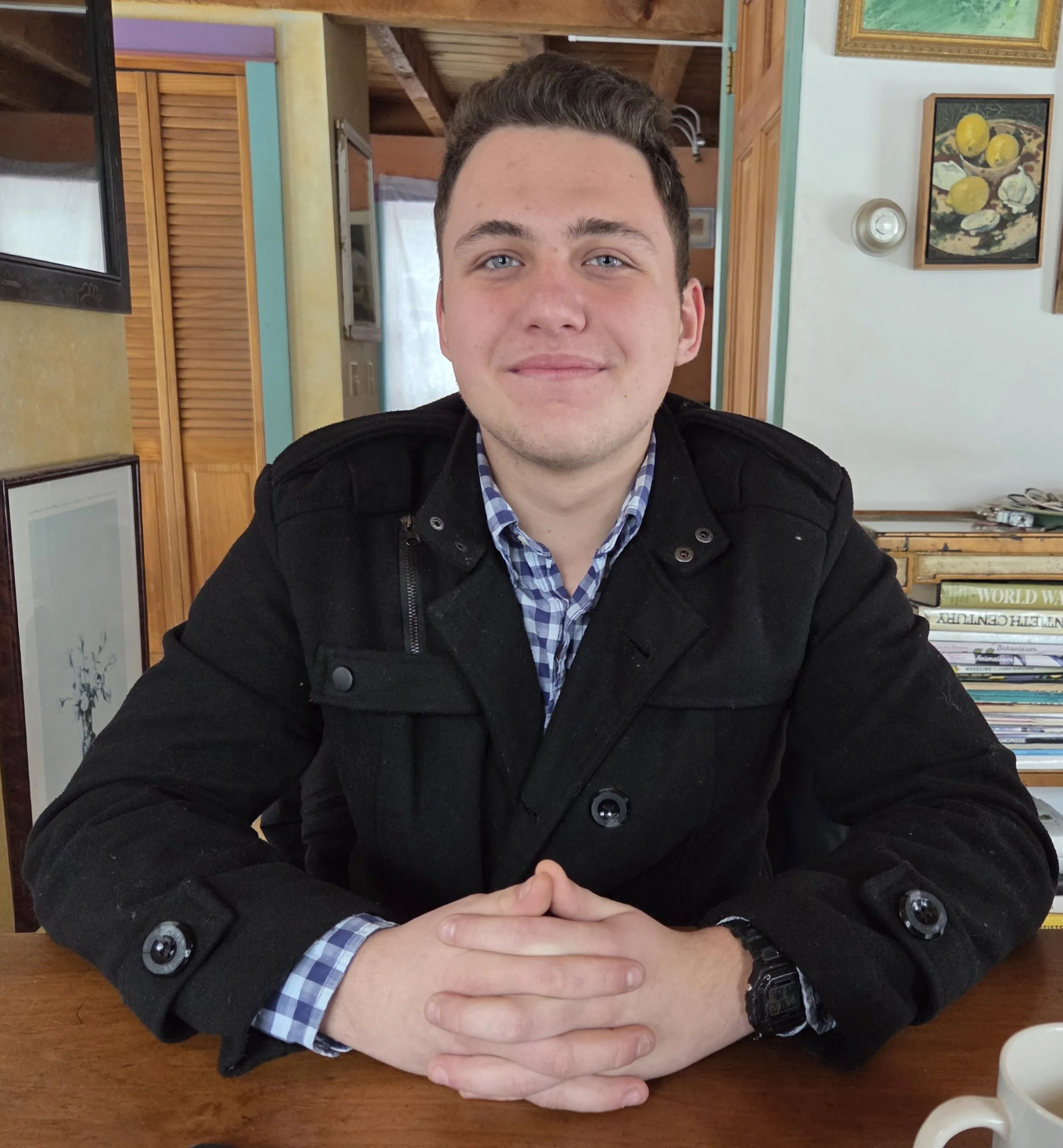
GSA graduate Levko Fedorak, at the Blue Hill home of Anya Antonovych, where he lives while attending Maine Maritime Academy. Photo by John Epstein.
Welcomed to the Peninsula, former GSA student who now attends MMA reflects on Maine life thousands of miles from war
Jan. 20, 2026
By John Epstein
There was a joyous party at the home of Anya Antonovych in Blue Hill on the evening of January 11 when Levko Fedorak returned from Ukraine where he had visited his family, including his parents and two younger brothers.
Fedorak, a 2024 graduate of George Stevens Academy and currently a sophomore at Maine Maritime Academy, has numerous friends and supporters in the area. A good number were there to celebrate his return, including former classmates, soccer teammates, and teachers and people who had financially supported him coming to Maine for his education after Russia had invaded his country in 2022.
Blue Hill Refugee Education Committee
Fedorak’s fans included members of a local support group, Blue Hill Refugee Education Committee.
“I didn’t really want him to go back to Ukraine,” said Tyler Knowles, a former GSA board member and one of the founders of the refugee committee who was at the party, “I was worried. I like him so much. I thought he would be taken into the army. But he told me not to worry.”
Diana Page, also a member of the group, had run a consulate in Brazil as a member of the U.S. Foreign Service, and was of a different mind from her friend, Knowles.
“We all take risks in life; it was his life,” she said.
Page and Knowles said that Antonovych, the party’s host and a former GSA teacher from a Ukrainian family, had been instrumental in bringing Fedorak’s plight to the attention of the Refugee Education Committee. Antonovych had a friend who was one of 10 Ukrainian war refugees --members of three different families, including Fedorak’s--living in a house in Poland in 2022 after the Russians invasion. The friend contacted Antonovych and suggested that Fedorak, a bright student who spoke fluent English, would do well in America.
Antonovych was familiar with the Refugee Education Committee. As a newly formed group in 2021, it previously had helped fund the entry of an Afghan student, Mahdi, who came to GSA in June 2022 from Kabul via Pakistan after recovering from roadside bomb injuries.
Following Fedorak’s arrival in the fall of 2022, two more Ukrainian students arrived from Ukraine to study at GSA with funding provided by the local refugee committee. Kyrylo Salo came in 2023 and is now a freshman at the University of Maine at Orono. Anna Dovhanych, now a GSA senior, intends to go to college in the U.S. to study architecture.
The four war refugee students–Mahdi, Levko, Kyrylo and Anna–have had their GSA education covered primarily through donations raised by the Blue Hill refugee committee via fundraisers, including benefit concerts by local music greats, Noel Paul Stookey and Paul Sullivan.
“This shows what a small Maine community can do if we really believe in it,” said Page.
The Rising Tide sat down with Fedorak upon his return from Ukraine, where he visited his mother, Lesya; father, Zakhar; and brothers Yarema and Severyn, ages 14 and 11. His father serves in the Ukrainian army in Lviv, Ukraine, arranging for shipment of military equipment and supplies. His mother, a journalist, and brothers live primarily in Poland. The following interview has been edited for brevity and clarity, while preserving Levko’s voice.
What emotional effect did the Russian attack on Ukraine on February 24, 2022 have on you, your family, your friends and your neighbors?
I was 15 at that time and when you are that age, you think you understand everything in the world, when in reality, you have no idea what’s going on. It was fear–for my friends, for my family, for my relatives. I understood that because my dad had to stay in Ukraine, I had to step up and be a solid support for my mom who was carrying a heavy burden.
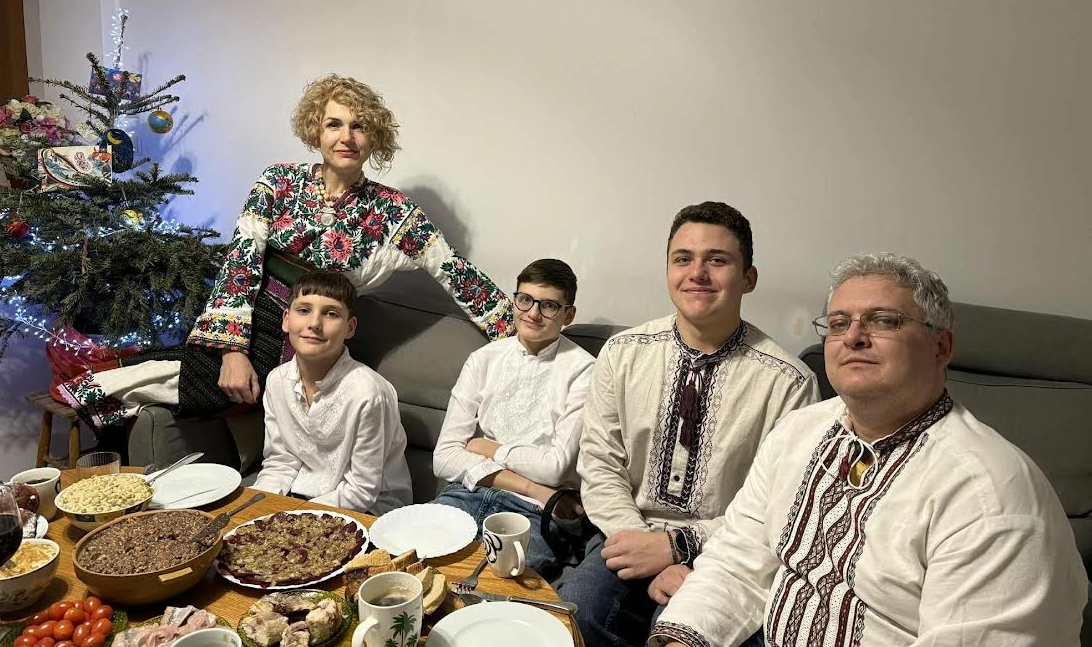
The Fedorak family celebrating Christmas at their refugee home in Rzeszow, Poland. From left to right are Levko's mother, Lesya; brother, Severyn, 11: brother, Yarema, 13; Levko; and father, Zakhar. Photo courtesy of Levko Fedorak.
Also, there was a feeling of being lost because there were a lot of questions that nobody had answers to. Nobody knew how long the war was going to go on. Nobody knew how well Ukraine is going to defend or how well Russia will do in its efforts. Nobody had any idea what life would look like during the war.
There was also anger. When you live peacefully in your city, go to school, head out with your friends to do things, and then–just out of nowhere–the city you were living in started getting bombed, that’s not something that any of us could have imagined.
Were any of your friends, neighbors or family members casualties of this war?
Yes, I had a friend before the war. We were in the same scout organization. He was three years older than me. He was kind of a role model for me. He enlisted in the military before the invasion as soon as he turned 18. He was a medic. His name was Maksym. He was killed by the Russians in the summer of 2022.
And another one of my friends was killed this past summer. My cousin was also fighting and very recently he got wounded. Thank God he’s alive and recovered. It’s tough, that’s just the people who were really close to me. But there were many more. They could not stand on the sideline. They have to defend the country.
When you first came to Maine, how did you feel?
Before the idea of George Stevens Academy came up, I really had no idea about Maine. It’s not one of the states that people outside of the United States hear often. I knew about Boston, New York City, bigger cities and states–California, Florida, Massachusetts. I came here without any prior knowledge, without any expectations.
GSA was a very different school environment. I was living for 13 years in Kyiv, the capital of Ukraine, which has a three million people population. It’s a big change. However, I decided to learn as much as I can. I didn’t know how long I would stay here because of the fundraising efforts.
When you came here, were you able to communicate with your family easily?
Well, easily might be an overstatement to an extent. Usually just through Facebook and WhatsApp. But it was definitely hard because nothing can really equal the communication impact of in-person interaction, especially with your family.
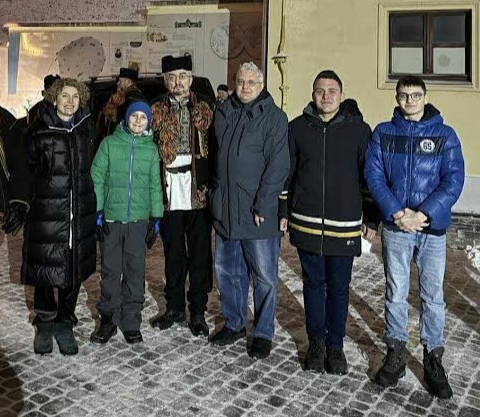
The Fedorak family on the streets of Lviv, Ukraine at a holiday market. From left to right flanking a Ukrainian military chaplain wearing robes and a black hat: Levko's mother, Lesya; brother, Severyn; father, Zakhar; Levko; and brother, Yarema. Photo courtesy of Levko Fedorak.
Why did you choose to go to MMA after graduating from GSA?
I chose MMA mainly for the international business and logistics program.
How did your parents feel about your choice?
They were very supportive. But they are 5,000 miles from here. When I told them I was committing to MMA, there was nothing they would really be able to do about it. But I think they are happy that I was able to stay in the U.S. for my university education.
So you decided to go back to visit Ukraine during the MMA Christmas break. Why did you make that decision and what was the response from your family and people here?
I just want to spend as much time as possible with my family and people who are close to me. Especially in war time when you never know if that missile is not headed for your house or that house, like it’s kind of roulette. Let’s say that people pray, especially in Ukraine, every night they go to bed that they will wake up in the morning.
I knew that people were worried about me, and rightfully. Because part of the fear was felt by me, not only about going to Ukraine but also about me coming back to the United States, even though I have all of my documents and I’m here on a student visa. You never know, mostly because of the current immigration policies. I have all of my documents in order. I carry all of my documents, always.
At a certain point, you just have to accept the circumstances around you and go for it. I always have a plan. But I understood and honestly appreciated the concern that people had here for me. Thankfully I was able to make it back safe and sound.
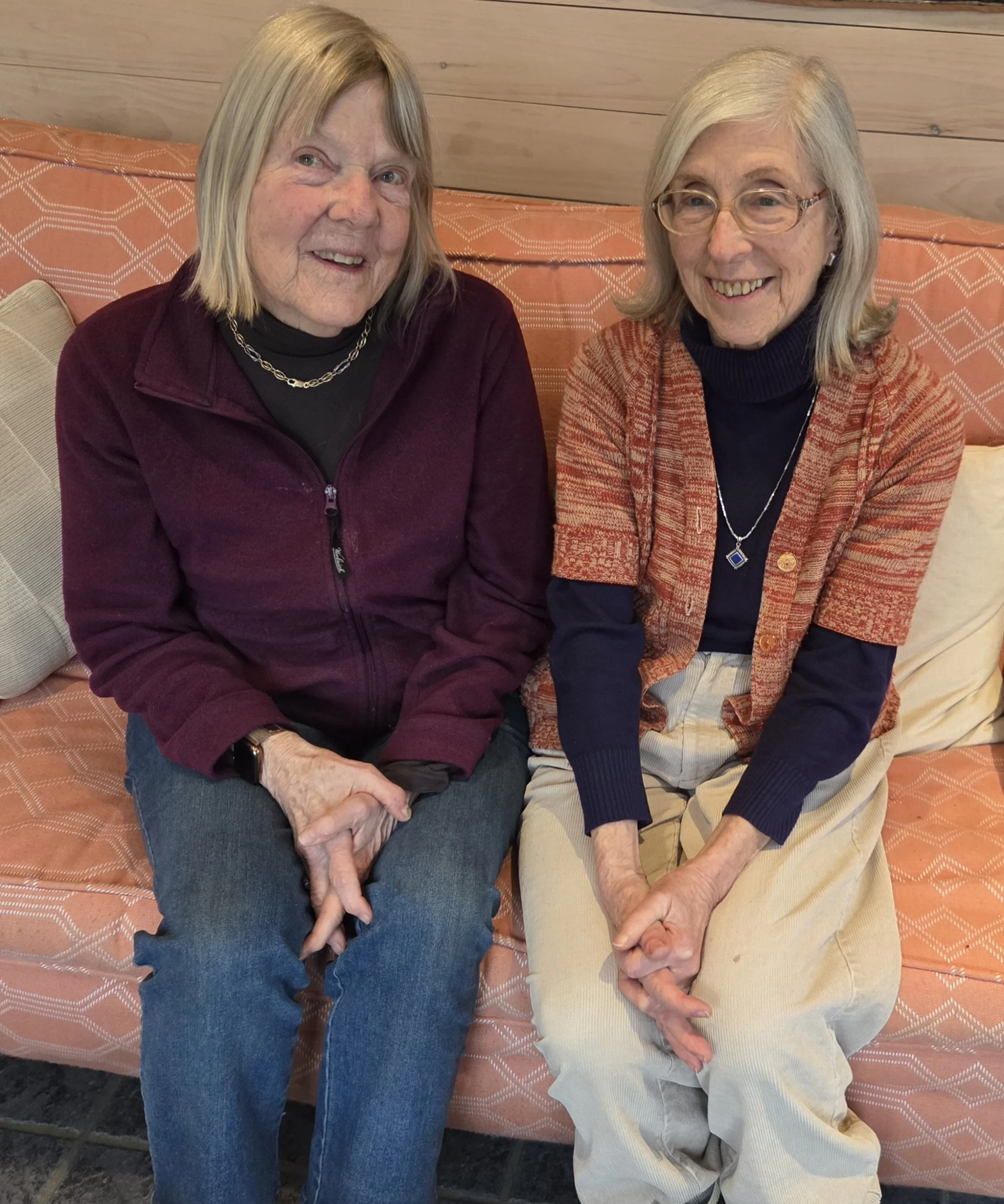
Tyler Knowles and Diana Page, organizers of the Blue Hill Refugee Education Committee, which has helped raise funds for war refugees to attend GSA and college. Photo by John Epstein.
And how was your reception when you were visiting your family?
It was great for me to see them. They were happy to see me. It’s really kind of surreal when you see your younger siblings be almost as tall as you are. My middle brother is going to be a teenager, then a young adult, and he wants my advice. I want to share my experience with him, too. Honestly, that pains me a lot not to see my brothers grow. I’m not there to give them a shoulder for support when they need it. They can call me whenever and ask for advice or opinion about certain things. However, it’s different when you are with them face-to-face.
Is your family happy that you’re here in Maine?
They are happy that I’m safe. They’re happy that I can get a good education in the U.S and that I’m doing well for myself.
What are your plans after MMA?
Because of the war, life is unpredictable for me. I’m kind of scared to plan. Like it doesn’t seem to make sense to me to make long-term plans. There is a saying: “That if you want to make God laugh, tell him about your plans for tomorrow.” So you never know what’s going to happen. Hopefully, I’ll be able to graduate from college, get a job somewhere, hopefully helping in Ukraine. I assume you’re asking if I want to stay in the United States or go back to Ukraine. I don’t know yet.
Do you have conversations generally with people in the area about the war in Ukraine and is there a wide range of responses?
I feel like people in Maine are able to differentiate good versus bad really quickly. They don’t like when something is unfair in life. I feel the vast majority of people I’ve met here are supportive and express condolences for what the Ukrainians have to go through.
