

Public gets first peek at Blue Hill’s future public safety building
Existing fire station also will be opened to the public on April 2
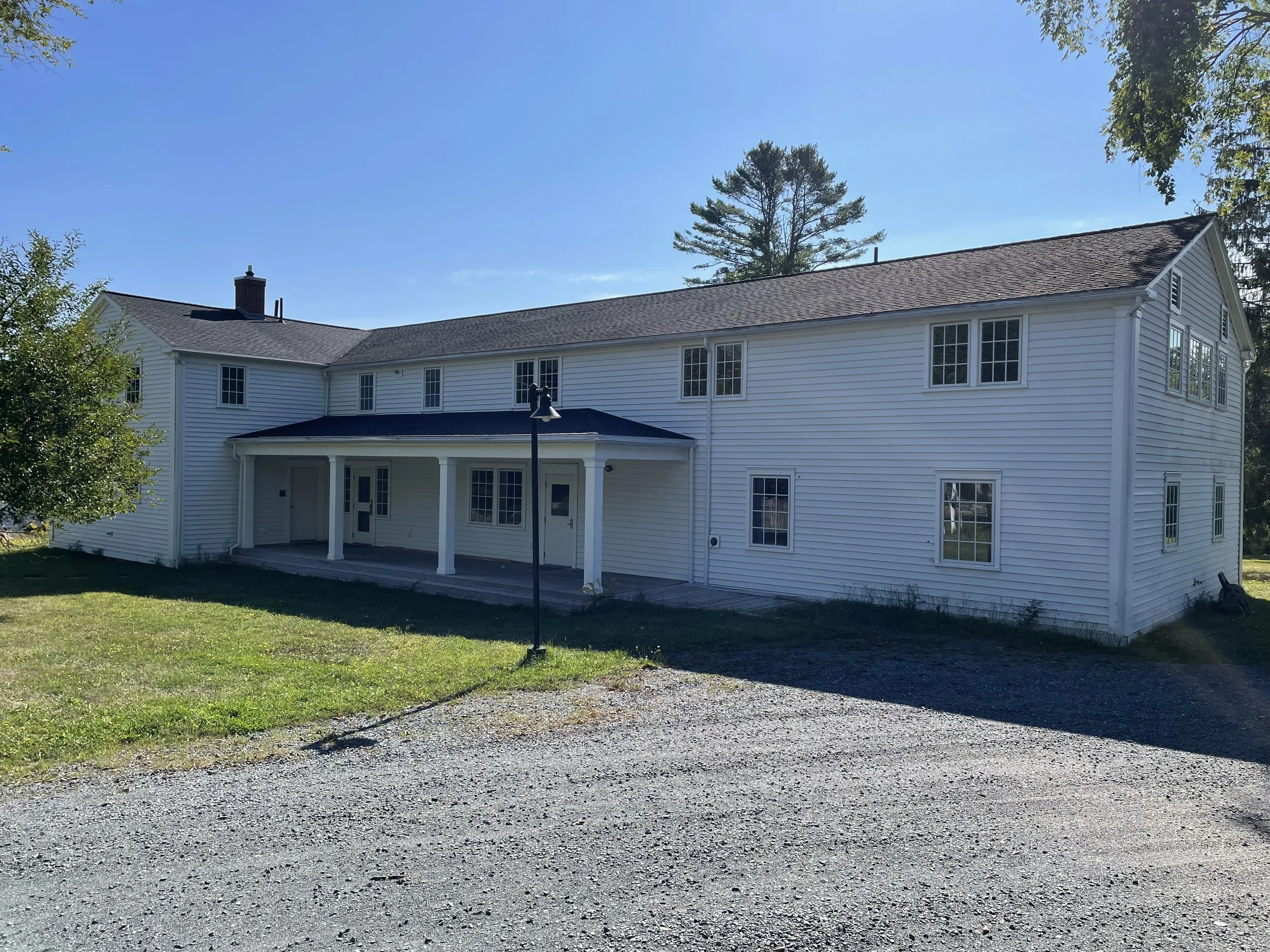
Renovations and new construction for an emergency services building at the former GSA student dormitory could begin next spring. File photo.
March 31, 2026
By Tricia Thomas
BLUE HILL—The public had its first peek at plans for a new public safety facility on Tenney Hill at an open house at the property on March 28. The two-hour event precedes an April 4 town meeting, at which Blue Hill voters will be asked to approve a $1.5 million loan and a $50,000 appropriation from existing funds to help pay for the $6.7 million project.
A second open house, giving Blue Hill voters an opportunity to tour the existing fire station on Water Street, will be held on Thursday, April 2, from 4 to 6 p.m.
Hosted by the Blue Hill Fire Department and Peninsula Ambulance Corps, the open house on March 28 marked the first time that the property, which includes a former student dormitory on nearly 17 acres, was opened to the public since the town purchased it from George Stevens Academy last year. GSA had put the Hinckley Hall dormitory property on the market in 2023, after losing most of the students it housed there to travel bans enacted during the COVID-19 pandemic. After getting approval from voters last summer, the Town of Blue Hill purchased the property last fall, along with a second parcel on which the Blue Hill Consolidated School resides, for $1.8 million.
Since then, two committees of first responders, town representatives and residents have been considering how to best use the existing building and add a new, five-bay fire station behind it to accommodate the town’s steadily growing emergency response needs.
Fire chief John Chapman said that while the existing building will need some work to make it suitable for fire department and PAC use, it already has many features—and the space—that both organizations are seeking in a new home.
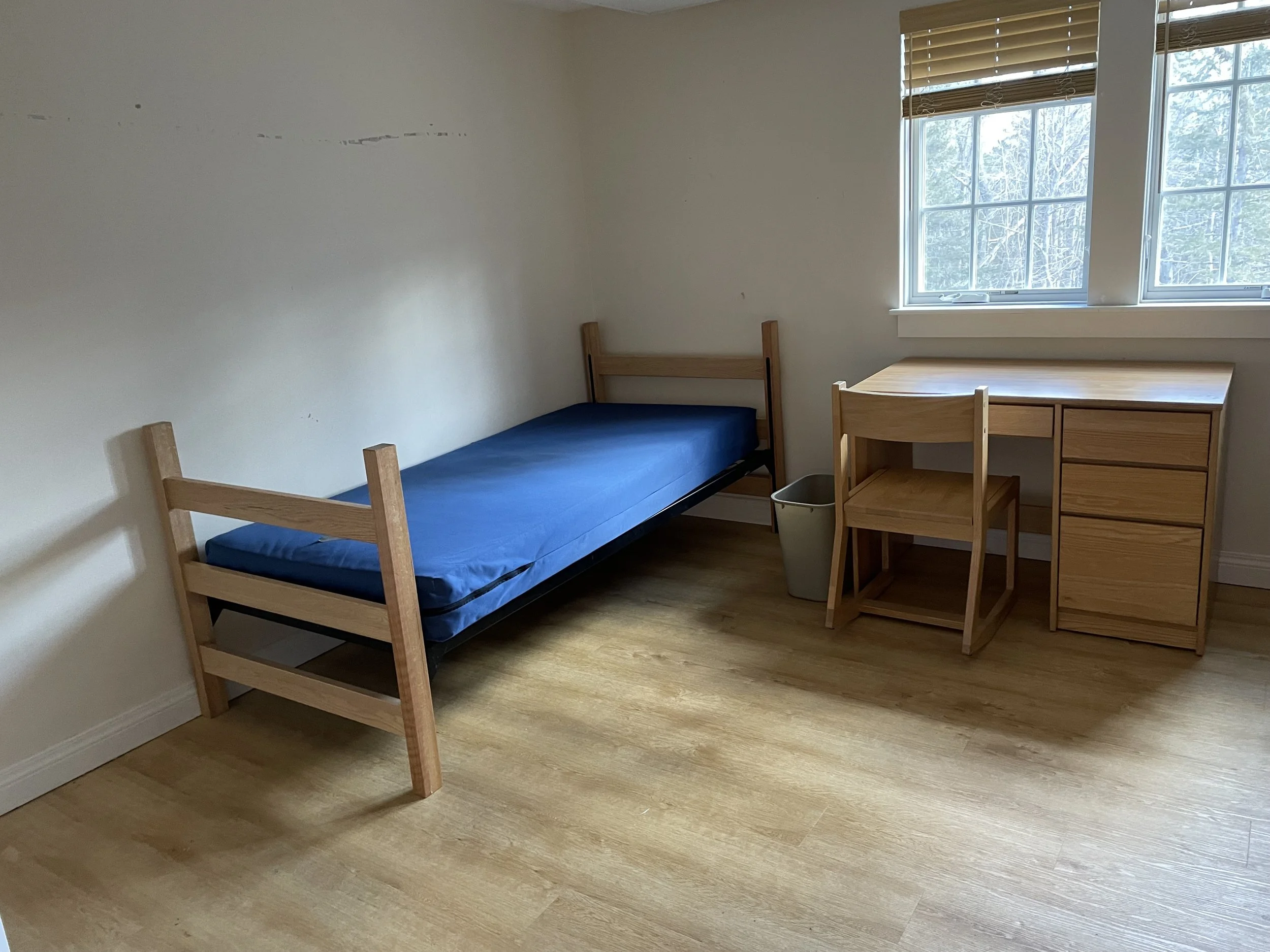
Former dorm rooms will be turned into bunk rooms for first responders, officials say. Photo by Tricia Thomas.
Currently, the fire department and ambulance organization share cramped space on Water Street. Originally constructed in the 1960s, the aging, concrete-block building no longer meets modern standards for firefighting and emergency services, officials say. New, larger fire trucks can’t fit into the bays without expensive customization, and one of PAC’s ambulances must remain parked outside, often in less-than-ideal weather conditions, Chapman said.
The building also lacks adequate space to store equipment and supplies, and narrow space between and around the rigs make cleaning and re-stocking them difficult. Firefighters and EMTs also don’t have adequate space to change out of their gear, wash off harmful carcinogens or blood-borne pathogens, and clean their gear and equipment. The existing building also lacks proper bunk, living and kitchen space for the EMTs who work there on long shifts around the clock or for firefighters who need to stay during storms and other large-scale emergencies, Chapman said.
“This building is already purpose-built, which is what made this building so attractive.”
Even if it was possible, raising the fire station’s roof or adding on—in a harborside location that already is vulnerable to flooding—won’t go far enough to bring the building up to modern standards. Needed renovations also likely would cost more than new construction, Chapman said.
“Time has just finally caught up with us,” he said.
Using the existing, two-story dormitory on Tenney Hill for office, bunk and living space will allow both the fire department and PAC to meet their current needs and accommodate future growth, both Chapman and PAC manager Alan Henschke said. The building also will include an office for visiting law enforcement, including the Hancock County Sheriff's Office and the Maine State Police.
Since it was used as a dormitory, the building already contains a mix of large, communal spaces for meetings, training events and gatherings, while smaller private rooms—many already furnished—can be used for offices or bedrooms. In addition, the building already is equipped with a fire detection system, sprinklers, fire doors and other safety features.
“This building is already purpose-built, which is what made this building so attractive,” Chapman said. “There’s already a sprinkler system here. There are already dorm rooms here. There are already offices here.”
Henschke agreed.
“This [project] will create a 40- to 50-year station, easily,” Henschke said.
Having a well-functioning place to work also may attract new EMTs and volunteer firefighters as the need for them grows, both Chapman and Henschke said.
“[I]f you want somebody well rested, well trained and mentally in the right place, this provides that.”
“We’ll have the expansion space when we need it,” Henschke said. “If we needed to hire someone tomorrow, we couldn’t do it. There’s no space for them [at the existing station].”
“Some people ask me, ‘Why do we need this?’ I’ve said, if you want somebody well rested, well trained and mentally in the right place, this provides that,” Henschke added, looking around the new space.
Although only conceptual designs have been developed so far, planned renovations to the building include replacing communal bathrooms on the second floor with three distinct washrooms that each contain a sink, toilet and shower, removing a wall between two small rooms to create a larger, communal lounge space on the second floor, and creating a new “warming” kitchen—one without a stove or oven—on the first floor. According to a town website dedicated to the project, those improvements are expected to cost $710,000.
The open house also featured color renderings of a planned 82-by-104-foot apparatus building to house both fire trucks and ambulances, which would be built behind the public safety building. The two buildings would be connected by a covered walkway.
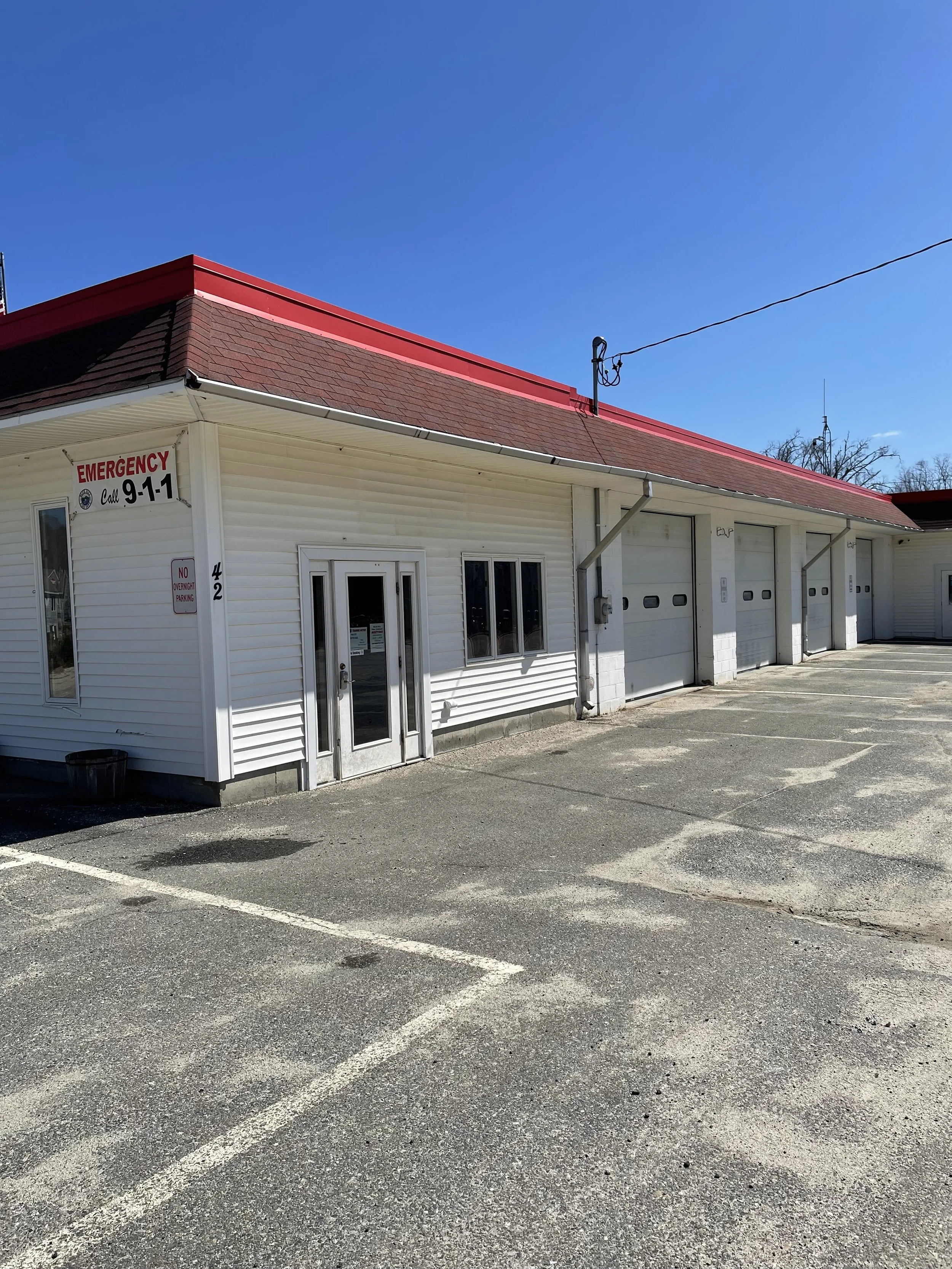
A second open house, giving Blue Hill voters an opportunity to tour the existing fire station on Water Street, will be held on Thursday, April 2 from 4 to 6 p.m. Photo by Tricia Thomas.
The new apparatus building would accommodate up to 10 fire or emergency vehicles, including the town’s boat, which now is kept in an unheated waterfront shed next to the existing fire station, Chapman said.
The new building also would provide ample space for equipment storage, vehicle cleaning and maintenance, and training. In addition, the building would be fitted with an on-demand, point-of-service exhaust system and dedicated space for first responders to remove soiled or smoke-filled gear, and to shower and launder their gear after emergency calls.
The town has estimated the total cost of renovating the dormitory building and constructing the new apparatus building at $6,785,000, which includes the $1.8 million it paid for the property last fall. The town already has applied for $3.4 million in federal grant funding through Maine Congressman Jared Golden and Senators Susan Collins and Angus King.
Whether the federal funding will be approved is unclear. Blue Hill’s public safety facility project is being considered for funding alongside similar fire station and public improvement projects throughout the state, Chapman said.
“[Collins, King and Golden] have been very honest, and they have said from the very beginning that it is a very competitive process,” Chapman said.
Any money awarded would be disbursed in 2027. If the funding is approved this summer, construction at the site could begin as early as next spring, Chapman said. The project is expected to take about 18 months to complete.
The town plans to pay the bulk of the remaining project costs through a total of $2.7 million in long-term loans—$1.2 million of which was approved by voters last August. At its annual town meeting on Saturday, April 4, voters will be asked to approve borrowing another $1,542,500 from the Maine Municipal Bond Bank and culling $50,000 from unassigned municipal funds for the project.
If the $1.5 million loan is approved by voters, the town can begin doing more detailed planning on the project, Chapman said.
“If we get an indication that we’re going to be approved…then we can start to do some of the design work, but we would not start to dig until the money has been granted,” Chapman said.
The town has developed a dedicated website for the project, which includes a conceptual design and site layout for the Tenney Hill site, cost information and FAQs. More information on the warrants up for a vote at the April 4 town meeting is also available online.
