

Local coalition calls for ban on rodenticides
State to outline rules this June on poison that can kill raptors and other carnivores
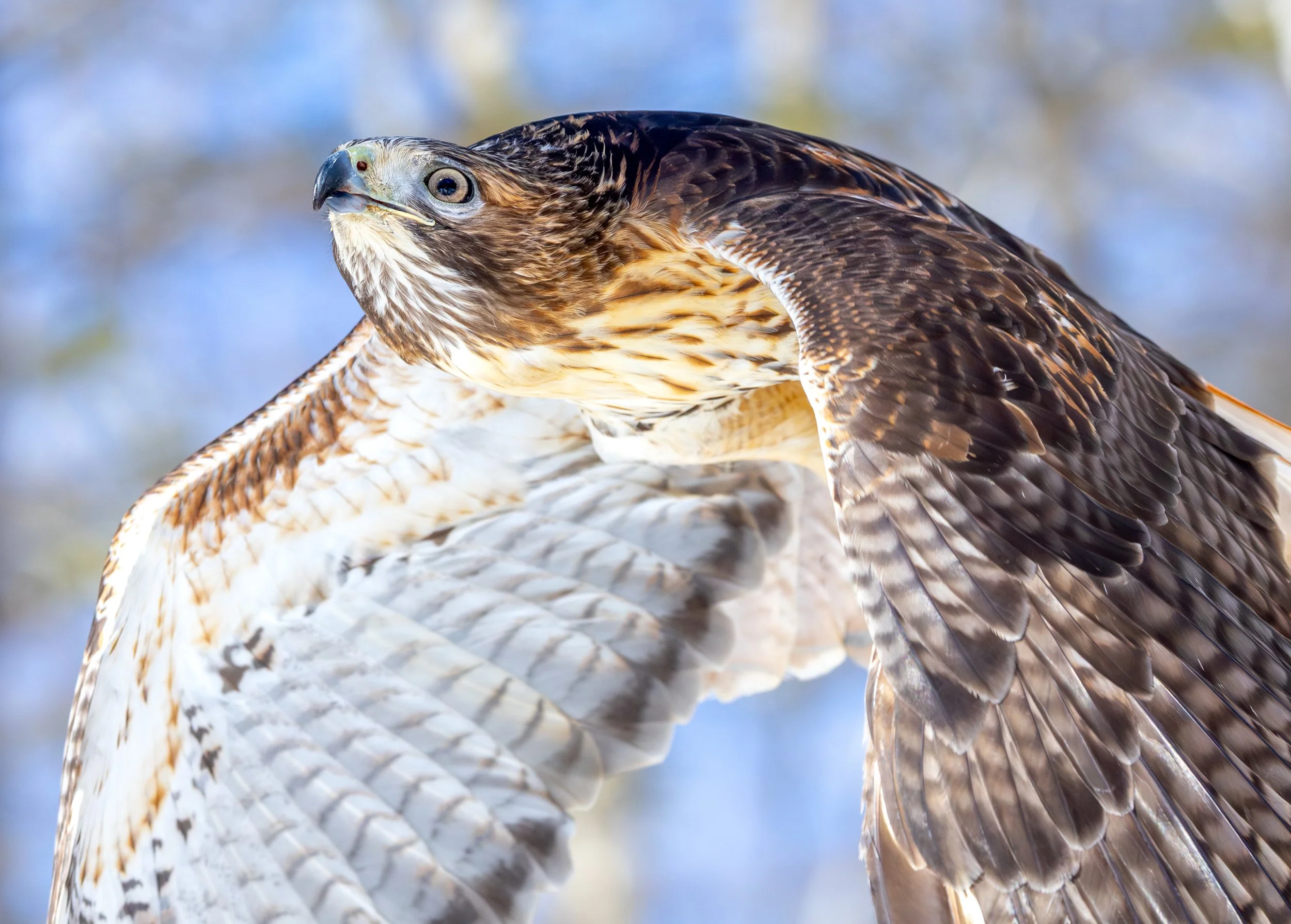
Red-tailed hawks are among the predators that feed on rodents, putti ng them at risk of inadvertently ingesting toxic rodenticides. Photos courtesy of Corrie Borges.
March 17, 2026
By John Epstein
Helena Melone has been living in Stonington for two years. She’s a visual artist, whose work shows a deep connection with the natural world around her, especially birds.
“When I first moved here, I used to listen to barred owls every night,” she said. But now, she said, the birds are a rarity. “I saw one once beside the road, just standing there, looking dazed,” Melone said.
She volunteered with Acadia Wildlife, a nonprofit that rehabilitates injured raptors, many of which she said showed lethargic behavior associated with poisoning. Melone then read reports and scientific studies that showed how predators, both birds and mammals, can die after eating rodents that had ingested a poisoned bait containing anti-coagulant rodenticides.
“It can take up to four days for a dose to kill, but the mouse, rat or squirrel wanders about in a weakened state, eats more of the poison and then becomes easy prey for predators,” Melone said. Those predators include raptors and mammals, such as foxes, bobcats, and fishers. “The poison builds up in the liver and the fat of the predator and can eventually kill them,” she added.

Helena Melone of Stonington, who helped found the Rodenticide-Free Maine Coalition. Photo courtesy of Helena Melone.
Advocating to ban anti-coagulant rodent poison
Melone spoke about the problem at the annual Wind and Waves bird-watching festival on Deer Isle in the spring of 2025. Her talk inspired Jacquie Gage, a Belfast biologist and educator with a home on Deer Isle, to spearhead a new advocacy group, the Rodenticide-Free Maine Coalition.
Gage’s partner, Richard Podolsky, a Ph.D. ecologist with a specialty in ornithology, joined the effort, as did others including Maine-based wildlife photographer and falconer Corrie Borges.
On Feb. 27, Podolsky, Gage and Melone and other coalition members gave oral and written testimony before the Maine Board of Pesticides Control. The Board is charged with implementing LD 356, a law signed by Governor Janet Mills last June, which calls for creating rules that prohibit the use of rodenticides in outdoor residential settings unless it is applied by a certified pest control company.
Podolsky, who has taught wildlife biology at several universities, including Michigan, Wayne State, and Rutgers, focused on regulating anticoagulant baits. He cited several scientific studies, including one from Massachusetts, showing that a high-percentage of red-tailed hawks had ingested at least one type of rodenticide, another in Maine that showed that more than half of fishers had ingested rodenticides, and one in California that showed that 80 percent of bears, bobcats, mountain lions and fishers had ingested rodenticide.
“The rodenticides are doing a better job killing animals higher up on the food chain than the target animals,” Podolsky said.
In written testimony–with 21 scientific and academic references–following his appearance before the pesticide control board, the ecologist stated that natural predators are the most efficient natural controllers of rodent populations.
“The rodenticides are doing a better job killing animals higher up on the food chain than the target animals.”
“By poisoning the predators that help regulate rodent abundance, we create conditions that favor rodent population rebounds and drive demand for additional poison applications,” he wrote.
Podolsky called for “a complete phase-out of anticoagulant rodenticides for all outdoor use – commercial and residential alike.” His request goes beyond the scope of the board’s mandate under the new law, which only calls for a prohibiting anticoagulant rodenticide in outdoor residential settings.
In particular, the ecologist cites the four so-called “second generation” anticoagulants that are highly potent–brodifacoum, bromadiolone, difenacoum, and difethialone–as the justification for a comprehensive ban that includes commercial applications in agriculture. The reason: They have a half-life between 113 and 300 days in a predator mammal’s liver tissue, he said.
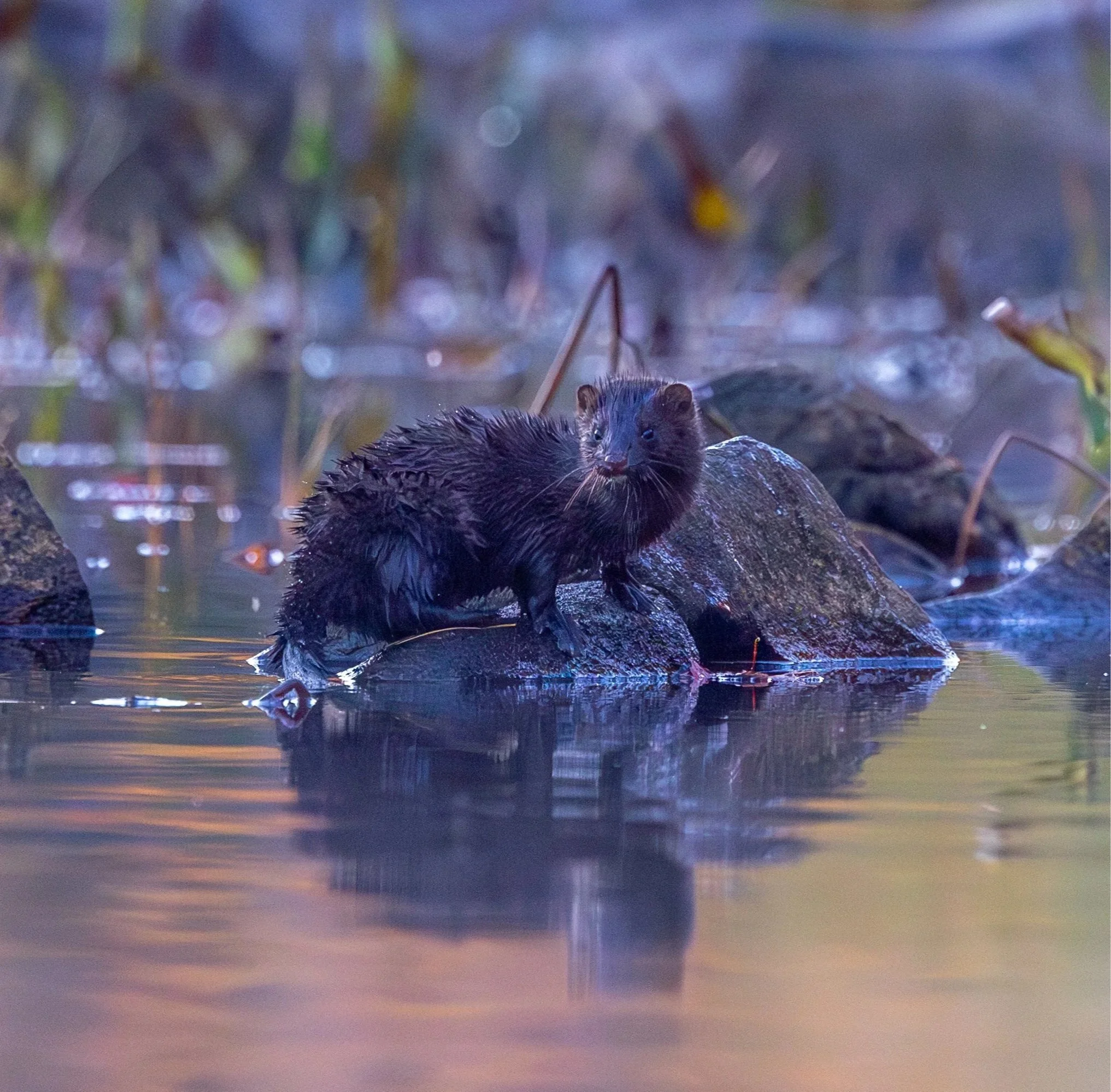
Animals like the American mink can also ingest deadly rodenticides. Photo courtesy of Corrie Borges.
“This extraordinary persistence means that poisoned rodents may remain toxic to predators and scavengers for weeks to months after ingestion, creating a prolonged secondary-poisoning risk,” Podolsky stated.
In her written testimony before the Board of Pesticide Control, Gage highlighted the information she had gained from talking “with nearly 150 community members including veterinarians, farmers, retail managers, wildlife rehabbers, home owners and organizations.”
Gage said many of the Mainers she talked with admitted to buying packages of rodenticides off the shelves and putting them to use without reading warning instructions.
“Most never heard of non-targeted wildlife species being killed or that rodents take days to die after consuming bait, making them easy toxic prey for wildlife and pets,” she said.

Some advocates want bait boxes like this to no longer be allowed if they contain the second generation anticoagulant brodifacoum that has proven to be deadly to raptors and other predators. Photo courtesy of Helena Melone.
Gage also called for banning anticoagulant rodenticide sales in stores, as well as banning their use by commercial pesticide companies.
What the pest-control companies say
Pest control companies contacted by The Rising Tide for comments about anticoagulant rodenticides did not return requests for comment. However, as part of its draft report to implement restrictions on rodenticides in outdoor residential settings, the Bureau of Pesticides Control sought feedback via a survey of stakeholders who attended the hearing. Half of the respondents were from the pesticide industry, including manufacturers, distributors, and applicators. More than half of them said that restrictions on anticoagulants would hurt their business.
Industry respondents argued a ban would have “a negative impact on human health” because rodents transmit disease. Others said requiring people to use only professional pest control applicators would be unfair to those who couldn’t afford to hire a company. Farms, which often have low profit margins, were mentioned as particularly vulnerable to a requirement to hire professional applicators. Two companies simply said their businesses would lose more than $100,000 a year.
Alternatives to rodent poison
Podolsky, Gage and Melone call for a system of integrated pest management (IPM) to control rodent populations. They describe a three-pronged approach:
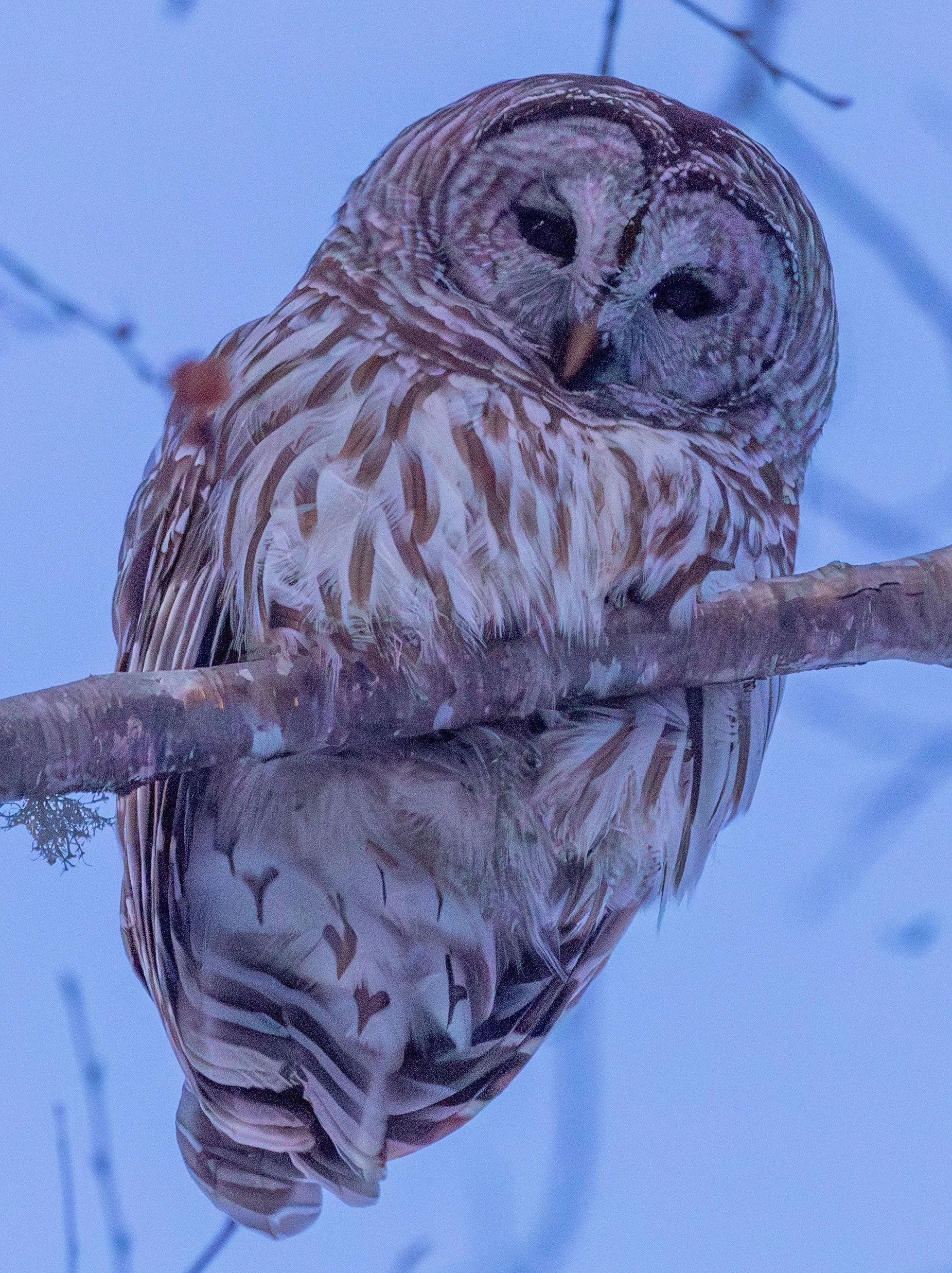
Barred owls are among the birds one group hopes to protect from rodenticides. Photo courtesy of Corrie Borges.
Excluding rodents from structures by sealing and blocking entry points and eliminating access roots.
Eliminating the availability of food sources by securing containers, cleaning up food waste in outdoor spaces and reducing clutter that fosters nesting.
Using mechanical kill devices, such as reusable snap-traps and electric traps.
Melone, the artist-turned-anti-rodenticide activist, seeks to spread the IPM message information throughout coastal Maine. She recently set up a Rodenticide-Free-Maine Coalition table outside Rockland’s Strand Theatre, which was showing the feature film “H is for Hawk,” a story about a woman’s relationship with a raptor.
“It’s the non-human elements that make our area beautiful, and we can’t pick and choose what nature brings. It’s a complete system,” Melone said.
She described a unique and simple rodent trap that was environmentally safe: a five-gallon bucket containing vegetable oil that attracts and drowns hapless mice and rats that fall through a trap door. Other variations on it include peanut butter placed on an empty toilet paper roll set across a bucket filled with water. The mouse ventures across the top of the open bucket and spins off the roll like a lumberjack on a log, falling into the water.
Still another local example, explained in a Rising Tide story last October, are small boxes filled with baited snap traps. Rodents seeking a quiet refuge enter the dark box and are met with a floor of snap traps.
Public comments on the proposed implementation by the Board of Pesticide Control will be reviewed at its April 10, 2026 meeting and, according to the minutes of the board’s Jan. 14, 2026 meeting, “if nothing is drastically changed, the Board would vote.” Jim Britt of the Maine Department of Agriculture, Conservation & Forestry, which oversees the board, said in an email to The Rising Tide that full implementation would likely occur no sooner than mid-June.
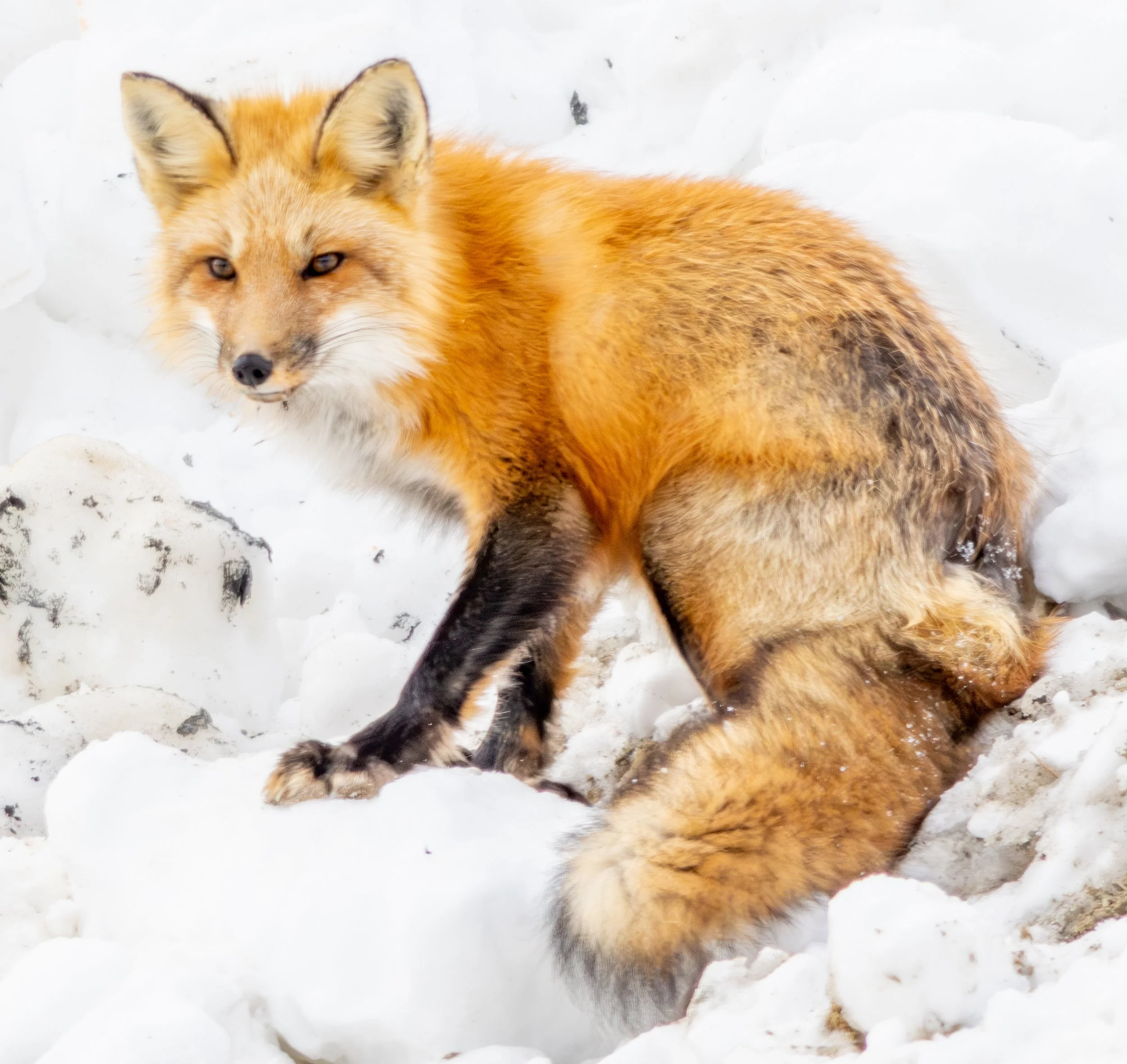
A red fox, one of Maine’s carnivores that relies on rodents for food. Photo courtesy of Corrie Borges.
