

Blast from the past: Bomb squad inspects Castine’s record number of cannonballs
State police say town’s trove of 50 cannonballs dating back to Revolutionary War sets a Maine record—and urges people not to assume they are safe
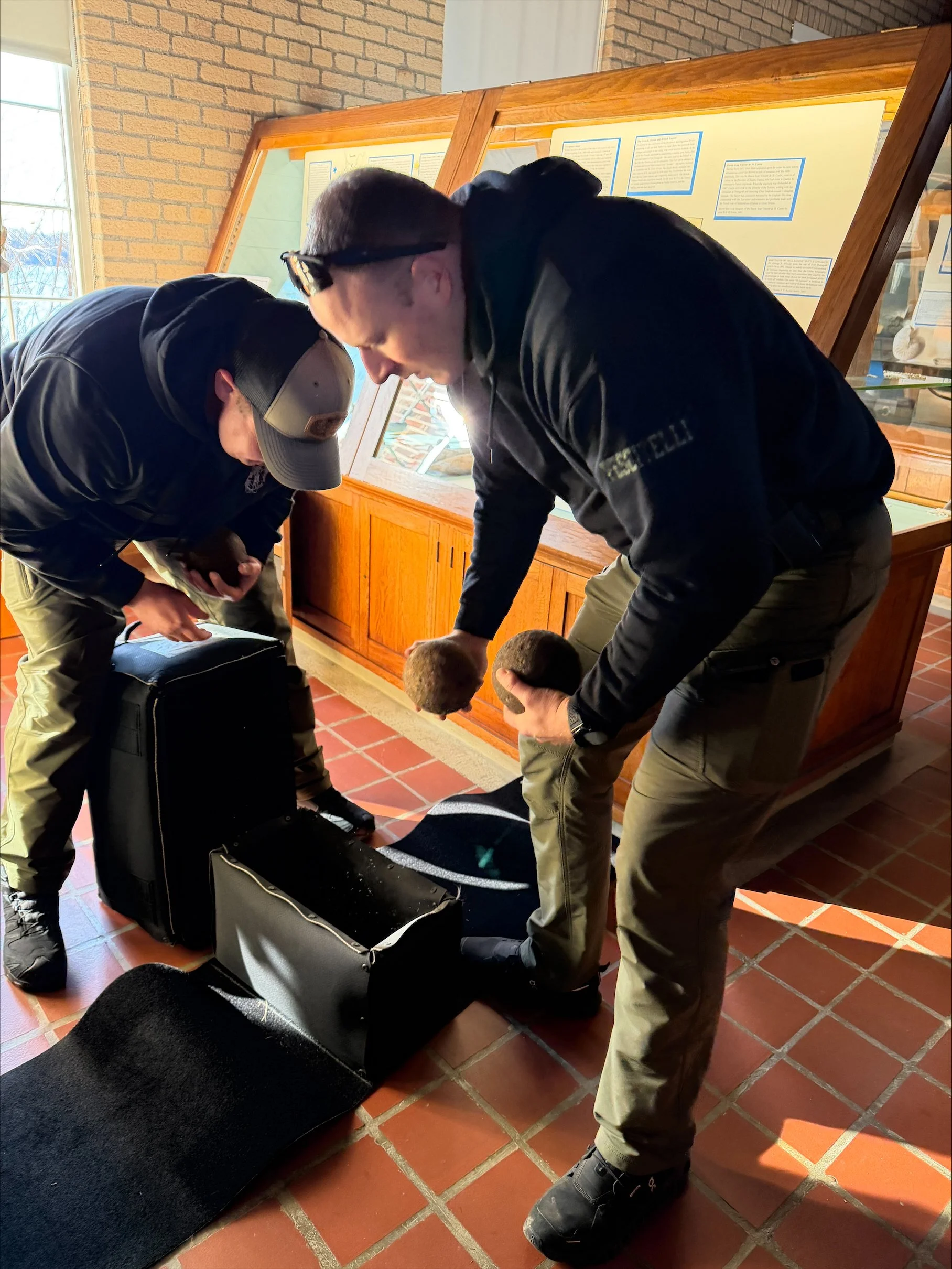
Maine State Police Sgt. Patrick Pescitelli, the state’s bomb squad leader, loads two cannonballs into a case for transport to a secure testing site. Photo courtesy of the Wilson Museum.
By John Epstein
CASTINE–It’s a good thing that Kate McMahon, Castine Historical Society’s executive director, keeps up with the news about historic sites in the Washington, DC area, where she previously curated exhibits for the Smithsonian.
Just before Thanksgiving, she read that Baltimore’s Ft. McHenry, the battle site that inspired Francis Scott Key to write the national anthem, had to be closed down because construction workers had uncovered unexploded cannonballs.
“I asked Jules Thomson, our collection manager, if we have cannonballs in our collection,” McMahon said. “And Jules said, ‘We do;’ then she went downstairs to our storage room to check.”
Live cannonballs?
Thomson located a couple dozen cannonballs of varying sizes dating back to the American Revolution and the War of 1812, when Castine was the backdrop to bloody sea and land battles between the colonists and British naval and army forces. Included in the collection were three 11-inch mortar shells that had plugs or seams–indicating possible explosive content–as well as many smaller shells, some nearly 250 years old.
McMahon and her staff contacted the Maine State Police bomb squad.
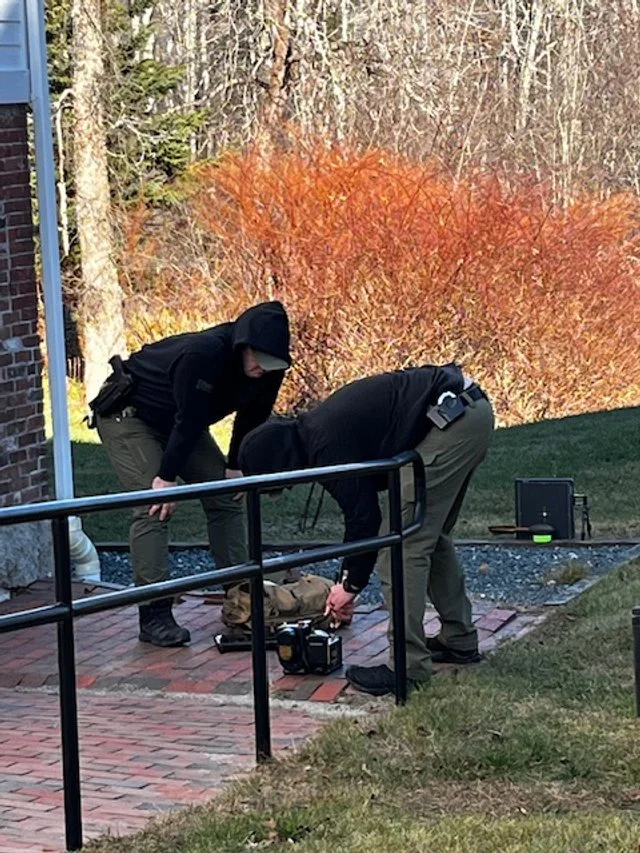
Outside the Castine Historical Society building, Maine state bomb squad technicians use portable X-ray equipment to examine cannonballs from the collection. Photo courtesy of the Castine Historical Society.
They wanted to come and look at all the cannonballs,” McMahon said. “We also contacted the Wilson Museum because they have cannonballs in their collection.” The Castine Historical Society also alerted the principal of the Adams School and the town office.
After getting a heads up from the historical society, the Wilson Museum’s director, Julia Gray, and collection manager Abby Dunham also called the state bomb squad. The reason: In their collections, both on display and in storage, were another two dozen cannonballs.
“They ranged in size from 3 inches to 10 inches,” Gray said.
On Dec. 1, the Maine State Police bomb squad led by Sgt. Patrick Pescitelli,along with state fire marshals, came to Castine to examine the cannonballs at both the historical society building and the Wilson Museum.
Bomb squad encounters 50 cannonballs
Arriving in a large steel-clad vehicle loaded with testing equipment, the bomb squad gathered some two dozen cannonballs from the historical society’s storage room and took them outside of the building. Using specialized field X-ray equipment, the officers determined if each piece of ordnance could potentially carry a charge of gunpowder. Preliminary analysis showed that two of the cannonballs were solid iron, so they were returned to the historical society’s storage room. The rest were loaded into the truck for testing in a secure area.
The bomb squad also similarly examined and retrieved the Wilson Museum cannonball collection which also numbered approximately two dozen. One large, slightly fractured cannonball was left at the museum along with a few small three-inch solid shot balls.
“In all, we examined 50 cannonballs, and as far as I know, that’s a Maine record,” said Pescitelli, the bomb squad sergeant, in a telephone interview with The Rising Tide. The state trooper said that old gunpowder in cannonballs and similar ammunition can either be inert or highly reactive.
“It’s possible that an old cannonball can explode if subjected to heat or sudden shock,” he said. “So if you discover one, don’t assume that it’s safe,” he said.
Pescitelli said the bomb squad will test old ordnance in an open area where there’s no danger of harming people or structures. His team also uses a military disposal facility in northern Maine.
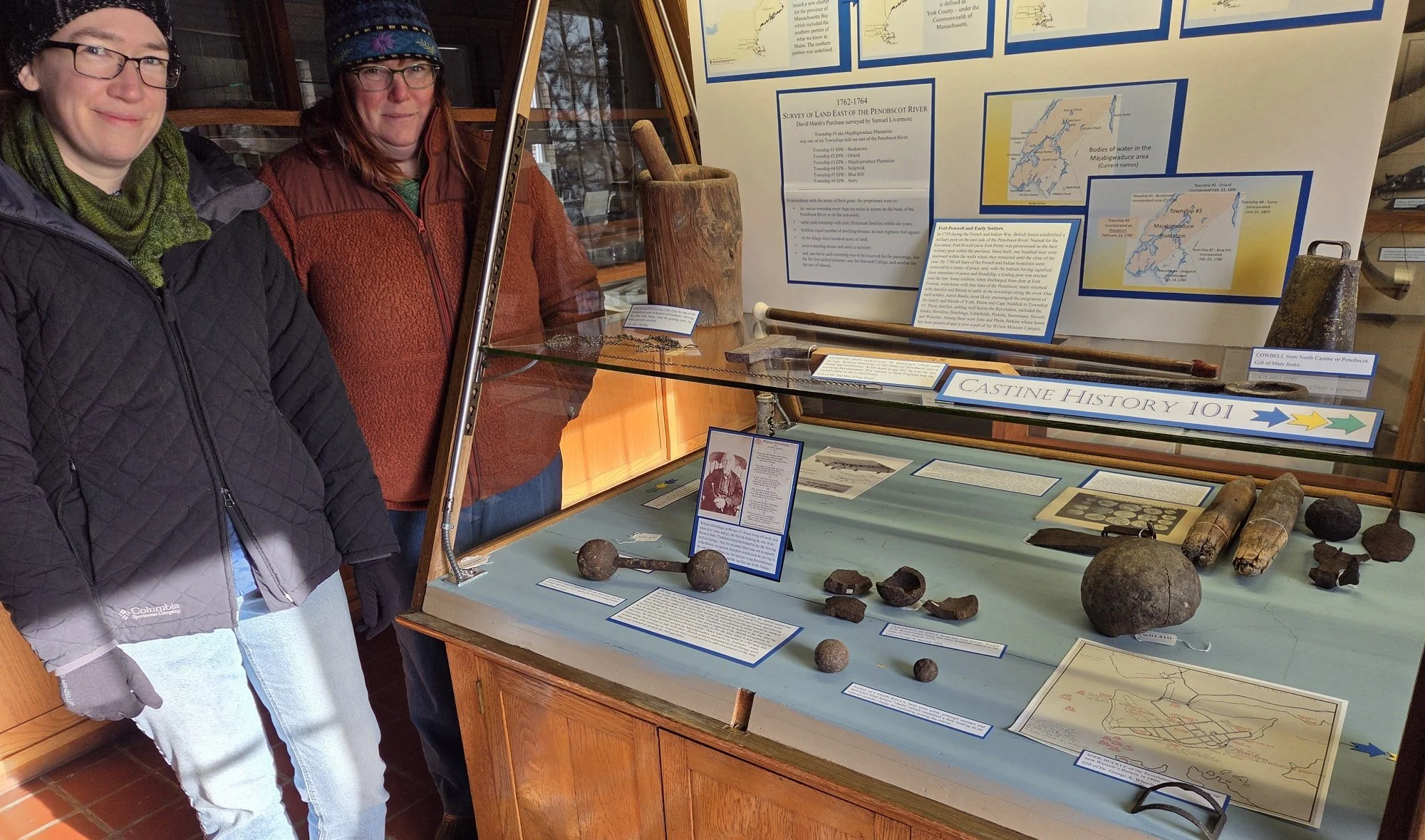
Abby Dunham, the Wilson Museum's collection manager (left) and Julia Gray, the museum’s executive director, stand beside what currently remains of the museum's cannonball collection, including a large cannonball, shell fragments, small cannon shot, and a dumbbell-shaped cannon shot used to cut through ships’ rigging during sea battles. Photo by John Epstein.
It’s likely there are more cannonballs out there
Neither the Castine Historical Society, nor the Wilson Museum can identify precisely who donated all the cannonballs in their collections. But it’s believed that at least one of the cannonballs in the Castine Historical Society collection was donated by Dr. Gardiner Gregory, who was a local history buff who had accumulated a large hoard of artifacts.
“They’ve been brought in since the museum was founded in the 1920’s and the last one we got was about 10 years ago,” said Wilson Museum director Gray, who believes some of the old ordnance came from old battle sites at Fort George and Nautilus Island.
“You can stick a shovel in the ground around here and come up with a cannon ball,” McMahon said. “They came from farmers, fishermen, people working in their yards.”
Both McMahon and Gray would like to have the cannonballs returned, or at least pieces of them, once they have been deemed safe. But in light of the newly understood safety risks, neither director seeks any new additions of antique ammunition.
“We’re good on cannonballs,” Gray said.
