

Dark Sky Maine to host Star Party on Sept. 12
Learn how to personally minimize light pollution
Sept. 8, 2026
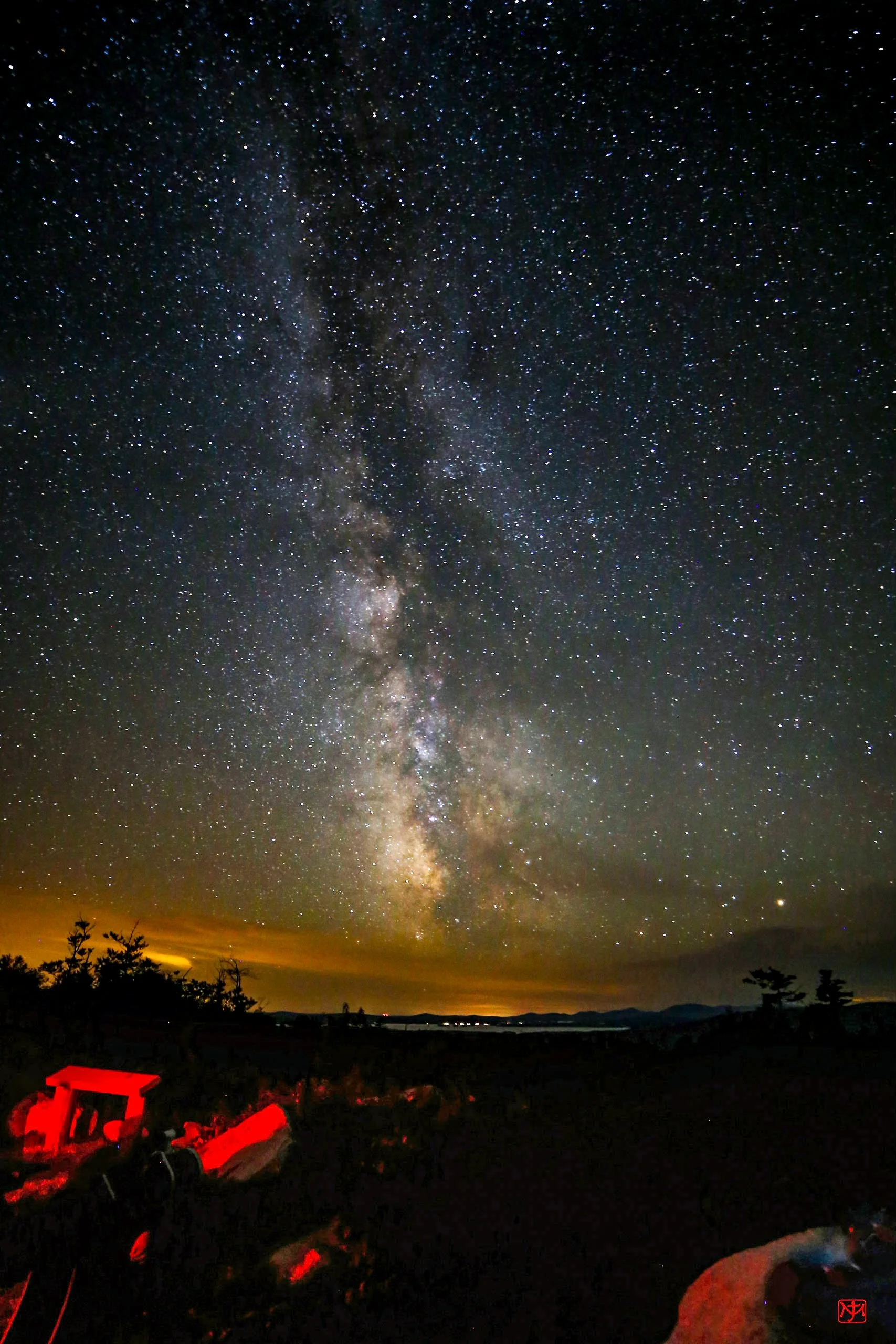
The night sky over Katahdin Woods and Waters National Monument, a dark sky sanctuary. Photo courtesy of John Meader Photography.
By Annie Means
BROOKLIN—Dark Sky Maine will host its Star Party on Saturday, Sept. 12 beginning at 4 p.m. at Flye Point in Brooklin. The event will bring the community together to celebrate Maine’s dark skies and bright stars.
A nonprofit organization dedicated to minimizing light pollution in the state, Dark Sky Maine is preparing for a lineup of evening events, including a solar telescope viewing, live music from the Loose Cannon Jug Band, food trucks, wood-fired pizza, talks with astronomers, fireside educational chats, a dance and more.
“I hope the community leaves the event with an appreciation of the night sky and how light affects that night sky,” Nancy Hathaway said, the event organizer and president and founder of Dark Sky Maine.
Light pollution refers to the human-made alteration of outdoor light levels—the glow of a city, street lights, or anything that emits light—which can dull the eye’s ability to see the constellations.
Scientists and stargazers alike can measure light pollution and the darkness of skies using something called the Bortle Scale, a nine-level numeric scale that measures the night sky’s brightness based on the visibility of celestial objects.
Dark skies, and having a system to measure them, are important for a variety of reasons, Hathaway said. Nocturnal wildlife such as birds, bats, and pollinators, depend on natural darkness. For example, artificial light disorients migratory birds and misleads sea turtle hatchlings away from the ocean.
Humans likewise benefit from dark skies, as overexposure to unnatural light disrupts circadian rhythms and sleep cycles. Poorly aimed lighting – lighting that shines up into the sky – also wastes energy and money.
“Light pollution is a very different kind of pollution in that it can be addressed immediately,” Hathaway said.
Hathaway came to this work naturally. She is a tenth-generation Mainer who took to stargazing at a young age.
“One night I got out of my car and looked up. The sky was so black and the stars were so bright that it was just this awe moment,” she said.
She co-founded Stars Over Katahdin, a star party now in its 13th year, that has brought together astronomers sharing their love of the night sky with the public. Hathaway was also the driving force behind Katahdin Woods and Waters National Monument’s designation as a Dark Sky Sanctuary.
The International Dark Sky Places program certifies Dark Sky Sanctuaries, communities, parks, and protected areas around the world that preserve and protect dark skies through responsible lighting policies and public education. To date, 86,000 acres of Maine's forestland earned that designation.
“After that I thought, why stop here? Why not save all the stars in Maine?” Hathaway said.
From there, she and her team developed Dark Sky Maine.
Beyond hosting star parties, the organization also advocates for light-conscious policy, notably championing the passage of LD 1934, a bipartisan bill in the Maine Legislature that promotes responsible outdoor lighting. The bill requires that outdoor lighting installed or replaced after Oct. 1, 2026, meet certain standards so it does not unnecessarily brighten the night sky when used for particular purposes or in particular settings.
“The best thing to do is to have a fixture that shields the lightbulb so things don’t go up into the night sky,” Hathaway said.
Dark Sky Maine also hosts virtual star parties and connects astronomers with the public for educational talks.
To learn more about Dark Sky Maine and to attend the Star Party, visit Dark Sky Maine’s website.
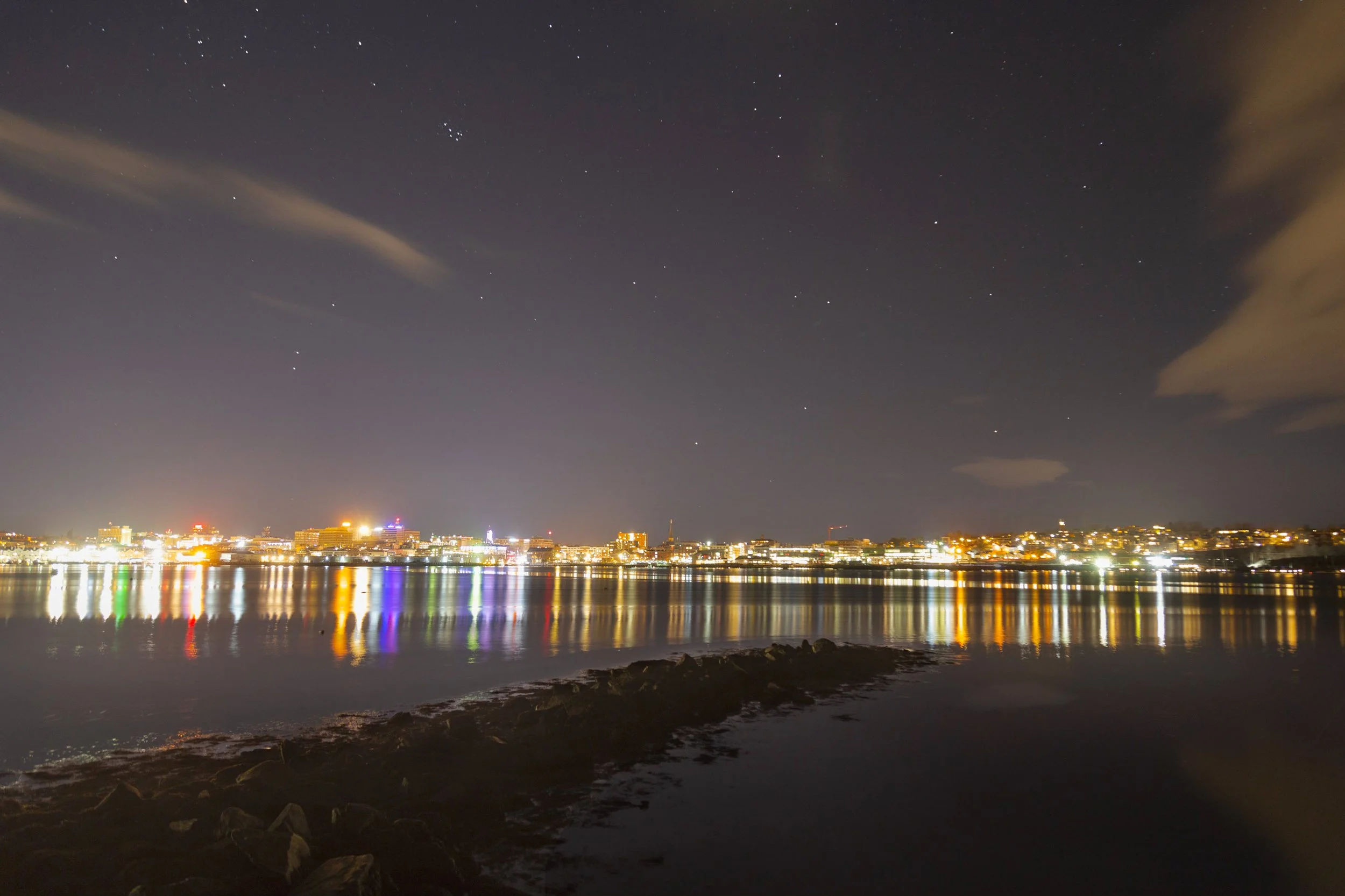
The night sky over Portland. Photo courtesy of John Meader Photography.
