

MMA approves nuclear engineering technology major
Trustees suspend PEO and oceanography programs, environmental science on probation
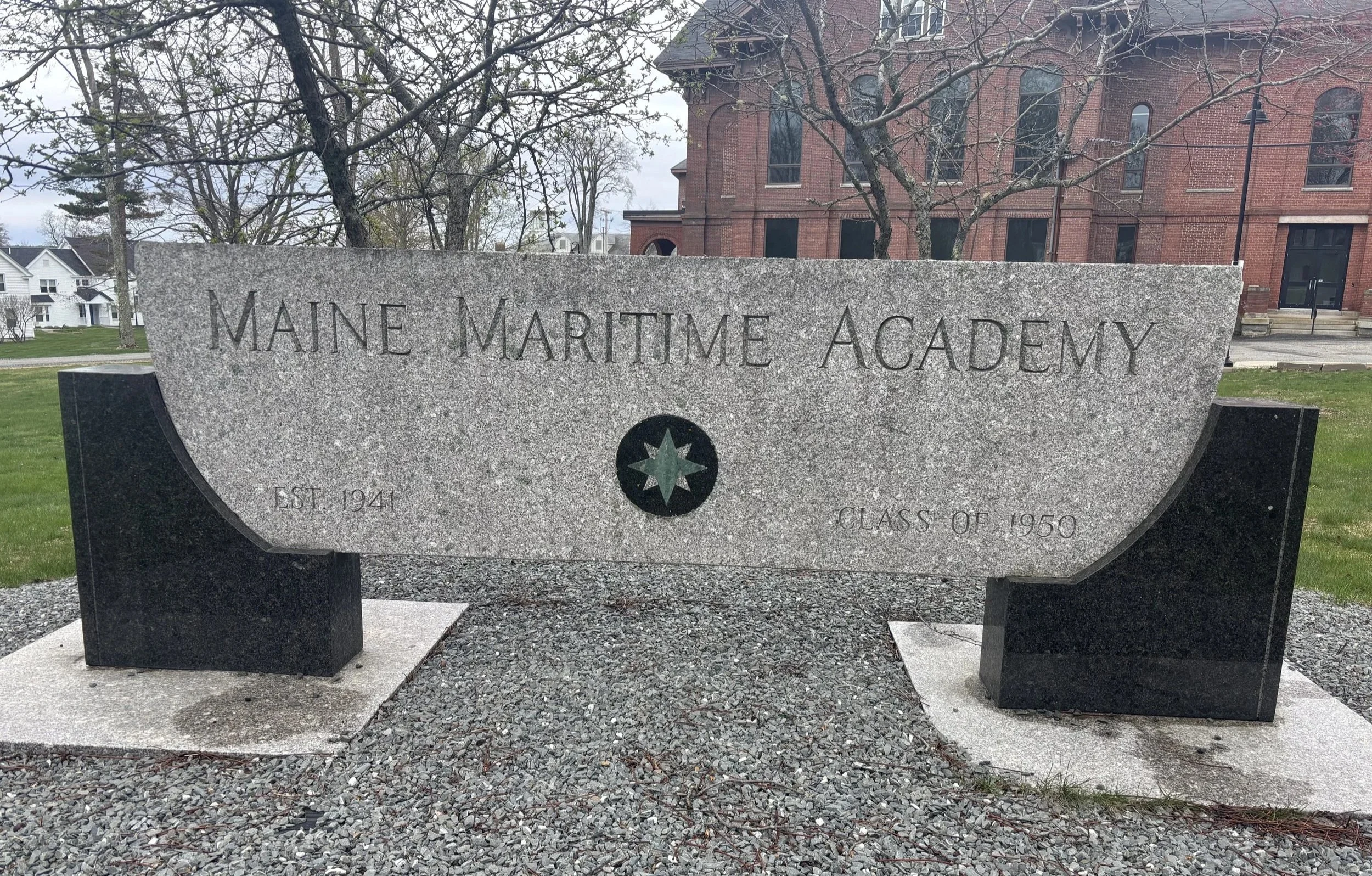
MMA will be the first maritime institution in the country to offer the NET major, officials say. File photo.
May 13, 2026
By Emily Baer
CASTINE–Maine Maritime Academy’s board of trustees voted to establish a nuclear engineering technology major during its meeting on May 1. The decision follows the reintroduction of a nuclear engineering technology minor last year, a $1 million grant from the U.S. Department of Energy to support the program and a $1.5 gift from alumnus Guy E. Mossman to establish the endowed chair of nuclear and reliability engineering.
MMA will be the first maritime institution in the country to offer the NET major. The program will launch officially in fall 2027 but Alaina Adams, chair of the educational policy committee, said during the meeting that there had already been “good momentum internally for the program.”
David Markow, vice president for enrollment management, admissions and financial aid, said his team has already seen “a really strong response” to the program during recent admissions events.
“During our open house [the nuclear engineering technology session] was basically standing room only,” Markow said about the informational session about the program.
The board also voted on to close the associate of science small craft design and associate of science small craft systems programs, both partnerships with the Landing School, due to low enrollment.
The board voted to close the power engineering operations program, again due to low enrollment.
“With this, there will be a teach out. We will no longer be accepting new students into the program [into PEO but] we will teach out the students that are currently enrolled for no more than four years,” Adams said. “There is no impact to faculty.”
The board voted to suspend the oceanography program. Like the other programs discussed during the meeting, the oceanography program has had “low enrollment for many years now,” Adams said.
“What that means is that we will not take in any new enrollees,” Adams said. “And again, we will teach our current enrollees. And, there is no impact to faculty members with this resolution.”
“So the reason we took the word 'suspension' [...] was to ensure that it would especially retract to not take any retrenchment,” academy president Craig Johnson said. “We're trying to stay away from retrenchment [...] and try to work with the faculty to grow other programs.
The academy’s admissions team will work with students who had been accepted into the PEO and oceanography programs for the fall to try to “convert” them to another program, Johnson said.
The terms of the suspension were not specified.
The board also voted to put the coastal marine and environmental science program on probation.
“This is a program where enrollment has been struggling, but we to give [it] the opportunity to see if we can increase enrollment [and] put together a success plan for [it],” Adama said, adding that the trustees would work with the department to develop “a process for what a probation period looks like and how [MMA] can increase enrollment over time.”
“We are not saying we're going to suspend this program. We're not saying we're canceling the program,” Adams said.
Faculty representative Stephen Baer, associate professor of marine science, asked the board to consider adding “clear definitions and commitments” to the probation, saying that “faculty in the [ocean studies] department are concerned about being potentially held responsible for enrollment [which is outside of] faculty scope of work and expertise.”
During the probationary period, the program will “develop and implement a program success plan to be approved by the provost and the Board of Trustees,” and the institution will provide support to the department throughout the process, the board said.