

New recycling approach will save transfer station thousands of dollars each month, manager says
A new recycling model will increase the level of municipal solid waste diverted from landfills from the typical 10-30 percent to over 50 percent. Photo by Steele Hays.
Nov. 2, 2026
By Steele Hays
SURRY–The Blue Hill-Surry Transfer Station has made major changes this month in how it receives and handles solid waste – changes that make it easier for users to dispose of their waste and that will save taxpayers money, according to transfer station manager Mike Laursen.
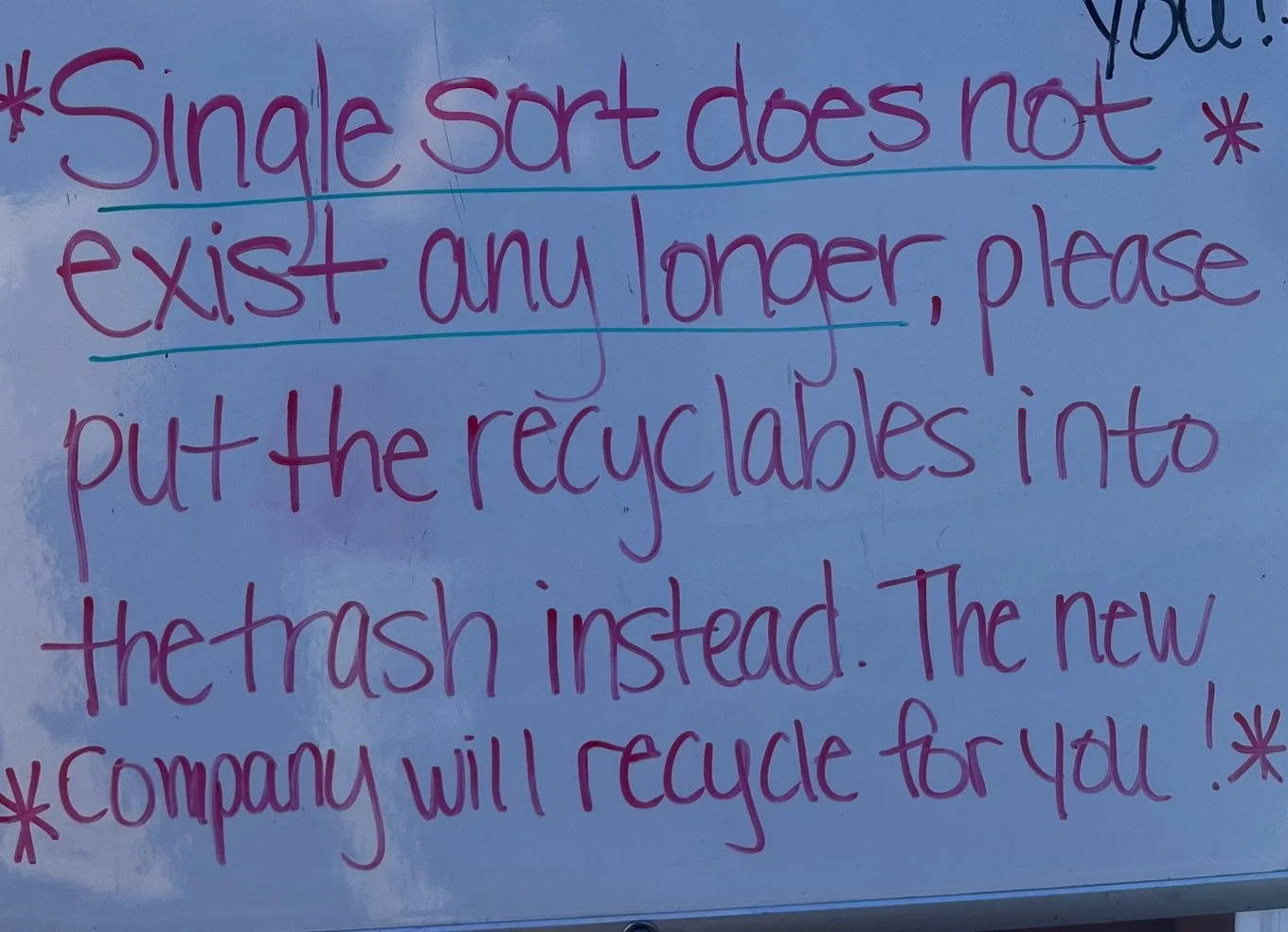
The changes went into effect in mid-October. Transfer Station users are now instructed to put all their trash into the compactors – except for corrugated cardboard and clean glass bottles and jars. The single-sort recycling canister is no longer open. Redeemable bottles and cans are still accepted separately as long as they are bagged.
These changes have been planned since early this year, as reported in April by The Rising Tide.
For years, residents have been dutifully separating their recyclable plastics, metal cans, and clean paper from household trash and placing the material into a designated trucking container. Now they don’t have to.
The changes have been enabled by the expanded operating capacity of Municipal WasteHub’s next-generation recycling plant in Hampden, which uses a range of sophisticated technologies to sort and process solid waste into separate streams. Organic materials like paper and food waste are extracted and decomposed into natural gas, and some recyclable materials like metal are recovered.
In an April interview with The Rising Tide, Municipal WasteHub’s chief executive officer Michael Carroll said, “We are going to extract every piece of fiber to be made into gas. So that is like your paper towel, your paper plate. And those are things you would not put in your normal recycling bin.”
Municipal WasteHub is a nonprofit organization with 115 Maine towns as members. It operates the Hampton facility in a partnership with a private company, Innovative Resource Recovery. The plant has been gradually ramping up its capacity this year and is now processing 400 to 500 tons of waste each month, according to Municipal WasteHub’s most recent e-newsletter.
Municipal WasteHub recently released a three-minute video providing a visual tour and explanation of how their recycling plant operates.
This method of recycling will increase the level of municipal solid waste diverted from landfills from the typical 10-30 percent to over 50 percent, according to Maine WasteHub.
Achieving a 50 percent level of recycling has been a goal of Maine’s state government since 1989, but progress towards reaching that level has been slow and sporadic. The most recent state-issued progress report said the statewide recycling level was 35.99 percent in 2024, and in several years during the previous decade, the annual rates fell. Reducing the volume of solid waste sent to landfills is critical due to the dwindling amount of available landfill space and the high cost of transporting waste.
The Hampden facility was formerly operated by a firm called Fiberight, but after a brief start-up period, it shut down in 2020 due to financial and operating challenges.
Laursen, the transfer station manager, estimated that the new approach will save roughly $2,000 to $4,000 per month.
Previously, the station has paid a company $2,000 per truckload to haul away the single-sort recycled items. During peak summer months, users have generated two truckloads per month. During non-peak months, volume averages roughly one truckload per month, Laursen said. By combining virtually all recycled materials with other waste into a single stream going to the Hampden plant, those costs will be cut, he said.
D. Scott Miller, a member of the Blue Hill Select Board and the Solid Waste Committee, said he is “optimistic.”
“I think it will work,” he said in an interview. “I think the Municipal WasteHub people understand the mishaps of the past. It’s good for the environment, and there are some real savings there [for the transfer station].”
