

CANCELLED: Controlled burn for Wallamatogus Mountain on April 28
Maine Forest Service to manage burn of blueberry fields
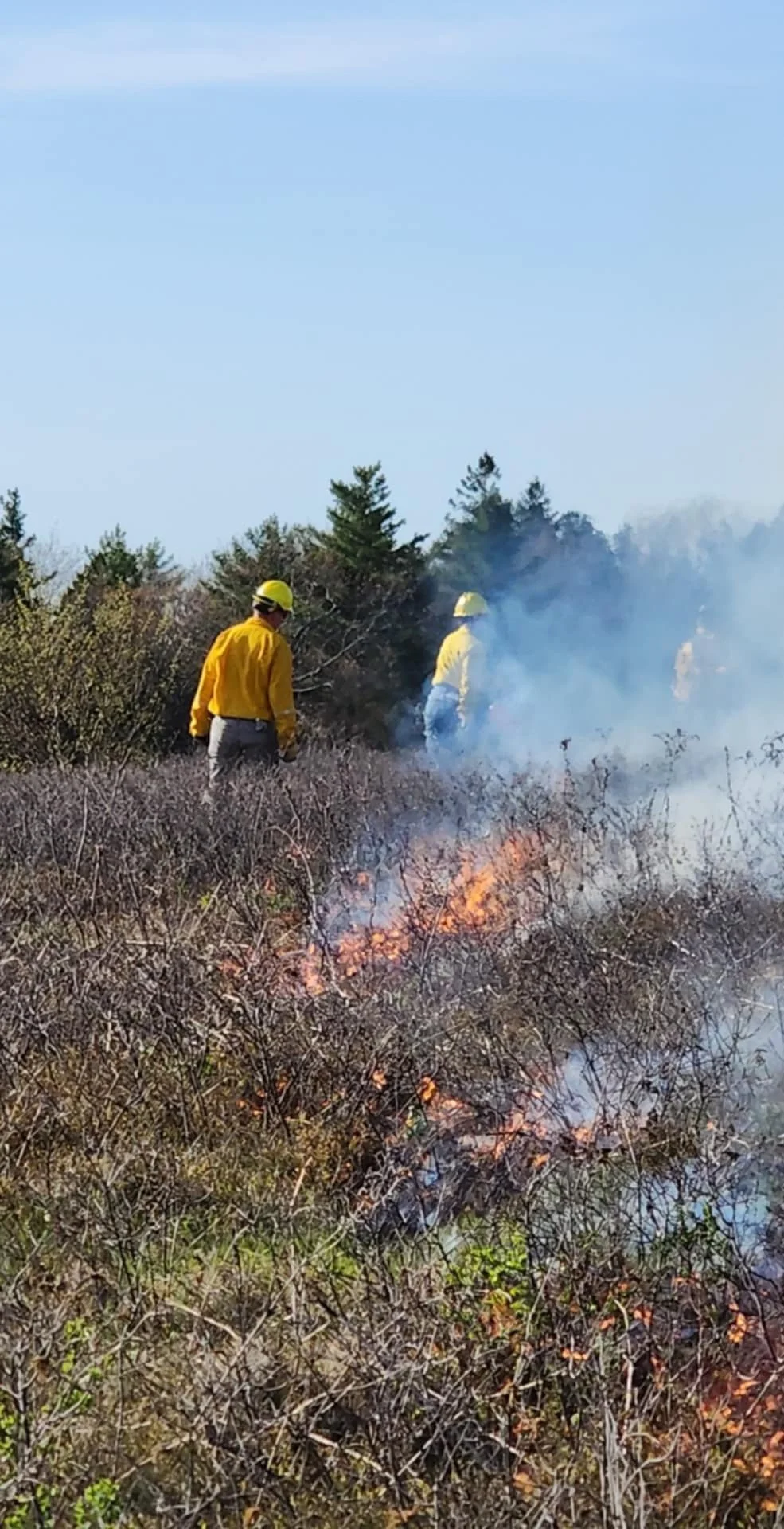
Firefighters will manage a controlled burn on Wallamatogus in Penobscot, similar to the one seen here at Caterpillar Hill in Sedgwick in this undated photo. Photo courtesy of Emily Andrew/BHHT.
Editor’s note: According to Blue Hill Heritage Trust, this burn was cancelled for April 28. We will provide more information about a future burn as it becomes available.
April 27, 2026
By staff
PENOBSCOT—If you see a column of smoke over Wallamatogus Mountain in Penobscot on Tuesday, April 28, there’s no need for concern. It’s all part of a controlled burn to manage the open blueberry barrens on the mountain’s southern-facing slope.
In partnership with the Maine Forest Service, Blue Hill Heritage Trust, the organization that owns much of the mountain, will be conducting the burn. Local volunteer firefighters will assist in the effort. The entire Penobscot Community Forest, as the area is now called, will be closed to all hikers and visitors.
Wallamatogus was bought in 2021 by the Conservation Trust to hold the 336-acre property while BHHT raised more than $1 million needed for the acquisition. BHHT raised the funds and became the property owner in 2023, ensuring it would forever remain open to the public. It had perviously been owned, managed and cultivated by W.R. Allen, a major family-owned Maine blueberry company.
The mountain, referred to locally as simply “Togus,” has sweeping views of Penobscot Bay, nearby coastal islands, and the Bagaduce River watershed. Its fields provide important habitat for upland sandpipers and vesper sparrows, two species in decline in Maine. There are also large areas of forest and wetlands around the field with a diverse range of habitat, including deer, bear and the occasional moose.
Burning blueberry land has long been used as a way to keep fields from turning into forests, while improving the health and yield of blueberry crops.
BHHT was founded in 1985 by residents of the Blue Hill Peninsula. Since then, it has conserved more than 12,000 acres on the Blue Hill peninsula.
