

King aims for a Maine with the ‘best workforce in America’
Gubernatorial candidate calls for a ‘birth-to-work strategy,’ with a plan for every graduate
EDITOR’S NOTE: The Rising Tide has asked all gubernatorial candidates to complete the following questionnaire. The Rising Tide will publish responses of candidates when received. These profiles are not paid advertisements. They are offered purely as a voter education tool. The Rising Tide does not endorse candidates for any office.
Below are responses from Democrat candidate Angus King III. The primary is June 9.
June 2, 2026
1. Background
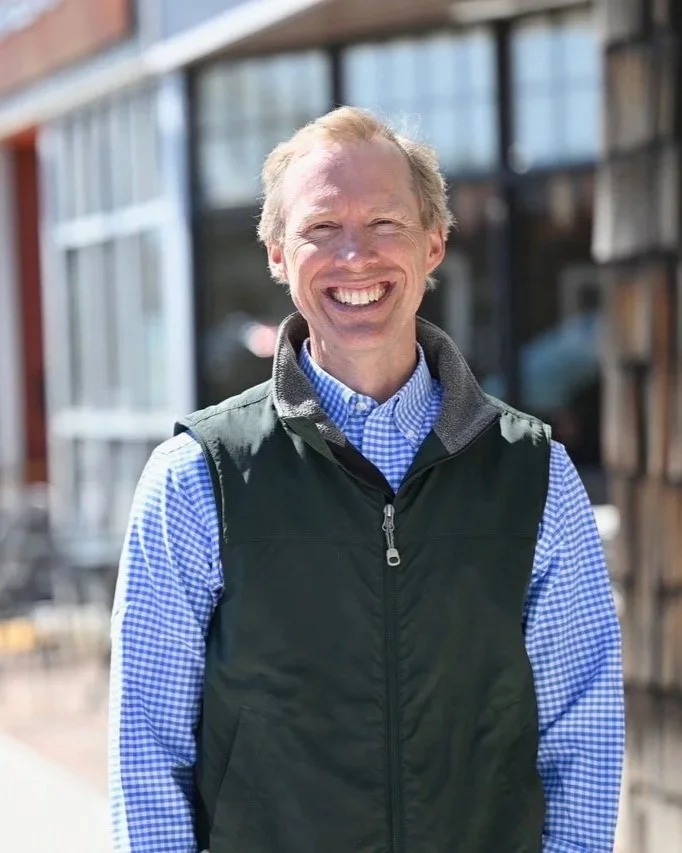
Angus King III is calling for stronger education and less friction for businesses. File photo.
Tell us about your background: Where did you grow up and where did you go to school? Tell us about your career (or careers). Why do you want to be governor, and how have your past experiences prepared you for this role?
After growing up in Topsham and going to Dartmouth for college, I worked in the Clinton White House. From there, I spent most of my career leading efforts to build public goods like housing and clean energy, and I saw how politics and policy often ran counter to the very things we need the most. I’m running because life has become too hard for too many people here in Maine, and our politics often feels too broken to help make a difference. Division has overwhelmed direction, leaving Mainers behind and wondering why it’s so hard to get anything done. At the same time, life has become too expensive for too many here—housing, energy, healthcare—and wages simply haven’t kept up. I know we can do better.
I haven’t spent my life in Augusta debating policy or drafting reports, I’ve spent it shaping the real world, building things that solve problems and help people, taking on the real challenges our state faces today. I have built affordable housing that was actually affordable, created wind and solar projects both here and around the world and in Clinton Maine, I turned cow manure into clean energy that is heating homes and creating good paying jobs. And I’ve done it all by bringing people together, innovating, knowing how to get things done, and being accountable for the dollars and results. I’ve built housing and companies, created clean energy and good jobs. That’s not the ordinary path, but this isn’t an ordinary moment, and we need to think differently to get things back on track.
2. Housing and Affordability
Maine faces rising housing costs, increasing property taxes and a shortage of workforce housing. What specific policies would you pursue in your first two years to make Maine more affordable for working families, young people and seniors?
Maine families are feeling squeezed by rising housing costs, high energy bills, increasing property taxes, and the growing cost of healthcare. Making Maine more affordable will be one of my top priorities from day one.
First, we need to build more housing. That means removing barriers to construction, supporting workforce housing like the Domus project that just broke ground in Freeport, and helping communities create the homes needed for young families, workers, and seniors. We need to streamline permitting, grow our skilled trades workforce, lean in on innovation, and act with more urgency, accountability and coordination at the state level to get more housing built. I’ve built homes for thousands of people, and I know we can do better.
Second, we need to bring energy costs under control by reducing the barriers to building low-cost renewables, changing our utility model so that efficiency and lower costs are prioritized for utilities, and making sure Maine ratepayers get a better deal when it comes to energy projects and procurement in Maine.
Third, we need to strengthen our workforce by ensuring every student graduates with a clear path to a career, college, an apprenticeship, or job training, restoring the dignity of work if college is not the chosen path.
We also need a government that is responsive, predictable, transparent and focused on results—making it easier to create jobs and invest in Maine communities. Speed is a signal, and we should think in decades but respond in days.
Finally, we must stabilize our healthcare system and improve access to affordable care, particularly in rural Maine. Let’s focus on public health and incentivize preventative and primary care so we get better health outcomes and lower costs for all Mainers.
My goal is simple: make Maine a place where young people can afford to stay, families can get ahead, and seniors can retire with dignity.
3. Rural Maine
Many rural communities are struggling with aging populations, school enrollment declines, workforce shortages and limited access to health care. What is your long-term vision for rural Maine, and how would your administration help small towns remain economically and socially viable? What specifically will you do for rural Maine?
Maine’s greatest economic advantage is what we already have: a great workforce, working forests, a world-class coastline, productive farmland, clean water, and a quality of life people increasingly seek out. In towns like Presque Isle or Skowhegan, there are great leaders who are investing in their towns, creating good jobs, and building up the community they share.
Rural development starts by building on those strengths. That means growing advanced forest products, ocean and marine industries, life sciences, and clean energy—sectors where Maine has a natural competitive edge and already has momentum. It also means supporting the innovators, the small businesses, the connectors who are building up community and making a difference for their neighbors.
The state’s role is to help these people and industries grow through smart investment, efficient permitting, and workforce pipelines that connect Mainers to good-paying jobs. My career has focused on turning natural assets into economic opportunity, and that’s the approach I’ll bring to Augusta.
4. Education and Workforce Development
Maine has slipped dramatically in delivery of quality education, and now ranks in the bottom 10 states in the nation. What is your plan to reverse this trend?
Maine should have the best-educated, best-trained workforce in America. To get there, we need a birth-to-work strategy that starts with strong early education and ends with clear pathways to careers.
First, we need shared accountability—parents, teachers, communities, businesses, and state government all working toward measurable goals. Every child should be reading by the end of third grade, and we all need to commit to making that happen for our future.
Second, we need to make classrooms places for learning again by limiting cell phone distractions and giving teachers the training, support, and career opportunities they deserve. We also need to support mental health care for kids who are struggling, so that teachers are freed up to teach.
Finally, every student should graduate with a plan—whether that’s college, an apprenticeship, job training, military service, or a career. We need stronger workforce partnerships and more hands-on training so every young Mainer is prepared for success, regardless of their chosen path. Aligning business needs with our high school and college programs so that kids know what opportunities are available and are prepared to take on those jobs will help our economy and our kids’ future.
5. Energy
Maine has some of the highest electricity rates in the nation. What is your plan to reduce electricity rates, and will you promise to lower it by a certain amount?
Maine families and businesses deserve affordable, reliable energy. We can stop runaway rate increases and begin bringing costs down by focusing on efficiency, accountability, and better deals for ratepayers.
That means changing the incentives for utilities, away from more spending and toward more efficient use of the grid and lower costs; investing in energy efficiency, streamlining permitting and interconnection so that new renewable energy is less expensive, and modernizing our grid to reduce long-term costs. We should make every energy decision with one question in mind: does it lower costs and improve reliability for Maine people?
There are innovations taking hold in other states to lower costs, and based on my experience in the energy business, I know we can put them to work here. I won’t make promises based on arbitrary numbers, but I will commit to a clear goal: lowering energy costs by demanding better performance, greater transparency, and a system that works.
6. Economy.
Maine has always struggled with a year-round economy. But seasonal states like Florida are booming, thanks to economic development plans that are business friendly and aim to lower income and property taxes. What’s your plan to spur economic development? Do you have any outside-the-box ideas you’d like to propose?
Maine’s economy will grow when we make it easier to invest, hire, and build here. My goal is simple: higher wages, more opportunity, and a stronger workforce.
First, we need to remove friction. Businesses should be able to get answers quickly and navigate permitting and state processes without unnecessary delays. We need to think in decades but respond in days, because speed sends a signal that Maine welcomes investment and high-wage jobs. We also have to stop changing rules midstream, leaving businesses unsure as to what is required. We should be predictable, transparent, and consider the cumulative impact of every new regulation that is considered.
Second, we need to lean into our small businesses. They are the backbone of Maine’s economy, and state government should treat them like customers we want to attract, support, and retain. When small businesses succeed, they create the good-paying jobs that help Maine families stay and thrive.
Finally, we need to play to Maine’s strengths. That means growing industries where we have a natural advantage—advanced forest products, the marine economy, life sciences, outdoor recreation and clean energy—and bringing more investment and opportunity to rural Maine.
One idea I’d pursue is a “Maine Fast Track” program that gives major job-creating projects a single point of contact so they don’t have to wander through multiple agencies to get started, and set clear timelines for decisions. Businesses don’t expect every answer to be yes, but they do expect an answer, and we should have a single door for any business to walk through so that we support rather than delay the start of someone’s dream. Maine can be both business-friendly and true to our values, and that’s how we’ll build a stronger year-round economy.
7. Trust in Government and Civic Life.
Americans increasingly distrust institutions, including government and the media. What would you do as governor to improve transparency, restore public trust and encourage more civil political dialogue in Maine?
Trust is earned, not demanded. People trust government when it's honest, transparent, and delivers solutions to real problems—not when it scores political points against the other side.
I am running to restore a more civil politics to a state that in the past has been a leader on that front. Elections are about choices, and disagreements are inevitable. But in everything I’ve built, I haven’t spent time trying to tear down the people who disagreed. Instead, I’ve done something harder, sitting down with them and listening and finding a way forward. The challenges facing Maine—housing, energy, affordability, education, healthcare and growing our economy—are too important to be drowned out by division and political theater.
Throughout my career, I've worked with people I disagreed with to solve hard problems. Not because compromise is always easy, but because it's often the only way to make progress. That's the approach I'll bring to public service.
As governor, I would make transparency and accountability a priority. Maine people deserve clear information about how decisions are made, how tax dollars are spent, and whether government is delivering results. We should set measurable goals, report on our progress, and be honest about where we're succeeding and where we need to do better.
Maine has a proud tradition of independence, respect, and neighbor helping neighbor. If we focus on solving problems, listening to one another, and working toward common goals, we can strengthen public trust and build a stronger Maine together. It’s the approach I’ve always taken, and I know that we can restore it to our politics here in Maine.
