

Pingree outlines rural investment and housing industry revitalization
Democrat says she will ‘build a bright economic future for all our communities - but especially our rural ones’
EDITOR’S NOTE: The Rising Tide has asked all gubernatorial candidates to complete the following questionnaire. The Rising Tide will publish responses of candidates when received. These profiles are not paid advertisements. They are offered purely as a voter education tool. The Rising Tide does not endorse candidates for any office.
Below are responses from Democrat candidate Hannah Pingree. The primary is June 9.
June 2, 2026
1. Background
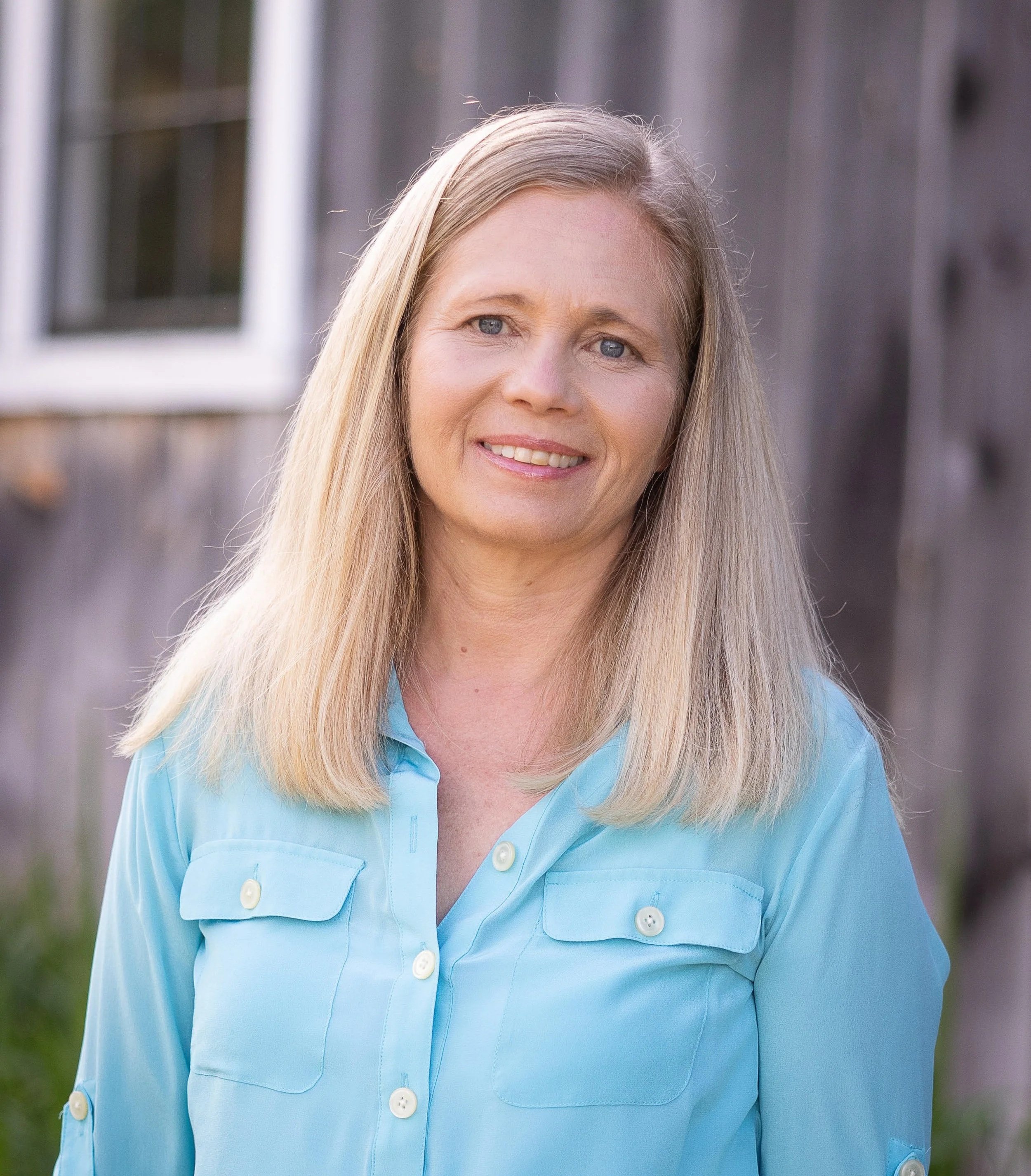
Hannah Pingree. Courtesy photo.
Tell us about your background: Where did you grow up and where did you go to school? Tell us about your career (or careers). Why do you want to be governor, and how have your past experiences prepared you for this role?
I'm a lifelong Mainer, born in Belfast and raised on the island of North Haven. This state has shaped everything about who I am and how I lead. My small community taught me how important it was to engage and work together with your neighbors to solve problems.
My career has taken many forms, all rooted in service and community. I served in the Maine Legislature for eight years representing the islands and many coastal towns of Knox and Hancock County, including Deer Isle, Stonington, Brooklin and Sedgwick. During my time in the legislature I got things done for our communities, serving as both Chair of the Health and Human Services Committee, and as the Speaker of the House. I've run a small business and an island housing organization, chaired my local school board, and most recently directed the Governor's Office of Policy Innovation and the Future, where I helped lead Maine's nationally recognized climate work alongside efforts to expand access to health care and affordable housing.
I want to be governor because I know how to both deliver for Maine people, stand up to a reckless president and I believe in our state’s future. I’m the mom of two teenage kids, and I think it is a pivotal time for our state to elect leaders who care deeply about solving the challenges our families are facing - from affordability to a changing future.
Every role I've held, whether in the State House, in my community, or in the executive branch, has proven that I know how to bring people together and get things done for Maine families. I know how to make big things happen in government and I know what needs fixing, and as a mom, I know what's at stake. As governor, I’ll fight every day for Maine people and deliver results for our people and communities.
2. Housing and Affordability
Maine faces rising housing costs, increasing property taxes and a shortage of workforce housing. What specific policies would you pursue in your first two years to make Maine more affordable for working families, young people and seniors?
Housing affordability is one of the most urgent challenges facing Maine families, workers, seniors, and young people. Years of underproduction, aging housing stock, and predatory private equity firms treating homes as commodities have driven up costs and pushed Mainers out of their own communities. It's also become an economic problem — employers tell me workers are turning down jobs because they can't find a place to live.
In my first two years, I'll pursue a bold plan built around five priorities. First, investing $100 million a year in developing and preserving homes that are actually affordable to Mainers - including homeownership, rentals and infrastructure to make housing possible. Second, taking on out-of-state corporations and private equity firms that are displacing families and driving up rents. Third, cutting red tape and streamlining permitting so we can build faster and smarter in partnership with communities. Fourth, growing the workforce that builds our homes through apprenticeships, training programs, and tuition-free community college. And fifth, reducing evictions and expanding permanent housing solutions for our most vulnerable residents.
3. Rural Maine
Many rural communities are struggling with aging populations, school enrollment declines, workforce shortages and limited access to health care. What is your long-term vision for rural Maine, and how would your administration help small towns remain economically and socially viable? What specifically will you do for rural Maine?
Rural Maine is not a problem to be managed. It's a place full of potential. My long-term vision is simple: every corner of this state deserves the tools to build a future that works for the people who live there. I’ve got a track record of showing up for our communities - from helping our fishermen protect the working waterfront, to deploying broadband that connects our communities.
I've run a small business and spent years navigating the state government from the inside. I know firsthand how broken and frustrating those systems can be, especially for small business owners and rural communities. As governor, I'm going to fix that.
Specifically, I'll launch a Rural Opportunities and Growth Partnership to drive targeted, locally led investments in downtowns, agriculture, fishing, forest products, and outdoor recreation. I'll create a State Resilience Bank to finance critical infrastructure with a focus on rural and underserved communities. I'll expand rural housing programs so young families and workers actually have a place to land. And I'll make sure every Mainer has reliable broadband and cell service, because you can't grow a business or access health care from a dead zone.
For small businesses, I'll build a true one-stop shop to cut red tape, expand lending tools, and put real business expertise within reach of small firms that can't afford full-time staff.
Rural Maine has watched jobs leave, young people move away, and the state government has felt distant for too long. My administration will work with renewed focus to build a bright economic future for all our communities - but especially our rural ones.
4. Education and Workforce Development
Maine has slipped dramatically in delivery of quality education, and now ranks in the bottom 10 states in the nation. What is your plan to reverse this trend?
As a product of Maine's public schools, a mom of two kids in a small rural school, and a former nine-year school board member and chair, this is personal for me. Maine's slide toward the bottom in education outcomes is not acceptable and reversing it is a top priority.
The foundation has to be literacy and numeracy. I'll invest in high-quality instruction, early literacy, evidence-based math education, and stronger teacher training so every child builds the core skills they need before anything else.
But academics alone aren't enough. Our kids are facing unprecedented mental health challenges and distractions. I'll expand School-Based Health Centers to keep students healthy and ready to learn, build on Maine's cell phone policy by taking a hard look at classroom screen use, and grow Career and Technical Education starting in middle school so students see a real connection between school and their future.
We also can't keep pitting education quality against property tax relief at the local level. I'll maintain Maine's historic 55% state funding commitment and push further to give communities the tools they need without forcing impossible local budget choices.
And we need to be honest about teacher pay. We will not attract and keep great educators without paying them competitive wages. Strong schools start with supporting the people who run them.
Maine graduates about 12,000 students a year. Every single one of them deserves to be ready for what comes next.
5. Energy
Maine has some of the highest electricity rates in the nation. What is your plan to reduce electricity rates, and will you promise to lower it by a certain amount?
Maine's electricity rates are too high and families and businesses are feeling it. I won't make a promise of a specific number because anyone who does is not being straight with you about investor-owned utilities, but I will tell you exactly what I'll do and hold myself accountable to results.
First, I'll hold utilities accountable in ways they haven't been before. That means tying utility profits to lower bills and better performance, opposing unjustified rate hikes from CMP and Versant, and requiring the Public Utilities Commission to actually penalize poor service and reject rate increases that aren't justified.
Second, I'll accelerate homegrown clean energy and invest in energy efficiency. Maine is still too dependent on costly imported fossil fuels. By using competitive auctions to rapidly deploy local solar, wind, and energy storage, we reduce that dependence and bring costs down. I'll also modernize permitting so clean energy gets built and connected faster.
Third, I'll protect ratepayers from speculative AI data centers that threaten to drive up costs for everyone else. I'll push for a moratorium until we can guarantee those projects pay their own way and don't burden Maine households.
And I'll target real relief to moderate and low-income families through expanded heat pump, efficiency, and local solar programs so the benefits of cleaner energy reach everyone, not just those who can afford it.
Electricity is a basic necessity. My administration will treat it that way.
6. Economy.
Maine has always struggled with a year-round economy. But seasonal states like Florida are booming, thanks to economic development plans that are business friendly and aim to lower income and property taxes. What’s your plan to spur economic development? Do you have any outside-the-box ideas you’d like to propose?
Maine doesn't need to become Florida. We need to become the best version of Maine and that means building on what makes us unique while aggressively growing the industries of the future.
Our heritage sectors, food, forestry, fishing, and the ocean economy, have powered this state for generations. I'll reinvest in them by helping businesses modernize, develop higher-value products, and keep more wealth here in Maine rather than exporting raw commodities. I'll also expand tools that help family businesses pass to the next generation instead of being sold off.
At the same time, Maine is already the fastest growing clean energy economy in New England. I'll build on that by investing in life sciences, advanced manufacturing, and clean technology, strengthening the connection between our research institutions and the businesses that can turn great Maine ideas into great Maine jobs.
Here's one outside-the-box idea I'm genuinely excited about: Maine's western hills once had a thriving industrialized housing economy. With our forest resources and emerging construction technologies, I believe Maine can become a national leader in advanced building products, prefabricated and 3D-printed construction solutions that create good manufacturing jobs here while helping solve the regional housing crisis at the same time.
I'll also cut the red tape that slows businesses down, modernize permitting, expand access to capital for startups and rural entrepreneurs, and use state purchasing power to give homegrown Maine innovations an early foothold in the market.
The goal is a year-round economy where opportunity exists in every region, not just along the coast in July.
7. Trust in Government and Civic Life.
Americans increasingly distrust institutions, including government and the media. What would you do as governor to improve transparency, restore public trust and encourage more civil political dialogue in Maine?
Trust in government is not given, it's earned. And right now, too many Mainers feel like government hasn't earned it.
My record shows how I try to govern. Over eight years in the Maine Legislature, including as Speaker of the House, I built a reputation for working across the aisle because I genuinely believe that's how you get things done. I was elected unanimously as Speaker of the House. The issues I fought for, broadband in rural areas, clean energy, lower health care costs, marriage equality, protecting kids from toxic chemicals, didn't happen because I stuck to one side. They happened because I built coalitions.
As governor, I'll bring that same approach. That means being honest with people even when the news isn't good, publishing clear data on how the state government is performing, and making it easier for ordinary Mainers to understand and engage with the decisions being made in Augusta.
Maine has a long tradition of independent, pragmatic governance and I intend to honor that. I'll seek out voices that don't already agree with me, hold regular public forums across the state including in communities that didn't vote for me, and model the kind of dialogue I want to see more of.
Restoring trust isn't a communications strategy, it's my governing philosophy.
