

Bellows envisions ‘housing corps’ to address Maine’s home shortage
Democrat also says she will propose ‘A New Deal For Our Economy’ to lower property taxes on primary residences
EDITOR’S NOTE: The Rising Tide has asked all gubernatorial candidates to complete the following questionnaire. The Rising Tide will publish responses of candidates when received. These profiles are not paid advertisements. They are offered purely as a voter education tool. The Rising Tide does not endorse candidates for any office.
Below are responses from Democrat candidate Shenna Bellows. The primary is June 9.
June 5, 2026
1. Background
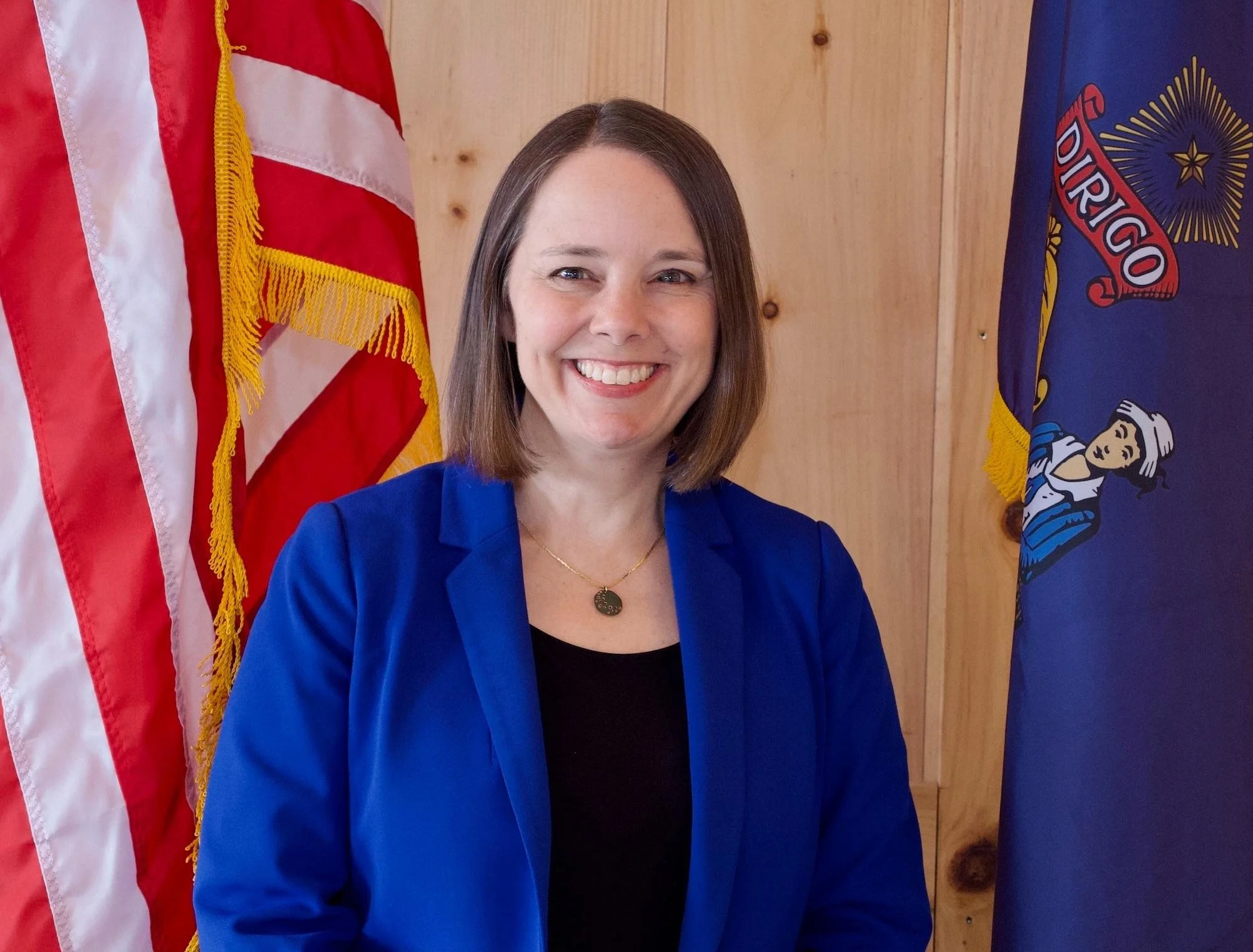
Shenna Bellows. Courtesy photo.
Tell us about your background: Where did you grow up and where did you go to school? Tell us about your career (or careers). Why do you want to be governor, and how have your past experiences prepared you for this role?
I grew up in Hancock, the daughter of a carpenter and a greenhouse worker (who became a registered nurse in her 50s), without electricity or running water until I was in the fifth grade. After earning a B.A. in International Politics & Economics from Middlebury College, I served as a Peace Corps volunteer in Panama and AmeriCorps VISTA in Nashville before moving back home to Maine to lead the ACLU of Maine from 2005‑2013. At the ACLU of Maine, I helped lead the fight for marriage equality, serving on the executive board of that campaign for seven years. I also led the statewide campaign for same-day voter registration. In 2016, I won a state senate seat in a swing district that voted for Donald Trump and for me. As chair of the Labor & Housing Committee, I helped lead efforts to pass paid time off and paid family medical leave. I sponsored and won passage of key laws to ensure safe drinking water and expansion of school meals including breakfast after the bell. I earned a 100% record from the AFL-CIO. I worked full-time while in the state senate as the Executive Director of the Holocaust and Human Rights Center of Maine. Since 2021 I have served as Maine’s first female Secretary of State, modernizing Maine State Archives, Elections, Corporations and the Bureau of Motor Vehicles and improving the employee and customer experience.
I know the challenges we face are large. Our rights are under attack, our institutions are failing, and too many Mainers are just one emergency away from disaster. We need a bold new vision for what Maine could look like, not just three years from now but 10 or 50 years down the road. That's why I'm proposing A New Deal for Maine. As governor, my mission is to make Maine the most affordable state in the nation — and I have the background to do it: growing up working class in rural Maine, winning and holding a swing district that voted for Trump, and running a large state agency.
2. Housing and Affordability
Maine faces rising housing costs, increasing property taxes and a shortage of workforce housing. What specific policies would you pursue in your first two years to make Maine more affordable for working families, young people and seniors?
Maine is one of the most beautiful places in the world – it’s not a surprise that so many people want to live here. But it’s forced housing prices to be unaffordable and it’s making life untenable for too many of our neighbors. As Maine’s next governor I’m going to:
Expand the housing fund to support construction of new units and rehabilitation of derelict properties to put more housing stock in the market
Create a housing corps modeled after AmeriCorps to pay people to train in the trades and put those skills to use in new home construction and rehabilitation of existing structures to train the next generation of carpenters, electricians and plumbers and help support the highly skilled labor needs of construction projects
Boost investment in the state’s first time homebuyers program to help folks who could afford a mortgage but can’t afford a down payment buy their first home and begin building equity
Lower property taxes for families who live and work in Maine by calling for a moratorium on property taxes for Maine residents paid for by significantly increasing property taxes for non-resident people living out of state.
3. Rural Maine
Many rural communities are struggling with aging populations, school enrollment declines, workforce shortages and limited access to health care. What is your long-term vision for rural Maine, and how would your administration help small towns remain economically and socially viable? What specifically will you do for rural Maine?
Everywhere I've traveled this past year, one issue keeps coming up: what happens to our town when the hospital closes? That's not hypothetical anymore. Nearly half of Maine's rural hospitals are at risk right now, and birthing centers are already gone from too many communities. Whether you're an older Mainer worried about accessing care as you age, or a young family deciding where to put down roots, healthcare access is the difference between a town that survives and one that doesn't.
As governor, I'll work with physicians, public health leaders, and community leaders to identify the services every corner of Maine must have — emergency rooms, birthing centers, community health centers — and use block grant funding to keep them open. Federal cuts are coming and they're going to hit rural Maine hardest. I'm not going to wait for that to happen. We're going to get ahead of it.
Keeping rural Maine strong requires more than healthcare. My housing corps will train the next generation of carpenters, electricians, and plumbers in the communities that need them most, keeping young workers in small towns while addressing the housing shortage at the same time. Expanding school meal programs and school-based health centers means rural kids have what they need to learn and families have one less reason to leave. And lowering property taxes for Maine residents will help the people who have built their lives here stay.
4. Education and Workforce Development
Maine has slipped dramatically in delivery of quality education, and now ranks in the bottom 10 states in the nation. What is your plan to reverse this trend?
When I was growing up at Hancock Grammar School and Ellsworth High School, Maine was in the top quartile in the nation. We led the nation in educational achievement and now we're in the bottom quartile. We're behind Mississippi. Our teachers are doing extraordinary work and they're underpaid. We need to pay teachers more and invest in education. That will grow our economy and support our students.
I believe the state needs to increase direct funding to Maine schools, including special education and English language learning, because property taxes are already too high and we can't keep asking families to carry that load. I'll also expand funding for school infrastructure, school-based health centers, mental health counselors, and teacher training. Maine was once a national leader in education. We're going to get back there, and I'm proud to be the first choice of the Maine Education Association to lead the way.
5. Energy
Maine has some of the highest electricity rates in the nation. What is your plan to reduce electricity rates, and will you promise to lower it by a certain amount?
Utility costs are too high. Our utility costs have risen by 36% in the last year. Central Maine Power made over $150 million in profit in just the first 9 months of 2025. We need to hold predatory utility companies accountable while expanding clean energy in our state. As governor I will cap the rate of return to 6% for utility companies, so that they are not making record breaking profits on the back of struggling Mainers. Right now, the Mainers who are paying the least for electricity are those who could afford the upfront investment for solar panels. I will work to install solar panels for LIHEAP eligible homes so that Mainers who could really benefit the most from lowered utility costs can access those savings. Finally, I'll streamline permitting for clean energy projects, cutting costs and hitting our climate goals at the same time.
6. Economy.
Maine has always struggled with a year-round economy. But seasonal states like Florida are booming, thanks to economic development plans that are business friendly and aim to lower income and property taxes. What’s your plan to spur economic development? Do you have any outside-the-box ideas you’d like to propose?
Rising costs are the top issue I hear about everywhere I go. Whether it's high property taxes, rising rents, or increased utility costs, too many people are struggling to make it to the end of the month. As governor I will roll out A New Deal For Our Economy that will lower property taxes on primary residences, cut utility costs, boost our housing supply, and provide opportunities for new businesses and entrepreneurship. We'll pay for it by making the wealthy pay their fair share.
By investing in small businesses and launching a new Maine Transformation Fund to bring new businesses to Maine and encourage homegrown entrepreneurship, we'll grow the economy and create good jobs. We'll also cut red tape and reduce government bureaucracy for business owners with a one-stop-shop online portal for businesses.
7. Trust in Government and Civic Life.
Americans increasingly distrust institutions, including government and the media. What would you do as governor to improve transparency, restore public trust and encourage more civil political dialogue in Maine?
As Secretary, I’ve worked extensively to increase trust in government and encourage civil dialogue and participation. One of the best ways we can restore trust in government and institutions is by just having them work! Why would you trust the state to help administer health care when your only experiences with the state, doing routine processing - like at the BMV– are horrible interactions. That’s one of the reasons I’ve been so deeply committed to modernization at the BMV, elections and corporations. We need to earn Mainers trust in government by showing them that we can do the things they expect from us in a timely manner.
