

40-foot ‘Big Jim’ sign to get new life honoring ‘Sardineland’
Giant sign taller than Paul Bunyan recalls an industry that employed thousands, inspiring packing competitions, a comic book, and even its own theme song
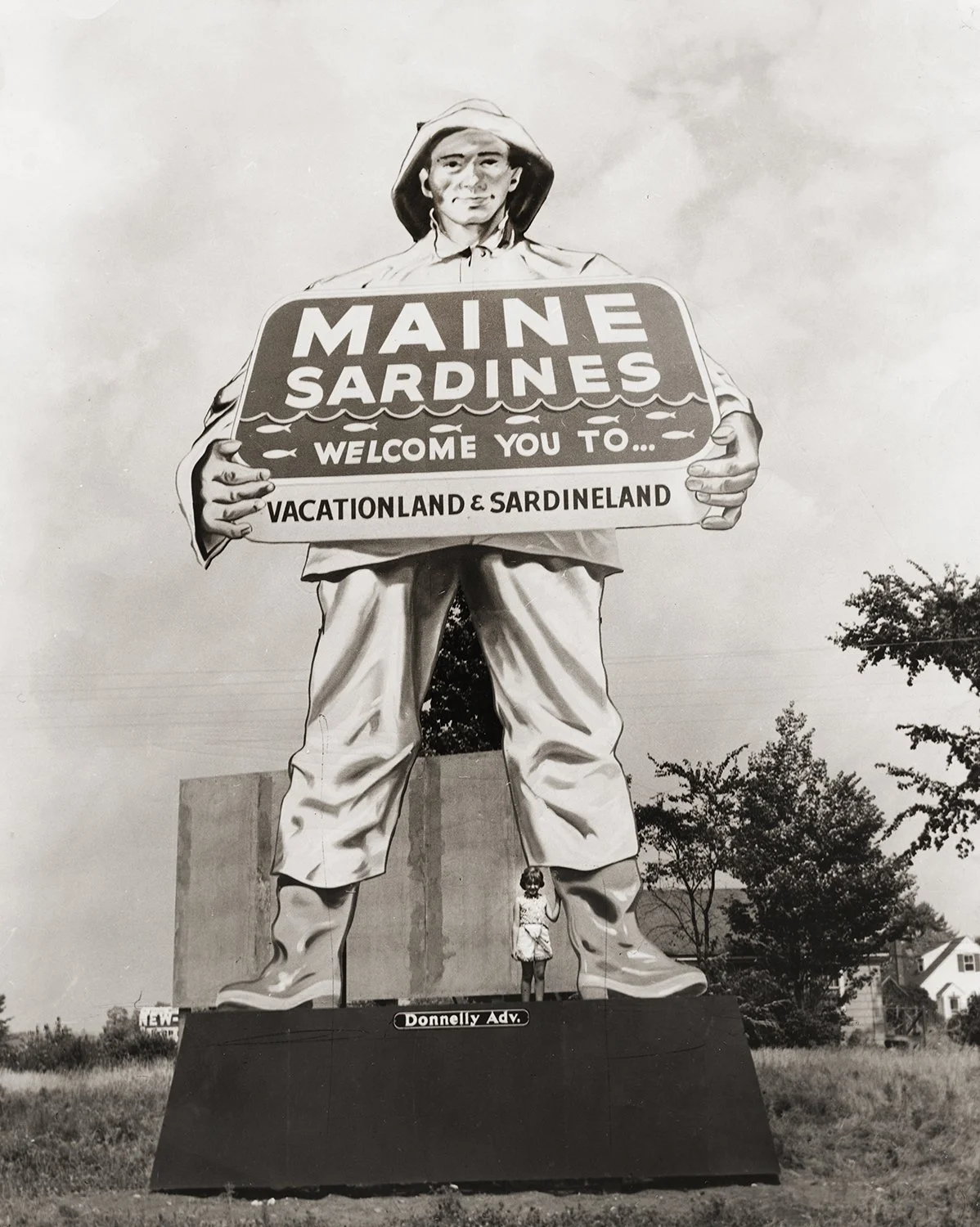
'“Big Jim,” the face of Maine’s sardine industry, once welcomed visitors to Vacationland—or Sardineland, as the fishing industry rebranded the state. Photo courtesy of the Penobscot Marine Museum.
By John Boit
A 40-foot-tall relic of Maine’s once-mighty sardine industry—known to generations of Route 1 travelers as “Big Jim”—may soon get a makeover.
The Penobscot Marine Museum in Searsport is leading a $30,000 fundraising effort to restore the towering aluminum figure, which has stood in Prospect Harbor since the 1970s. The sign originally debuted in 1959 in Kittery as a promotion by the Maine Sardine Council.
“It represents all the people that worked in the industry and in Maine that was tens of thousands of people, and primarily they were women,” said museum archivist Kevin Johnson, who is spearheading the project. He said Big Jim evokes memories for anyone who drove the coast during the industry’s peak.
“Many people said, boy, I knew I was almost to my favorite Maine spot when I saw that sign on the side of the highway, which you could see for miles away,” he said.
Once restored, Big Jim is expected to move temporarily for one year from Prospect Harbor to the front lawn of the marine museum in Searsport. It will be hard to miss, standing taller than the Paul Bunyan statue in Bangor.
“A full-size person comes up to the top of his boot,” Johnson said.
While at the museum, Big Jim will be a centerpiece throughout most of 2026 as part of the museum’s ongoing “Sardineland” exhibit showcasing the history of the fish and its impact on Maine.
“It will be a spectacle,” Johnson said, “and that’s really my goal.”
Symbol of a lost industry
As many as 50 sardine factories dotted the coast of Maine 75 years ago, including in Brooklin and Stonington. The small fish represented an economic powerhouse, and used to be larger than the lobster industry, Johnson said.
Big Jim—named for Jim Warren, the director of the now-defunct Maine Sardine Council—was part of a sweeping promotional campaign that once included a sardine song (“Sardines mean a whale of a lot to me,” croons the singer) and even a comic book. The council created the character at a time when Maine sardines, which are actually juvenile Atlantic herring, were at the height of production.
An advertising agency once wrote a song extolling the virtues of sardines. While the sardines were a hit for decades, the song was not. Hit the play button above to hear a scratchy recording. Audio courtesy of the Penobscot Marine Museum.
“Maine sardines are technically not sardines. They are Atlantic herring,” Johnson said. The name “sardine” actually comes from a herring in Sardinia, an island off the coast of Italy. Maine entrepreneurs in the 1800s began canning the young fish and marketing them as sardines, and the name stuck.
Maine sardines played a large role in World War II, with tins of the fish sent to troops overseas.
“Nearly all the sardines from that World War II era went to the troops,” Johnson said — a shift that helped push Americans away from eating sardines and toward tuna after the war.
The last Maine sardine cannery, Stinson Seafood in Prospect Harbor, closed in 2010.
The Big Jim figure standing in Prospect Harbor today is not the original plywood sign erected in 1959. That first version deteriorated quickly, Johnson said, and “a talented person from the [Stinson] cannery took that original form and then cut panels out of aluminum” onto which Big Jim was painted.
But time and weather have not been kind to Big Jim, and now the statuesque harbinger of the fishy harvest–”So healthful and delicious,” one iteration of the sign proclaimed–is in need of refurbishment.
While sardine packing is no longer the massive industry it once was, there are plenty who still remember it. The museum has its ongoing “Sardineland” exhibit, which explores the history of the fishery and the culture around it. A sardine festival held by the museum in October drew 1,200 visitors.
“Traffic was backed up in Searsport both ways,” Johnson said.
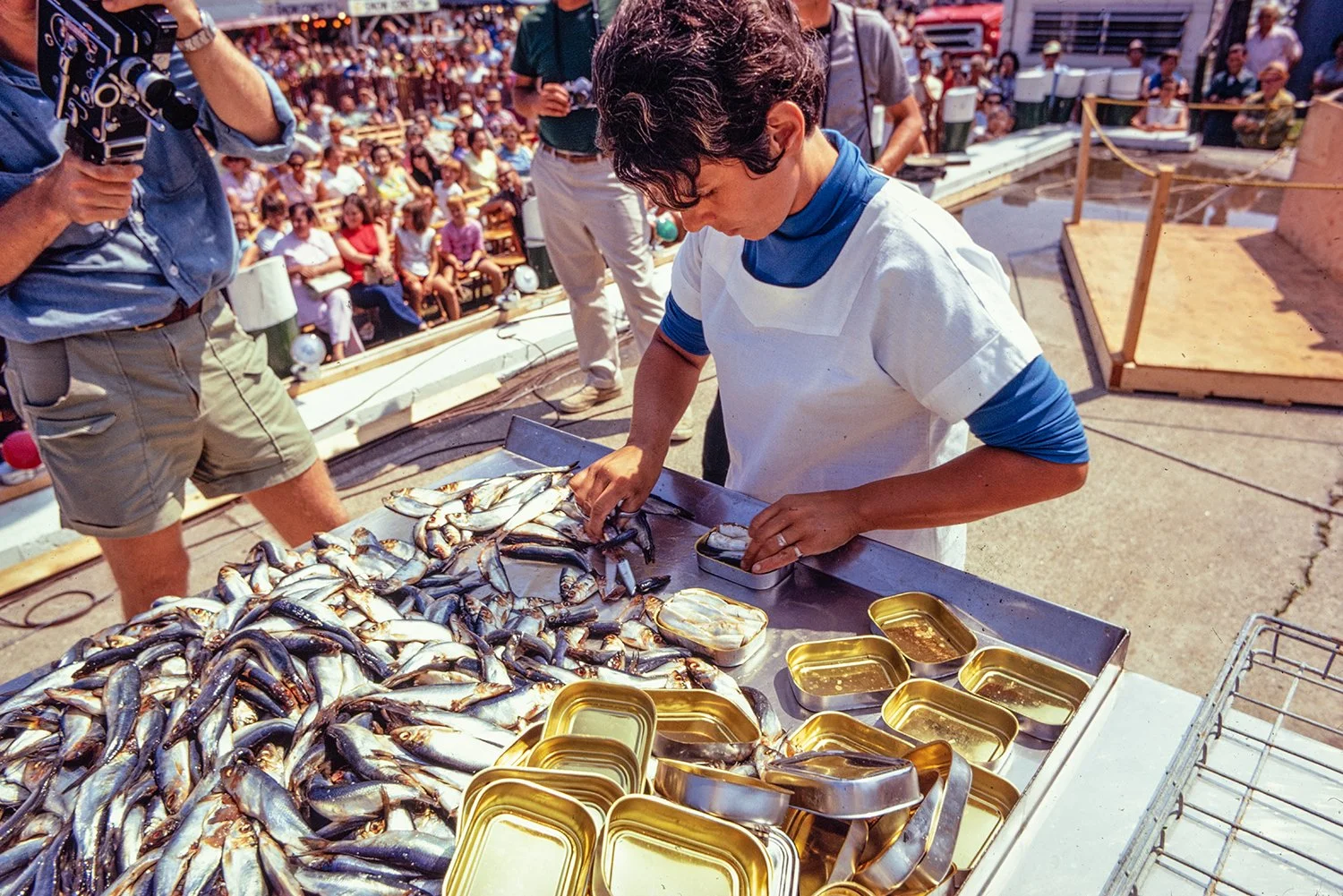
Rita Willey, sardine packing champion of Maine, in an undated photo. Willey’s fame even landed her a guest appearance on the “Johnny Carson Show.” Photo courtesy of the Penobscot Marine Museum.
One highlight of that event was the appearance of 86-year-old Rita Willey, a former sardine-packing champion who dominated statewide contests in Rockland from 1970 to 1983.
“She was a full-blown celebrity,” Johnson said of Willey, who lives in Rockland today. “She was on the Johnny Carson show. She was like Cooper Flag today. She’s still alive and as fiery as you can imagine.”
A local team for a local landmark
The restoration effort has drawn an enthusiastic group of volunteers. Johnson said one partner, Dan Miller, the founder of Belmont Boat Works, “is the one with the crane and eager to be involved.” Annadeene Fowler, a Belfast artist, will repaint the massive figure with the “Women on Walls Collective.”
Closer to home is David Wyman, an engineer who lives in Castine. Since moving and reinstalling a 40-foot metal statue requires engineering help, Wyman has drafted plans for a heavy, ballasted platform designed to keep the sign secure—and even allow it to be lowered flat during high winds.
“You wouldn’t want this thing to fall down on Route 1, that’s for sure,” Johnson said.
For more information, visit the website of the Penobscot Marine Museum.
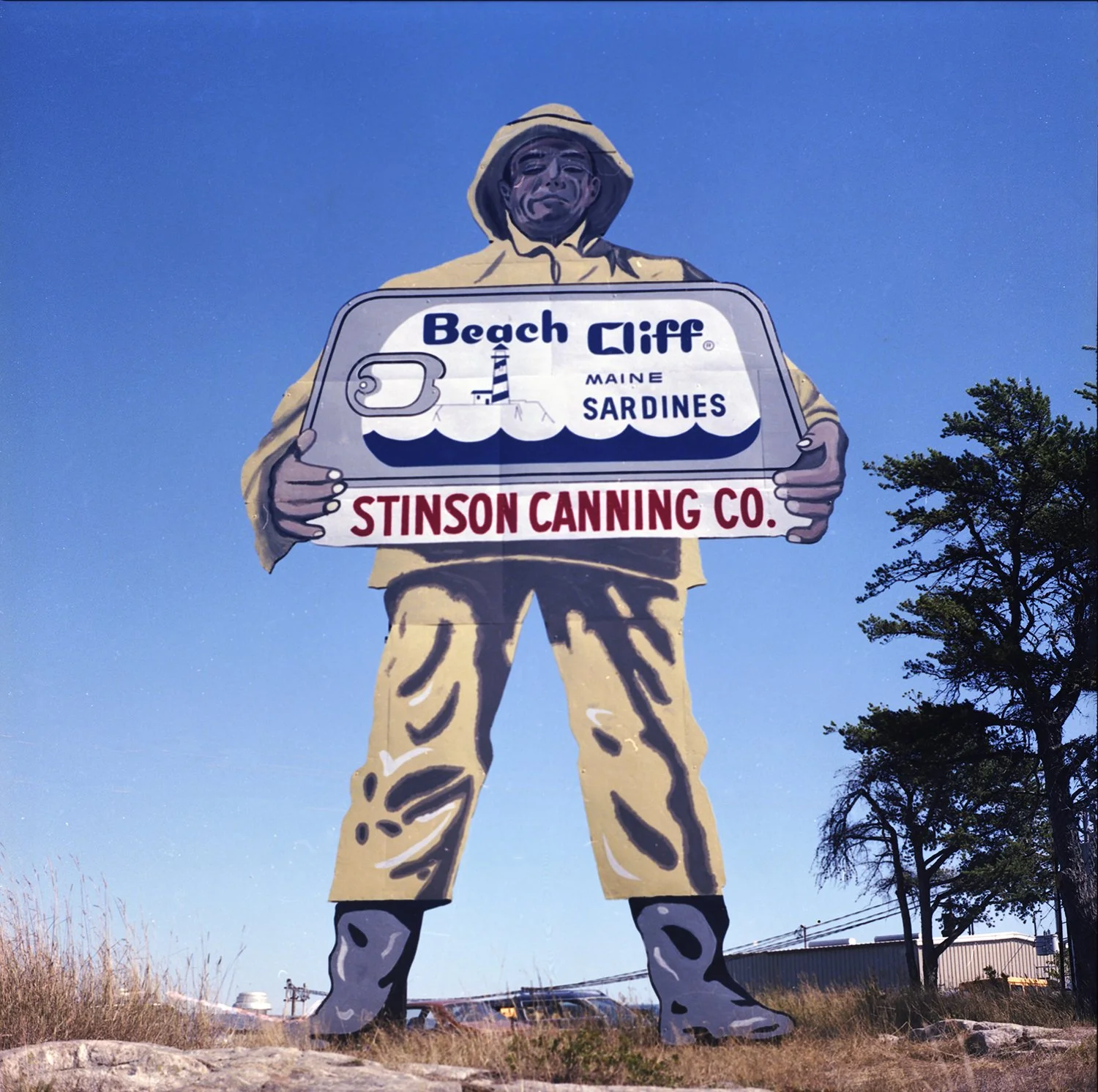
Big Jim, now in Prospect Harbor, will stand tall in Searsport in 2026 as part of a “Sardineland” exhibit. Photo courtesy of the Penobscot Marine Museum.
