Castine voters approve $6.2M budget, including GSA funding request
Residents voice displeasure that GSA didn’t show up–again–to explain tuition request
May 12, 2026
By John Boit
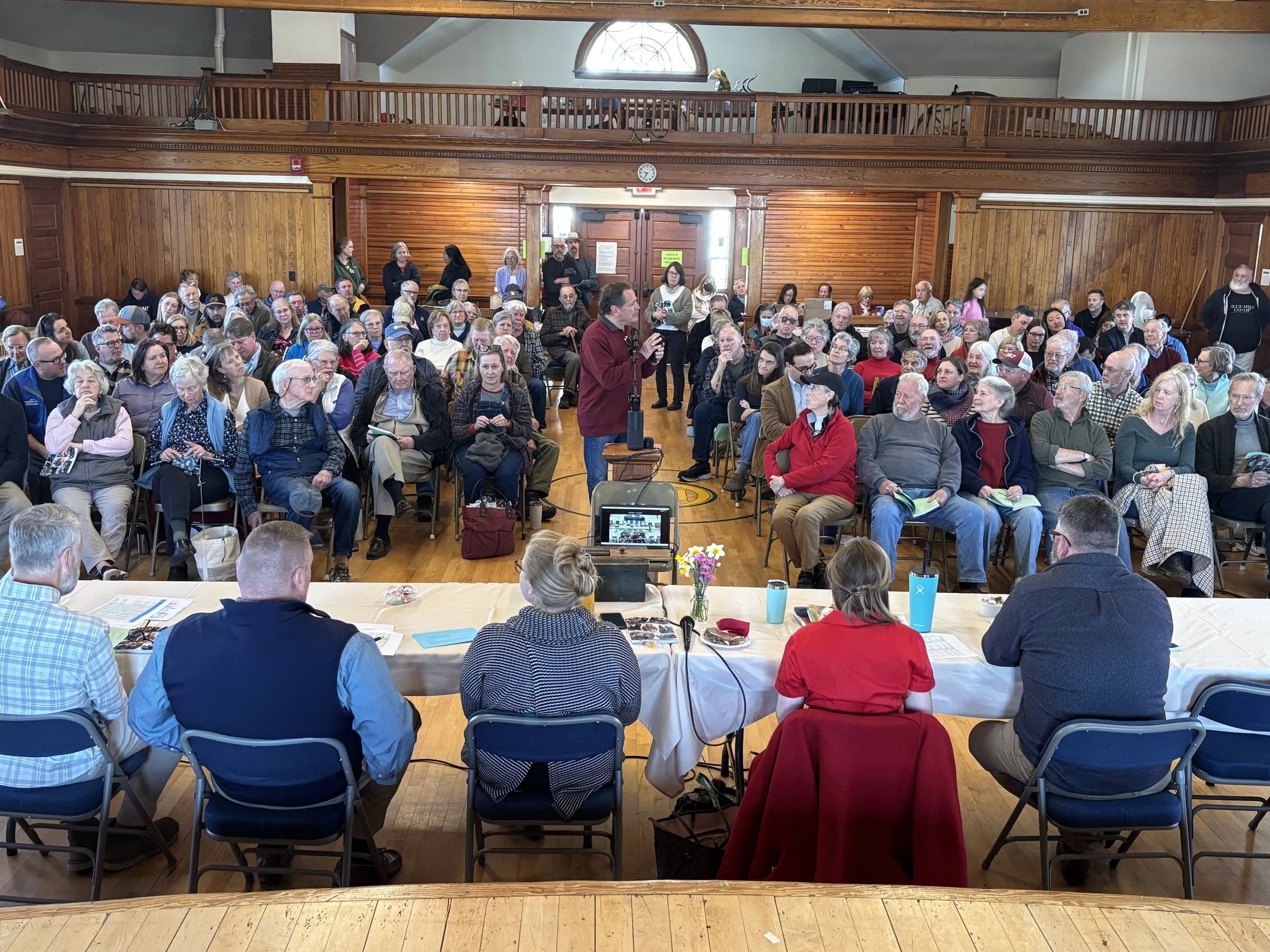
It was standing room only during Castine’s town meeting on May 9. Photo by John Boit.
CASTINE–Castine voters approved a total budget of $6,223,229.40 at their town meeting on May 9, an increase of 7.8% over last year’s budget.
Voters sailed through the vast majority of 68 budget items over a three-hour town meeting, but lingered for 25 minutes over the question of a supplemental funding request from George Stevens Academy, with most questioning why no one from the school came to the meeting.
The supplemental funding request–$26,010 for an estimated 17 students from Castine–has been asked of the seven so-called “sending towns” whose students attend GSA, a private town academy in Blue Hill that serves as a de facto public high school for about 205 students in the area.
Financial difficulties at the high school over the past several years–caused by declining enrollment, changing demographics of smaller family sizes, and the loss of the school’s lucrative boarding program–have led to the school asking for the extra tuition to shore up finances. While most towns have opted to pay the extra tuition, Penobscot and Surry voters rejected the request in recent weeks. The school has said those students may still attend the high school while it seeks alternate sources of funding to make up the loss of about $60,000 between the two towns.
The vote in Castine prompted lengthy discussion. The lack of GSA representation at the meeting was noted by nearly every speaker.
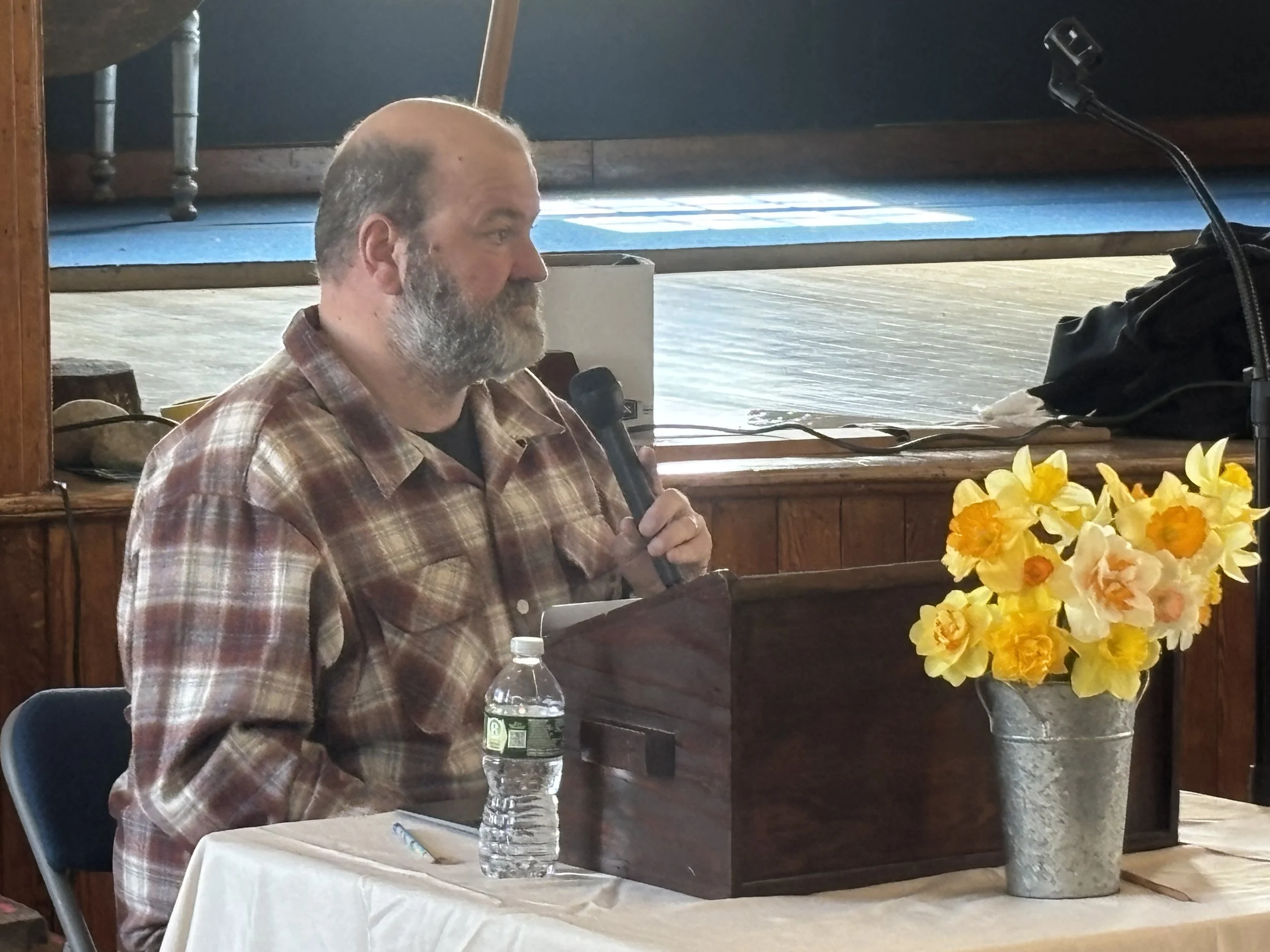
Mark Morgioni said that while “I don’t have a problem with funding GSA,” he added that, “I am somewhat upset that GSA is asking for money again without bothering to send someone.”
“What I have a concern with is the constant coming to the trough asking for more money… No one came last year to explain why they were asking again. No one is here again,” said voter Debbie Bonaminio, who emphasized that she supports the school and the school choice that comes with it. “The fact that nobody from GSA, whether they are short-staffed or not, is not here is insulting, quite frankly.”
In a statement emailed to The Rising Tide on May 12, a GSA representative said the school regretted not sending anyone to the meeting.
“We very much regret that we weren't able to send a representative to the recent town meeting. We deeply appreciate the strong support from the Castine community this weekend and regret our absence,” the statement said, adding that it is “working diligently” to attract board members from Castine to serve on committees for the school, and eventually on its board of trustees.
At the town meeting, resident Barbara Fleck noted that the amount asked by the school is small when compared to the overall town budget.
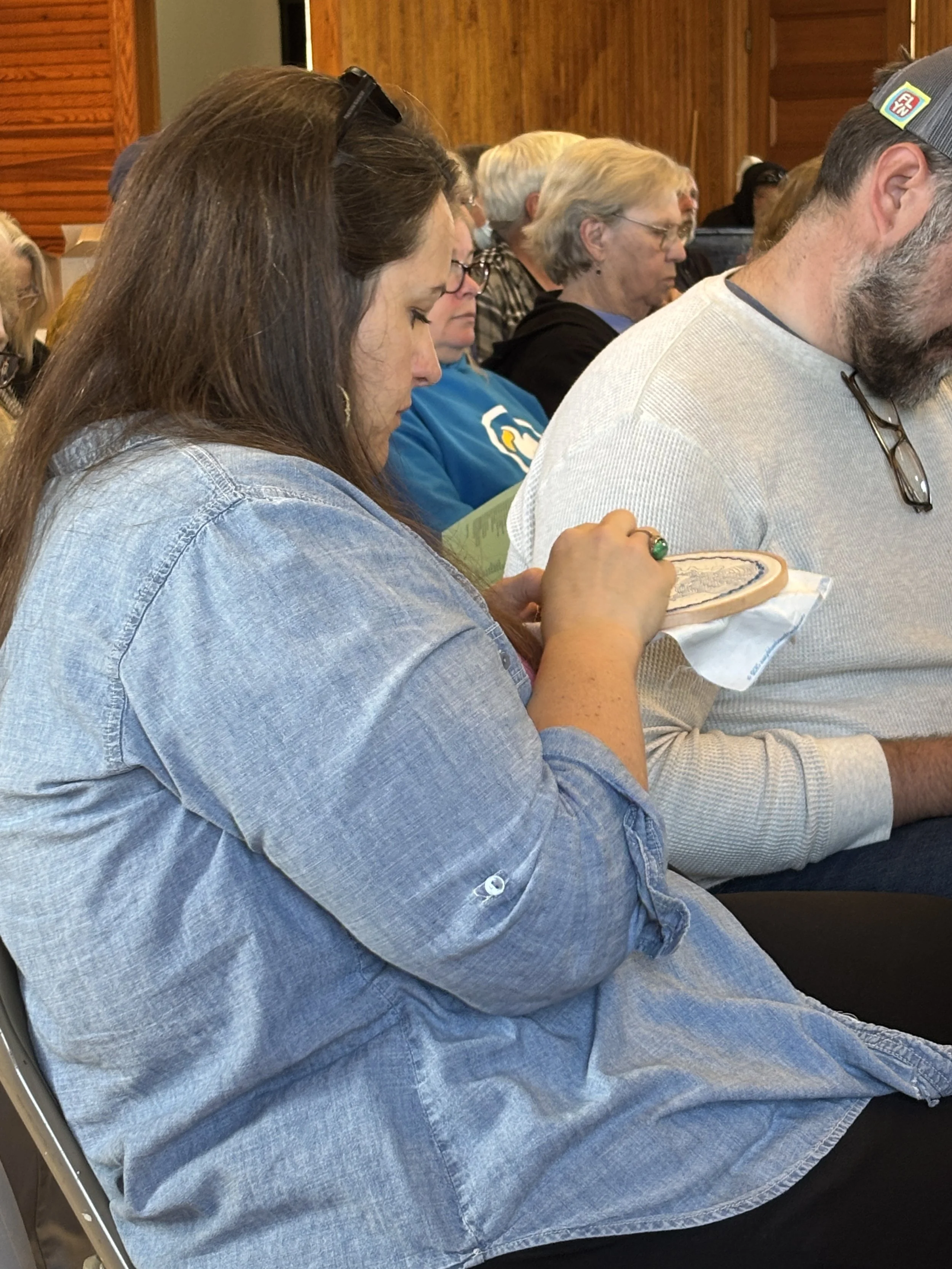
Jessica Simmons worked on her needlepoint during the three-hour meeting. Photo by John Boit.
“It’s less than $30 per taxpayer,” Fleck noted, saying the town can not afford to “be so cheap” if it wants to encourage young families to stay in Castine or move into the community.
While nearly every speaker voiced their support for GSA, taxpayers continued to bristle at the school’s noticeable absence at the meeting.
“My problem is if we reframe this as investing into a business practice, the business plan of ‘we’ll figure it out’ is pretty concerning,” said voter Zach Sawyer. “I don’t love that we don’t have an idea of what their plan is long term for these funds.” He said he wanted to see GSA come back to town meeting next year to articulate a plan for the school’s future.
Shawn Blodgett, former town manager of Castine who now serves as its code enforcement officer, spoke from the floor in defense of GSA. He said that without GSA, students and families could be forced to spend hours each day going back and forth to other area high schools.
“I think there would be an incredible gaping hole on the peninsula if GSA were to go away,” Blodgett said, while noting he shared residents’ concern that GSA “did not show up to speak to this.” But he also noted that the $30 per taxpayer “did not seem a huge investment.”
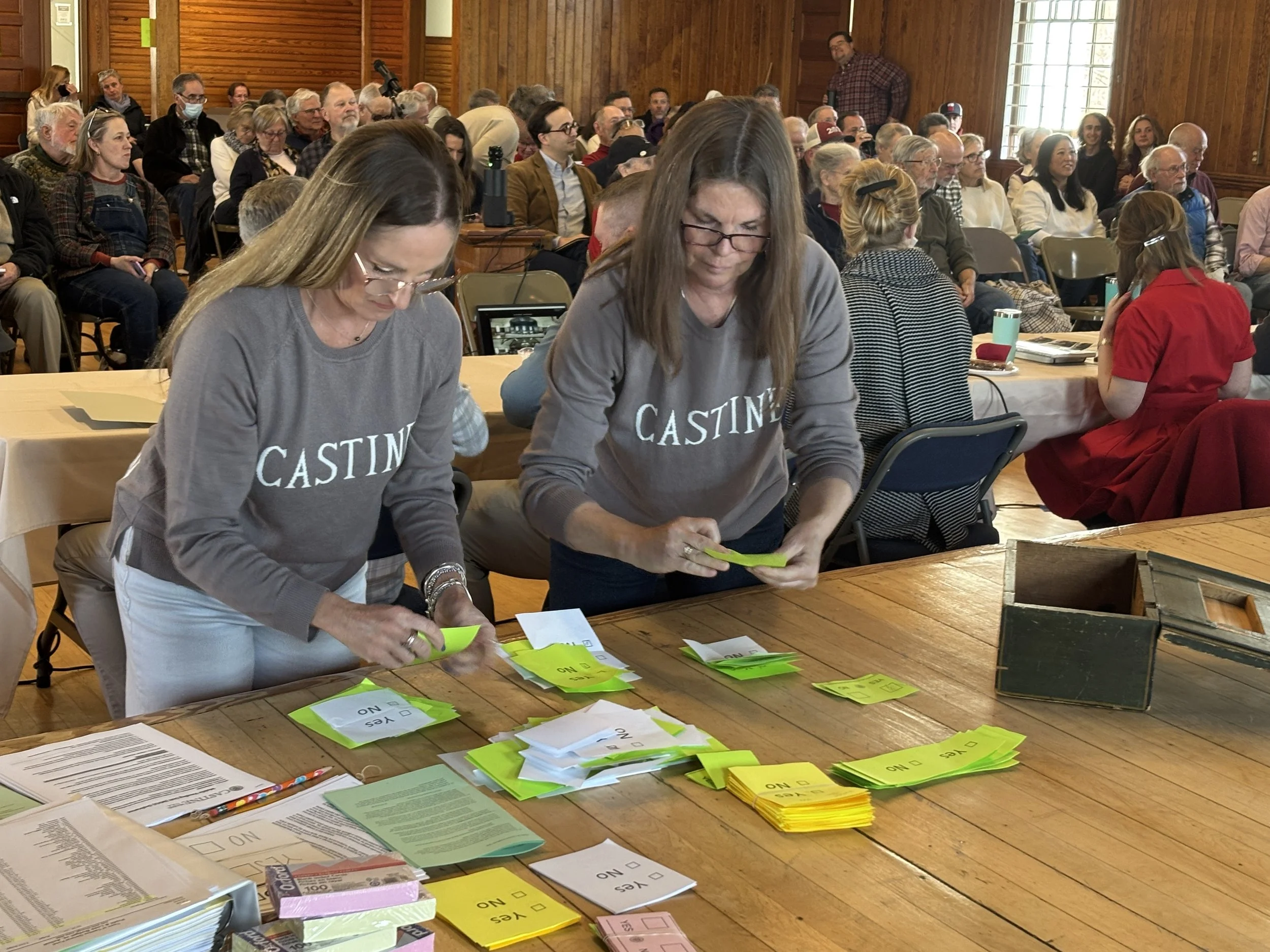
At the end of the GSA discussion, voters cast secret ballots on the issue, voting 87-37 in favor of funding supplemental tuition.
For the town’s total educational expenses, voters approved a school budget of $2,275,610.40, plus the additional funding of $26,010 for GSA supplemental tuition.
On the municipal side of the budget, voters also approved:
$390,132 for Witherle Memorial Library, an increase of $43,765 over last year. In addition, the town voted to approve $113,000 for library capital projects, as well as $5,000 building maintenance.
$180,839 for the fire department, a decrease of $21,004;
$164,660 for the transfer station, a decrease of $3,554;
$45,864 for the harbor master and dock operations, a decrease of $3,407;
$300,769 for miscellaneous items such as street lights, emergency dispatching costs, Peninsula Ambulance, law enforcement, an animal control officer and dockside public bathrooms, representing an increase of $7,350 over last year;
$424,376 for public works, an increase of $46,009.
Voters also approved raising money from taxation to set aside funds for several reserve accounts, including $250,000 for a new fire station, $50,000 for a fire truck purchase, and $15,000 for public works.
For the upcoming 250th celebration of the nation’s founding, voters approved $8,100 for fireworks.
“That passes. Everyone loves fireworks,” town moderator Mike Abernathy said.
Also during the meeting, voters honored two residents with standing ovations: Robin Mass, who served as town moderator for 20 years, and Peter Vogell, who served on the selectboard for 40 years as well as serving as the town’s assistant fire chief.
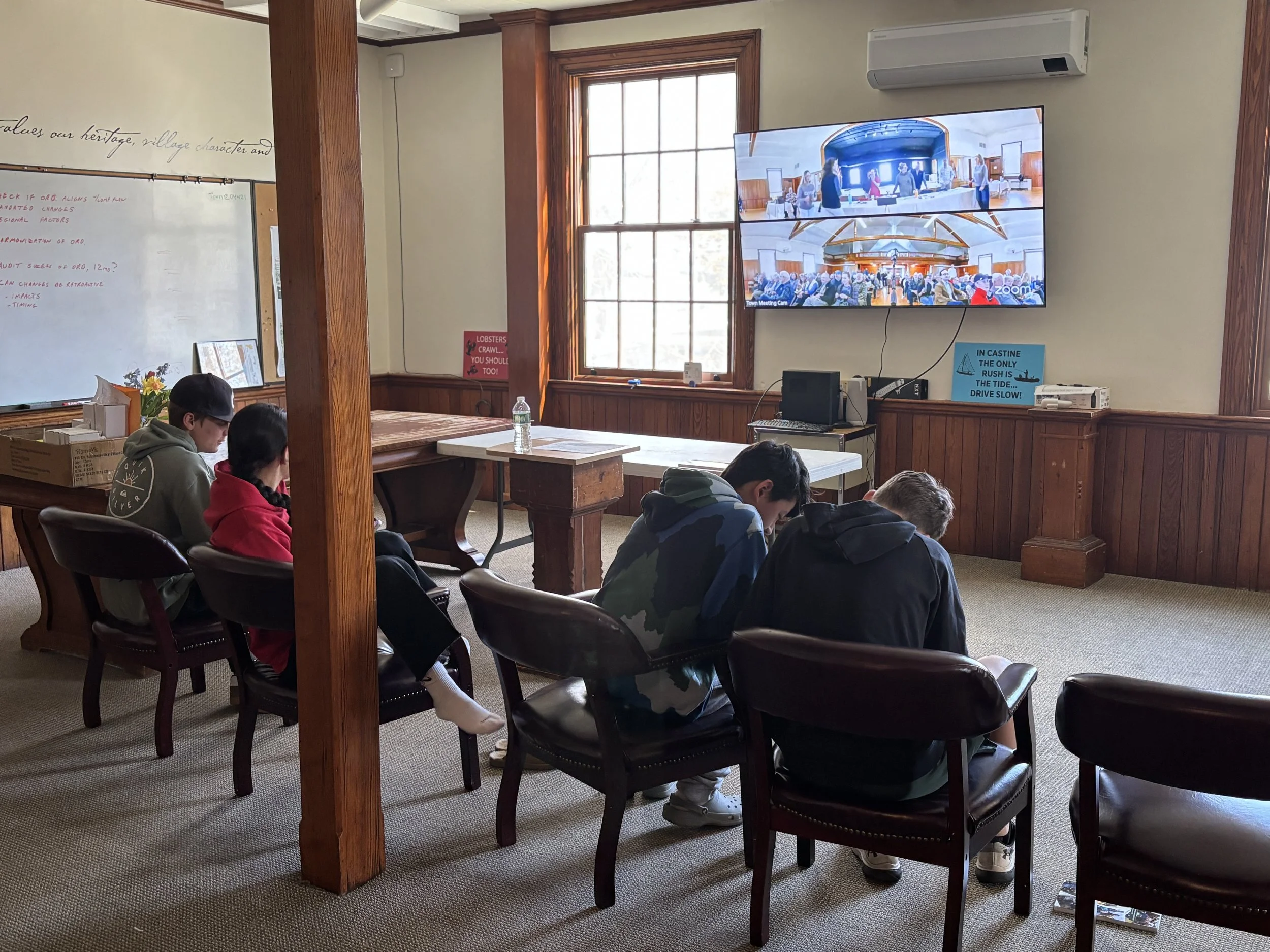
Adams School students were busy running a bake sale to fund a class trip to New York City but watched a live-stream of the meeting. Photo by John Boit.
As voters met on the second floor of Emerson Hall, town manager Derik Goodine set up a monitor on the first floor of the building so that students from the Adams School, who were running a bake sale to fund their class trip to New York City, could watch the proceedings on a live video feed. Students followed along with copies of the town meeting warrant articles.
Just prior to adjourning around 11:30 a.m., Bonaminio spoke again from the floor to congratulate the town on the participatory nature of town meetings.
“This is direct democracy,” Bonaminio said. “This is what the Greeks created. And not everywhere in the United States still does this. It’s a very unique New England thing. The fact we get to come here, even if we don’t agree with one another, the fact we still get to do this in a very uncertain world, I just wanted to say that hopefully we can all appreciate the privilege that we all have to come here together as community and walk out together as a community having done something a lot of people don’t get to do. And I hope we get to do it forever.”