

Mother shares 3 lessons from losing both her sons to addiction
High school collaborates with nonprofit for full-day conference on substance abuse
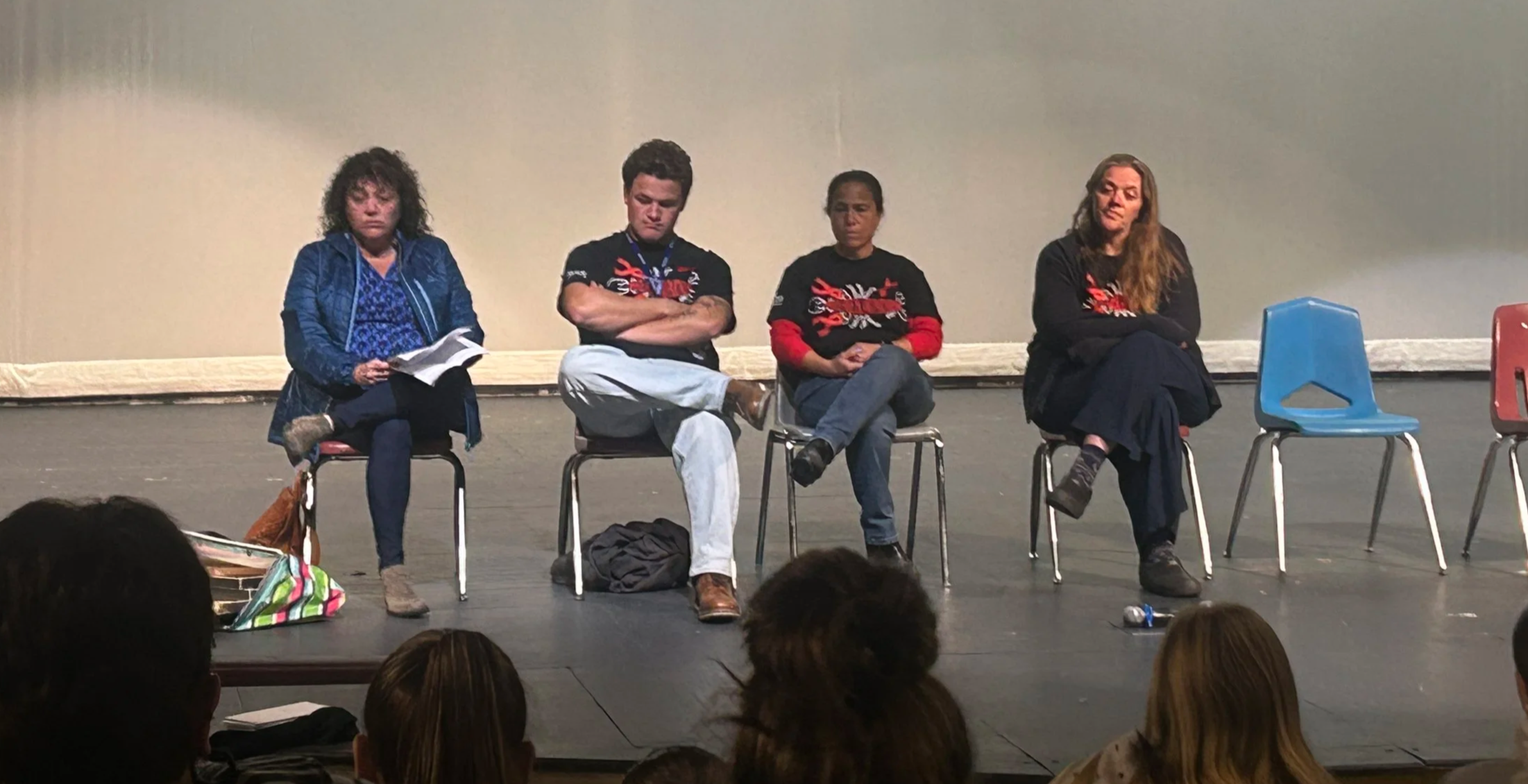
Panelists during the Fall OFIP Conference included (from left) Shelly Yankowsky, Isaac Callaghan, Rebecca Gratz, and Ashley Pesek, the program director of the Opiate-Free Island Partnership. Photo by Maizy Weirich.
Oct. 27, 2026
By Maizy Weirich
DEER ISLE—A mother who lost both her sons to drug addiction shared her three biggest lessons with high school students at an all-day conference on substance abuse for students at Deer Isle-Stonington High School.
The high school hosted the Fall OFIP Conference in collaboration with the Opiate-Free Island Partnership to spread awareness of substance abuse, recovery, and available resources for and from the community.
Ryder Bray, a senior at Deer Isle-Stonington High School, said OFIP’s presence in the school makes a difference.
“It definitely is a big influence because I feel like a lot of schools, they don’t have this, and they don’t have the resources around them,” Bray said.
After a brief introduction to the conference, students made their way to the elementary school auditorium to watch a screening of Beautiful Boy, which features addiction unfolding within the relationship dynamic of a father and son. After the film, two individuals, Isaac Callaghan and Shelly Yankowsky, spoke to the students about their personal struggles, loss, and lessons regarding addiction.
Reliving a mother’s worst nightmare
Yankowsky said her boys were funny, family-oriented, and overall great kids.
“Sean drove once to Southwest Harbor to play cribbage with his aunt and all the old ladies,” Yankowsky said, “Like, who does that?” she laughed.
In an interview, she told The Rising Tide how her children were first introduced to drugs.
Adam, the older brother by four years, started smoking marijuana at 15. Years later, his little brother, Sean, began using pills after he was injured on the football team.
“Sean got hurt in high school playing football, and he was given opioids,” Yankowsky said. “I looked at his pills…all of a sudden his pills were gone.”
Sean was 14.
As time progressed, Yankowsky said her sons’ substance abuse increased to harder drugs.
“It was marijuana, Percocet, then it was oxies, and then it was heroin, and then it was fentanyl,” Yankowsky said.
As a police dispatcher married to a state trooper, Yankowsky said that she figured she and her husband would be more equipped than most to handle the situation with her sons, but they were lost. She said there were significantly fewer resources eight years ago than there are today.
On August 7, 2017, Adam died of an overdose. Ten months later, June 23 of 2018, the Yankowskys relived their worst nightmare. Sean had overdosed and died.
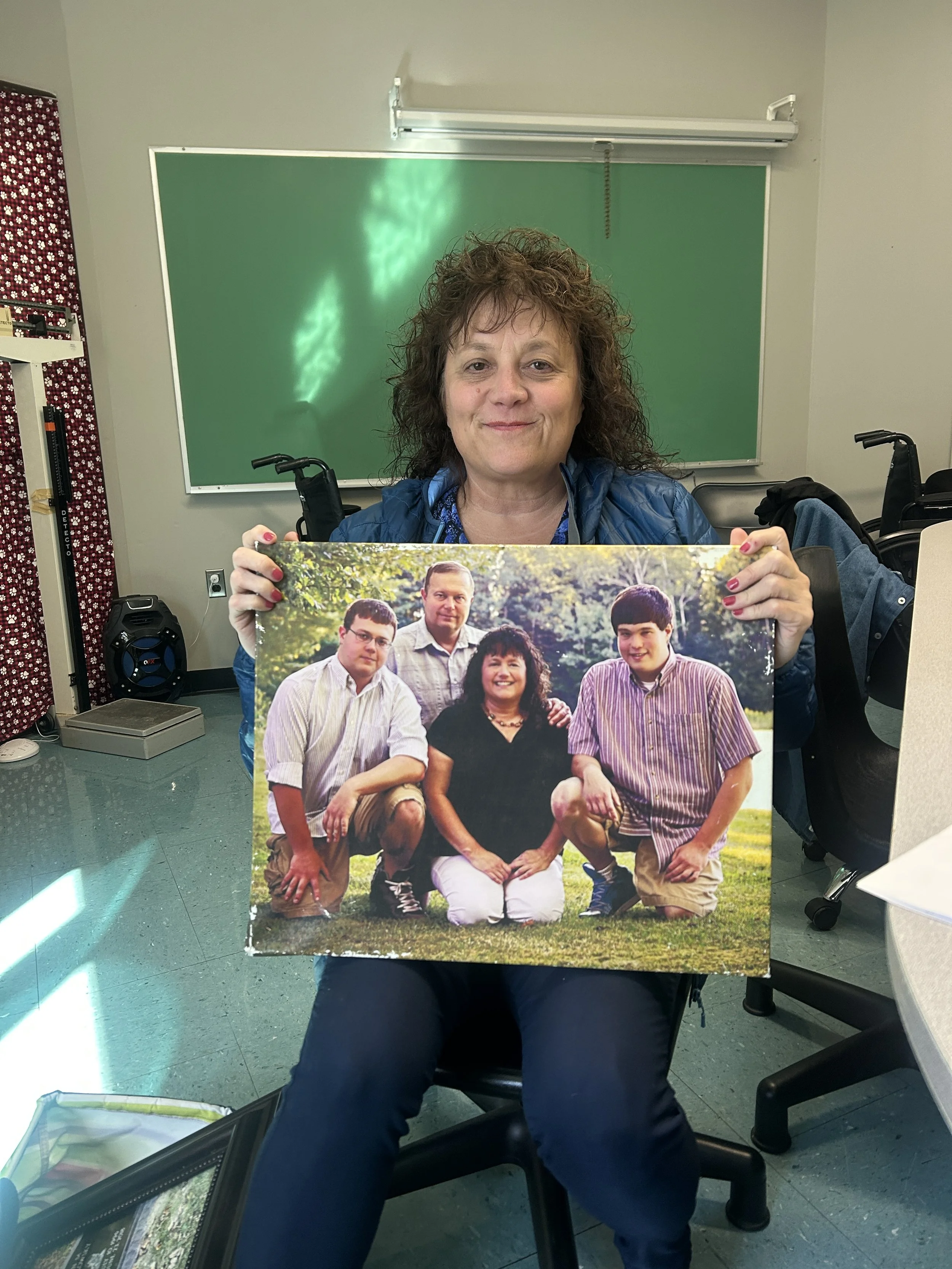
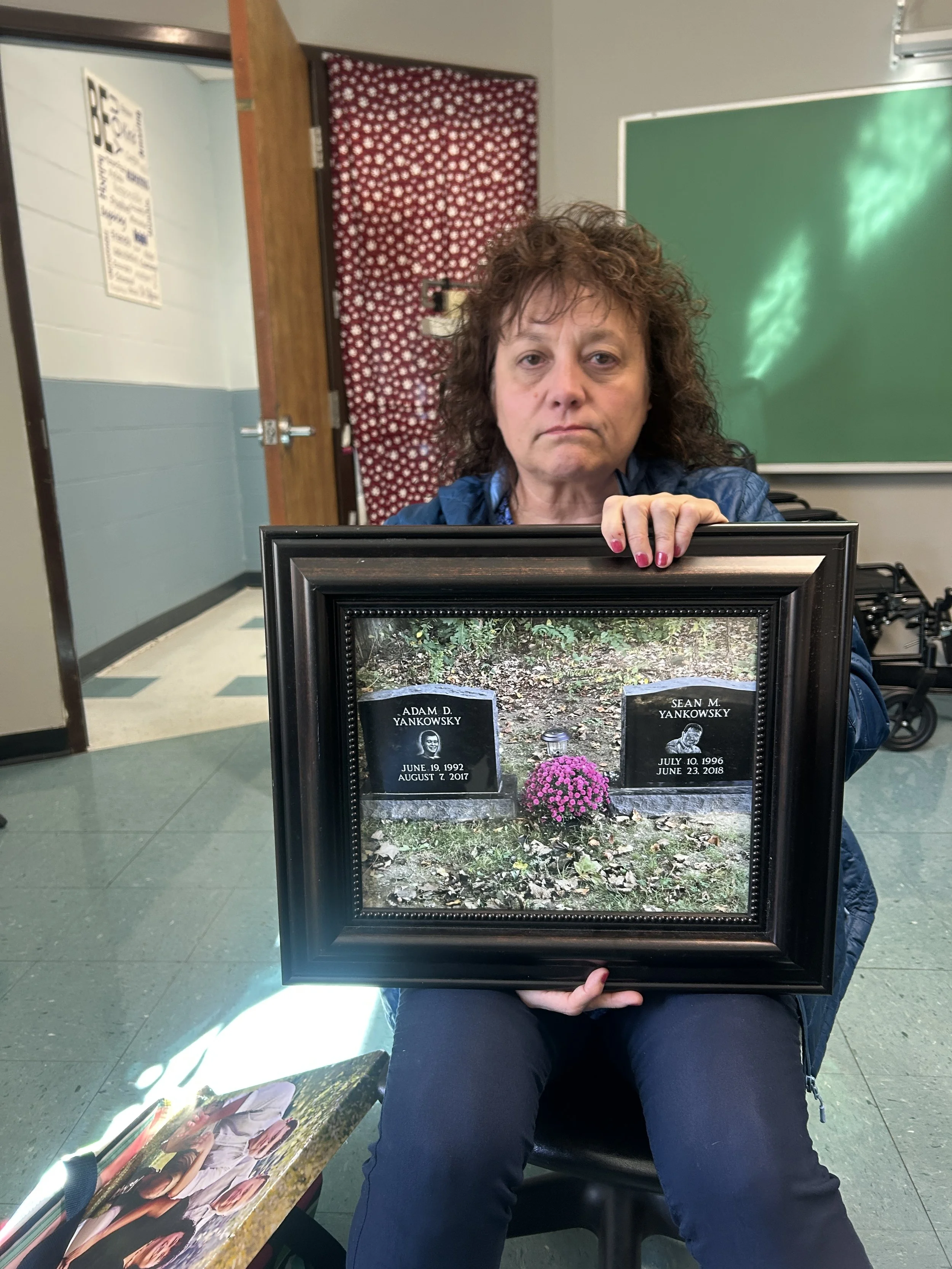
While speaking in front of the students, Yankowsky shared three lessons for those dealing with someone in active addiction.
First, she said: Don’t enable those struggling with addiction.
“It’s one of the hardest things you’ll ever have to do in your life, but you can’t be the one that's always bailing them out,” Yankowsky said.
Her second lesson was to plant seeds.
“Let them know that when they’re ready to get better, you are there for them,” Yankowsky said.
The third is to “love them unconditionally.”
“They’re gonna mess things up a lot. Love them anyway. Tell them every chance you get that you love them,” she said.
Today, Yankowsky and her husband take every chance available to share their stories, and the lessons they tragically learned, so their sons’ deaths are “not in vain.”
Willpower is not the antidote
Isaac Callaghan spoke to students about his experience as an alcoholic and drug addict. He was just 16 when he started smoking weed, and 17 when he started drinking alcohol. He has been sober since May of 2023.
Callaghan is the son of the principal of Deer Isle Stonington High School, Rebecca Gratz.
“I loved the way they made me feel, and I didn’t really feel like I had the opportunity to trade it for something better for a little while,” Callaghan said of the substances he used, in an interview with The Rising Tide.
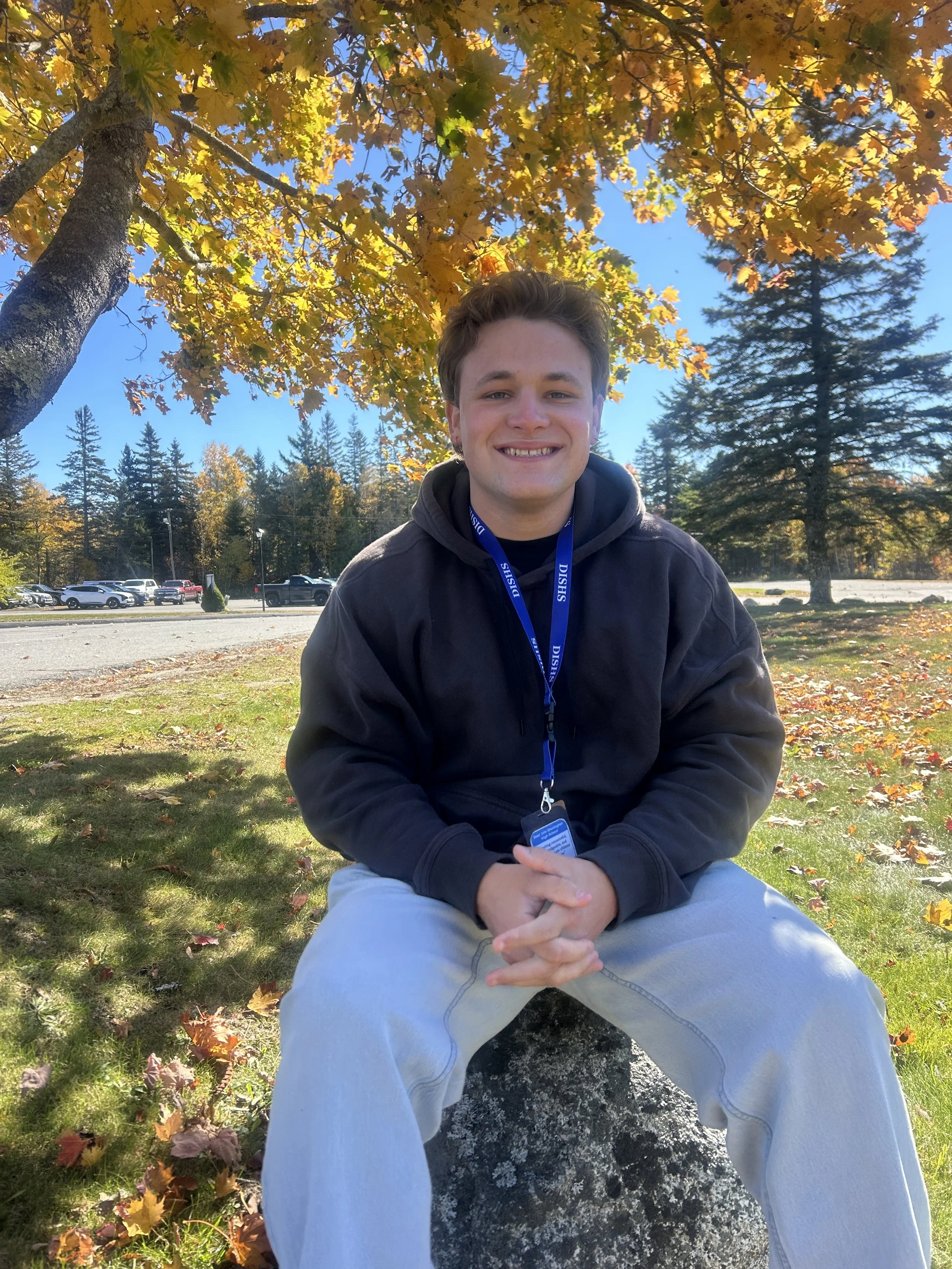
Callaghan shared his battle with alcohol and drugs to students at Deer Isle-Stonington High School on Oct. 23. Photo by Maizy Weirich.
Callaghan said that eventually he couldn’t continue to ignore the repercussions of his drug use. He made a call to a treatment center in Portland to begin recovery.
Callaghan decided to share his story with students in the hope of minimizing the feeling of shame associated with addiction. He said he wants people to understand that “willpower” alone doesn’t eliminate addiction.
“I’ll tell you, the amount of times that I woke up in the morning and made the choice that I wasn’t going to get high or get drunk that day. And by the time the sun goes down, by the time noon rolls around, I have gone back on that promise to myself,” Callaghan said.
Callaghan is now 24 years old and three and a half years sober. He said that “overcoming” addiction is often a daily decision. Each day an addict maintains sobriety, he said, is an intentional choice.
“I don’t try to tell myself that I’m going to be sober for the rest of my life because I have, at least I plan to, have a whole lot of the rest of my life, and that can be overwhelming," Callaghan said. “The way I can convince myself to not use or drink when I have a compulsion is just to make it to the end of the day,” Callaghan said.
Callaghan now lives in Portland and works as a carpenter. He said he surrounds himself with like-minded people who he can lean on for support.
“It’s better on this side,” Callaghan said.
Drug use in the school
During downtime at the conference, one student told The Rising Tide that drug use is common among students, and that it is challenging to encourage students to stop using, despite a day dedicated to spreading awareness of substance use disorder.
“No matter how you try to stop it, a lot of people still bring stuff in,” said the student, whose name is not being used for this article.
The student added that they smoked before school that day.
“I know I smoked a couple things before. Maybe even a whole bowl,” the student said. “I feel like why some students do it is…to feel something.”
“Like a relief of stress. There’s a lot of stressful things around,” another student added.
OFIP has a working partnership with the high school and hosts events where students continue to interact with ambassadors and staff to spread increasing awareness of substance abuse. To learn more about OFIP and its four new community ambassadors, click here.
