

Plus, a new accessible trail opens in Sargentville featuring a 500-foot boardwalk

From left, Megan Flenniken of Blue Hill Heritage Trust, Reid Calhoun and Nicolette Burtis of Moon Beam Farm, and Brett Sykes of Maine Farmland Trust celebrate the easement. Photo courtesy of Maine Farmland Trust.
Nov. 17, 2026
By Staff
BLUE HILL—A 65-acre farm in Blue Hill has been permanently protected from development thanks to a new conservation easement on the property.
Blue Hill Heritage Trust and Maine Farmland Trust announced the agricultural conservation easement on Nov. 13, which protects Moon Beam Farm along Route 15 from development in perpetuity.
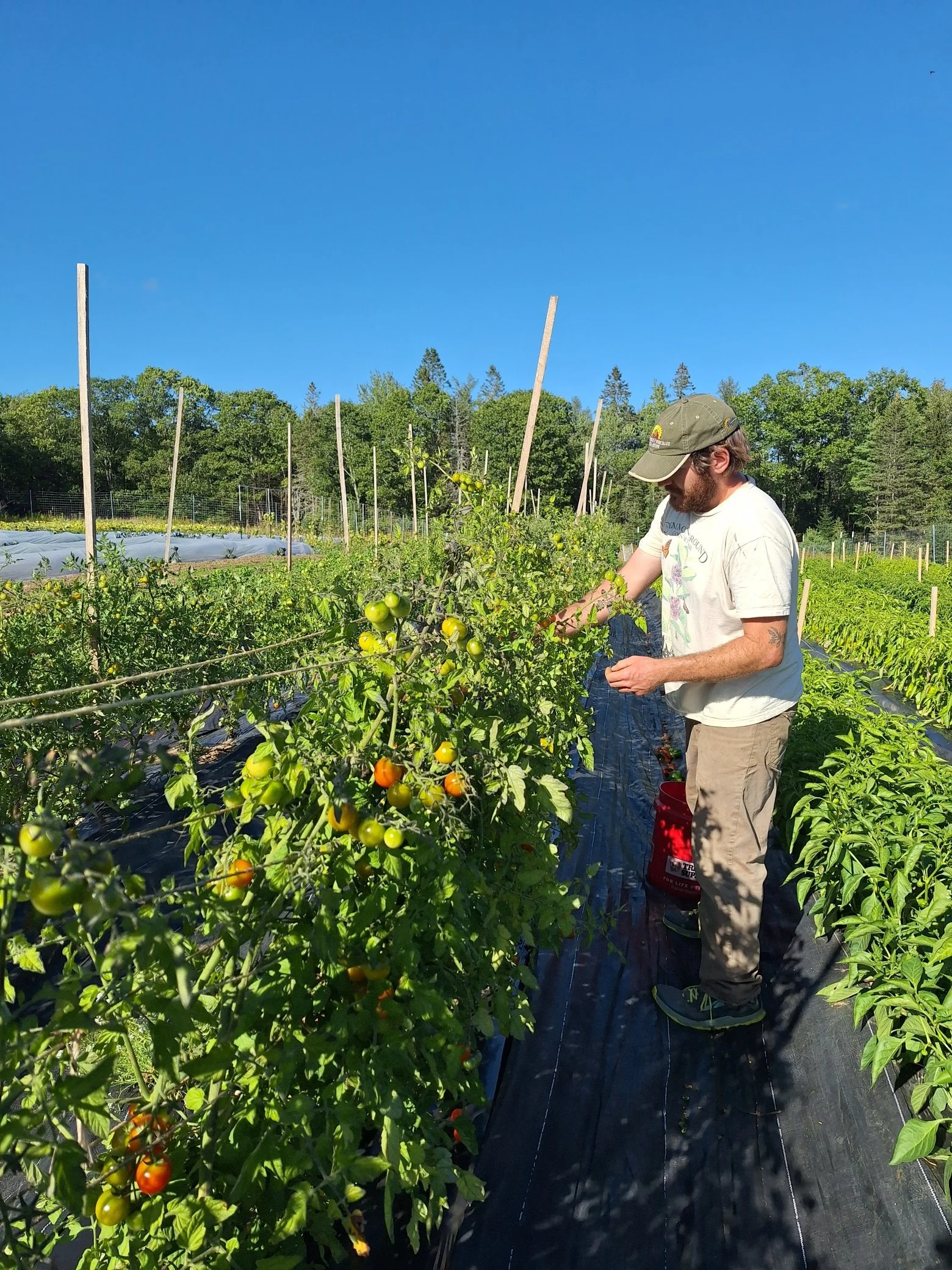
Reid Calhoun harvests tomatoes at Moon Beam Farm. Photo courtesy of Maine Farmland Trust.
Between the two trusts, over a dozen farmland parcels on the Blue Hill Peninsula have been conserved over the past several decades, with a particular focus on the Route 15 farmland corridor stretching through Orland, North Penobscot and Blue Hill.
The corridor contains a band of glacially deposited soils that are deep, fertile, and well-suited for agriculture, and are among the most productive farmland in Hancock County, supporting generations of local farmers, according to the release.
Brett Sykes, director of farmland protection at Maine Farmland Trust, said the collaboration between the two trusts will help ensure that farmers have the land required to grow a durable agricultural economy.
“Maine’s farmland is disappearing at an alarming rate, and only 4.6 percent is permanently protected. With its quality soils, this stretch of farmland in Blue Hill is a vital resource for food production and economic development in the region, and we can’t afford to lose it,” Sykes said.
Moon Beam Farm is owned and operated by Reid Calhoun and Nicolette Burtis. Calhoun purchased it in November of 2024. The couple has now “turned a once-fallow field into a flourishing organic vegetable operation that just concluded its second growing season,” the release said.
“I worry about farmland on the Blue Hill Peninsula turning into ‘agricultural getaways’ where the land is valued for its beauty, instead of its ability to feed people. I’ve wanted to work with Maine Farmland Trust for a while, because I’ve seen how much Maine Farmland Trust’s work matters to keep farms in active agriculture,” Calhoun said.
The easement designates an agricultural management area protecting the field acreage and surrounding forested land where the farmers plan to expand their fields. Also, a separate habitat management area protects forested land and the shoreline of Mill Stream.
New accessible trail in Sargentville
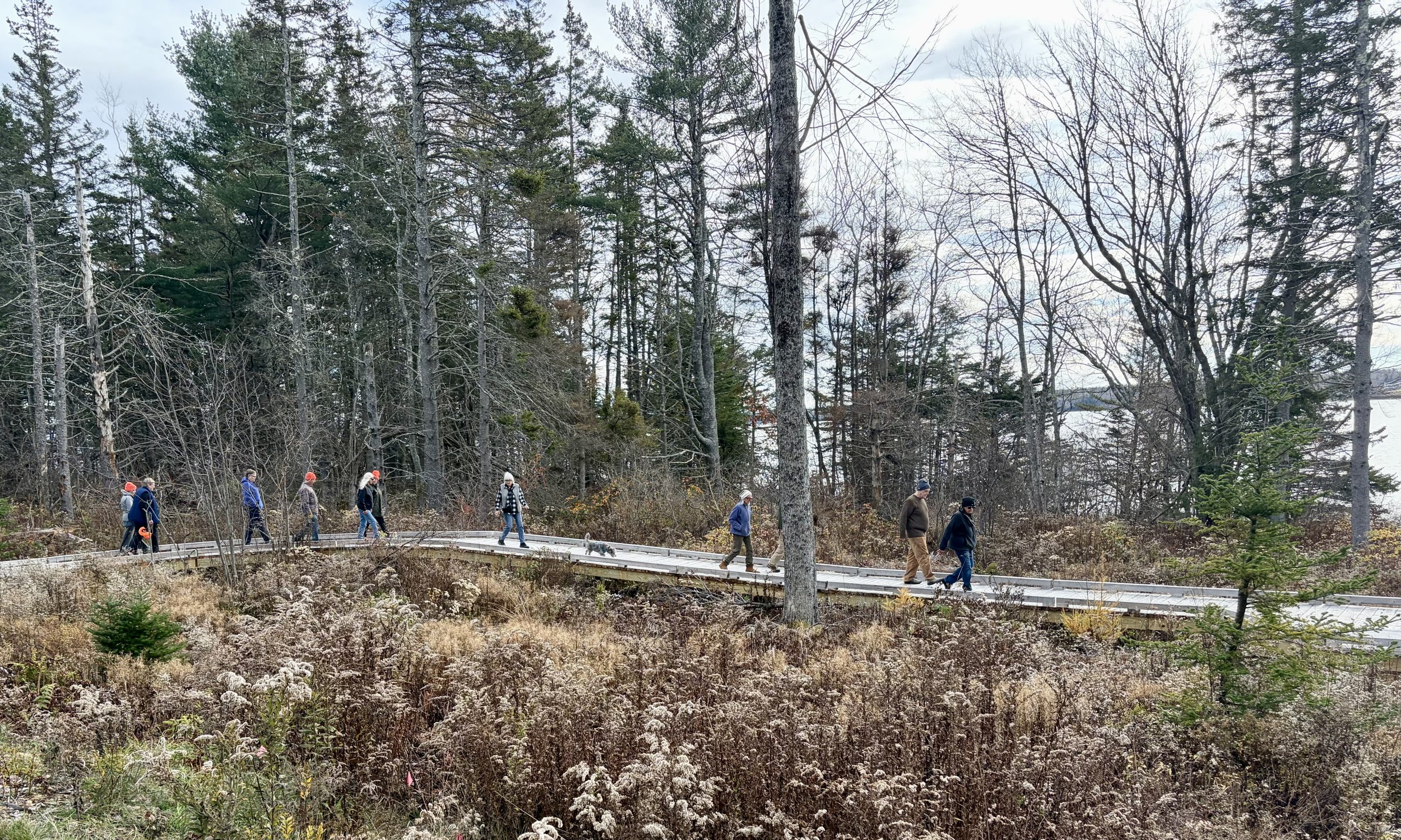
The Landing Accessible Trail offers 500 feet of accessible boardwalk. Photo courtesy of Blue Hill Heritage Trust.
In other local conservation news, one of Blue Hill Heritage Trust’s newest additions is the Landing Accessible Trail, featuring more than 500 feet of accessible boardwalk. The trail adds to the area’s growing network of accessible trails.
For more than a century, the property was part of Edgehill, a “cherished family retreat” established in 1905, according to a BHHT press release. When the family eventually faced decisions about the property's future, they chose conservation over private development. Working with Blue Hill Heritage Trust, the Rossney family permanently protected the 15.3-acre parcel, including more than 400 feet of shoreline along Eggemoggin Reach.
According to a press release from the trust, one of the most significant considerations was determining how to provide an accessible trail while minimizing impacts on the surrounding ecosystem.
Due to the property's wet conditions, a traditional gravel trail would have required greater ground disturbance and potentially increased runoff toward the shoreline. Instead, the trust secured the necessary environmental permitting to construct a six-foot-wide elevated boardwalk, which minimizes disturbances to the wetlands.
Construction also required careful scheduling around the nesting season of a resident osprey, during which disturbance to the area was restricted.
Erin Amadon, a nationally recognized professional trail builder, constructed the new trail. To learn more about Amadon’s experience and process on Maine trails, click here.
